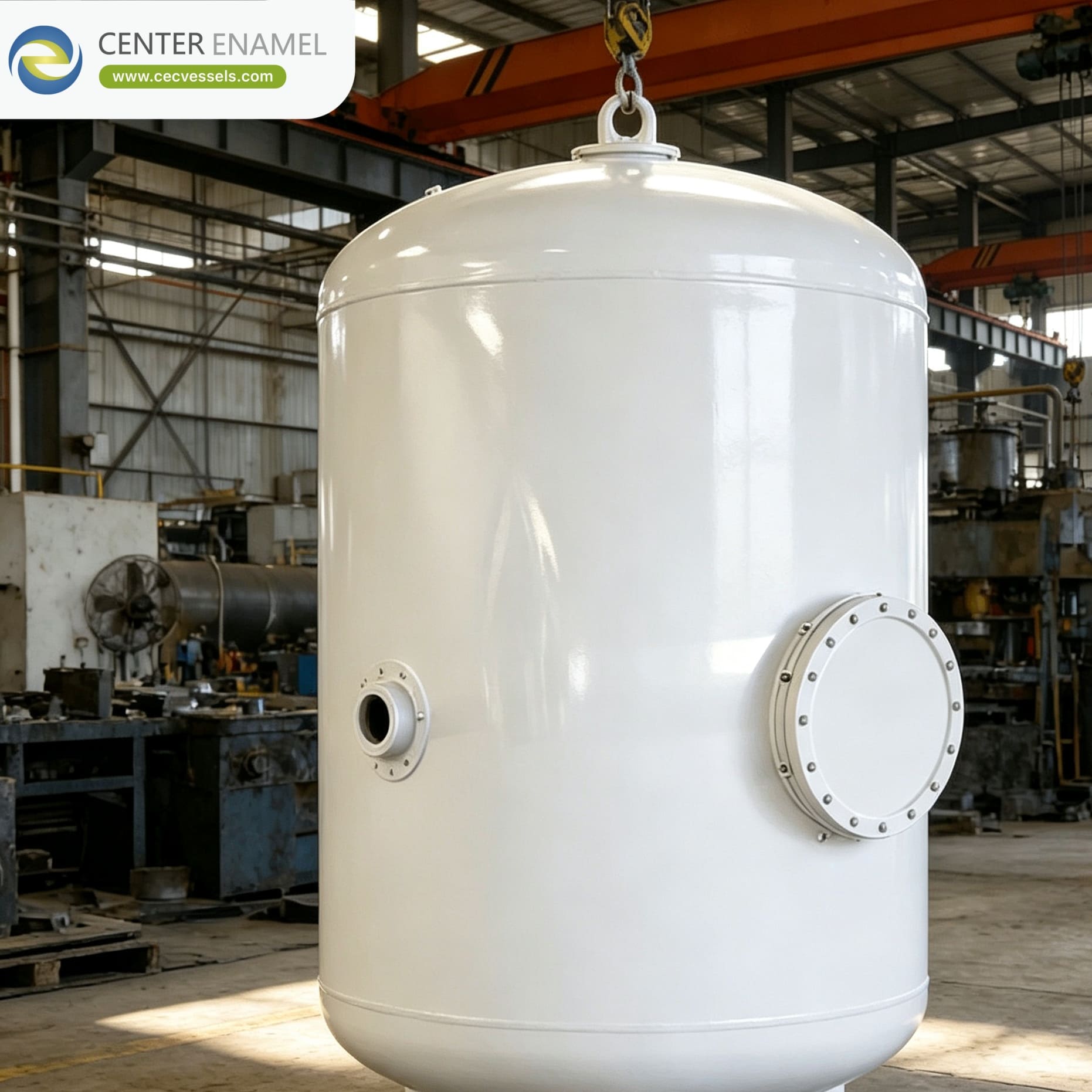
Quadruple-Effect Evaporator for Concentrating Large Volumes of Industrial Liquids
A Quadruple-Effect Evaporatoris an industrial evaporation system designed to concentrate liquid solutions by removing water or another volatile component through four connected evaporation stages. By reusing vapor generated in one stage as the heating medium for the next, the system improves thermal energy utilization and supports large-scale liquid concentration. This technology is suitable for industries that process substantial volumes of liquid materials, including chemical manufacturing, food and beverage production, pharmaceutical processing, salt production, and industrial wastewater treatment. It can help increase the concentration of valuable components, reduce liquid volume, and prepare materials for subsequent processing. Compared with a single-effect evaporator, a quadruple-effect configuration makes more extensive use of secondary vapor. Its overall performance depends on the feed composition, evaporation capacity, required final concentration, heat-transfer characteristics, and operating conditions. Center Enamel provides industrial equipment solutions for a range of processing applications. For customers planning a Quadruple-Effect Evaporator, understanding the working principle, system configuration, and process requirements is essential to selecting suitable equipment. How Does a Quadruple-Effect Evaporator Work?The working principle of a Quadruple-Effect Evaporatoris based on sequential evaporation and the reuse of thermal energy. Instead of allowing the vapor generated during each stage to leave the system without further use, the equipment transfers this vapor to the next effect to provide additional heating. A typical system operates through the following stages. First Effect: Initial EvaporationThe feed liquid enters the first effect, where an external heating source supplies the energy needed to initiate evaporation. As the liquid receives heat, part of its water or other volatile component becomes vapor. The vapor is separated from the remaining liquid and directed toward the heating section of the second effect. The liquid continues through the evaporation system according to the selected feed arrangement. Second Effect: Reusing Secondary VaporThe second effect receives thermal energy from the vapor generated in the first effect. It operates at a lower boiling temperature, allowing the incoming vapor to transfer heat to the process liquid. Additional evaporation occurs, increasing the concentration of the remaining liquid. The newly generated vapor then provides heating energy for the third effect. Third Effect: Continued ConcentrationThe third effect continues the evaporation process using vapor from the second effect as its heating medium. As more volatile material is removed, the concentration of the liquid increases. The temperature, liquid flow rate, and heat-transfer conditions are coordinated to maintain the required process performance. Vapor generated in this stage is transferred to the fourth effect. Fourth Effect: Final EvaporationThe fourth effect completes the four-stage evaporation sequence. The liquid undergoes further concentration before being discharged or transferred to downstream equipment. Depending on the process design, the vapor leaving the final effect may enter a condenser or another suitable recovery system. Condensate can also be collected for appropriate reuse where its quality meets the intended requirements. By connecting all four effects, the system enables the same initial thermal input to contribute to evaporation across multiple stages. This approach can improve steam economy compared with single-effect evaporation, although actual performance depends on the process design and operating conditions. Main Components of a Quadruple-Effect EvaporatorA complete Quadruple-Effect Evaporatoris an integrated processing system. Each component performs a specific function in heat transfer, vapor separation, liquid movement, concentration control, or energy recovery. Four Evaporation EffectsThe four effects form the core of the system. Each stage contains suitable heat-transfer surfaces and evaporation spaces designed to match its operating conditions. The effects may use falling-film, forced-circulation, or other appropriate evaporation arrangements. The selection depends on the characteristics of the liquid, including viscosity, concentration, heat sensitivity, and flow behavior. Feed PreheaterA feed preheater raises the temperature of the incoming liquid before it enters the main evaporation section. Where practical, recovered condensate or available process heat can be used to preheat the feed. This arrangement helps integrate the heating stages and improve overall thermal energy utilization. Vapor-Liquid SeparatorsVapor-liquid separators separate generated vapor from the concentrated liquid at each stage. Effective separation helps the vapor move to the next effect while allowing the liquid to continue through the process. Separator design should correspond to the expected vapor flow, liquid characteristics, and operating conditions. Condenser and Condensate Recovery SystemThe condenser removes heat from vapor leaving the final stage or other designated process locations. The resulting condensate can be collected and managed according to its quality and the facility's operating requirements. Condensate recovery may also provide opportunities for heat integration when the temperature and composition are suitable. Pumps and PipingPumps and piping transfer feed, process liquid, concentrated product, and condensate between equipment components. Their capacities and layouts should match the required flow rates and process arrangement. Proper coordination supports stable material movement throughout the evaporation system. Instrumentation and Control SystemTemperature, liquid level, flow rate, and concentration measurements can be used to monitor process performance. An automated control system can coordinate the four effects and help maintain the desired operating conditions. The level of automation should reflect production requirements, process complexity, and the customer's control strategy. Key Advantages of a Quadruple-Effect EvaporatorImproved Thermal Energy UtilizationThe main advantage of a Quadruple-Effect Evaporatoris the reuse of secondary vapor across four connected stages. Vapor generated in one effect supplies heat to the next, allowing more evaporation to take place using the original heating energy. This arrangement can reduce the amount of fresh steam required per unit of water evaporated compared with a single-effect system. Actual steam consumption varies according to feed concentration, final concentration, temperature differences between effects, heat losses, and equipment configuration. A detailed process evaluation is therefore important when estimating energy savings. Suitable for Large-Volume Liquid ProcessingFour interconnected evaporation stages can support continuous concentration in industrial production lines with substantial feed volumes. The equipment can be designed according to the required evaporation capacity, operating schedule, and final product concentration. Proper sizing of the heat-transfer surfaces and vapor-handling components helps coordinate the entire system. Reduced Liquid VolumeEvaporation removes water or another volatile component from the feed, leaving a more concentrated product. This reduces the volume of material that needs to be transferred, stored, or processed in subsequent operations. For manufacturers handling large quantities of dilute liquid, concentration can simplify downstream processing and improve the organization of material flows. Continuous Production CapabilityA suitably designed quadruple-effect system can operate continuously, receiving feed while discharging concentrated product. Continuous operation is valuable for production facilities with stable feed availability and consistent concentration requirements. Coordinated process controls help maintain operating conditions and support repeatable production. Flexible Equipment ConfigurationThe evaporation system can be configured according to the physical properties of the feed and the required concentration process. Different feed arrangements and evaporation technologies can be considered during engineering. This flexibility enables the system to serve different industrial applications rather than relying on a single standardized configuration. Industrial Applications of Quadruple-Effect EvaporatorsChemical ManufacturingChemical plants frequently need to concentrate aqueous solutions, recover valuable components, and prepare liquid materials for crystallization or other downstream operations. A Quadruple-Effect Evaporatorcan remove part of the solvent while retaining the desired components in the concentrated product. The system can be configured according to the feed composition, target concentration, and production capacity. Material compatibility and heat-transfer requirements should be evaluated to determine the appropriate construction materials and evaporation technology. Food and Beverage ProcessingFood and beverage manufacturers use evaporation to concentrate products before drying, crystallization, formulation, or packaging. Depending on the product and process requirements, multi-effect evaporation may be suitable for sugar solutions, dairy liquids, fruit-based products, and other process streams. For temperature-sensitive materials, the evaporation arrangement should be selected with consideration for operating temperature and residence time. Falling-film technology may be appropriate for certain applications because it allows liquid to flow as a thin film along the heating surfaces. Pharmaceutical and Fine Chemical ProductionPharmaceutical and fine chemical processes may require the concentration of solutions containing valuable ingredients or dissolved compounds. A quadruple-effect system can support these operations when its operating conditions and materials are compatible with the product requirements. The design should account for the desired final concentration, process temperature, cleaning procedures, and applicable production standards. Salt and Mineral ProcessingSalt production and mineral processing often involve the concentration of solutions before crystallization or further material recovery. A Quadruple-Effect Evaporatorcan remove water from suitable feed solutions, increasing the concentration of dissolved substances. The concentrated stream may then be transferred to crystallizers or other separation equipment. The system design should account for the solution's composition, solubility behavior, and expected concentration range. Industrial Wastewater TreatmentSome industrial wastewater treatment processes use evaporation to reduce liquid volume and concentrate dissolved materials. A quadruple-effect system may be considered when the wastewater characteristics and treatment objectives support thermal concentration. The process design should evaluate feed variability, solids content, heat-transfer characteristics, and the intended handling of the concentrated stream and recovered condensate. The appropriate configuration depends on the specific wastewater composition and the wider treatment process. Important Design Considerations for a Quadruple-Effect EvaporatorFeed Flow Rate and Evaporation CapacityThe feed flow rate determines the quantity of liquid entering the system over a specified period. The required evaporation capacity depends on the initial concentration and the target concentration of the final product. Engineers should calculate the material balance to determine how much water or other volatile component must be removed. This calculation provides the basis for selecting the total heat-transfer area and the capacity of the individual effects. Feed Properties and Final ConcentrationFeed composition has a direct influence on evaporation behavior. Viscosity, dissolved solids, boiling characteristics, and heat sensitivity should be considered during equipment selection. The required final concentration also affects the design. Some materials can be concentrated through conventional evaporation, while others may require forced circulation or another specialized configuration to maintain suitable heat transfer. Selection of Evaporation TechnologyDifferent evaporation technologies are suitable for different types of liquids. Falling-Film Evaporator:The liquid flows downward along heating surfaces as a thin film. This arrangement can provide efficient heat transfer and relatively short residence time for suitable liquids. Forced-Circulation Evaporator:A pump circulates liquid through the heat-transfer section. This arrangement can be considered for liquids that require controlled circulation during concentration. The appropriate choice depends on the feed properties, evaporation rate, final concentration, and process objectives. A four-effect system may use the same technology across all effects or combine different arrangements where justified by the engineering design. Heat-Transfer Area and Temperature DistributionEach effect requires sufficient heat-transfer area to achieve the intended evaporation duty. The temperature difference between the heating medium and the process liquid provides the driving force for heat transfer. Because the four effects operate at different temperatures, the available temperature difference must be allocated appropriately across the system. Engineers should consider heat-transfer coefficients, boiling-point elevation, heat losses, and the properties of the concentrated liquid. Materials and Manufacturing QualityConstruction materials should be selected according to the chemical composition of the feed, process temperature, cleaning requirements, and expected operating conditions. Stainless steel may be suitable for many applications, while other materials can be evaluated according to project-specific requirements. Fabrication procedures, dimensional accuracy, inspection requirements, and documentation should be established in accordance with the approved equipment specifications. How to Choose a Quadruple-Effect Evaporator ManufacturerSelecting a qualified Quadruple-Effect Evaporator Manufactureris an important step in developing a reliable industrial concentration system. When evaluating a supplier, customers should consider:
lProcess Engineering:The supplier should understand the feed characteristics, evaporation duty, and target concentration. lCustomized Design:Equipment dimensions and process arrangements should match the intended production requirements. lMaterial Selection:Materials should be compatible with the process liquid and specified operating conditions. lManufacturing Capability:Fabrication quality and inspection procedures should meet the applicable project specifications. lSystem Integration:The evaporator should coordinate with preheaters, pumps, condensers, storage vessels, and downstream equipment. lTechnical Communication:Clear documentation and communication help align the equipment supply with the project's technical scope. Before requesting a quotation, customers should prepare the feed flow rate, initial and final concentrations, required evaporation capacity, liquid properties, available heating utilities, and installation conditions. These details help the manufacturer assess the required configuration and provide a project-specific equipment proposal. Quadruple-Effect Evaporator Solutions from Center EnamelCenter Enamel provides industrial equipment solutions for customers across a range of processing and storage applications. For industrial concentration projects, the equipment configuration should be selected according to the process requirements and coordinated with the wider production system. Businesses searching for a China Quadruple-Effect Evaporator Manufacturershould evaluate engineering suitability, equipment specifications, material compatibility, and the supplier's ability to address project requirements. Center Enamel can be contacted to discuss the intended application, feed properties, evaporation capacity, target concentration, and plant layout. These details provide a starting point for determining whether the company's available manufacturing and engineering capabilities match the project scope. A project-specific approach helps ensure that the selected evaporation system is designed around the actual production process rather than relying solely on nominal equipment capacity. Supporting Efficient Industrial Liquid ConcentrationA Quadruple-Effect Evaporatoroffers an effective approach to concentrating large volumes of industrial liquids through four connected evaporation stages. By reusing secondary vapor as a heating source, the system can improve thermal energy utilization, reduce fresh steam requirements, and support continuous production. Successful equipment selection depends on feed characteristics, evaporation capacity, final concentration, heat-transfer requirements, and integration with the surrounding process equipment. Careful engineering and clear technical specifications help establish an evaporation system suited to the intended application. For manufacturers planning a new concentration line or upgrading existing processing equipment, Center Enamel can be approached to discuss project requirements and explore suitable industrial equipment solutions.
|