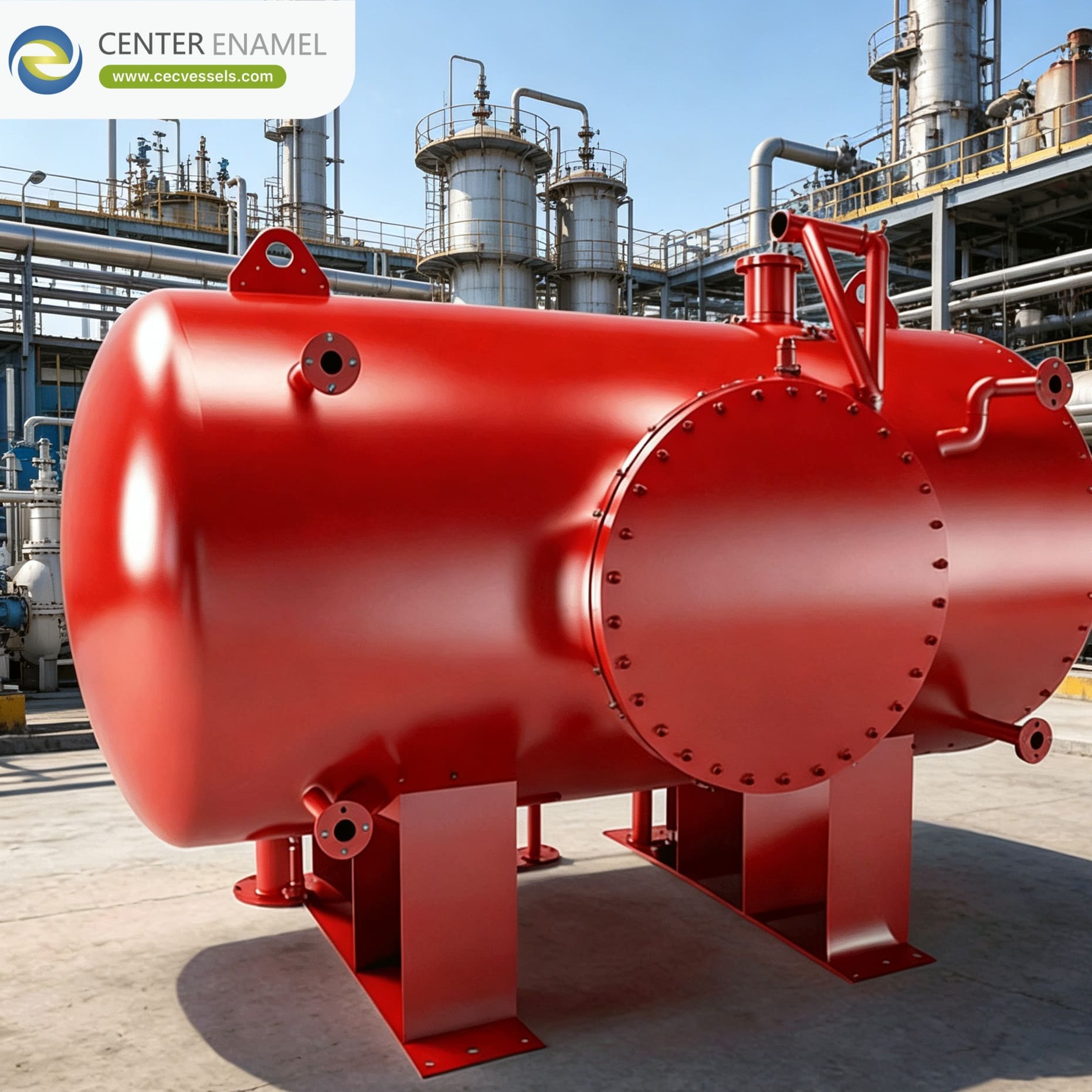
Multi-Effect Evaporator for Large-Volume Industrial Liquid Concentration
A Multi-Effect Evaporatoris an industrial evaporation system designed to concentrate liquid solutions by removing part of their solvent, usually water, through controlled heating and vaporization. Its defining feature is the use of multiple evaporation stages, known as effects, in which vapor generated in one stage provides thermal energy for the next stage. This arrangement improves heat utilization compared with a conventional single-effect evaporation process. Instead of relying entirely on fresh steam for each stage, the system reuses secondary vapor to support additional evaporation. As a result, multi-effect evaporation is suitable for industrial facilities that process large volumes of liquid and require consistent concentration performance. A typical system consists of multiple evaporators, heat-transfer sections, vapor-liquid separators, circulation pumps, condensers, feed and discharge pipelines, and a control system. Depending on the application, the equipment can also include preheaters, condensate recovery units, and additional process monitoring instruments. The number of effects is selected according to the required evaporation capacity, feed characteristics, final concentration, available utilities, and production objectives. Double-effect, triple-effect, and quadruple-effect configurations are commonly considered for different industrial requirements. Center Enamel provides industrial equipment solutions for customers evaluating liquid processing systems. A suitable multi-effect evaporator configuration begins with understanding the material to be concentrated, the required water removal rate, and the desired integration with the existing production process. How Does a Multi-Effect Evaporator Work?The operating principle of a Multi-Effect Evaporatoris based on sequential evaporation and the reuse of thermal energy. Each effect contributes to the overall concentration process while making use of vapor generated in the preceding stage. 1. Feed Preparation and PreheatingThe process begins when the feed liquid enters the system. Depending on its temperature and composition, the liquid may pass through a preheater before entering the first effect. Preheating raises the feed temperature and can utilize recovered heat from condensate or other suitable process streams. This helps reduce the external energy required to bring the liquid to evaporation conditions. Feed preparation requirements depend on the material being processed. Factors such as initial concentration, viscosity, suspended solids, and temperature influence the appropriate equipment arrangement. 2. Evaporation in the First EffectThe first effect receives fresh steam or another suitable heating medium. Heat passes through the heat-transfer surface and causes part of the solvent in the feed to evaporate. As water or another volatile component changes into vapor, the remaining liquid becomes more concentrated. The generated secondary vapor retains useful thermal energy that can be reused in subsequent effects. The first effect therefore serves as the initial stage of both liquid concentration and heat recovery. 3. Vapor Reuse in Subsequent EffectsThe vapor produced in the first effect is directed to the heating section of the second effect. The second effect operates at a lower boiling temperature, allowing the incoming vapor to provide the heat required for further evaporation. The process continues through the remaining effects. In a triple-effect system, vapor from the second effect heats the third effect. In a quadruple-effect system, the same principle extends across four stages. This cascading heat-recovery arrangement allows the system to evaporate additional liquid using thermal energy already introduced into the process. 4. Concentrated Product CollectionAs the liquid passes through the evaporation stages, its concentration increases. The final product is discharged according to the required concentration specification and can be directed to storage, crystallization, drying, or another downstream process. The liquid flow arrangement depends on the system design. Feed may move through the effects in the same direction as the vapor energy cascade, in the opposite direction, or through a customized arrangement. 5. Final Vapor Condensation and Heat RecoveryVapor leaving the final effect is commonly directed to a condenser, where it is converted into liquid. The resulting condensate may be collected for reuse or transferred to another treatment stage, depending on its quality and the facility's requirements. Additional heat recovery can be incorporated into feed preheating or other suitable plant processes to improve overall thermal utilization. Main Components of a Multi-Effect Evaporator SystemA complete Multi-Effect Evaporatorintegrates several components to provide controlled heating, vapor separation, liquid transfer, and product concentration. Evaporation EffectsEach effect contains a heat-transfer section where the liquid receives thermal energy and undergoes evaporation. The number of effects determines how many stages participate in the vapor-reuse process. The configuration should reflect the required evaporation capacity, feed properties, available temperature difference, and desired steam economy. Heat-Transfer EquipmentHeat exchangers or integrated heating surfaces transfer thermal energy from steam or secondary vapor to the process liquid. Their design depends on the liquid's viscosity, flow rate, temperature, solids content, and concentration range. Appropriate heat-transfer area helps support the required evaporation duty. Vapor-Liquid SeparatorsVapor-liquid separators separate generated vapor from the concentrated liquid before the vapor enters the next effect or condenser. Suitable separation arrangements help limit liquid droplet carryover and support stable operation throughout the evaporation train. Circulation Pumps and PipingPumps and pipelines transport the feed, circulating liquid, concentrate, and condensate between process sections. The circulation arrangement depends on the evaporator type and the physical properties of the liquid. Pump capacity and pipeline dimensions should be selected according to the required flow rate and system configuration. Condenser and Condensate Recovery SystemThe condenser converts the final vapor into liquid. Condensate collection equipment can then direct the resulting stream toward reuse or another designated process. Where appropriate, recovered condensate heat may also contribute to feed preheating. Control and Monitoring SystemThe control system coordinates feed flow, liquid levels, temperature, circulation, and product discharge. Additional instruments may monitor concentration, condensate flow, and other process variables. Automated monitoring supports repeatable operation and helps maintain the required production conditions. Types of Multi-Effect EvaporatorsDifferent effect configurations provide different balances between energy utilization, equipment arrangement, and processing capacity. Double-Effect EvaporatorA double-effect evaporator contains two connected evaporation stages. Vapor generated in the first effect provides heat for the second effect. This arrangement can be suitable for industrial applications requiring improved steam utilization without extending the process across a larger number of effects. Triple-Effect EvaporatorA triple-effect evaporator uses three sequential evaporation stages. Vapor from the first effect heats the second, while vapor from the second heats the third. This configuration is widely considered for continuous liquid concentration in chemical manufacturing, food processing, and industrial water treatment. Quadruple-Effect EvaporatorA quadruple-effect evaporator extends the heat-reuse sequence across four stages. By reusing vapor through additional effects, the system can improve steam economy under suitable operating conditions. It may be appropriate for large-volume applications where reducing fresh steam consumption is an important design objective. The best configuration is not determined by the number of effects alone. Feed properties, temperature requirements, equipment investment, utility costs, and maintenance planning should all be considered when selecting the system. Falling-Film and Forced-Circulation EvaporationA Multi-Effect Evaporatorcan incorporate different evaporation technologies according to the material characteristics and required processing performance. Falling-Film EvaporatorIn a falling-film evaporator, the feed liquid is distributed across the upper section of heat-transfer tubes and flows downward as a thin film. Heat passes through the tube walls, causing part of the liquid to evaporate. This arrangement provides a large heat-transfer area and can be suitable for liquids that benefit from relatively short residence times. It is commonly considered for food ingredients, chemical solutions, and other compatible liquid streams. Forced-Circulation EvaporatorA forced-circulation evaporator uses pumps to move the liquid through the heat-transfer section. This controlled circulation can be suitable for concentrated liquids or applications where continuous movement through the heating system is required. The appropriate configuration depends on viscosity, solids content, concentration range, and the characteristics of the feed. Combining suitable evaporation technologies across multiple effects allows the system to be configured around the behavior of the liquid throughout the concentration process. Advantages of Multi-Effect Evaporation for Large-Volume ProcessingA Multi-Effect Evaporatoroffers several practical benefits for industrial facilities that need to remove substantial quantities of water or other volatile components. Improved Steam EconomyThe primary advantage is the reuse of secondary vapor as a heating medium. This reduces the amount of fresh steam required compared with a single-effect system handling a comparable evaporation duty under suitable conditions. Actual steam economy depends on the number of effects, temperature differences, feed properties, heat losses, and overall system performance. Continuous Liquid ConcentrationMultiple effects can operate as an integrated process train, supporting continuous feed processing and concentrated product discharge. This arrangement is suitable for production facilities where evaporation is a regular part of manufacturing rather than an occasional batch operation. Efficient Thermal Energy UtilizationBy transferring vapor heat from one effect to another, the system makes more effective use of the initial heat input. Additional heat recovery through condensate collection and feed preheating may further improve energy utilization. Flexible System ConfigurationThe number of effects, circulation method, heat-transfer arrangement, and feed flow direction can be selected according to the application. This flexibility allows the equipment to serve different production capacities and liquid characteristics. Integration with Existing Process EquipmentA multi-effect evaporator can be connected to upstream filtration, downstream crystallization, storage tanks, condensate recovery, and other process units. Careful integration helps coordinate the evaporation system with the overall production line. Industrial Applications of Multi-Effect EvaporatorsMulti-effect evaporation is used across industries that require liquid concentration, water recovery, or separation of volatile and non-volatile components. Chemical ProcessingChemical manufacturers use evaporators to concentrate process solutions, adjust product composition, and prepare materials for subsequent operations. Equipment materials, heat-transfer surfaces, and operating conditions should be selected according to the chemical composition and required final concentration. Food and Beverage ManufacturingEvaporation can concentrate syrups, extracts, and other liquid ingredients. Falling-film configurations may be considered when efficient heat transfer and controlled residence time are important. The system design should reflect product quality requirements, cleaning procedures, and appropriate construction materials. Pharmaceutical ProductionPharmaceutical processes may require the concentration of selected liquid formulations or intermediate products. A suitable evaporation system can be specified according to process cleanliness, material compatibility, temperature requirements, and the concentration target. Industrial Wastewater TreatmentIndustrial wastewater may contain large quantities of water alongside dissolved substances. Evaporation can reduce liquid volume and produce a concentrated stream for further treatment or recovery. A multi-effect arrangement can improve steam utilization when the wastewater characteristics and process conditions are suitable for this technology. Salt and Mineral ProcessingSalt and mineral processing operations often use evaporation to increase solution concentration before crystallization or solid-liquid separation. The system should be designed according to the solution composition, concentration range, and intended downstream process. Pulp and Paper ProductionThe pulp and paper industry uses evaporation in selected process-liquor concentration and chemical recovery applications. A multi-effect system can be configured according to the liquor characteristics, required concentration, plant utilities, and integration requirements. How to Select the Right Multi-Effect EvaporatorSelecting a suitable Multi-Effect Evaporatorrequires a detailed review of the process conditions and production objectives. Evaluate Feed CharacteristicsImportant parameters include initial concentration, viscosity, solids content, boiling-point elevation, and chemical composition. These properties influence the heat-transfer arrangement, circulation requirements, and appropriate number of effects. Determine Evaporation CapacityThe required capacity is generally expressed as the quantity of solvent removed per unit of time. Feed volume, initial concentration, target concentration, and operating hours should be defined before equipment sizing. Accurate process data helps establish the required heat-transfer area and supporting equipment capacity. Define the Final ConcentrationThe target concentration determines the quantity of solvent that must be removed. Depending on the application, the specification may be expressed as total solids content, dissolved solids concentration, or another measurable parameter. Clear product specifications help align the evaporation system with the intended production result. Review Energy and Utility RequirementsAvailable steam, electricity, cooling water, and condensate recovery arrangements influence the overall design. A complete evaluation should compare expected steam consumption, operating costs, equipment investment, and the intended production schedule. Consider Installation and MaintenanceAvailable floor space, equipment access, pipeline routing, cleaning requirements, and connections to existing process units should be reviewed during system planning. A well-defined equipment specification supports smoother installation and long-term operation. Why Choose Center Enamel as Your Multi-Effect Evaporator Manufacturer?Choosing a suitable Multi-Effect Evaporator Manufacturerinvolves evaluating equipment configuration, engineering communication, material selection, and integration with the intended production process. For companies comparing a China Multi-Effect Evaporator Manufacturer, it is important to provide clear information about feed composition, evaporation capacity, target concentration, available utilities, and installation conditions. Center Enamel provides industrial equipment solutions and can be considered when evaluating equipment requirements for large-volume liquid concentration. A project-specific technical discussion can help establish the design basis for the evaporation effects, heat-transfer sections, vapor-liquid separators, circulation equipment, condensers, and control system. The final configuration should reflect the behavior of the feed throughout the evaporation process, not simply its initial properties. For example, changes in viscosity or solids concentration may influence the choice between falling-film and forced-circulation arrangements. By reviewing the process requirements and utility conditions together, customers can identify a suitable equipment configuration for their production objectives. This approach also provides a foundation for discussing equipment scope, system integration, and project-specific specifications with Center Enamel. Improving Industrial Liquid Concentration with Multi-Effect EvaporationA Multi-Effect Evaporatoris an effective option for large-volume industrial liquid concentration because it reuses vapor heat across multiple evaporation stages. This arrangement can improve steam economy, support continuous production, and make better use of available thermal energy. The best results depend on selecting an appropriate number of effects, matching the heat-transfer technology to the feed characteristics, and defining clear capacity and concentration requirements. For companies seeking a Multi-Effect Evaporator Manufactureror a China Multi-Effect Evaporator Manufacturer, Center Enamel offers a starting point for discussing industrial equipment requirements and suitable system configurations. With a well-defined process specification and application-oriented design, multi-effect evaporation can support consistent production and efficient resource utilization across a wide range of industrial liquid processing applications.
|