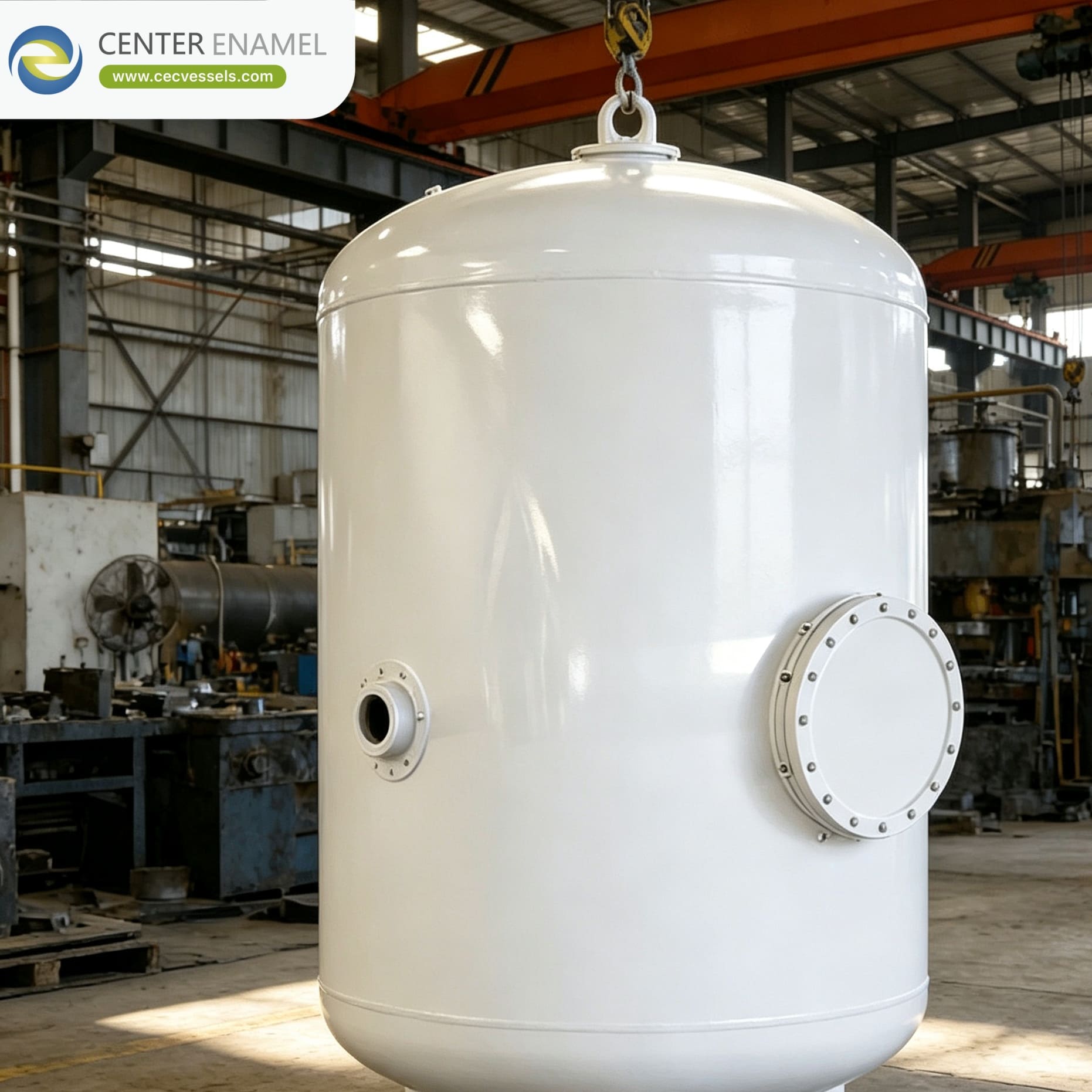
3 Phase Separators for Oil, Gas & Water
3 phase separatorsare industrial vessels designed to separate produced fluids into three distinct phases: gas, oil, and water. They are widely used in oil and gas production to prepare each stream for further processing, storage, transportation, or treatment. Unlike two-phase equipment, which separates gas from a combined liquid stream, a three-phase separatorperforms gas-liquid and oil-water separation within one vessel. Its operation relies primarily on differences in density, gravity, and fluid behavior. Depending on production requirements, these vessels can be designed in horizontal or vertical configurations, with internal components selected to match the composition and flow characteristics of the incoming fluids. How Do Three-Phase Separators Work?The working principle of three-phase separatorsinvolves several stages that allow gas, oil, and water to separate inside the vessel. 1. Inlet DistributionThe incoming wellstream enters the vessel through an inlet nozzle. An inlet diverter changes the direction and velocity of the incoming mixture, helping release free gas and separate larger liquid droplets. This initial stage distributes the fluid and establishes suitable conditions for the subsequent separation process. 2. Gas-Liquid SeparationAfter entering the vessel, the mixture moves into a separation zone where gas rises toward the upper section and liquid collects below. The reduction in flow velocity gives gas bubbles time to disengage from the liquid. The vessel dimensions and internal arrangement are designed to provide adequate separation space for the expected flow rate. 3. Oil-Water SeparationThe remaining liquid enters the liquid collection section, where oil and water separate according to their density differences. Water generally settles toward the bottom, while oil forms a layer above the water. The separation time depends on the fluid properties, droplet size, temperature, and vessel configuration. When stable emulsions are present, additional treatment may be needed to achieve the required oil and water quality. 4. Gas Mist RemovalBefore leaving the vessel, the separated gas passes through a mist extractor that captures many of the fine liquid droplets remaining in the gas stream. Collected droplets combine and return to the liquid section. The gas then exits through its designated outlet and can be directed to downstream treatment or processing equipment. 5. Separate Liquid DischargeOil and water leave through separate outlets controlled by level instruments and valves. The control system maintains the appropriate liquid levels and oil-water interface. This coordinated operation helps maintain consistent separation and provides more stable feed conditions for downstream equipment. What Are the Main Components of a 3 Phase Separator?The performance of 3 phase separatorsdepends on the correct design and arrangement of their internal components.
lInlet diverter:Changes the incoming flow direction and promotes initial gas-liquid separation. lGravity separation section:Provides space for gas to disengage and oil and water to form separate layers. lBaffles:Guide fluid movement and help establish suitable separation zones. lMist extractor:Removes entrained liquid droplets from the gas outlet stream. lOil-water interface control:Monitors the boundary between the oil and water layers. lLevel control valves:Regulate the discharge of separated liquids. lInstrumentation:Monitors operating conditions and supports stable process control. lVessel outlets:Direct gas, oil, and water to their respective downstream systems.
The specific arrangement varies with the separator design, production capacity, and required outlet specifications. Horizontal vs. Vertical Three-Phase SeparatorsBoth horizontal and vertical three-phase separatorsare widely used in oilfield production. The best configuration depends on gas flow, liquid volume, available installation space, and separation requirements. Horizontal Three-Phase SeparatorsHorizontal separators provide an extended liquid separation path and a relatively large interface area between oil and water. Key characteristics include:
lSuitable for applications requiring substantial liquid handling capacity. lProvide a long settling path for oil-water separation. lAllow internal components to be arranged along the vessel length. lMay require more ground space than vertical configurations.
Horizontal designs are frequently selected when liquid residence time and oil-water separation are important considerations. Vertical Three-Phase SeparatorsVertical separators arrange the gas separation zone above the liquid collection section. Their main characteristics include:
lA relatively small ground footprint. lA vertical arrangement that supports gas disengagement above the liquid section. lSuitability for selected production streams with relatively high gas content. lA configuration that can simplify certain installation layouts.
The final selection should be based on process calculations rather than vessel orientation alone. What Is the Difference Between a Three-Phase Separator and a Free Water Knockout?A free water knockout (FWKO)is equipment primarily intended to remove free water from produced fluids. It can also separate gas from the liquid stream, depending on its configuration. A conventional three-phase separatoris designed to produce separate gas, oil, and water streams. In practice, the terms can overlap because some free water knockouts are configured to handle all three phases. The distinction depends on the equipment design and the primary separation objective. When selecting equipment, engineers should confirm whether the process requires complete three-phase separation or mainly the removal of bulk free water. Key Applications of 3 Phase Separators3 phase separatorsare used in different stages of oil and gas production and processing.
lWellhead production:Separates gas, oil, and water near the production source. lWell testing:Helps determine the proportions of gas, oil, and water produced by an individual well. lOilfield processing facilities:Prepares produced fluids for additional treatment. lOffshore production platforms:Supports phase separation within integrated production systems. lGas gathering facilities:Removes liquids from gas streams before further treatment. lProduced water management:Separates water from hydrocarbons before water treatment or other approved handling processes.
By dividing the incoming mixture into individual streams, a separator helps downstream equipment operate with more consistent feed conditions. How to Select the Right Three-Phase SeparatorChoosing the appropriate phase separatorrequires a clear understanding of the process conditions and intended results. Feed Composition and Flow RateDetermine the expected gas flow, oil production rate, water content, and presence of suspended solids. These factors influence vessel sizing, liquid capacity, and internal component selection. Required Separation QualityDefine the acceptable liquid carryover in the gas stream and the required water content in the separated oil. These specifications help establish the necessary residence time and mist removal performance. Vessel ConfigurationCompare horizontal and vertical designs according to the gas-to-liquid ratio, liquid handling requirements, available space, and maintenance access. Material SelectionChoose materials based on fluid composition, operating temperature, corrosion characteristics, and applicable design standards. Material compatibility should be confirmed during the engineering stage. Instrumentation and IntegrationEvaluate liquid level controls, interface monitoring, outlet valves, and connections to downstream equipment. Coordinated design supports stable operation across the complete production system. Fabrication and Quality InspectionConfirm the applicable fabrication standards, welding procedures, inspection requirements, and documentation. These factors help ensure that the finished equipment matches the approved engineering specifications. Frequently Asked Questions About 3 Phase SeparatorsWhat Are the Three Phases in a Three-Phase Separator?The three phases are gas, oil, and water. Gas generally occupies the upper section, oil forms the middle liquid layer, and water settles toward the bottom. How Does a Three-Phase Separator Separate Oil and Water?It uses the density difference between oil and water. With sufficient settling time, water droplets move downward and oil droplets rise, allowing the liquids to form separate layers. Can One Separator Handle Different Production Flow Rates?A separator can accommodate a defined operating range when properly designed. Engineers should evaluate normal flow rates, expected variations, fluid properties, and required outlet quality before determining its capacity. Does a Three-Phase Separator Remove Water Vapor from Gas?A conventional three-phase separator removes free liquids and entrained droplets, but it does not normally remove water vapor to the level required for pipeline specifications. Additional dehydration equipment, such as glycol systems or molecular sieve units, may be needed. Can Three-Phase Separators Be Customized?Yes. Three-phase separatorscan be customized by capacity, vessel orientation, materials, internal components, instrumentation, and connection arrangement to meet specific production requirements. Improving Oil, Gas, and Water SeparationProperly designed 3 phase separatorsprovide an effective way to divide produced fluids into gas, oil, and water streams. Their performance depends on suitable vessel sizing, efficient internal components, accurate liquid level control, and integration with downstream treatment equipment. By evaluating feed composition, production capacity, outlet specifications, and installation requirements, operators can select a three-phase separatorthat supports consistent separation and reliable oilfield processing.
|