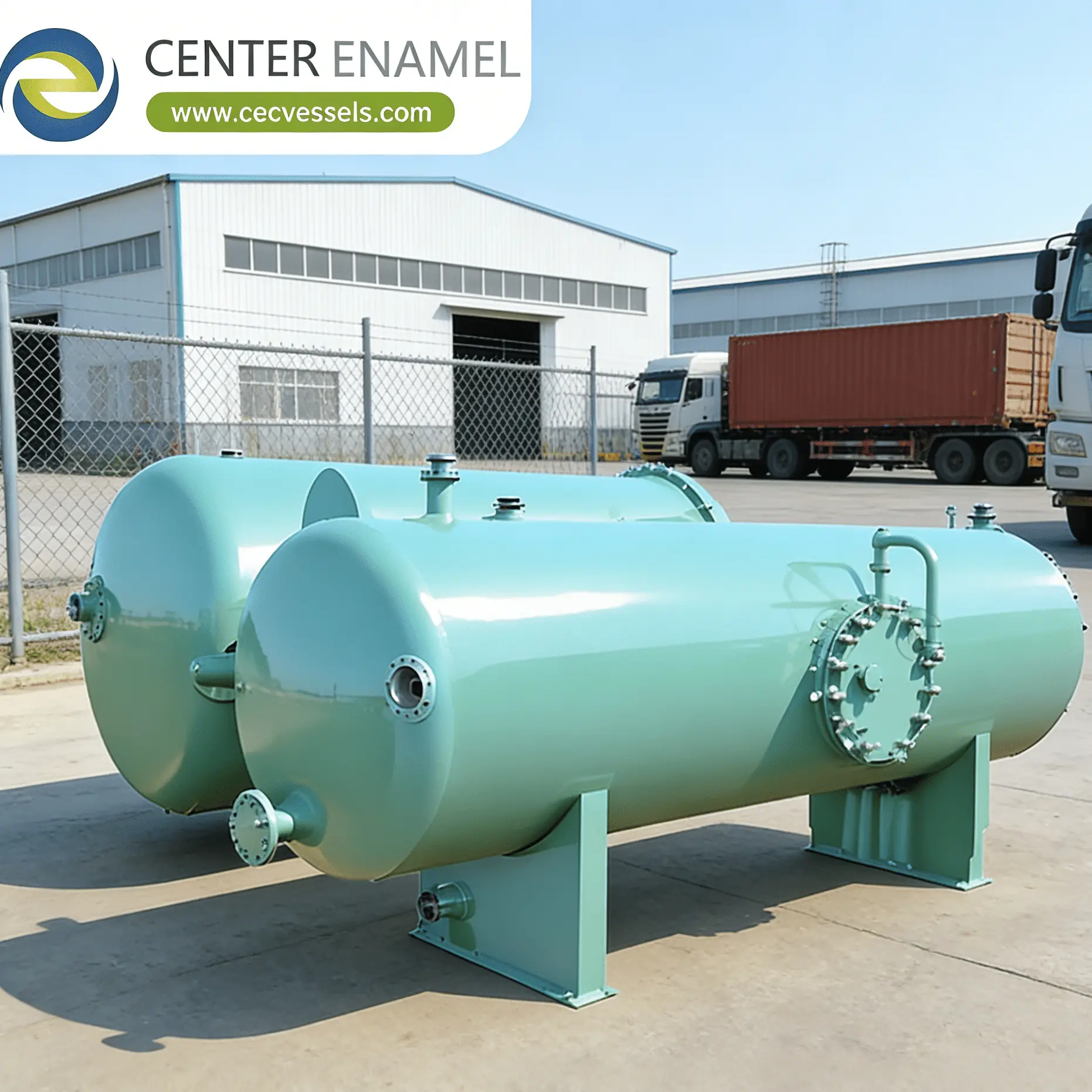
What Is a Stainless Steel Reactor? A Guide to Material Selection and Process Control
A stainless steel reactor is a specialized process vessel used to carry out chemical reactions, mixing, heating, cooling, dissolution, and other controlled processing operations. Stainless steel reactors are widely used because they combine durable construction, corrosion resistance, cleanability, and flexible equipment design. A stainless steel chemical reactor can be configured according to the properties of the materials being processed and the requirements of the production process. Its design may include an agitator, heating or cooling system, internal components, instruments, feed connections, discharge outlets, and automated controls. Unlike a simple storage vessel, a stainless steel reactor is designed to support active processing. The materials inside the vessel may be mixed, heated, cooled, or reacted for a defined period while important process conditions are monitored and controlled. Why Is Stainless Steel Used for Reactor Vessels? Stainless steel is one of the most commonly used materials for reactor construction because it offers a useful combination of corrosion resistance, mechanical strength, fabrication flexibility, and surface quality. Many industrial processes involve liquids, solvents, chemicals, or ingredients that require equipment with good resistance to corrosion. Stainless steel can provide reliable performance in a wide range of applications, while different stainless steel grades allow the material to be selected according to the characteristics of the process medium. The smooth surface of stainless steel is also useful for processes where cleaning is important. This is one reason stainless steel reactor vessels are widely used in pharmaceutical, food, biotechnology, cosmetic, and specialty chemical applications. Stainless steel can also be fabricated into different vessel sizes and configurations. This allows manufacturers to produce standard or customized reactors according to production capacity, installation space, and process requirements. How Does a Stainless Steel Reactor Work? The operating principle of a stainless steel reactor depends on the process being performed. In many applications, raw materials are introduced into the vessel through one or more feed connections. An agitator may then mix the materials to create a more uniform composition. If the process requires temperature control, a jacket, internal coil, or external circulation system can provide heating or cooling. During processing, instruments can monitor important parameters such as temperature, liquid level, flow, and other process conditions. Depending on the application, samples may also be collected through a dedicated sampling connection. After the required processing time, the finished material can be discharged through the outlet and transferred to downstream equipment for further processing, separation, packaging, or storage. The reactor can operate as a batch vessel, where a defined quantity of material is processed at one time, or as part of a continuous production system. How Is the Right Stainless Steel Material Selected? Material selection is an important stage in the design of a stainless steel reactor. The selected stainless steel grade should be compatible with the process medium and the intended operating conditions. Stainless steel 304 is commonly used for general industrial applications. It offers good corrosion resistance and is widely available for equipment fabrication. Stainless steel 316 is often selected for applications requiring enhanced corrosion resistance. The choice between different grades depends on the composition of the process materials, temperature requirements, cleaning procedures, and other operating factors. The reactor material selection should consider more than the main vessel shell. Components such as agitator shafts, impellers, internal coils, valves, fittings, and process connections should also be evaluated for compatibility with the application. Surface treatment can be another important consideration. Different applications may require different internal surface finishes, particularly where product cleanliness and efficient cleaning are priorities. What Are the Main Components of a Stainless Steel Reactor? A stainless steel reactor can include several components that work together to support the production process. The vessel body forms the main processing chamber. Its size and geometry are selected according to the required working volume and process characteristics. The agitator system provides mixing. It normally includes a motor, drive system, shaft, and one or more impellers. The agitator design can be customized according to liquid viscosity, material density, mixing requirements, and the presence of solids or gases. A heating or cooling system provides temperature management. Depending on the application, this may include an external jacket, internal coil, half-pipe arrangement, or external heat exchange system. Additional components may include feed nozzles, discharge outlets, manways, sight glasses, sampling ports, spray devices, baffles, sensors, and control instruments. Each component can be selected and positioned according to the overall process design. How Does Material Selection Affect Reactor Performance? The material of construction has an important influence on the long-term suitability of a reactor. The selected stainless steel should match the chemical and physical properties of the materials processed inside the vessel. A suitable material can help maintain the surface condition of the equipment and support consistent operation over time. Material selection should therefore begin with a detailed understanding of the process medium. Factors that may be considered include chemical composition, concentration, temperature, viscosity, solids content, and cleaning agents. When a process involves several materials, compatibility should be evaluated for the complete production cycle rather than only one ingredient. For specialized applications, manufacturers may also consider surface roughness, weld treatment, and polishing requirements. These details can influence cleanability and the suitability of the reactor for particular products. What Types of Stainless Steel Reactors Are Available? Stainless steel reactors can be produced in different configurations to support different processing methods. A batch reactor processes a defined quantity of material during each production cycle. This configuration is widely used for specialty chemicals, pharmaceuticals, food ingredients, cosmetics, and other products that require flexible production. A continuously operated reactor is designed to receive and discharge materials as part of an ongoing production process. Continuous configurations can be integrated with pumps, feed systems, heat exchangers, separators, and automated controls. Agitated reactors use mechanical mixing to blend materials and improve circulation inside the vessel. The agitator can be configured for low-viscosity liquids, viscous materials, emulsions, suspensions, or other process conditions. Jacketed reactors include an outer space around the vessel wall for the circulation of a heating or cooling medium. This design provides a practical method for managing process temperature. Customized stainless steel reactor vessels can combine several of these features within one equipment system. How Does Mixing Influence Process Control? Mixing is one of the most important functions of many stainless steel reactors. Effective mixing can help distribute reactants, maintain uniform material composition, and improve contact between different components. The appropriate mixing system depends on the material properties and process objectives. Low-viscosity liquids may require a different impeller design from thick or highly viscous materials. For processes containing solids, the agitator may be designed to maintain particle suspension and reduce settling during operation. In gas-liquid applications, mixing can support gas dispersion throughout the liquid. The location, size, and number of impellers can also influence the flow pattern inside the vessel. Baffles may be added to guide liquid movement and improve overall circulation. For this reason, the agitator should be selected as part of the complete reactor design rather than as an isolated component. How Is Temperature Controlled in a Stainless Steel Reactor? Temperature management is essential for many chemical and industrial processes. A reaction or mixing operation may require heating during one stage and cooling during another. A reactor jacket is a common solution for temperature control. A heating or cooling medium circulates through the jacket and transfers energy through the vessel wall. Internal coils can provide additional heat transfer area. They may be selected when the process requires a different heat transfer arrangement or when additional temperature control capacity is beneficial. An external circulation system can also be used. Process material may circulate through an external heat exchanger before returning to the reactor. Temperature sensors can continuously monitor the process. These instruments can be connected to automated controls that adjust the heating or cooling system according to the selected operating conditions. How Can a Stainless Steel Chemical Reactor Be Customized? Customization allows the reactor to match a specific production process. The first step is usually to define the required capacity and working volume. The vessel dimensions can then be designed according to the available installation space and the required processing capacity. The height-to-diameter relationship can be adjusted according to mixing, heat transfer, and layout requirements. The agitator can be customized according to viscosity, density, solids content, and mixing objectives. Different impeller configurations can provide different flow patterns within the reactor. The heating or cooling system can also be selected according to the process. A jacket, coil, or external heat exchange arrangement may be incorporated into the final design. Nozzle locations can be customized to simplify connections with feed tanks, pumps, pipelines, sensors, and downstream equipment. The control system can also be configured according to the desired level of automation. Customization makes it possible to develop stainless steel reactors for pilot-scale production, laboratory applications, specialty manufacturing, and larger industrial processes. What Process Control Systems Can Be Used? Modern stainless steel reactor systems can include a range of instruments and controls to support consistent operation. Temperature monitoring is one of the most common control functions. Sensors provide real-time information that can be used to regulate heating and cooling systems. Agitator speed can also be controlled to match different stages of the production process. Variable-speed systems allow mixing intensity to be adjusted according to material characteristics. Level instruments can monitor the quantity of material inside the vessel. Flow measurement may be used when the reactor is connected to continuous feed or circulation systems. Automated control platforms can combine information from multiple instruments. Operators can monitor the process from a centralized interface and adjust operating parameters according to production requirements. Sampling systems can also support process monitoring by allowing material to be collected at selected stages. How Are Stainless Steel Reactors Used in Chemical Processing? Stainless steel reactors are used for many chemical operations, including synthesis, blending, dissolution, neutralization, crystallization, and catalytic processing. In specialty chemical production, a reactor may be designed to process specific formulations or reaction sequences. Multiple feed points can allow ingredients to be introduced at different stages. The combination of mixing and temperature control allows the same vessel to support several process functions. This can simplify the equipment layout and improve integration with the overall production line. A stainless steel chemical reactor can also be connected to downstream separation equipment, filtration systems, evaporators, condensers, dryers, or storage vessels. The exact configuration depends on the process flow and the characteristics of the final product. How Are Stainless Steel Reactors Used in Pharmaceutical and Food Processing? Pharmaceutical and food-related processes often require equipment with good cleanability and carefully controlled processing conditions. Stainless steel is widely used because it can provide a smooth and durable processing surface. Reactor systems for these industries may include sanitary connections, specialized surface finishes, cleaning systems, and instrumentation designed for controlled production. In pharmaceutical applications, stainless steel reactor vessels can be used for synthesis, intermediate processing, formulation, and other production operations. In food processing, reactors may support mixing, heating, cooling, ingredient preparation, fermentation, or other controlled processes. The final equipment design should match the product characteristics and the applicable production requirements. What Should Be Considered When Selecting a Stainless Steel Reactor? Selecting a stainless steel reactor begins with understanding the production process. The process medium, batch size, production capacity, and desired operating method all influence the equipment design. The required working volume should be determined together with the total vessel capacity. Adequate space may be needed for mixing and process expansion. Material compatibility should be evaluated for the complete range of substances that contact the reactor, including raw materials and cleaning media. Mixing requirements should be clearly defined. Information about viscosity, solids content, density, and desired circulation can help determine the most suitable agitator configuration. Temperature requirements should also be considered. The heating or cooling method should provide suitable heat transfer for the intended process. Finally, the reactor should be evaluated as part of the complete production system. Connections with pumps, storage tanks, piping, controls, and downstream equipment can influence nozzle positions and the overall layout. Why Are Stainless Steel Reactor Vessels Important for Modern Manufacturing? Stainless steel reactor vessels provide a flexible platform for controlled processing across a wide range of industries. Their design can combine material resistance, mechanical mixing, temperature management, instrumentation, and customized process connections. Different stainless steel grades and surface finishes allow the equipment to be adapted to specific process media and production requirements. At the same time, the vessel configuration can be customized according to capacity, mixing performance, heating or cooling needs, and installation conditions. For chemical manufacturers, pharmaceutical producers, food processors, biotechnology companies, and other industrial operations, the right stainless steel reactor can become an important part of an integrated production system. By carefully considering material selection, vessel configuration, mixing design, temperature management, and process control, manufacturers can develop a stainless steel reactor system that supports consistent and efficient processing.
|