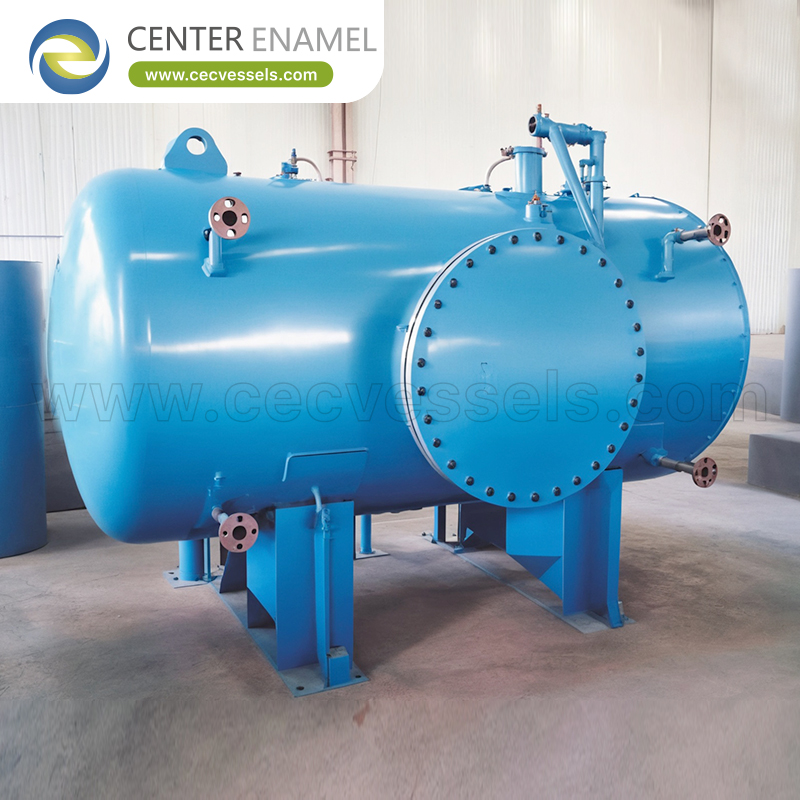
Highly Efficient Adsorption Filters for Precise Wastewater Organic Matter Removal
Highly Efficient Adsorption Filters for Precise Wastewater Organic Matter Removal Wastewater treatment facilities, whether municipal or industrial, utilize primary and secondary treatment processes to effectively remove bulk solids and readily biodegradable organic matter. In alignment with advancing environmental standards, modern regulations increasingly emphasize the importance of tertiary treatment, which targets the removal of non-biodegradable and trace pollutants that conventional biological methods do not fully address. These persistent contaminants include:
Refractory Organics: These are complex chemical compounds, such as certain industrial byproducts, phenols, and dyes, that contribute to elevated Chemical Oxygen Demand (COD) and Biological Oxygen Demand (BOD) values. Their effective management is essential to meet discharge regulations and maintain environmental quality.
Emerging Contaminants: This category encompasses pharmaceuticals, personal care products, hormones, and pesticides. Even at trace concentrations, these substances are recognized for their potential long-term benefits in supporting ecological balance and public health by being carefully managed.
Color and Odor: Residual dye molecules and sulfur compounds can influence the aesthetic quality of treated water. Their removal is important to meet standards for final discharge and water reuse applications, enhancing the overall quality and acceptability of the treated water.
For the precise and highly efficient removal of these persistent and trace compounds from large volumes of water, Adsorption Filters represent an advanced and often essential technology. These filters serve as a final "polishing" step, effectively reducing residual organic substances, eliminating trace contaminants, and ensuring the treated water achieves the highest standards of quality for safe discharge or reuse.
The Mechanism: Adsorption in the Liquid Phase
Adsorption Filters for Wastewater Organic Matter Removal utilize the principle of adsorption—where molecules are physically attracted to and held on the surface of a solid—applied to the liquid phase.
High-Porous Media: The primary adsorbent is usually granular activated carbon , which is preferred for its massive internal surface area and capacity to bind a wide variety of non-polar organic molecules.
Flow and Contact Time: Pre-treated wastewater is flowed through a deep bed of the media contained within a pressure vessel. The vessel must be precisely sized to ensure adequate Empty Bed Contact Time , which is the duration required for the organic molecules to effectively migrate from the bulk liquid and attach to the carbon surface.
Concentration Gradient and Removal: The process relies on the concentration difference: the high concentration of organic matter in the water drives them to the clean carbon surface where they are adsorbed into the micro-pores. This effectively removes the targeted contaminants.
Exhaustion and Reactivation: Over time, the bed becomes saturated with organic matter. Once breakthrough occurs (i.e., organic levels start to rise in the effluent), the saturated carbon is either replaced with fresh or, for large systems, sent for high-temperature thermal reactivation (regeneration) to burn off the adsorbed organics and restore the carbon's surface area for reuse.
This process provides highly reliable, chemical-free removal of persistent organic pollutants, securing environmental compliance and enabling water reuse schemes.
Shijiazhuang Zhengzhong Technology Co.,Ltd (Center Enamel), as a specialist Adsorption Filters Manufacturer, designs and fabricates the high-integrity pressure vessels required for these critical liquid-phase adsorption applications.
Center Enamel's Highly Efficient Adsorption Filter Design
Designing Adsorption Filters for Wastewater Organic Matter Removal demands specialized knowledge of hydraulic flow, pressure vessel integrity for long-term liquid service, and media management. Our solutions are engineered for maximum efficiency and longevity.
1. Optimized Hydraulics for Contact and Efficiency
Efficient removal hinges on uniform flow and maximizing the contact between the water and the adsorbent media.
Precision Flow Distribution: Our pressure vessels incorporate advanced inlet distributors and underdrain systems to ensure the wastewater is dispersed uniformly across the entire cross-section of the media bed. This eliminates channeling, maximizes the use of the costly media, and provides the necessary high contact time for effective adsorption.
Effective Backwash System: Although the primary function is adsorption, the vessels must also be capable of occasional backwashing to remove fine particles and suspended solids that accumulate on top of the media bed. Our backwash systems are designed to gently clean the media, prevent premature fouling, and maintain the integrity of the adsorption bed.
Low Pressure Drop Design: The internal flow paths are engineered to minimize hydraulic head loss, ensuring the overall water treatment process can operate efficiently and minimize the energy consumption of the upstream pumps.
2. Robust and Chemically Resilient Construction
Wastewater environments are often aggressive and require robust, long-life pressure vessels.
Code-Mandated Integrity: Our Adsorption Filters are built to safely contain water and media under high-flow pressure conditions. Adherence to the ASME Boiler & Pressure Vessel Code (BPVC), the European BS EN 13445 standard, and the Chinese national standard GB/T 150.1-150.4-2024 provides our clients with certified assurance of structural stability, reliability, and safety for decades of continuous operation.
Corrosion Protection: Wastewater often contains varying levels and corrosive agents. Our vessels are constructed from appropriate corrosion-resistant materials or coated with specialized internal linings to ensure the vessel integrity is maintained throughout its service life, preventing leaks and costly vessel replacement.
Media Handling Ports: The vessels are designed with large, secure access manways and specialized ports for the efficient loading and hydraulic unloading of the adsorbent media, minimizing media change-out time and labor costs.
3. Integrated Solutions for Continuous Polishing
Most treatment plants require continuous flow and cannot tolerate downtime for media exchange.
Modular Design: We typically design filtration trains using multiple vessels in parallel. This allows for one vessel to be taken offline for media replacement or backwash while the remaining vessels continue to treat the full wastewater flow, ensuring uninterrupted compliance and operation.
Center Enamel: Global Manufacturing Strength and Certified Quality
The capacity of Shijiazhuang Zhengzhong Technology Co.,Ltd (Center Enamel) to deliver custom, high-integrity pressure vessels for specialized liquid treatment is built upon our massive production base and dedicated engineering expertise.
Unmatched Production Scale and R&D Base
Our operational foundation, a vast 150,000㎡ production and R&D base, provides the integrated resources necessary for fabricating the large, robust pressure vessels required for global water and environmental projects.
Integrated Fabrication Control: We manage the entire manufacturing lifecycle, maintaining absolute control over material sourcing, specialized welding and fitting procedures, and application of internal corrosion-resistant linings. This vertical control is essential for guaranteeing the consistent, certified quality of every Adsorption Filter vessel intended for long-term wastewater service.
Capacity for Water Projects: Our large-scale facility is capable of fabricating multiple, high-diameter adsorption vessels simultaneously, meeting the volume and size demands of major municipal and industrial water treatment plant upgrades worldwide.
Technological Leadership: Our R&D team continuously focuses on optimizing the internal hydraulic design and corrosion resilience of our Adsorption Filters, ensuring our systems provide best-in-class performance for Wastewater Organic Matter Removal, confirming our status as a leading China Adsorption Filters Manufacturer.
Adherence to Global Engineering Standards
Our strict compliance with the world’s most recognized engineering standards is the definitive proof of our product safety and long-term reliability.
The ASME Boiler & Pressure Vessel Code (BPVC): Provides the fundamental guarantee of structural integrity and safety for high-volume, pressure-containing equipment in critical utility service.
The European BS EN 13445 standard: Confirms our design and fabrication practices comply with comprehensive European technical specifications.
The Chinese national standard GB/T 150.1-150.4-2024: Affirms a domestic standard of technical excellence that is benchmarked against the highest global criteria for quality and robustness.
This multi-standard certification establishes Shijiazhuang Zhengzhong Technology Co.,Ltd (Center Enamel) as the highly reliable global partner for advanced water treatment solutions. Operational and Economic Benefits
Integrating Center Enamel’s Highly Efficient Adsorption Filters provides wastewater treatment operators with critical advantages in compliance, operational stability, and resource management.
1. Achieving Strict Discharge Compliance
The primary benefit is reliably achieving the tightest possible effluent quality standards.
Organic Pollution Reduction: Adsorption provides a highly effective, robust solution for reducing recalcitrant organic contamination, lowering the Chemical Oxygen Demand and Biological Oxygen Demand to meet tertiary treatment limits.
Removing Emerging Contaminants: It is one of the most effective methods for eliminating trace concentrations of pharmaceuticals, pesticides, and other emerging contaminants—compounds that pose the biggest challenge for future compliance.
Aesthetic Improvement: The removal of residual dyes and odor-causing compounds ensures the discharged or reused water is clear and odorless, addressing aesthetic concerns and facilitating public acceptance.
2. Operational Stability and Cost Efficiency
Reliable Polishing: Adsorption provides a final, robust polishing step that protects the environment and reduces the risk of costly regulatory fines associated with non-compliant discharge.
Maximizing Media Life: Optimal hydraulic design ensures maximum utilization of the adsorbent media, extending its useful life and minimizing the cost and frequency of media replacement or thermal regeneration.
Low Maintenance: The robust, corrosion-resistant, and code-certified vessel design requires minimal maintenance over its long service life, reducing operational expenditure.
3. Enabling Water Reuse
High-Quality Feed: The ultra-clean water produced by the advanced adsorption process meets stringent purity standards, making it highly suitable for a wide range of industrial applications such as water reuse, cooling tower makeup, or even aquifer recharge. By effectively removing contaminants and impurities, this treated water transforms what would otherwise be considered a waste stream into a valuable, sustainable resource that supports environmental conservation and operational efficiency.
The Final Barrier for Water Purity
In the era of stringent environmental mandates, the removal of trace and refractory Organic Matter from wastewater is non-negotiable. Traditional biological and physical processes often fall short, making high-efficiency Adsorption Filters the essential final barrier to environmental compliance and sustainable water stewardship.
Shijiazhuang Zhengzhong Technology Co.,Ltd (Center Enamel) is the definitive expert and certified global partner in providing this advanced technology. As a leading China Adsorption Filters Manufacturer, we deliver Highly Efficient Adsorption Filters for Precise Wastewater Organic Matter Removal that combine optimal hydraulic engineering and material resilience with the structural integrity required for critical utility service. Operating from our vast 150,000㎡ production and R&D base and adhering strictly to standards like the ASME Boiler & Pressure Vessel Code (BPVC), we empower municipal and industrial wastewater facilities worldwide to achieve superior effluent quality, protect water resources, and secure long-term operational sustainability.
|