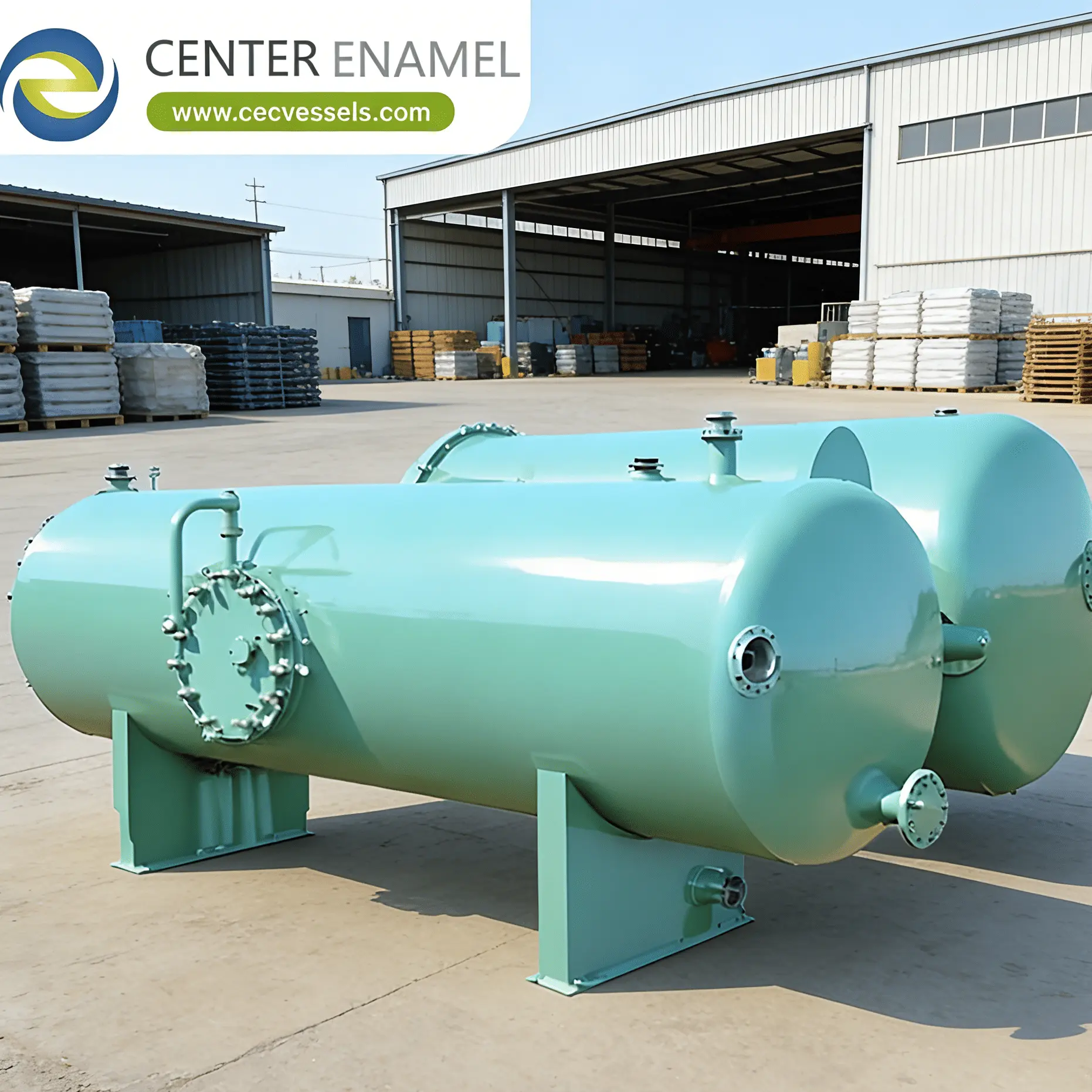
Anaerobic Reactor for Biogas Production and Wastewater Treatment
An Anaerobic Reactoris a biological treatment system that uses microorganisms to break down organic matter in wastewater without oxygen. During this process, organic compounds are converted into simpler substances, including methane-rich biogas, carbon dioxide, and stabilized biomass. Anaerobic reactors are widely used for wastewater treatment and organic waste management because they combine pollutant reduction with renewable energy recovery. Depending on wastewater characteristics, treatment capacity, organic loading, and process requirements, different anaerobic reactor configurations can be selected for municipal wastewater, industrial effluent, agricultural waste, food-processing wastewater, and other organic-rich streams. For biogas production, the reactor provides a controlled environment where anaerobic microorganisms can convert biodegradable organic matter into biogas. The generated biogas can then be collected, purified when required, and used for heating, electricity generation, or other energy applications. Center Enamel provides engineered anaerobic reactor solutions for wastewater treatment and biogas projects, with equipment configurations selected according to project capacity, wastewater characteristics, operating conditions, and site requirements. How Does an Anaerobic Reactor Work?The operation of an anaerobic reactor is based on a series of biological conversion stages. Organic matter in wastewater is gradually transformed through the activity of different groups of microorganisms. The main biological stages include:
lHydrolysis:Complex organic materials such as carbohydrates, proteins, and fats are broken down into simpler soluble compounds. lAcidogenesis:The soluble organic compounds are converted into organic acids, alcohols, hydrogen, and carbon dioxide. lAcetogenesis:Intermediate products are further converted into acetate, hydrogen, and carbon dioxide. lMethanogenesis:Methanogenic microorganisms convert acetate, hydrogen, and carbon dioxide into methane and carbon dioxide, forming the main components of biogas.
The reactor retains and mixes the biological material with wastewater to provide sufficient contact between microorganisms and organic substrates. Depending on the reactor design, hydraulic retention time, sludge retention characteristics, mixing method, and organic loading can be adjusted to achieve the required treatment performance. The resulting biogas is collected from the upper section of the reactor and can be directed to a gas holder, gas treatment system, boiler, combined heat and power unit, or other downstream equipment. Anaerobic Reactor for Biogas ProductionBiogas production is one of the most important applications of anaerobic treatment technology. Organic wastewater and waste streams contain biodegradable compounds that can be converted into useful energy through anaerobic digestion. A typical biogas production system may include:
lFeed collection and pretreatment lAnaerobic reactor lBiogas collection system lGas purification equipment lBiogas storage lDigestate or treated wastewater handling lEnergy utilization equipment
The anaerobic reactor is the central biological unit in this process. Organic material enters the reactor and remains in contact with anaerobic microorganisms for a defined treatment period. As microorganisms digest the organic matter, biogas is produced and collected. The methane content of biogas provides an opportunity for energy recovery. Depending on the project, biogas may be used in boilers, generators, combined heat and power systems, or upgraded for other applications. Anaerobic digestion therefore provides two functions within one treatment process: organic matter removal and renewable energy recovery. Anaerobic Reactor for Wastewater TreatmentAnaerobic treatment is particularly suitable for wastewater containing a relatively high concentration of biodegradable organic matter. Common applications include food and beverage processing, dairy production, breweries, starch processing, sugar production, agricultural processing, pharmaceutical production, and other organic wastewater streams. Compared with conventional aerobic treatment, anaerobic treatment does not require continuous oxygen supply for biological conversion. This makes it possible to integrate anaerobic reactors into treatment systems where energy efficiency and biogas recovery are important considerations. An anaerobic reactor can also be used as a primary biological treatment stage before aerobic polishing or other advanced treatment processes. In such configurations, the anaerobic process reduces a significant portion of biodegradable organic loading, while downstream treatment provides additional purification according to discharge or reuse requirements. The overall process can therefore be designed as a combination of anaerobic digestion, aerobic treatment, clarification, filtration, nutrient removal, and other treatment technologies. Main Types of Anaerobic ReactorsDifferent anaerobic reactor designs are available to accommodate different wastewater characteristics and project capacities. UASB ReactorThe Upflow Anaerobic Sludge Blanket, or UASB reactor, is a widely applied anaerobic treatment technology. Wastewater flows upward through a blanket of anaerobic sludge, allowing microorganisms to contact organic matter efficiently. UASB reactors are commonly used for industrial wastewater and other organic-rich wastewater streams. Their compact process arrangement and biological treatment characteristics make them suitable for projects where effective organic matter conversion and biogas recovery are required. CSTR Anaerobic ReactorA Continuous Stirred Tank Reactor, or CSTR, uses mechanical or hydraulic mixing to maintain relatively uniform conditions throughout the reactor volume. CSTR systems are commonly applied to wastewater and organic materials with higher solids content. Continuous mixing helps maintain contact between microorganisms and organic substrates and supports stable biological digestion. Anaerobic Contact ReactorAn anaerobic contact reactor combines biological treatment with biomass separation and recirculation. After wastewater leaves the reactor, microorganisms can be separated from the treated liquid and returned to the biological process. This arrangement helps maintain an active microbial population within the treatment system and can be adapted to different industrial wastewater applications. IC ReactorAn Internal Circulation, or IC, reactor uses internal liquid and gas circulation to improve contact between wastewater and microorganisms. It is often applied to wastewater with high organic loading and is designed to achieve efficient biological conversion within a relatively compact reactor arrangement. The appropriate reactor type depends on wastewater composition, organic concentration, solids content, required treatment capacity, and project objectives. Materials and Structure of Anaerobic ReactorsMaterial selection is an important part of anaerobic reactor engineering because the tank must provide long-term containment and stable biological operating conditions. Depending on the project, anaerobic reactors can be manufactured using different structural and protective systems. For large-scale wastewater and biogas projects, bolted tank technology can provide a modular approach to fabrication, transportation, and installation. Center Enamel specializes in Glass-Fused-to-Steel and Fusion Bonded Epoxy solutions for large storage and treatment tanks. Glass-Fused-to-Steel technology combines the strength of steel with a protective glass coating, providing a durable surface suitable for wastewater and biogas applications. Fusion Bonded Epoxy tanks use a factory-applied epoxy coating system to provide corrosion protection and a smooth internal surface. Material and coating selection can be adjusted according to wastewater composition, temperature, solids concentration, operating conditions, and project specifications. For anaerobic reactor projects, the tank structure can also be integrated with mixers, inlet and outlet systems, gas collection equipment, inspection openings, access platforms, and other process components. Anaerobic Reactor Design ConsiderationsAnaerobic reactor design should be based on the characteristics of the treatment stream and the required biological process. Important design parameters include:
lWastewater flow rate lChemical oxygen demand (COD) lBiochemical oxygen demand (BOD) lOrganic loading rate lTotal suspended solids lpH and alkalinity lWastewater temperature lHydraulic retention time lSludge characteristics lRequired biogas production lTreated water quality lAvailable installation area
For biogas projects, gas production and collection capacity should also be considered during the overall system design. The reactor can be connected with biogas storage and utilization equipment to form an integrated energy recovery system. A correctly selected reactor configuration allows the biological process, tank structure, gas collection system, and downstream treatment equipment to work together as a complete system. Benefits of Anaerobic Treatment TechnologyAnaerobic treatment provides several important benefits for wastewater and organic waste management. Biogas recovery:Organic matter can be converted into methane-rich biogas, providing a renewable energy source. Reduced organic loading:Anaerobic microorganisms convert biodegradable organic compounds into simpler products, reducing the organic load entering downstream treatment units. Energy-efficient biological treatment:The process does not rely on continuous aeration for biological conversion, which can reduce energy requirements compared with processes that depend heavily on aeration. Resource recovery:Wastewater and organic waste can be treated as resources for recovering energy and stabilized organic material. Flexible integration:Anaerobic reactors can operate as standalone biological treatment units or as part of larger wastewater treatment and biogas systems. Large-scale applicability:Modular tank construction allows reactor capacity to be adapted to different project requirements. Center Enamel Anaerobic Reactor SolutionsCenter Enamel is an experienced manufacturer and engineering company providing tank and reactor solutions for wastewater treatment, biogas production, and environmental projects. Our engineering approach begins with understanding the customer's wastewater characteristics, treatment capacity, process requirements, and site conditions. Based on these parameters, our technical team can recommend a suitable anaerobic reactor configuration and supporting tank system. Center Enamel's manufacturing capabilities include Glass-Fused-to-Steel and Fusion Bonded Epoxy tank technologies. Factory-controlled coating and fabrication processes support consistent product quality, while modular tank construction facilitates transportation and on-site installation. Our anaerobic reactor solutions can be integrated with:
lWastewater pretreatment systems lBiogas collection systems lDouble membrane gas holders lGas purification systems lDigestate treatment systems lAerobic biological treatment lSludge handling systems lBiogas energy recovery equipment
As a China Anaerobic Reactor Manufacturer, Center Enamel serves wastewater treatment and biogas projects in different markets and provides customized engineering support according to project requirements. Project-Based Engineering and ManufacturingEach wastewater and biogas project has different feed characteristics, treatment capacity, site conditions, and process requirements. For this reason, anaerobic reactor engineering should be based on actual project data rather than relying only on standard dimensions. Center Enamel can support customers from preliminary technical communication through reactor configuration, tank manufacturing, quality inspection, delivery, installation guidance, and project support. For large-scale projects, modular tank construction provides flexibility during transportation and assembly. Components can be manufactured in the factory and assembled at the project site according to the approved engineering design. The reactor can also be customized with suitable inlet and outlet arrangements, mixing systems, gas collection components, access structures, platforms, and other accessories required for the treatment process. This project-oriented approach enables the anaerobic reactor to be integrated with the complete wastewater treatment and biogas production system. Quality Standards and ManufacturingQuality control is integrated into the manufacturing process of Center Enamel's tank and reactor products. Material verification, coating inspection, dimensional inspection, assembly checks, and other quality procedures are applied according to the product type and project specifications. For Glass-Fused-to-Steel tanks, steel plates are processed and coated under controlled factory conditions before final assembly. The glass coating is fused to the steel substrate to create a strong and durable protective surface. For Fusion Bonded Epoxy systems, the coating is applied under controlled manufacturing conditions to provide consistent coverage and adhesion. Engineering documentation, manufacturing records, inspection information, and project-specific technical documents can be prepared according to customer and project requirements. Choosing an Anaerobic Reactor ManufacturerSelecting the right Anaerobic Reactor Manufacturerrequires consideration of more than tank capacity. Customers should evaluate the manufacturer's engineering experience, material technology, manufacturing capability, project support, quality management, and ability to provide customized solutions. For wastewater treatment and biogas production, the manufacturer should understand both the tank structure and the biological treatment process. This enables the reactor to be properly integrated with upstream pretreatment, biological treatment, biogas collection, and downstream treatment systems. Center Enamel combines tank manufacturing expertise with environmental engineering experience to provide anaerobic reactor solutions for industrial wastewater, municipal wastewater, agricultural waste, food-processing wastewater, and biogas projects. Start Your Anaerobic Reactor ProjectAn Anaerobic Reactorcan serve as an important biological treatment and renewable energy recovery unit for wastewater and organic waste projects. By converting biodegradable organic matter into biogas while reducing organic pollutants, anaerobic treatment supports both wastewater management and resource recovery. As a China Anaerobic Reactor Manufacturerand Anaerobic Reactor Manufacturer, Center Enamel provides customized tank and reactor solutions based on wastewater characteristics, treatment capacity, process design, and project requirements. Contact Center Enamel to discuss your application and receive a suitable anaerobic reactor solution for your wastewater treatment or biogas production project.
|