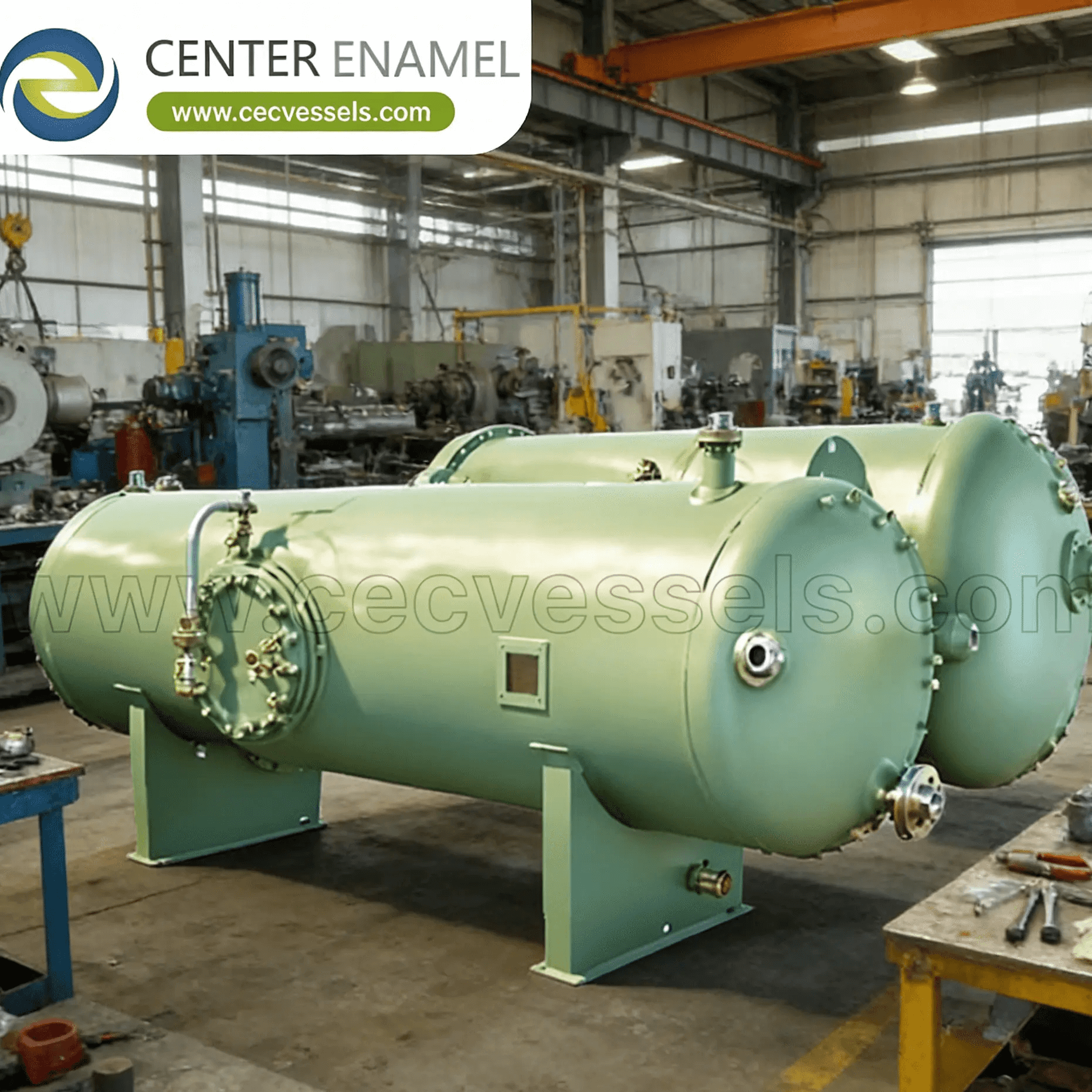
ASME Pressure Vessel Fabricators and Fabrication Services
Industrial manufacturing relies heavily on engineered containment systems that handle specialized process requirements. Quality vessel fabrication requires strict adherence to engineering standards, advanced material science, and meticulous welding techniques. Modern facility operators partner with experienced vessel fabricators to design systems that maintain structural integrity under demanding operating parameters. These manufacturing processes incorporate rigorous quality control protocols, non-destructive examination, and thorough testing to ensure long-term operational reliability across chemical processing, power generation, and energy sectors.
Throughout history, the evolution of heavy manufacturing has driven the need for standardized safety measures. Industrial facilities require robust structural components capable of containing various liquids and gases under specific operational environments. As global industries expanded during the industrial revolutions, the demand for uniform codes became increasingly apparent. Craftspeople and engineers recognized that inconsistent manufacturing methods could lead to catastrophic equipment failures. Consequently, regulatory bodies and professional engineering societies were established to formulate standardized guidelines, establishing a solid foundation for modern heavy industrial manufacturing.
The Importance of ASME Certification in Vessel Fabrication
Adhering to recognized industry standards is paramount when constructing containment infrastructure. An accredited asme pressure vessel fabricator operates under strict boiler and pressure vessel code requirements. This certification guarantees that every phase of production—from raw material verification to final hydrostatic testing—meets rigorous safety benchmarks. Facilities utilizing certified pressure vessel fabrication services benefit from minimized operational risks, regulatory compliance, and seamless integration into complex industrial ecosystems. Certification also provides operators with documented traceability for materials and welding procedures.
The American Society of Mechanical Engineers code represents a globally recognized benchmark for structural and operational excellence. When a manufacturing facility achieves this accreditation, it signals to clients that their internal quality management systems adhere to rigorous third-party audits. Engineers and project managers rely heavily on these certifications to mitigate legal and operational liabilities. Furthermore, international trade often hinges on compliance with these universally accepted codes, making certification an essential asset for any competitive enterprise in the global marketplace.
Core Capabilities of Expert Vessel Fabricators
Professional fabrication workshops are equipped with advanced machinery and specialized tooling designed to manipulate heavy alloys and carbon steels. Expert vessel fabricators utilize automated welding systems, plate rolling equipment, CNC plasma cutting, and precision heat-treating furnaces. Their technical teams consist of certified welders, quality assurance inspectors, and experienced mechanical engineers who collaborate to execute complex geometric designs, including vertical columns, horizontal drums, heat exchangers, and specialized storage tanks.
Key Fabrication Services Offered:
Custom engineering design and mechanical calculations aligned with international codes.
Advanced plate rolling, forming, and automated girth and longitudinal welding.
Comprehensive non-destructive testing including radiography, ultrasonic, and dye penetrant inspection.
Post-weld heat treatment to relieve internal stresses and enhance material ductility.
Surface preparation, abrasive blasting, and application of specialized industrial coatings.
The mechanical prowess required to shape heavy-gauge metal plates demands specialized machinery. Hydraulic presses capable of exerting thousands of tons of force are utilized to bend thick steel sheets into seamless cylindrical shells. Following the forming stage, automated submerged arc welding systems join these sections with deep penetration and minimal defect rates. Each piece of equipment undergoes rigorous calibration to ensure dimensional accuracy within strict millimeter tolerances, reflecting the high standards expected in contemporary heavy industrial workshops.
Customization and Engineering Adaptability
Every industrial plant has unique spatial constraints, process flow requirements, and fluid characteristics. Leading pressure vessel fabricators excel in delivering customized solutions tailored to specific project specifications. Engineers work closely with plant operators to determine optimal wall thicknesses, corrosion allowances, nozzle orientations, and internal baffling configurations. This collaborative approach ensures that the finished equipment integrates smoothly into existing infrastructure while maximizing thermal and mechanical efficiency.
Custom engineering often begins with detailed computer-aided design modeling and finite element analysis. These advanced simulation tools allow designers to evaluate how a structure will react to fluctuating thermal loads, mechanical stresses, and dynamic fluid movements before a single piece of metal is cut. By anticipating potential weak points during the digital prototyping phase, fabricators can optimize the design, ensuring durability and longevity in challenging field environments.
Quality Assurance and Comprehensive Testing Protocols
Ensuring absolute safety requires an uncompromising commitment to quality assurance. Comprehensive pressure vessel fabrication services encompass multi-tier inspection regimens. Quality control inspectors verify material test reports, monitor weld progression in real time, and execute dimensional checks at critical manufacturing milestones. Final hydrostatic or pneumatic pressure tests validate the structural soundness of the vessel before dispatch, ensuring complete client confidence and compliance with statutory mandates.
Quality assurance extends far beyond visual inspections. Metallurgical laboratories analyze material coupons taken from production test plates to verify tensile strength, yield strength, and impact resistance. Non-destructive examination techniques, such as radiographic imaging and ultrasonic testing, penetrate deep into the weld metal to detect subsurface flaws without damaging the component. These exhaustive verification steps guarantee that the completed apparatus meets every specification mandated by the governing design code.
Choosing the Right Manufacturing Partner
Selecting the ideal partner for industrial containment projects involves evaluating technical proficiency, fabrication capacity, past project portfolios, and compliance track records. A reliable asme pressure vessel fabricator demonstrates transparent communication, rigorous project management, and adherence to scheduled delivery timelines. By partnering with established vessel fabricators, industrial enterprises secure high-performance equipment designed to withstand the test of time, ensuring operational continuity and safety across all manufacturing cycles.
Evaluating a potential manufacturing partner also requires assessing their supply chain resilience and material sourcing practices. Premium fabricators maintain long-standing relationships with certified mills, ensuring a steady supply of high-grade alloy steels, stainless steels, and nickel alloys. This strategic procurement capability prevents project delays and guarantees that all raw materials possess authentic mill test reports. Ultimately, a trusted fabrication partner serves as an extension of the client's engineering team, contributing valuable expertise from initial concept through final installation.
|