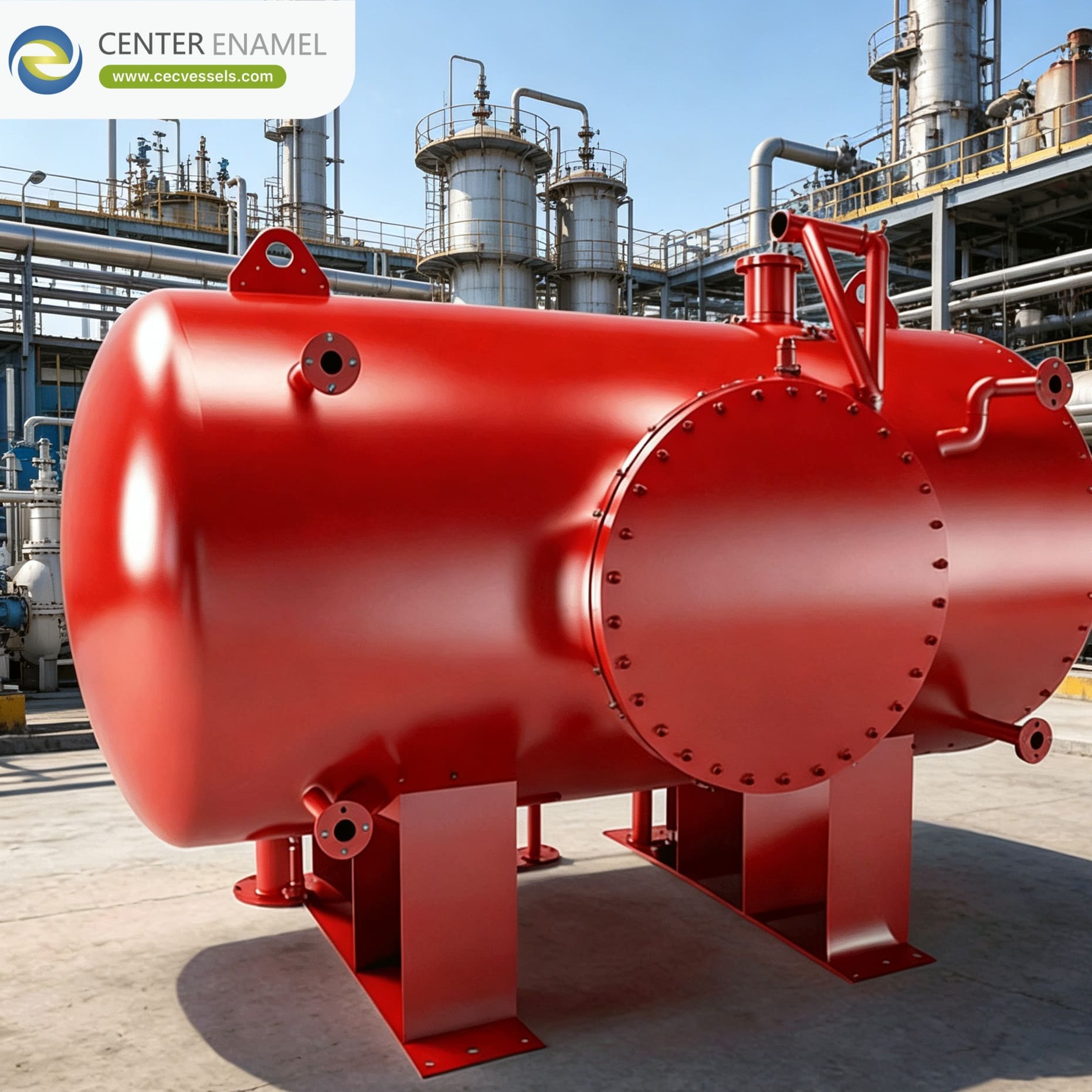
Batch Reactor for Flexible Industrial Chemical Processing
A Batch Reactoris a process vessel designed to carry out chemical reactions by charging a specified quantity of raw materials into the reactor, processing them under controlled conditions, and removing the resulting product after the reaction cycle is completed. Unlike continuous reactors, which receive feed materials and discharge products continuously, a batch reactor processes materials in individual production cycles. This operating method provides flexibility for manufacturers producing different formulations, product grades, or chemical compositions within the same production facility. A typical batch reactor can integrate an agitator, heating or cooling jacket, internal coils, feed ports, discharge connections, temperature instruments, level measurement, and other process components. The configuration can be customized according to the reaction characteristics and production requirements. Batch reactors are widely used in chemical manufacturing, pharmaceuticals, food processing, polymers, resins, specialty chemicals, petrochemicals, and other industries. Their flexible operating structure makes them suitable for processes where production recipes, batch sizes, and reaction conditions may vary between production cycles. How Does a Batch Reactor Work?The operation of a Batch Reactorgenerally begins with the preparation and charging of raw materials. Different ingredients can be introduced according to a predetermined formulation and production sequence. Once the required materials have been added, the agitator can be started to promote uniform mixing throughout the vessel. Heating or cooling equipment can then be used to establish the required process temperature. During the reaction stage, operators can monitor important parameters such as temperature, mixing speed, reaction time, material level, and other process variables. Additional materials can also be introduced through dedicated feed connections when the process requires staged addition. After the desired reaction time has been reached, the processed material can be discharged through the reactor outlet. The vessel can then be cleaned or prepared for the next production cycle. The basic operating sequence can be summarized as: Material Charging → Mixing → Heating or Cooling → Reaction → Process Monitoring → Product Discharge This cycle-based operation gives manufacturers considerable flexibility when producing multiple products using similar equipment. Main Components of a Batch ReactorThe configuration of a Batch Reactordepends on the chemical process, material properties, production capacity, and required operating conditions. Several components are commonly integrated into the reactor system. Reactor VesselThe vessel forms the main processing chamber where raw materials are mixed and chemically transformed. Its volume, diameter, height, material, and internal configuration can be customized according to the production requirements. Center Enamel manufactures process vessels using materials including carbon steel, stainless steel, and clad materials. Vessel capacity and finishing options can also be customized for different industrial applications. Agitator SystemThe agitator promotes material circulation and helps maintain a more uniform composition throughout the reactor. Different agitator configurations can be selected according to viscosity, solids content, liquid level, mixing requirements, and vessel geometry. Impeller type and rotation speed can also be adjusted to match the process. Heating and Cooling SystemTemperature control is an important part of many batch processes. A reactor may use an external jacket, internal coil, or another heat-transfer arrangement to add or remove thermal energy. The appropriate system depends on the required temperature range, heat-transfer duty, material properties, and reaction characteristics. Feed ConnectionsBatch processes may require several raw materials to be added at different stages. Dedicated feed nozzles and connections allow ingredients, catalysts, additives, solvents, or other materials to be introduced according to the production recipe. Discharge SystemOnce the reaction cycle is complete, the processed material needs to be transferred from the reactor to downstream equipment. The discharge system can include bottom outlets, valves, pumps, piping, and customized connections depending on product viscosity and process requirements. InstrumentationTemperature sensors, level instruments, flow meters, sampling ports, and other instrumentation can be integrated into the reactor. These components allow operators and control systems to monitor the batch throughout its production cycle. Types of Batch ReactorsDifferent batch reactor configurations are available for different production processes. Agitated Batch ReactorAn agitated batch reactor uses a mechanical mixer to distribute materials throughout the vessel. It is suitable for liquid blending, chemical synthesis, polymer processing, resin production, and other processes requiring controlled material circulation. Jacketed Batch ReactorA jacketed batch reactor incorporates an external jacket around the vessel. Heating or cooling media can circulate through the jacket to control the temperature of the process material. This configuration is widely used where temperature adjustment is an important part of the reaction cycle. Stainless Steel Batch ReactorStainless steel batch reactors are commonly used for chemical, pharmaceutical, food, and specialty material production. Stainless steel can provide suitable material compatibility for many industrial processes and can be finished according to specific process requirements. Glass-Lined Batch ReactorGlass-lined reactors combine a steel vessel structure with a glass lining designed for applications requiring specific chemical compatibility and process cleanliness. They can be considered for selected fine chemical, pharmaceutical, and specialty chemical processes where the process medium requires a suitable lined surface. Clad Batch ReactorA clad batch reactor combines different metal materials to provide a customized vessel structure. Clad construction can be selected when the process requires a combination of structural performance and specific material compatibility. Applications of Batch ReactorsThe flexible operating structure of batch reactors allows them to serve many industries. Chemical ManufacturingChemical manufacturers use batch reactors for synthesis, neutralization, polymerization, crystallization, blending, and other chemical processes. Because raw materials can be charged in controlled quantities, production recipes can be adjusted between batches. This makes batch processing suitable for specialty chemicals and products manufactured in different grades. Pharmaceutical ProcessingBatch reactors are widely used in pharmaceutical and biopharmaceutical processing for synthesis, formulation, mixing, and other controlled production steps. Reactor materials, surface finishes, agitators, heating systems, and instrumentation can be selected according to the specific manufacturing requirements. Resin and Polymer ProductionBatch reactors are frequently used for resin and polymer manufacturing. Reaction conditions such as temperature, mixing, material addition, and reaction time can be controlled throughout each production cycle. Center Enamel also provides customized resin production and synthesis reactors for industrial resin manufacturing applications. Its reactor solutions can incorporate temperature control and mixing systems designed according to the production process. Food and Beverage ProcessingBatch reactors and mixing vessels can support food and beverage processes involving controlled blending, heating, formulation, and concentration. The equipment can be designed with suitable internal surfaces, agitators, feed systems, and cleaning arrangements according to the characteristics of the processed materials. Petrochemical ProcessingBatch reaction equipment can also be integrated into selected petrochemical and specialty chemical production processes. The reactor can be connected with heat exchangers, separators, storage vessels, pumps, and other process equipment to form an integrated production system. Environmental ProcessingCertain environmental applications use batch reaction systems to process liquid streams through controlled mixing, chemical dosing, neutralization, or other treatment steps. The reactor configuration can be adapted to the characteristics of the process liquid and the required treatment sequence. Benefits of Batch Reactor ProcessingA Batch Reactoroffers several practical characteristics for industrial production. Flexible ProductionOne of the primary characteristics of batch processing is its flexibility. Different raw materials, formulations, and production parameters can be applied to different batches. This makes batch reactors particularly suitable for facilities manufacturing multiple products using related processing equipment. Precise Material AdditionBatch reactors allow raw materials to be introduced according to a defined sequence. This can be useful for reactions requiring staged addition of catalysts, additives, solvents, or other process materials. Controlled Reaction TimeEach batch can follow a predetermined reaction cycle. Operators can adjust the processing time according to the reaction requirements and target product characteristics. Adaptable Temperature ControlHeating and cooling systems can be integrated into the reactor to maintain the required process temperature during different stages of the batch. Easy Process IntegrationBatch reactors can be connected with storage tanks, pumps, heat exchangers, condensers, separators, filtration systems, and other equipment. This allows the reactor to function as part of a complete industrial process line. Batch Reactor Design ConsiderationsSelecting the appropriate Batch Reactorrequires consideration of several process parameters. Working VolumeThe reactor working volume should correspond to the required batch size. Sufficient space should also be considered for mixing, material expansion, foam formation, and other process characteristics. Material CompatibilityThe reactor material should be selected according to the chemical composition and temperature of the process medium. Carbon steel, stainless steel, clad materials, and specialized lined configurations can be considered for different applications. Mixing RequirementsAgitator design depends on liquid viscosity, density, solids concentration, vessel dimensions, and required mixing performance. The impeller type and mixing speed should be selected according to the characteristics of the process material. Heat-Transfer RequirementsHeating or cooling requirements determine the appropriate heat-transfer configuration. Jackets, coils, or external heat exchangers can be incorporated depending on the process. Feed and Discharge ArrangementThe location and number of feed connections should correspond to the material addition sequence. Product discharge requirements should also be considered when designing the outlet configuration. Cleaning and MaintenanceFor applications involving multiple product formulations, cleaning requirements should be considered during reactor design. Suitable internal surfaces, access openings, and drainage arrangements can support convenient cleaning and maintenance. Batch Reactor vs. Continuous ReactorThe main difference between a batch reactor and a continuous reactor is the way materials move through the production system. A Batch Reactorprocesses a defined quantity of material during each production cycle. Materials are charged, reacted, and discharged as a batch. A continuous reactor receives feed materials continuously and simultaneously discharges processed material. Center Enamel's continuous reactor solutions are designed around steady material flow, residence time, mixing, heat transfer, and continuous product output. Batch reactors are therefore particularly suitable for flexible production, variable formulations, specialty chemicals, and processes where reaction time and staged material addition need to be controlled for each individual batch. Continuous reactors can be considered for processes requiring stable feed and continuous production. The appropriate reactor type depends on production volume, product variety, process characteristics, reaction time, material flow requirements, and overall plant configuration. Customized Batch Reactor Manufacturing by Center EnamelAs a China Batch Reactor Manufacturer, Center Enamel provides customized reactor equipment for chemical, pharmaceutical, food, petrochemical, environmental, and other industrial applications. Center Enamel operates a 150,000-square-meter production base and manufactures process equipment using carbon steel, stainless steel, and clad materials. The company's services cover product design, R&D, production, transportation, installation, commissioning, and after-sales support. For batch reactor projects, Center Enamel can customize the vessel according to working volume, material selection, agitator configuration, heating and cooling requirements, feed connections, discharge arrangements, instrumentation, and installation conditions. The engineering team can evaluate the relationship between reactor dimensions, mixing requirements, heat-transfer area, material characteristics, and production cycle to develop an appropriate configuration. Center Enamel also provides other reaction equipment, including agitated tank reactors, resin production reactors, resin synthesis reactors, and specialized chemical reactors, allowing customers to select equipment according to their specific process requirements. Quality Manufacturing and Project SupportThe quality of a batch reactor depends on accurate engineering, appropriate materials, precise fabrication, and effective inspection. Center Enamel applies quality management procedures throughout the manufacturing process. Fabrication can include material preparation, forming, welding, machining, assembly, dimensional inspection, and final testing according to project requirements. The company states that its process equipment manufacturing capabilities cover carbon steel, stainless steel, and clad materials. Its website also identifies compliance with international standards including ASME, ISO 9001, and BS EN 13445. For customized projects, Center Enamel can provide integrated support from design and manufacturing through delivery, installation, commissioning, and after-sales service. Flexible Batch Reactor Solutions from Center EnamelA Batch Reactorprovides a flexible platform for industrial chemical processing by allowing materials to be charged, mixed, heated or cooled, reacted, and discharged according to a defined production cycle. Its adaptable configuration makes it suitable for chemical manufacturing, pharmaceuticals, food processing, resin production, petrochemical applications, environmental processing, and specialty chemical production. As a China Batch Reactor Manufacturer, Center Enamel combines engineering design, manufacturing capabilities, material selection, customized reactor configuration, and project support to provide equipment for different industrial processes. Customers can provide the required working volume, process material, reaction type, mixing requirements, heating or cooling conditions, production capacity, material requirements, and applicable standards. Based on these parameters, Center Enamel can develop a customized batch reactor solution designed for flexible and controlled industrial production.
|