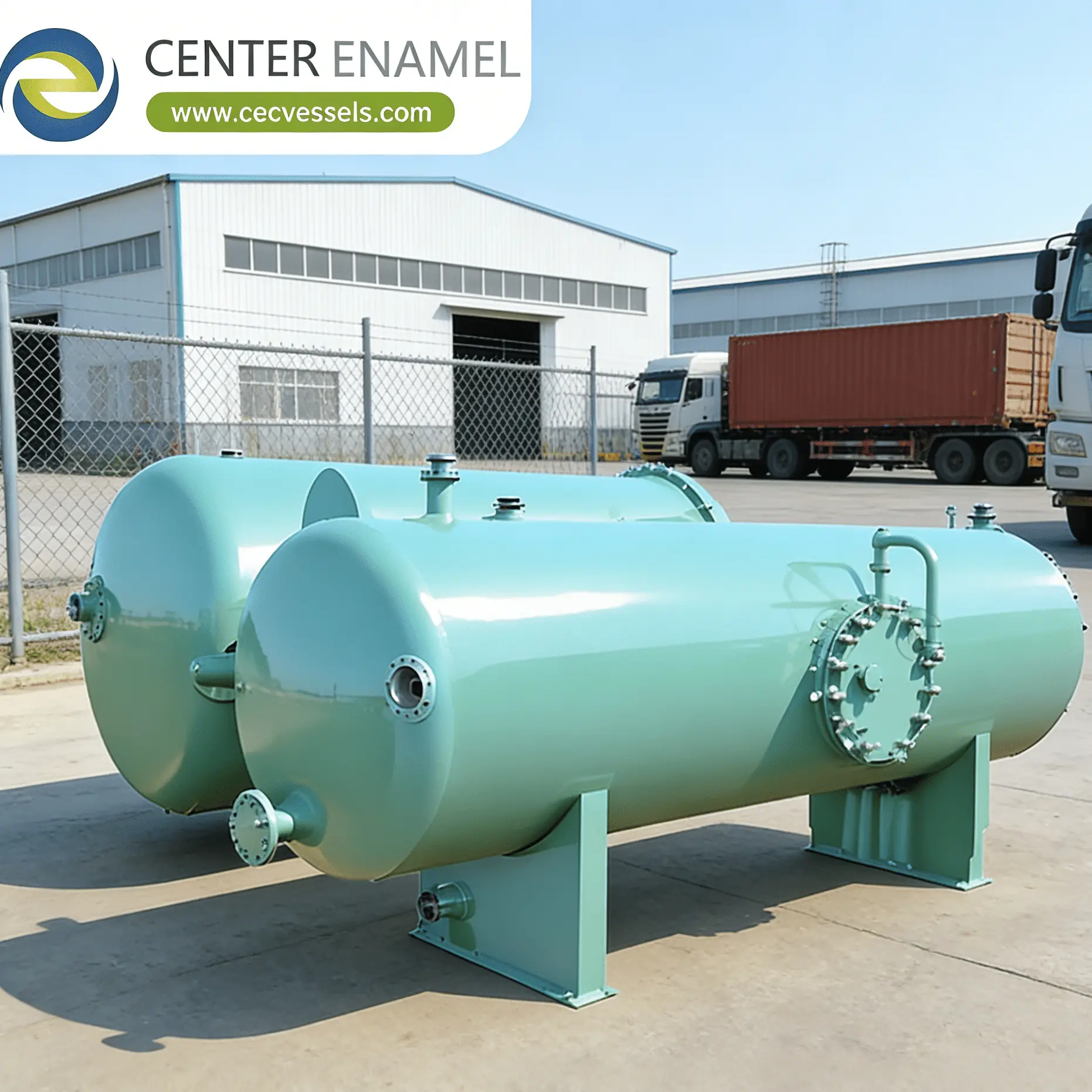
Boiler Pressure Vessels In Refineries Importance And Safety
Boiler pressure vessels are fundamental components in the refining industry, serving as the primary medium for thermal energy generation and fluid processing. As a professional Boiler Pressure Vessels Manufacturer, Center Enamel develops these critical systems to ensure consistent steam supply and operational stability for global oil and gas facilities, meeting the most rigorous international engineering standards. The Essential Role of Boiler Pressure Vessels in Refining
In a modern refinery, steam is a universal utility used for heating crude oil, driving turbines, and facilitating chemical reactions. Boiler pressure vessels are designed to contain and manage this thermal energy. Without these robust vessels, the complex fractional distillation and cracking processes that produce gasoline, diesel, and jet fuel would not be possible.
As a leading China Boiler Pressure Vessels Manufacturer, Center Enamel engineering focuses on providing a stable environment for steam production. These vessels act as the heart of the refinery’s utility system, converting water into high-quality steam while maintaining structural integrity under continuous operation. By prioritizing efficient design, these systems help refineries optimize their energy balance and maintain steady production cycles. Classification of Pressure Vessel Types in Refineries
The refining process requires a diverse range of pressure vessels to handle various temperatures and mediums. Center Enamel provides a comprehensive portfolio of vessels that integrate seamlessly into refinery operations.
1. Fire-Tube and Water-Tube BoilersThese are the primary types of boiler pressure vessels used to generate steam. Water-tube designs are particularly favored in large refineries due to their ability to provide rapid steam generation and handle significant thermal loads, ensuring the facility has the energy required for distillation towers.
2. Steam Distribution CylindersOnce steam is generated, it must be distributed across the plant. Steam distribution cylinders act as headers, managing the flow of steam to different processing units like reboilers and heat exchangers. Center Enamel ensures these cylinders are built to precise specifications to prevent energy loss.
3. Condensate Tanks and Storage VesselsAfter steam transfers its heat, it returns to a liquid state. Condensate tanks collect this treated water so it can be recycled back into the boiler. This closed-loop system is essential for water conservation and energy efficiency.
4. Integrated Separation VesselsRefineries also require specialized vessels for fluid management, such as:
Coalescing Oil Separators: Used to remove oil from wastewater or process streams. Resin Tanks: Utilized in chemical treatment sections of the refinery. Fiber Adsorption Tanks: Specialized units for material purification and separation.
Technical Specifications and Material Science
Refinery environments demand equipment that can withstand constant thermal cycling and exposure to industrial fluids. Center Enamel provides customizable technical specifications to ensure every vessel is built for its specific environment:
Pressure Ranges: Expertly designed for Low Pressure and Medium Pressure industrial applications.
Temperature Limits: Fully customizable to support the intense heat required for saturated steam production.
Material Selection: High-quality 304 and 316 Stainless Steel for superior corrosion resistance in chemical units, and high-strength Carbon Steel for general utility and storage.
Volume Capacities: Solutions are available for any industrial scale, customizable for volumes above 1 cubic meter.
Engineering Design Standards and Global Compliance
The importance and safety of a boiler pressure vessel are guaranteed by adherence to international fabrication codes. Center Enamel integrates these standards into every stage of production to ensure long-term reliability.
ASME Boiler and Pressure Vessel Code (BPVC)The ASME code is the global benchmark for pressure equipment. Section I (Power Boilers) and Section VIII (Pressure Vessels) provide the rules for design, material selection, and fabrication. Compliance with ASME ensures that the vessels are designed with the necessary safety margins for continuous operation.
GB/T 150.1-150.4-2024The GB/T 150 series is the national standard for metal pressure vessels in China. The 2024 update represents the latest advancements in welding technology and material science. Adhering to these standards ensures that our boiler pressure vessels are optimized for modern industrial performance.
BS EN 13445For the European market, BS EN 13445 provides harmonized rules for unfired pressure vessels. It places a heavy emphasis on material fatigue and stress analysis, ensuring the equipment remains stable even under frequent pressure variations. Operational Importance: Driving Refinery Efficiency
The efficiency of a boiler pressure vessel directly impacts the profitability of a refinery. High-quality vessels from a trusted China Boiler Pressure Vessels Manufacturer like Center Enamel offer several advantages:
Consistent Steam Quality: Dry, high-energy steam is required for optimal heat exchange. Precision-engineered boilers prevent "priming" or water carryover, protecting downstream turbines.
Thermal Retention: Advanced insulation and shell design minimize heat loss, reducing the amount of fuel required to maintain process temperatures.
Scalability: Customizable vessel sizes allow refineries to expand their utility capacity as production needs grow.
Our high-performance pressure vessels serve a vast industrial landscape, from petroleum refining and chemical processing to food, dairy, and brewing. We deliver precision-engineered solutions for pharmaceuticals, power generation, and wastewater treatment, ensuring compliance with the world’s most stringent safety codes. Our systems are designed for peak efficiency and longevity, empowering global partners to excel in even the most challenging environments.
1. Chemical Industry Project l Project Location: Hubei, China l Pressure Vessels: Resin tanks, Coalescing oil separators, Fiber adsorption tanks, Compressed air storage tanks, Condensate tanks, and Steam distribution cylinders l Material: Stainless Steel and Carbon Steel. l Design Standards: GB/T 150 (Pressure Vessels) l Application: Integrated chemical fluid processing, separation, and steam distribution for chemical plants
2. Seawater Desalination Project l Project Location: Malta l Pressure Vessels: Concentrated Sulfuric Acid Storage Tanks (Vertical layout) l Material: Carbon Steel l Design Standards: EN 13445 l Application: Storage of 98% concentrated sulfuric acid.
3. Waste-to-Energy Incineration Project l Project Location: Hebei, China l Pressure Vessels: Large-scale Landfill Leachate Storage and Treatment Tanks (2 Sets) l Material: Carbon Steel l Design Standards: GB 50341-2003 and GB 50128-2005. l Application: Wastewater Treatment
4. Aquaculture Wastewater Treatment Project l Project Location: Sichuan, China l Pressure Vessels: Vertical Wastewater Treatment Vessels (Φ 6×16.5 m (h) 1 set; Φ 7.6×16.5 m (h) 1 set) l Material: Carbon Steel l Design Standards: National standard for vertical cylindrical storage tanks. l Application: Aquaculture Wastewater Treatment
Maintenance Requirements for Peak Performance
To ensure a boiler pressure vessel continues to operate safely and efficiently, regular maintenance is essential. For ASME-certified vessels, requirements typically include:
Periodic Inspections: Regular visual and non-destructive testing (NDT) to check for corrosion, scale buildup, or material fatigue in the shell and nozzles.
Water Treatment Management: Ensuring the feedwater is correctly treated to prevent mineral deposits (scaling) inside the vessel, which can significantly reduce heat transfer efficiency.
Safety Valve Testing: Verifying that pressure relief valves are functional and correctly calibrated to protect the structural integrity of the vessel.
Weld Integrity Verification: Inspecting all connection points and nozzle attachments to ensure no structural issues have developed over years of operation.
The Center Enamel Manufacturing Advantage
Choosing Center Enamel as your China Boiler Pressure Vessels Manufacturer means partnering with a leader in technical innovation and quality fabrication.
Integrated Design and EngineeringOur team utilizes Finite Element Analysis (FEA) to simulate how pressure and thermal loads will affect the vessel shell. This allows us to optimize the design for both safety and efficiency before manufacturing begins.
Advanced Fabrication TechnologyWe utilize automated welding systems and CNC machining for nozzle attachments and head forming. This commitment to precision ensures that our vessels meet the strict inspection criteria of GB/T 150-2024 and ASME.
Comprehensive Quality AssuranceEvery boiler pressure vessel produced by Center Enamel undergoes a battery of tests, including hydrostatic pressure testing and helium leak testing, to verify its structural integrity and performance. Summary of Industrial Reliability
Boiler pressure vessels are the silent engines of refinery production. By understanding their importance and adhering to strict safety standards, refineries can ensure stable and efficient operations. By combining international design standards like ASME BPVC and the updated GB/T 150.1-150.4-2024, Center Enamel delivers high-performance solutions that offer both efficiency and long-term durability. As a dedicated China Boiler Pressure Vessels Manufacturer, our focus on quality materials and advanced engineering ensures that our products support the long-term success of our global partners.
Let’s build a safer, more efficient future together. If you have an upcoming project that demands high-durability pressure vessels, we are here to help. Please send your requirements to our team, and our technical experts will connect with you promptly to ensure your project meets the highest industrial standards. |