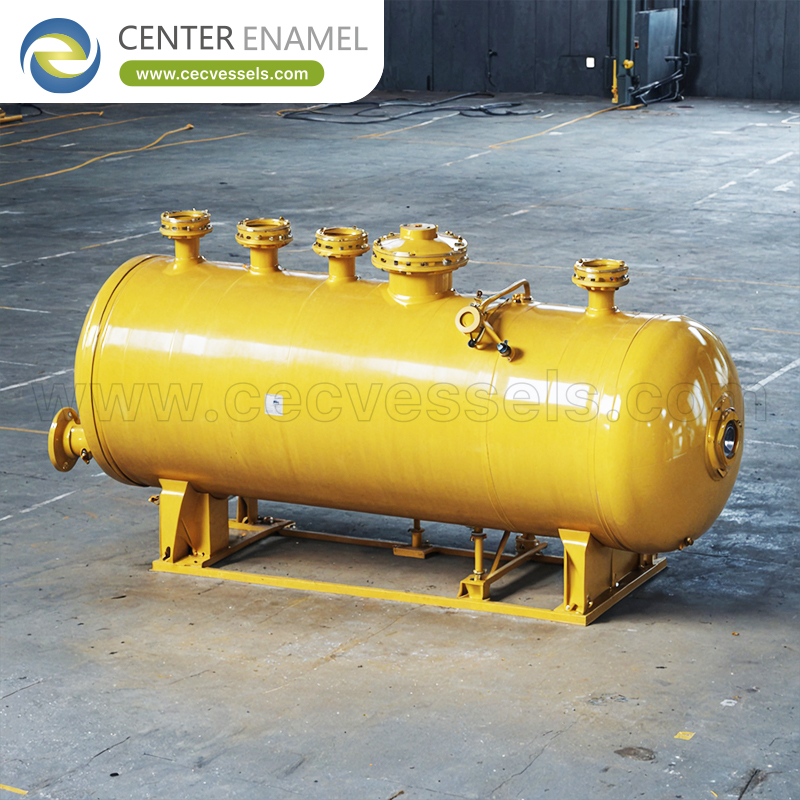
Catalytic Reactor Applications in Industry Explained
Catalytic reactors are important process units used to improve the speed, selectivity, and efficiency of chemical reactions. By providing controlled contact between reactants and a catalyst, these reactors support many industrial processes that transform raw materials into valuable products. Today, catalytic reactor applications can be found across petroleum refining, petrochemical production, hydrogen processing, environmental treatment, renewable fuels, pharmaceuticals, and specialty chemicals. What Is a Catalytic Reactor?A catalytic reactor is a process vessel or reaction system in which a catalyst helps accelerate a chemical reaction without being consumed as a primary reactant. The catalyst provides active sites where reactant molecules can interact more efficiently. The reactor is designed to provide suitable contact between the feed and catalyst while maintaining appropriate temperature, flow, mixing, and heat transfer conditions. Depending on the process, the catalyst may be arranged as a fixed bed, suspended in a liquid, circulated with gas, or coated onto a structured surface. Common catalytic reactor designs include fixed bed reactors, trickle bed reactors, fluidized bed reactors, slurry reactors, tubular catalytic reactors, and monolith reactors. Catalytic Reactor Applications in Petroleum RefiningPetroleum refining is one of the most important areas for catalytic reactor applications. Refineries use catalytic processes to change the molecular structure of petroleum fractions and produce fuels and chemical feedstocks with desired properties. Distillation mainly separates crude oil components according to their boiling ranges. Catalytic reactors, in contrast, chemically transform these components into more useful products. Fluid Catalytic CrackingFluid catalytic cracking, commonly known as FCC, converts heavier petroleum fractions into lighter products such as gasoline components, liquefied petroleum gas, and petrochemical feedstocks. In an FCC system, finely divided catalyst particles circulate through the reactor and regeneration system. Vaporized feed contacts the catalyst, and large hydrocarbon molecules are converted into smaller molecules. The continuous circulation of catalyst allows the process to operate efficiently while supporting consistent conversion. HydrocrackingHydrocracking combines catalytic cracking and hydrogenation to convert heavy hydrocarbon fractions into lighter products. Typical products include diesel, jet fuel, naphtha, and other valuable refinery streams. Hydrocracking reactors generally use catalyst beds containing materials that promote both cracking and hydrogenation reactions. Reactor configuration, catalyst selection, feed distribution, and temperature management are important factors in achieving the desired product yield. HydrotreatingHydrotreating is another major catalytic application in a refinery. It is used to improve the quality of petroleum streams by reducing sulfur, nitrogen, oxygen-containing compounds, and other unwanted components. Fixed bed and trickle bed reactors are commonly used for hydrotreating. The feed passes through catalyst beds where chemical reactions transform undesirable compounds into easier-to-remove products. Hydrotreating can be applied to naphtha, kerosene, diesel, gas oil, and other refinery streams. Catalytic ReformingCatalytic reforming converts naphtha into higher-value products, particularly high-octane reformate and aromatic compounds. It can also generate hydrogen for use in other refinery processes. The reforming reaction changes the molecular structure of hydrocarbons rather than simply separating them. Catalyst formulation and reactor conditions are selected according to the required product characteristics. IsomerizationIsomerization rearranges the molecular structure of hydrocarbons while keeping the same molecular formula. In refineries, this process is commonly applied to light naphtha components to improve their octane characteristics. Catalytic isomerization reactors provide a controlled environment for these molecular rearrangement reactions and are often integrated with other refinery units. Catalytic Applications in Petrochemical ProductionCatalytic reactors are also widely used in petrochemical plants. Many petrochemical reactions depend on catalysts to achieve useful conversion and selectivity. Hydrogenation reactors, oxidation reactors, dehydrogenation reactors, and polymerization reactors are common examples. Selective hydrogenation can convert unwanted unsaturated compounds while preserving valuable components in a feed stream. Dehydrogenation reactors remove hydrogen from hydrocarbons to produce important intermediates for petrochemical manufacturing. Catalytic oxidation is used to produce chemicals such as ethylene oxide and other oxygen-containing intermediates. Catalysts help guide the reaction toward the desired product. Catalytic Reactors for Hydrogen and Syngas ProductionHydrogen production is another important catalytic application. Several catalytic reaction stages may be combined to produce and purify hydrogen-rich gas. Steam reforming uses a catalyst to convert hydrocarbons and steam into synthesis gas containing hydrogen and carbon monoxide. The resulting gas can then pass through water-gas shift reactors. In a water-gas shift reactor, carbon monoxide reacts with steam to produce additional hydrogen and carbon dioxide. Different catalyst systems may be used depending on the operating stage and required gas composition. Methanation is another catalytic process used in gas treatment. It can reduce residual carbon oxides in hydrogen-rich gas or support synthetic methane production. Catalytic Reactors in Chemical ManufacturingChemical manufacturing uses catalytic reactors for a wide range of reactions, including hydrogenation, oxidation, synthesis, coupling, and polymerization. For fine chemicals and specialty chemicals, selectivity is particularly important because the desired product may have a complex molecular structure. Catalysts can help direct the reaction toward a specific compound. Depending on production scale and reaction characteristics, stirred catalytic reactors, slurry reactors, fixed bed reactors, and continuous flow reactors can all be used. Pharmaceutical manufacturing also uses catalytic reactions to produce intermediates and active compounds. In these applications, reactor design must support accurate temperature control, effective mixing, catalyst handling, and consistent product quality. Catalytic Reactors for Environmental TreatmentCatalytic reactor applications extend beyond product manufacturing. Catalysts are widely used to treat industrial gases and reduce unwanted emissions. Catalytic oxidation systems can convert suitable volatile organic compounds and carbon monoxide into simpler products. Selective catalytic reduction systems are used to reduce nitrogen oxides in combustion-related exhaust gases. Automotive catalytic converters are another familiar example. Their structured catalyst surfaces promote reactions that convert carbon monoxide, hydrocarbons, and nitrogen oxides into less harmful substances. The reactor configuration is selected according to gas composition, flow rate, catalyst structure, temperature range, and treatment requirements. Catalytic Applications in Renewable EnergyThe growth of renewable fuels has created new applications for catalytic reactors. Bio-oils, biomass-derived gases, renewable hydrogen, and captured carbon can all be processed through catalytic technologies. Hydrodeoxygenation is used to remove oxygen from renewable oils and improve their fuel properties. Catalytic upgrading can also convert biomass-derived intermediates into fuels and chemical feedstocks. Fischer-Tropsch synthesis is another important catalytic process. It converts synthesis gas into hydrocarbon products that can be further processed into synthetic fuels. Catalytic CO2 conversion is also being developed for producing methanol, methane, and other chemical intermediates. These applications connect catalytic reactor technology with carbon utilization and renewable hydrogen systems. How Reactor Types Match Different ApplicationsDifferent industrial catalytic applications require different reactor configurations. Fixed bed reactors are widely used because the catalyst remains inside a stationary bed while reactants pass through it. They are common in hydrotreating, hydrogenation, oxidation, and gas treatment. Trickle bed reactors allow gas and liquid feeds to pass through a packed catalyst bed. They are frequently used for refinery hydroprocessing and other gas-liquid catalytic reactions. Fluidized bed reactors suspend catalyst particles in a flowing gas or liquid. This arrangement provides strong mixing and is particularly useful for processes such as fluid catalytic cracking. Slurry reactors suspend catalyst particles in a liquid phase. They are suitable for selected gas-liquid-solid reactions, including some Fischer-Tropsch and hydrogenation processes. Monolith reactors use structured catalyst surfaces with many channels. They are commonly applied to gas treatment and automotive exhaust systems. Factors Affecting Catalytic Reactor SelectionSelecting a catalytic reactor requires consideration of the reaction and production process as a complete system. Important factors include feed composition, catalyst type, catalyst loading, reaction temperature, phase behavior, required conversion, product selectivity, heat transfer, mass transfer, residence time, and reactor capacity. The physical form of the catalyst is also important. Pellets, powders, extrudates, coated surfaces, and suspended catalyst particles each require different reactor arrangements. Catalyst replacement and regeneration should also be considered during equipment selection. Reactor internals need to provide appropriate catalyst support, feed distribution, and access for loading and unloading. Material selection is another important part of reactor design. The construction materials should be compatible with the process medium and operating conditions. Reactor in Refinery: Why It Is ImportantA reactor in refinery operations performs chemical conversion that cannot be achieved through physical separation alone. Refinery reactors help transform heavy hydrocarbons, improve fuel properties, remove unwanted compounds, and produce valuable intermediates. For example, FCC reactors convert heavy fractions into lighter products, hydrotreating reactors improve fuel quality, hydrocracking reactors produce valuable middle distillates, and reforming reactors increase the value of naphtha streams. Because different refinery processes have different reaction mechanisms and catalyst requirements, the reactor configuration must be matched to the specific catalytic application. Catalytic reactor applications cover a broad range of industrial processes. From catalytic refinery operations and petrochemical production to hydrogen generation, environmental treatment, renewable fuels, and specialty chemicals, catalytic reactors provide controlled environments for efficient chemical conversion. The most suitable reactor depends on the catalyst, feed characteristics, reaction type, product requirements, heat and mass transfer conditions, and production capacity. Understanding these factors helps engineers select an appropriate reactor configuration for each industrial application. As industrial processes continue to develop, catalytic reactors will remain an important part of modern chemical and energy production, supporting efficient conversion of petroleum, natural gas, biomass, renewable resources, and other raw materials into valuable products.
|