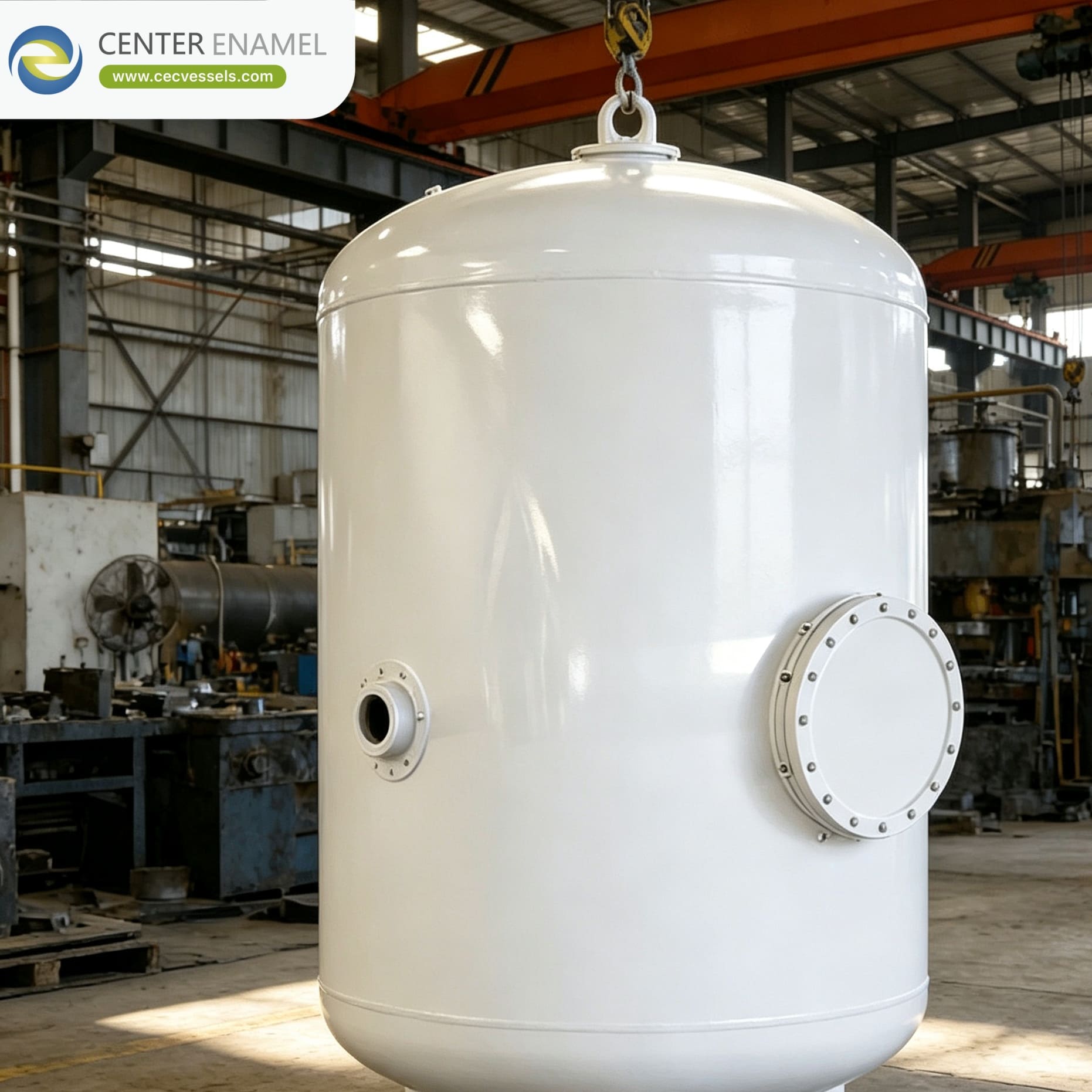
Catalytic Reactor for Efficient Chemical Reaction Processes
A Catalytic Reactoris specialized process equipment designed to facilitate chemical reactions with the assistance of a catalyst. The catalyst provides an alternative reaction pathway that can accelerate the desired chemical transformation while remaining available throughout the catalytic cycle. Catalytic reactors are widely used in chemical manufacturing, petrochemical processing, refining, pharmaceutical production, environmental treatment, polymer production, and other industrial processes. By coordinating reactant flow, catalyst contact, temperature control, mixing, and residence time, a catalytic reactor creates suitable conditions for controlled chemical conversion. The design of a catalytic reactor depends on the characteristics of the reaction and the physical form of the catalyst. Different configurations can be used for gas-phase, liquid-phase, or multiphase reactions. Fixed-bed, fluidized-bed, trickle-bed, slurry, and agitated catalytic reactors are among the common configurations used in industrial processing. For each application, reactor geometry, catalyst arrangement, internal components, material selection, and heat-transfer method should be considered together. This integrated approach helps the reactor match the specific requirements of the production process. How Does a Catalytic Reactor Work?The working principle of a catalytic reactor is based on controlled contact between reactants and a catalyst. Feed materials enter the reactor through a designed inlet system and are distributed within the reaction zone. The catalyst then promotes the desired chemical transformation. In a fixed-bed catalytic reactor, catalyst particles are generally arranged in a stationary bed. The reactants flow through the catalyst bed and interact with the active surfaces of the catalyst. This configuration is widely used for continuous chemical processing. In a fluidized-bed reactor, catalyst particles are suspended by an upward flow of gas or liquid. This arrangement creates strong contact between the process materials and catalyst particles and can provide effective heat and mass transfer. A trickle-bed reactor allows liquid and gas phases to flow through a packed catalyst bed. This type of reactor can be applied to processes involving multiple phases, particularly in chemical and petrochemical production. Agitated catalytic reactors use mechanical mixing to improve the distribution of reactants and catalyst within the reaction medium. They can be suitable for liquid-phase or slurry catalytic reactions where mixing performance is an important part of process control. Regardless of the configuration, the objective is to create appropriate contact between the reactants and catalyst while maintaining suitable reaction conditions. Key Components of a Catalytic ReactorA catalytic reactor is more than a basic vessel. Its internal and external components are designed according to the reaction process and operating requirements. The main components may include the reactor shell, catalyst support system, feed inlet, product outlet, distributor, internal structures, heating or cooling system, instrumentation connections, and inspection openings. The catalyst support system is particularly important for fixed-bed reactors. It supports the catalyst material and allows process fluids to pass through the reaction zone. The support structure must be designed according to catalyst characteristics, reactor dimensions, and process flow. Feed distributors are also important because uniform material distribution helps the catalyst bed operate more consistently. Uneven flow can reduce the effective utilization of the catalyst, while appropriate distribution promotes more uniform contact between reactants and catalyst. Heat-transfer components can include jackets, coils, tubes, or other engineered surfaces. Depending on the reaction, heat may need to be supplied or removed to maintain the desired process temperature. Instrumentation connections allow the reactor to integrate with temperature monitoring, flow control, level measurement, and other process-control systems. By coordinating these components during the engineering stage, a catalytic reactor can be developed as an integrated process system rather than simply as an individual piece of equipment. Common Catalytic Reactor ConfigurationsDifferent chemical processes require different reactor configurations. Selecting the appropriate design depends on catalyst characteristics, feed materials, reaction kinetics, phase conditions, and production requirements. Fixed-Bed Catalytic ReactorA fixed-bed reactor contains catalyst particles arranged in a stationary bed. Feed materials pass through the catalyst bed and undergo the desired chemical reaction. Fixed-bed systems are commonly applied to catalytic synthesis, refining, petrochemical processing, and other continuous chemical processes. Their relatively straightforward catalyst arrangement also makes them suitable for processes where catalyst replacement or regeneration follows an established operating cycle. Fluidized-Bed Catalytic ReactorA fluidized-bed catalytic reactor uses a controlled upward flow to suspend catalyst particles. The resulting fluidized condition provides extensive contact between catalyst and process materials. This configuration can provide effective heat transfer and material distribution and is widely associated with processes that require circulating or continuously managed catalyst particles. Trickle-Bed Catalytic ReactorA trickle-bed reactor typically handles gas and liquid reactants passing through a stationary catalyst bed. The liquid phase flows over the catalyst particles while the gas phase moves through the reaction zone. This configuration can be used in petrochemical and chemical processing applications where gas-liquid-solid interaction is required. Slurry Catalytic ReactorIn a slurry catalytic reactor, fine catalyst particles are suspended within a liquid reaction medium. Mechanical agitation can maintain catalyst distribution and support contact between the catalyst and reactants. Slurry systems can be considered for liquid-phase reactions and processes where catalyst dispersion is an important part of reactor operation. Agitated Catalytic ReactorAn agitated catalytic reactor incorporates mechanical mixing to promote material circulation and catalyst distribution. Agitator selection can be based on viscosity, solids content, reaction characteristics, and required mixing intensity. This configuration can be adapted to batch or semi-continuous processing and is particularly useful when homogeneous distribution within the reactor is required. Applications of Catalytic ReactorsCatalytic reactors support a wide range of industrial chemical processes. Their applications are closely related to the ability of catalysts to facilitate specific chemical transformations. In the petrochemical industry, catalytic reactors can be used for processes such as catalytic reforming, hydroprocessing, hydrogenation, and catalytic conversion. Reactor configuration and catalyst arrangement are selected according to the feedstock and target products. In chemical manufacturing, catalytic reactors can support synthesis reactions, oxidation processes, reduction reactions, polymer-related processes, and other chemical transformations. Customized reactor designs allow manufacturers to coordinate material handling, mixing, heating, cooling, and catalyst contact. In refining, catalytic processing is used to transform hydrocarbon feedstocks into fuels and valuable intermediate products. Fixed-bed and other specialized reactor configurations can be integrated with separation, heat exchange, and downstream processing equipment. In environmental applications, catalytic reactor technology can support the conversion or treatment of selected compounds through controlled catalytic reactions. Reactor design can incorporate suitable catalyst arrangements, gas distribution systems, thermal-control components, and process monitoring. In pharmaceutical and fine chemical production, catalytic reactions can be used for selective synthesis and process development. Reactor materials and internal configurations can be customized according to product purity requirements and process characteristics. Catalytic Reactor Design ConsiderationsThe design of a Catalytic Reactorbegins with understanding the chemical process. Important design information includes the reaction type, feed composition, catalyst characteristics, required capacity, residence time, operating temperature, material compatibility, and process flow rate. Catalyst properties are a major consideration. Catalyst particle size, shape, density, active surface area, loading quantity, and regeneration requirements can influence the internal design of the reactor. Flow distribution should also receive careful attention. The inlet and distributor configuration should support uniform movement of process materials through the reaction zone. For fixed-bed reactors, suitable distribution helps make better use of the available catalyst volume. Heat management is another important design element. Depending on the reaction, the process may require heating, cooling, or temperature stabilization. Jackets, coils, heat-transfer surfaces, and external heat exchangers can be incorporated according to process requirements. Material selection should be based on the process medium, temperature, chemical composition, and required service conditions. Common material options include carbon steel, stainless steel, and clad materials. The reactor can also be designed with customized nozzles, manways, support structures, catalyst loading systems, discharge arrangements, and instrumentation connections. Center Enamel Catalytic Reactor ManufacturingAs a China Catalytic Reactor Manufacturer, Center Enamel provides customized reactor equipment for chemical, petrochemical, refining, and related industrial applications. Center Enamel combines engineering design, material selection, fabrication, inspection, and project support. The company operates a large production and R&D base and manufactures process equipment using materials such as carbon steel, stainless steel, and clad materials. Its product portfolio covers reaction equipment, separation equipment, heat exchange equipment, storage equipment, and other customized process vessels. This broad manufacturing capability allows catalytic reactors to be coordinated with related equipment in an integrated process system. For a catalytic reactor project, Center Enamel can customize reactor dimensions, internal structures, catalyst support systems, connection configurations, surface treatment, and other equipment features according to project specifications. The engineering process considers the relationship between the reactor body and its internal components. Reactor geometry, material selection, feed distribution, catalyst arrangement, heat-transfer design, and process connections can be coordinated during the design stage. Center Enamel also provides integrated project services covering product design, R&D, manufacturing, transportation, installation, commissioning, and after-sales support. Its website states that its equipment manufacturing capabilities include carbon steel, stainless steel, and clad materials, with services aligned with international standards such as ASME, ISO 9001, and BS EN 13445. Why Choose a Customized Catalytic Reactor?Chemical processes differ considerably in terms of reaction mechanism, catalyst properties, feed composition, production capacity, and operating conditions. For this reason, a standardized reactor may not provide the most suitable configuration for every application. A customized Catalytic Reactorallows the equipment design to reflect the actual process requirements. Catalyst loading, internal support structures, feed distribution, mixing equipment, heat-transfer components, and connection arrangements can all be considered during engineering. Customized reactor design can also facilitate integration with upstream and downstream equipment. Feed systems, heat exchangers, separators, condensers, storage vessels, and process-control systems can be coordinated around the reactor to create a complete production line. For large industrial projects, customized fabrication also provides greater flexibility in equipment dimensions, material selection, transportation arrangements, and installation requirements. Center Enamel's manufacturing and engineering capabilities support customized process equipment for different industrial applications. The company describes its services as covering design, production, transportation, installation, commissioning, and after-sales support. Catalytic Reactor and Process EfficiencyA well-designed catalytic reactor contributes to efficient chemical processing by creating appropriate conditions for catalyst-reactant contact, heat transfer, material flow, and reaction control. Catalyst utilization is closely connected with flow distribution and internal configuration. When process materials are distributed appropriately across the reaction zone, the available catalyst can participate more effectively in the intended chemical transformation. Temperature control also influences reaction consistency. Properly designed heat-transfer components help maintain the required temperature range and provide suitable thermal conditions for the process. Residence time is another important parameter. Reactor volume, feed rate, internal configuration, and flow characteristics can be coordinated to achieve the required contact time between reactants and catalyst. For continuous production, reactor configuration can also be integrated with continuous feeding and product discharge systems. This enables the reactor to operate as part of a broader process line rather than as an isolated production unit. Selecting the Right Catalytic Reactor ManufacturerChoosing a China Catalytic Reactor Manufacturerinvolves evaluating engineering capabilities, manufacturing resources, material options, customization capacity, quality management, and project support. The manufacturer should be able to understand the process requirements before developing the equipment configuration. Important project information may include catalyst type, reaction medium, capacity, temperature, flow rate, residence time, reactor configuration, material requirements, and applicable standards. Manufacturing capability is also important for complex reactor projects. Fabrication equipment, welding capabilities, inspection procedures, material traceability, and quality control all contribute to the final equipment configuration. Center Enamel provides customized process equipment for chemical and petrochemical applications, with a manufacturing base covering approximately 150,000 square meters. Its product range includes reaction, separation, heat exchange, and storage equipment. Customized Catalytic Reactor Solutions from Center EnamelA Catalytic Reactorprovides a controlled environment for catalyst-assisted chemical reactions and can be configured for fixed-bed, fluidized-bed, trickle-bed, slurry, or agitated processing. The right reactor design brings together catalyst characteristics, material flow, heat transfer, reactor internals, material selection, and process integration. A customized approach allows these factors to be coordinated according to the specific requirements of each production process. As an experienced China Catalytic Reactor Manufacturer, Center Enamel develops customized reaction equipment for chemical, petrochemical, refining, environmental, and related industrial applications. From engineering design and material selection to fabrication, inspection, transportation, installation, and commissioning, Center Enamel supports customers throughout the equipment project lifecycle. For a catalytic reactor project, customers can provide the reaction type, catalyst information, process medium, required capacity, operating temperature, flow rate, reactor configuration, material requirements, and applicable standards. Based on these parameters, Center Enamel can develop a catalytic reactor solution tailored to the specific process and production requirements.
|