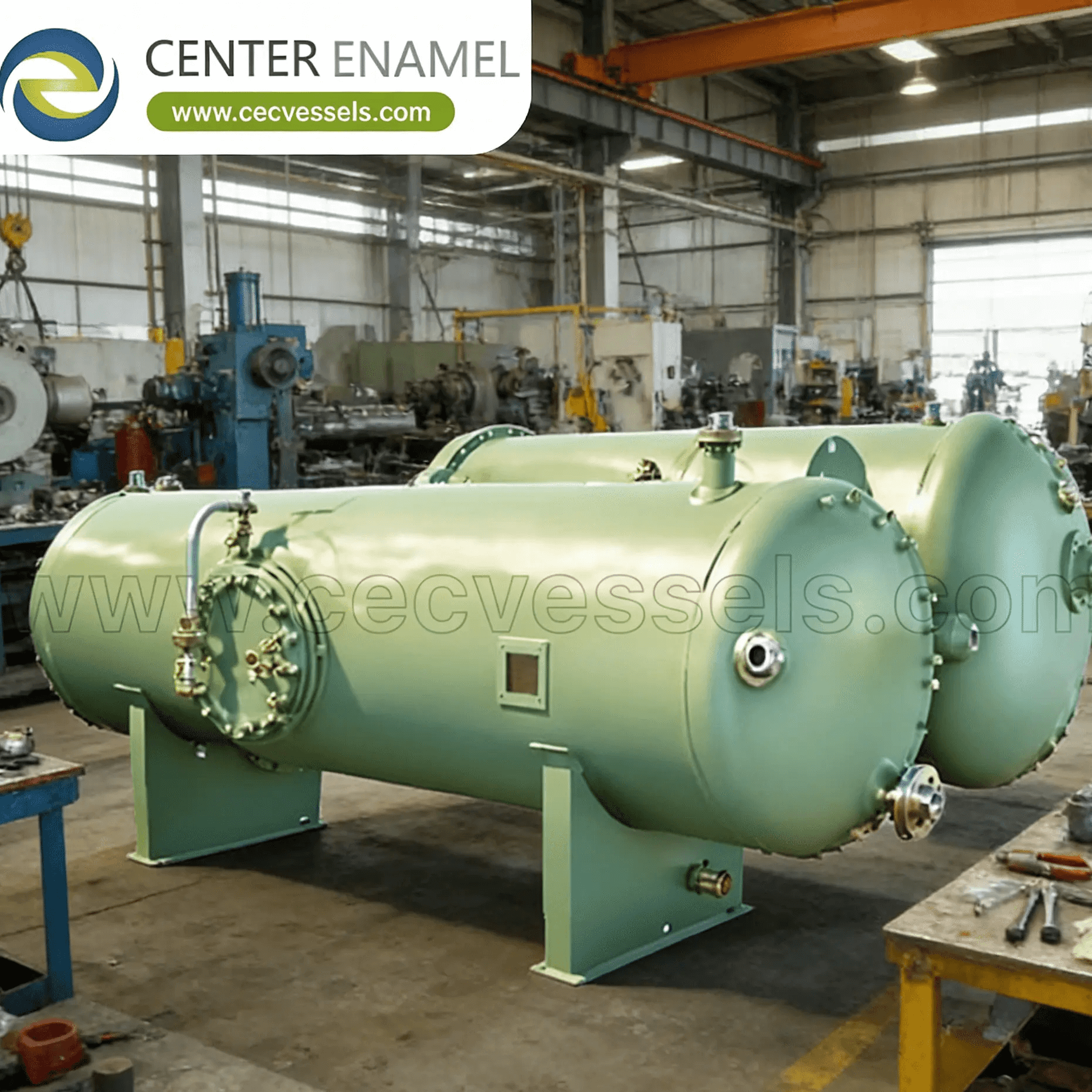
China Biomass Processing Reactor Manufacturer Delivering Reaction Systems for Biomass Conversion Applications
In modern renewable energy production and bio-based refining, a Biomass Processing Reactoris engineered to maintain a stable, controlled environment where molecular transformations, mixing, and thermal transitions occur simultaneously. Biomass processing—encompassing agricultural residue hydrolysis, lignin extraction, bio-oil upgrading, and enzymatic conversion—demands uniform heat distribution, thorough liquid-solid slurry agitation, and dependable batch-to-batch operational stability.
The internal chamber of each Biomass Processing Reactoris structurally optimized to handle fluid forces, with the wall thickness and geometry calculated to resist continuous mechanical loads and operational stresses. Inside the vessel, specialized internal baffles are strategically positioned to break up fluid swirling and direct the flow vertically. This optimized circulation pattern eliminates dead zones and ensures that all organic feedstocks, catalysts, solvents, and biological enzymes achieve uniform contact time throughout the processing cycle, yielding superior conversion efficiency and consistent output purity across large-scale industrial runs.
Material Selection and Surface Metallurgy for Biomass Refining
Two core metal materials, carbon steel and stainless steel, dominate the fabrication of industrial process vessels, each carrying unique processing and application merits for biomass handling.
Carbon Steel Efficiency:Carbon steel presents excellent cost efficiency and high tensile strength, ideal for conventional industrial environments and non-corrosive auxiliary holding vessels. Mature rolling and welding craft process carbon steel plates into cylinder shells and dished heads efficiently, shortening production cycles and delivering high structural economy.
Stainless Steel Protection:Stainless steel features natural anti-corrosion properties that block chemical reactions between vessel bodies and aggressive bio-based media, organic acids, or solvents. Polished stainless steel interiors prevent material adhesion, eliminate slurry build-up, and reduce maintenance and cleaning frequency in bio-refining lines.
Unified processing standards apply to both material types across our facilities: precise blanking, seamless welding, and surface anti-rust treatments are completed in sequence. Every finished component goes through strict tightness and structural tests. Vessels made of carbon steel suit general chemical and water treatment projects, while stainless steel variants serve high-hygiene production including bio-based extractions, organic acid processing, and biopharmaceutical workflows.
Collaborative Engineering Divisions Driving Global Success
The institutional excellence of Center Enamel is defined by a corporate culture of engineering rigor and cohesive departmental collaboration within the global pressure vessel market. As a recognized Biomass Processing Reactor Manufacturer, our interconnected corporate divisions work side-by-side to deliver tailored processing solutions.
Integrated Divisional Workflow
R&D Team:Our core technological breakthroughs originate within our advanced R&D Team, where technical talents cultivate premium product innovations that refine fluid mixing dynamics and thermal conversion efficiency.
Strategic Marketing Team:Working directly with industrial clients, our Marketing Team utilizes its robust engineering construction background to identify complex biomass process parameters and offer high-value, tailored vessel proposals.
Precision Design Team:Our Design Team steps forward to draft robust configurations, calculating all safety factors, corrosion allowances, and operational dimensions required for varied environmental conditions.
Expert Installation Team:Bringing these blueprints to life across the globe, our expert Installation Team demonstrates flawless execution, applying strict quality governance to complete complex field setups safely and punctually.
Technical After-Sales Team:To sustain long-term operational excellence, our After-sales Team delivers proactive monitoring, professional maintenance guidance, and rapid troubleshooting around the clock.
By combining R&D, marketing, design, installation, and after-sales into one fluid workflow, Center Enamel consistently manufactures world-class reactors that endure.
Rigorous Engineering Design and Code Compliance
Center Enamel’s expert Design Team pioneers the engineering of high-performance reaction equipment by rigidly adhering to rigorous international compliance standards, including ASME Section VIII (Div 1 & 2), EN 13445, and GB 150. As a leading China Biomass Processing Reactor Manufacturer, our engineering workflow transforms complex operational requirements into precise blueprints.
This sophisticated engineering process begins with a meticulous assessment of the vessel's specific operating parameters, such as thermal cycling requirements and fluid agitation loads. Utilizing advanced pressure vessel design software, our engineers accurately simulate complex stress distributions and structural fatigue. Every critical boundary—including shell thickness, elliptical head geometries, and nozzle reinforcements—is precisely calculated to counter mechanical containment demands and thermal stresses.
The team balances localized wind loads, seismic coefficients, and essential corrosion allowances to guarantee structural integrity under cyclic loading environments. By combining theoretical physics with rigid global codes, the Design Team successfully transforms complex safety standards into highly precise, secure engineering blueprints, ensuring that every manufactured vessel easily achieves official regulatory certification and delivers flawless operational safety in demanding industrial fields worldwide.
Comprehensive Quality Control and Leak Detection Suite
To ensure zero-tolerance leakage for critical processing applications, we complement our hydraulic protocols with specialized gaseous and chemical evaluations within our Pressure and Tightness Testing suite, complementing our initial Material Performance Testing and NDT. --------------------------------------------------------------------------+ After validating structural yield limits via hydraulic means, or when liquid tests are impractical, we utilize pneumatic testing, airtightness testing, or kerosene leak testing to detect microscopic pathways. Our pneumatic testing uses compressed air or gas to stress the vessel, while our airtightness testing employs high-sensitivity gas detection to ensure absolute sealing integrity for volatile substances.
For specific geometric configurations or atmospheric vessels, we apply a kerosene leak test to the welded seams, leveraging kerosene's high capillary action to reveal even the smallest micro-porosities that might escape standard NDT methods like RT or UT. Together with our foundational material verification (PMI, hardness) and rigorous joint NDT (JB4730 compliance), these precise tightness methodologies provide the final layer of quality assurance. Our dedication to combining NDT, material science, and diverse pressure testing ensures the production of world-class process vessels.
Real-World Industrial Deployment Case Study
Center Enamel’s heavy manufacturing expertise is demonstrated across a diverse portfolio of large-scale industrial vessel deployments worldwide. A prominent example includes the Aquaculture Wastewater Treatment Project in Sichuan, China, which highlights our capability in large-volume fluid handling equipment design and heavy structural fabrication.
In the Sichuan Aquaculture Wastewater Treatment Project, Center Enamel designed and constructed a high-capacity industrial filtration array featuring massive vertical wastewater treatment vessels. This specialized equipment deployment includes one set measuring Φ 6 × 16.5 meters in height and a second, larger set measuring Φ 7.6 × 16.5 meters in height, representing engineering benchmarks in large-volume liquid handling.
Constructed from heavy-gauge carbon steel and enhanced with localized internal protective coatings, these vessels are fully optimized to handle organic sludge, chemical residues, and biological loads. The structural design strictly adheres to the Chinese national standard for vertical cylindrical storage tanks, ensuring maximum safety margins against hydrostatic pressure and environmental variables. Deployed in advanced aquaculture wastewater treatment systems, these vertical tanks facilitate efficient sedimentation, biological oxidation, and intensive fluid clarification, proving Center Enamel’s versatile manufacturing strengths across demanding real-world industrial scenarios.
Corporate Capabilities and Global Supply Chain Integration
Center Enamel stands out as a professional global supplier of standardized and tailor-made pressure vessels with mature manufacturing capacity for diversified metal materials. Carbon steel and stainless steel serve as mainstream fabrication materials, supplemented by composite clad plates to match different medium properties and working environments.
Design teams calculate structural thickness and accessory configurations based on medium acid-base characteristics and operating parameters to guarantee stable product performance. The full product range includes storage, reaction, heat exchange, separation, and vertical vessels with adjustable capacities starting from 10 cubic meters. Multiple surface treatment options such as industrial painting, pickling, and passivation are available to extend equipment service life.
Strict non-destructive inspection and tightness testing are conducted after fabrication, while large-scale projects support professional on-site assembly and synchronous test work. Adhering to unified international manufacturing specifications, the factory delivers consistent, safe, and long-lasting vessel solutions for petrochemical, pharmaceutical, food, environmental protection, and biomass processing industries worldwide.
Specialized Reaction Systems for Renewable Biomass Conversion
Processing raw agricultural waste, forestry residues, and organic starches into biofuels or biochemicals requires specialized vessel engineering tailored to heterogeneous mixture handling. As an experienced China Biomass Processing Reactor Manufacturer, Center Enamel customizes equipment architectures to align with specific bio-refining pathways.
Slurry Agitation & Solid SuspensionBiomass feedstocks often contain high solids content and non-Newtonian flow properties during pre-treatment and hydrolysis. Our engineering team integrates custom agitator systems—such as high-torque helical ribbons, multi-stage anchor impellers, or hydrofoil turbines—to prevent slurry stratification, optimize mass transfer, and ensure complete enzyme or catalyst exposure.
Thermal Regulation and Heating JacketsBiomass conversion processes rely heavily on strict temperature profiles to maximize yields during thermal digestion or enzymatic hydrolysis. Center Enamel designs custom heating jackets—including dimple jackets, half-pipe coils, and conventional baffled jackets—engineered for efficient hot oil, steam, or hot water circulation.
Why Partner with Center Enamel for Biomass Processing Reactors
Selecting the right equipment manufacturer is essential to building an efficient, high-yield biomass conversion facility. Center Enamel combines heavy manufacturing infrastructure, precise material selection, and rigorous quality testing to deliver reliable reactor systems.
Tailored Engineering:Customized internal baffling, optimized mixing impellers, and computed wall geometries.
Versatile Metallurgy:Expert application of carbon steel, high-grade stainless steel (304/316L/duplex), and composite clad alloys.
Comprehensive Quality Testing:100% NDT weld inspection, hydrostatic testing, and advanced gas/kerosene leak detection.
Global Track Record:Proven equipment deployments and engineering support across more than 100 countries.
Whether you require a single Biomass Processing Reactorfor pilot-scale bio-refining or a complete array of vessels for commercial biomass conversion, Center Enamel delivers custom equipment engineered to meet your exact processing goals.
Frequently Asked Questions
What role does a Biomass Processing Reactor play in bio-refining?A biomass processing reactor provides a controlled environment with uniform thermal management and mixing required to convert raw biomass, organic residues, and starches into bio-based chemicals, biofuels, or biopolymers.
How do internal baffles improve performance in a biomass reactor?Internal baffles prevent fluid swirling caused by agitators and direct the flow vertically. This eliminates dead zones in viscous biomass slurries, ensuring equal thermal distribution and uniform contact time across all reagents.
What materials are recommended for biomass processing vessels?High-grade stainless steel (316L or duplex stainless steel) is widely used for biomass reactors due to its resistance to organic acids and harsh chemical catalysts. Carbon steel is frequently utilized for non-corrosive auxiliary holding tanks.
Which international standards do Center Enamel reactors satisfy?Our vessels are designed and manufactured in full compliance with major global codes, including ASME Section VIII (Div 1 & 2), European EN 13445, and Chinese national standard GB/T 150.
Partner with a Premier China Biomass Processing Reactor ManufacturerUpgrade your bio-refining and biomass conversion facilities with custom reaction systems from Center Enamel. Our engineering team is ready to assist with tailored equipment blueprints, thermal calculations, and global project support.
Website:https://www.cecvessels.com/ Company:Shijiazhuang Zhengzhong Technology Co., Ltd (Center Enamel) Scope:Custom Industrial Vessels, Biomass Processing Reactors, Chemical Mixing Tanks, and Storage Tanks
|