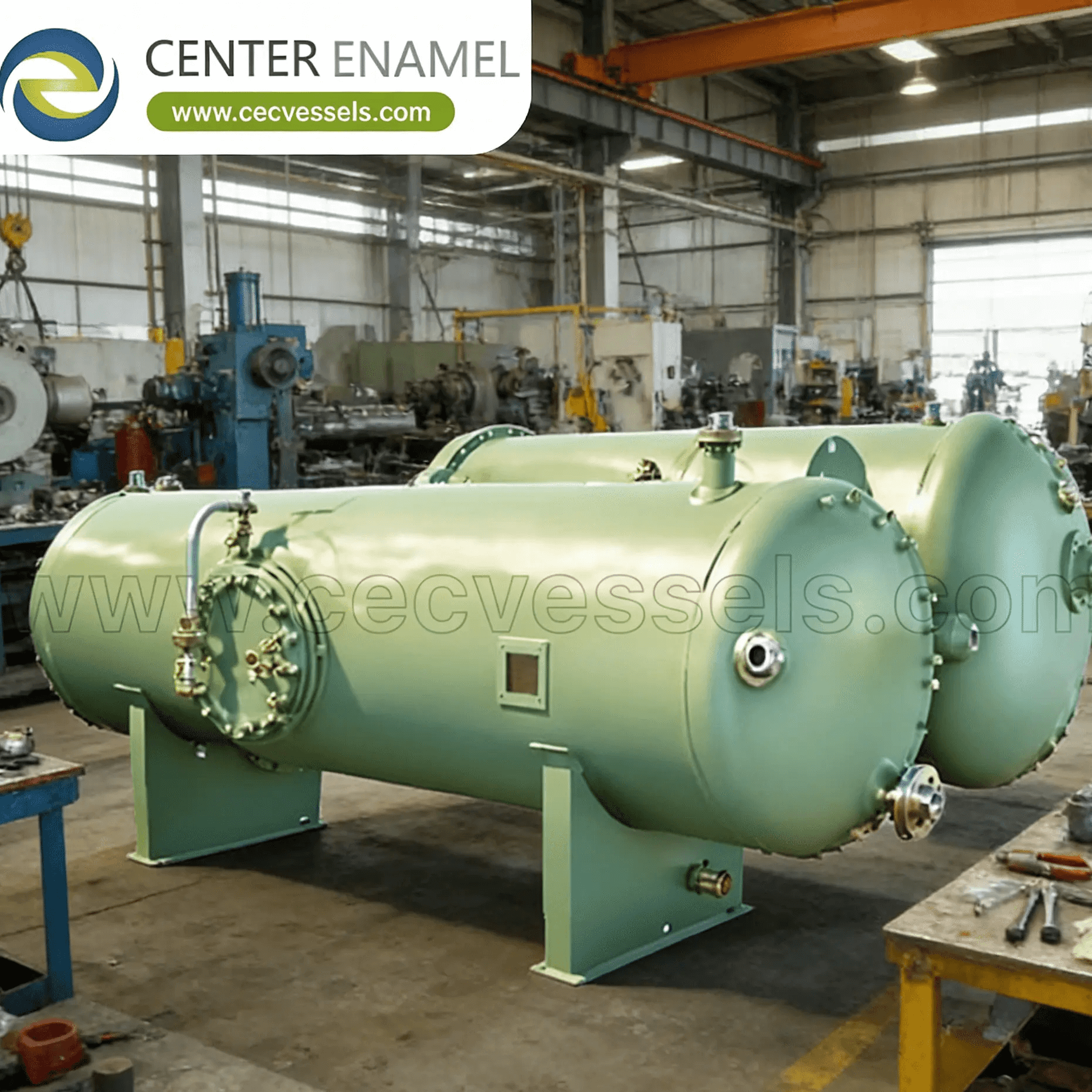
China Oil Processing Separator Manufacturer Providing Oil, Gas, and Water Separation Solutions for Refinery Applications
A separator is a fundamental engineered vessel designed to segregate multi-phase fluid streams into their individual components based on density differences and thermodynamic principles. In modern industrial processing, fluids extracted or transferred from primary sources rarely exist in a pure state; they typically arrive as complex mixtures of gases, liquids, and solid particulates. Within downstream refinery applications, the raw crude oil mixture entering the facility contains significant fractions of water, dissolved gases, and fine sediments. The primary objective of an oil processing separator is to isolate these distinct phases with maximum efficiency, protecting downstream equipment from damage and ensuring compliance with stringent process specifications.
As an established China oil processing separator manufacturer, our engineered systems serve as the critical first line of defense in refinery process streams. By stabilizing process streams early in the production cycle, separators prevent severe operational issues such as liquid slugging in compressors, cavitation in pumps, and chemical foaming in distillation columns.
In a three-phase refinery separation application, the separation process relies on the physical properties of the immiscible phases: gas, oil, and water. The separation of the liquid phases (oil and water) is governed by gravity settling, where the heavier water droplets settle to the bottom of the vessel while the lighter oil droplets rise to the liquid-liquid interface. By maximizing the residence time and using specialized internal components—such as baffle plates, coalescing packs, and weirs—our equipment ensures that the oil and water phases are fully segregated, meeting the strict purification criteria of global refineries.
Advanced Metallurgy and Material Selection for Refinery Separators
Material selection lays the foundation for stable service of pressure vessels, with carbon steel and stainless steel as two mainstream structural materials for industrial manufacturing. When selecting materials for an oil processing separator, engineers must balance mechanical strength, chemical compatibility, and cost-effectiveness to achieve long-term steady operation.
Carbon SteelCarbon steel boasts outstanding mechanical strength and stable processing performance, fitting general industrial media with weak corrosivity. Its good weldability and formability simplify forming and assembly procedures during fabrication. For refinery fluid streams that exhibit low corrosive properties, carbon steel provides a highly robust and cost-effective structural shell. The exterior of carbon steel vessels is finished with high-performance protective industrial coatings to prevent atmospheric oxidation and maintain structural integrity.
Stainless SteelStainless steel targets production lines handling acidic, alkaline, or hygienic-sensitive materials. Smooth inner surfaces of stainless steel components avoid medium residue and simplify regular cleaning, fully complying with sanitary and chemical purity standards. In refinery operations where sour water or organic acids are present, stainless steel or composite clad plates are deployed to prevent material degradation and surface pitting. Standardized manufacturing craft covers plate cutting, rolling, welding, heat treatment, and surface finishing. Weld seams receive full inspection to guarantee structural tightness. Vessel wall thickness and internal supporting structures are matched to material features for long-term steady operation. Products made from the two materials cover chemical, environmental, and food industries, delivering balanced cost and service performance for medium storage and reaction workflows.
Compliance with International Design Codes and Quality Standards
Pressure vessel performance and market credibility are guaranteed by compliance with a complete set of international and national standards. Adherence to strict international safety, containment, and structural codes allows products to integrate reliably into worldwide industrial systems. For a China oil processing separator manufacturer, aligning production with globally recognized standards ensures that the equipment can be seamlessly deployed in refineries across different continents.
Our design and manufacturing processes strictly comply with the following three core standards:
ASME BPVC Section VIII: This is the internationally recognized benchmark for pressure vessel design. Manufacturing and design fully satisfy ASME BPVC Section VIII, the global standard that ensures validated safety factors, precise wall thickness design, and a robust structure for heavy industrial loads during continuous operation.
BS EN 13445: For European customers, vessels comply with BS EN 13445, which specifies material control, design validation, test procedures, and safety inspection in line with the European Pressure Equipment Directive (PED).
GB/T 150.1-150.4-2024: Domestic production strictly implements GB/T 150.1 150.4 2024, the latest national standard featuring modern design technologies and material inspection representing the highest engineering level in China.
The table below outlines how these critical standards guide the manufacturing parameters of our oil processing separators:
Full compliance with these key standards ensures consistent safety, stable quality, and wide applicability for pressure vessels used in global industrial processing.
Rigorous Quality Control and Non-Destructive Testing (NDT)
Within our quality ecosystem at Center Enamel, Non-Destructive Testing (NDT) serves as a critical bridge between our initial Material Performance Testing and final Pressure and Tightness Testing. While our material tests confirm the raw alloy's viability, our NDT ensures that our fabrication and welding processes have introduced no hidden internal flaws. This rigorous testing phase is critical for ensuring that an oil processing separator maintains absolute structural integrity during long-cycle operation in refineries.
We subject the butt-welded joints of our pressure vessels to localized radiographic testing (RT) or ultrasonic testing (UT), covering no less than 10% of the total length of each welded joint. Crucially, we mandatorily include all T-joint configurations in this localized NDT, as they are inherently prone to higher stress concentrations.
Our standard NDT parameters strictly comply with Chinese industry standards to ensure maximum safety:
Radiographic Testing (RT): All RT procedures comply with the standard JB4730.2. We utilize technique class AB, requiring a quality grade of no less than Grade III to achieve compliance.
Ultrasonic Testing (UT): All UT procedures comply with the standard JB4730.3. We mandate technique class B, with a strict quality grade requirement of no less than Grade II for qualification.
Passing these rigorous NDT benchmarks is a mandatory prerequisite before we allow any vessel to advance to final hydrostatic, hydraulic, pneumatic, or kerosene leak testing. This multi-level validation guarantees that the structural sealing remains flawless under continuous operation.
Advancements and Trends in the Global Separator Industry
The global pressure vessel sector keeps advancing alongside the overall upgrading of modern manufacturing. Diversified demands from the chemical, petrochemical, pharmaceutical, food, and environmental industries are continuously lifting international standards for equipment safety, structural rationality, and personalized customization. Today's modern refineries require highly efficient oil processing separator systems that feature compact footprints, optimized fluid retention times, and compatibility with automated process controls.
As a vital pioneer and participant in this changing landscape, Center Enamel anchors our long-term growth on strong technical adaptation and a persistent craftsmanship spirit. In response to these shifting dynamics, we actively promote the deep integration of precise design philosophies and standardized manufacturing protocols. By utilizing advanced computational fluid dynamics (CFD) modeling, we can simulate phase separation patterns inside the vessel before fabrication begins. This integration helps drive the entire pressure vessel industry to move toward higher product stability, minimized operational risks, and significantly longer service cycles.
By sticking to ingenuity-oriented research and development alongside stable quality control, we constantly set reliable benchmarks for the pressure vessel industry. Our core objective is to fuel sound, high-quality industrial progress, ensuring that modern containment equipment can perfectly adapt to the increasingly stringent regulatory environments and sophisticated processing demands found in global industrial supply chains today.
Industrial Project Profile: Phase Separation and Containment Case Study
To showcase our engineering, fabrication, and quality control capabilities, we highlight a major industrial storage and treatment project successfully completed in Hebei, China. While this application focused on municipal waste processing, the structural engineering and standard-compliant manufacturing methodologies directly reflect the rigorous protocols we implement as a leading China oil processing separator manufacturer.
Waste-to-Energy Incineration Project (Hebei, China)For the Waste-to-Energy Incineration Project located in Hebei, China, we successfully engineered, fabricated, and deployed two massive sets of large-scale Landfill Leachate Storage and Treatment Tanks. Engineered using premium-grade carbon steel, these specialized wastewater containment vessels feature advanced anti-corrosive linings designed to withstand the highly complex, abrasive, and acidic chemical profile characteristic of municipal landfill runoff.
The structural engineering and fabrication processes were strictly aligned with China’s premier industrial standards, specifically:
lGB 50341-2003: Code for Design of Vertical Cylindrical Welded Steel Oil Tanks lGB 50128-2005: Code for Construction and Acceptance of Vertical Cylindrical Welded Steel Oil Tanks
These standards ensure peerless structural rigidity and structural longevity. Applied directly within the facility’s critical wastewater treatment infrastructure, these massive storage sets play an indispensable role in biological processing, sediment separation, and environmental hazard containment. This heavy-duty pressure vessel solution successfully mitigates the risk of groundwater pollution, supporting the municipal waste plant in achieving sustainable environmental remediation goals.
The high efficiency of the liquid-solid phase separation achieved in this project highlights our deep understanding of separation dynamics, which is directly applied to optimize our refinery oil processing separator units. Custom Separation Solutions and Cross-Border Manufacturing Expertise
Global standard compliance makes Center Enamel a trustworthy cross-border equipment manufacturer for industrial containment solutions. All independently designed and fabricated pressure vessels pass certification against international mainstream codes including ASME, ISO 9001, and BS EN 13445, fully satisfying market access requirements of Europe, North America, Southeast Asia, and other regions.
Our technical team is proficient in regional regulatory differences, adjusting design schemes and test standards to meet local industrial safety rules. This regulatory versatility allows us to customize every oil processing separator to the exact specifications of the target refinery:
Every finished unit is attached with complete certification reports, material certificates, and inspection records to support clients’ project filing and operation approval. Strict production alignment with standardized norms eliminates hidden structural risks during long-term equipment operation. Whether for small pilot production devices or large-scale industrial reaction systems, all products maintain unified safety and quality benchmarks. Center Enamel’s full set of international certifications simplifies global project cooperation and lowers clients’ compliance costs for industrial production equipment procurement.
Center Enamel: A Leader in Global Containment Systems
Center Enamel builds a complete product matrix covering GFS storage tanks, FBE coated tanks, and five major categories of pressure vessels, forming a comprehensive containment equipment supply system. Our pressure vessel series is divided into storage, reaction, heat exchange, separation, and vertical types, which can be configured flexibly according to production process needs. The equipment suits extensive industrial scenarios including petrochemical processing, pharmaceutical synthesis, food beverage concentration, agricultural chemical production, wastewater treatment, and waste-to-energy conversion. As an established Oil Processing Separator Manufacturer, we match our material selections to the exact chemical profile of each process stream:
Hygienic Stainless Steel Vessels: Match fine chemical and pharmaceutical production with strict sanitation standards.
Cost-Effective Carbon Steel Vessels: Fit general industrial medium storage and reaction workflows, providing high structural rigidity and stable performance.
Center Enamel’s engineering team accumulates rich experience in matching equipment with different production processes, optimizing internal structures to improve material processing efficiency and reduce operation costs. Widely deployed in over 100 countries, the diversified product line addresses containment demands of both light and heavy industrial sectors globally[cite: 1]. By integrating rigorous testing, certified materials, and precision manufacturing, we deliver reliable and long-lasting phase separation solutions that optimize productivity in refinery applications worldwide.
|