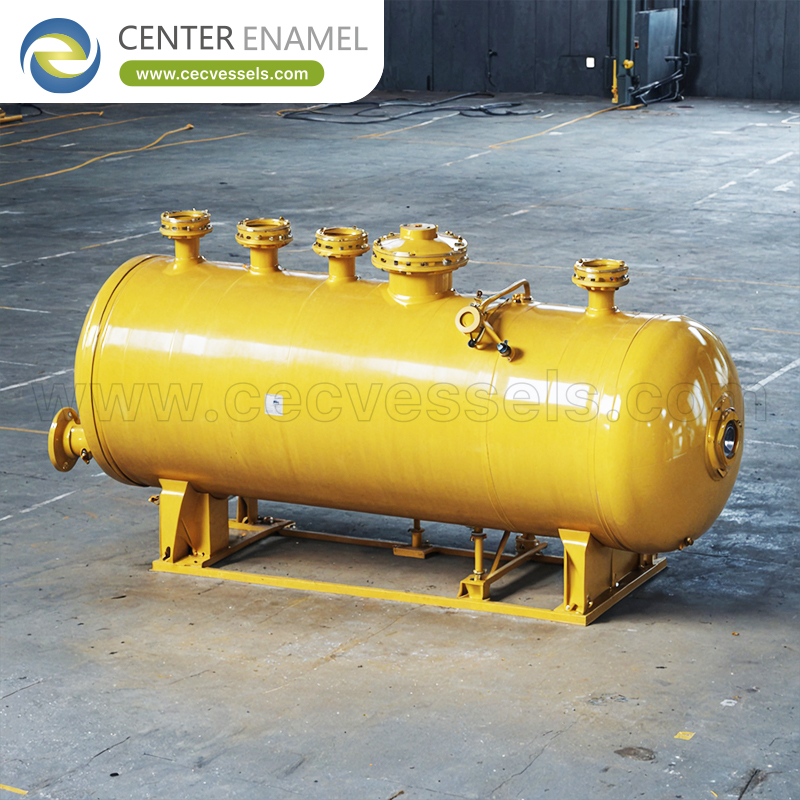
China Polymer Modification Reactor Manufacturer Supporting Molecular Structure Control Processes
Shijiazhuang Zhengzhong Technology Co., Ltd. (Center Enamel) is a specialized China Polymer Modification Reactor Manufacturer dedicated to the engineering of high-performance reaction systems. We provide global industrial partners with certified stainless steel vessels designed to deliver precise temperature control and uniform mixing for the chemical alteration of polymers, enhancing their physical and mechanical properties for diverse applications.
Comprehensive Applications of the Polymer Modification Reactor
The Polymer Modification Reactor is a critical processing unit in the plastics and advanced materials industries, specifically engineered to alter the chemical structure or physical properties of existing polymers. These modifications can improve strength, flexibility, fire resistance, UV stability, or processability. As a leading manufacturer, we design our reactors to support a wide range of specific industrial applications where precise control over molecular changes is essential.
1. Graft Polymerization for Enhanced PropertiesGraft polymerization involves attaching side chains to a polymer backbone, significantly altering its characteristics.
Impact Modifiers for Plastics: The reactor is used to graft monomers onto existing polymer chains (e.g., grafting maleic anhydride onto polypropylene). This enhances the impact strength of commodity plastics like PP, making them suitable for automotive parts and consumer goods.
Compatibilizers for Polymer Blends: When blending incompatible plastics, a graft copolymer produced in the reactor acts as a bridge, improving the adhesion and overall performance of the blend.
2. Cross-linking and Curing ReactionsCross-linking creates a network structure within a polymer, increasing its rigidity, heat resistance, and chemical inertness.
Elastomer Curing: In the rubber industry, the Polymer Modification Reactor facilitates the vulcanization (cross-linking) of natural and synthetic rubbers. Precise temperature control ensures optimal cross-link density, which is critical for tire performance and sealing applications.
Thermoset Resin Curing: For epoxy, polyester, and phenolic resins, the reactor manages the curing process to achieve the desired mechanical strength and thermal stability for composites and coatings.
3. Polymer Degradation and Depolymerization (Controlled)Controlled degradation can be used to reduce molecular weight for specific applications or as part of a recycling process.
Viscosity Modification: The reactor can be used to precisely reduce the molecular weight of polymers, such as polypropylene, to produce waxes or to control the melt flow rate for injection molding applications.
Chemical Recycling Feedstock Preparation: In the circular economy, reactors are used to break down complex polymers into smaller, reusable chemical building blocks. Precise thermal and chemical control ensures the purity of these recovered monomers.
4. Functionalization and Surface ModificationAdding specific functional groups to a polymer can alter its surface properties, improving adhesion, printability, or hydrophilicity.
Flame Retardancy: The Polymer Modification Reactor incorporates flame-retardant additives or grafts functional groups that enhance the fire resistance of textiles and construction materials.
Biocompatible Coatings: For medical devices, polymers are functionalized in these reactors to become biocompatible, preventing rejection when implanted in the human body.
5. Compounding with Nanomaterials and FillersIncorporating advanced materials into a polymer matrix creates composites with superior performance.
Nanocomposite Production: The reactor ensures the uniform dispersion of nanoparticles (e.g., carbon nanotubes, graphene) into polymer melts. This improves electrical conductivity, mechanical strength, and barrier properties.
Reinforced Plastics: For fiberglass or carbon fiber-reinforced polymers, the reactor provides the necessary mixing to thoroughly impregnate the fibers with the polymer matrix, achieving high-strength lightweight composites. Advanced Engineering for Precise Molecular Control
As a prominent China Polymer Modification Reactor Manufacturer, Center Enamel focuses on the technical synergy between thermal management and high-performance agitation. These factors are critical for achieving specific molecular structures and desired polymer properties.
High-Efficiency Heating and Cooling Systems
Polymer modification reactions are often highly sensitive to temperature.
Half-Pipe Coil Jackets: These are ideal for high-velocity thermal media, providing rapid and uniform heating or cooling. The design ensures structural stability, even with viscous polymer melts.
Dimple Jackets: Highly efficient for maintaining a steady temperature over long periods. The dimpled structure creates turbulence in the fluid, maximizing the heat transfer coefficient and preventing localized overheating that could degrade the polymer.
Internal Cooling Baffles: For highly exothermic reactions, internal baffles or cooling coils can be integrated to increase the heat exchange surface area directly within the mixing zone, ensuring precise temperature control throughout the batch.
Optimized Agitation Systems for Viscous PolymersModified polymers can have extremely high viscosities, requiring robust and specialized mixing.
High-Torque Drive Systems: Our reactors are equipped with heavy-duty motors and gearboxes, designed for continuous operation under the significant resistance of polymer melts and slurries.
Specialized Impeller Profiles: We offer a range of impellers including anchor agitators with scrapers, helical ribbon impellers, and planetary mixers. Anchor and helical ribbon designs are particularly effective for high-viscosity materials, ensuring thorough mixing and preventing product buildup on vessel walls.
Variable Speed Control: Every Polymer Modification Reactor features frequency-controlled drives, allowing operators to precisely adjust the mixing intensity. This is essential for preventing shear degradation of the polymer while still achieving uniform dispersion of additives. Compliance with Global Engineering Standards
Our status as a trusted China Polymer Modification Reactor Manufacturer is built on a foundation of strict adherence to international safety and quality codes.
The ASME Boiler & Pressure Vessel Code (BPVC)
We design and fabricate our vessels in accordance with the ASME BPVC Section VIII. This is the premier global benchmark for industrial vessel integrity. Compliance ensures that our Polymer Modification Reactors are engineered with validated factors of safety and structural reliability for long-term industrial service.
BS EN 13445 (European Standard)
For our clients in the European market, we comply with the BS EN 13445 standard for unfired pressure vessels. This standard covers all aspects of material selection, design, and testing, ensuring that our equipment meets the mechanical integrity requirements of the European Pressure Equipment Directive (PED).
GB/T 150.1-150.4-2024 (Chinese National Standard)
As a leader in the domestic industry, we strictly follow the latest 2024 update to the Chinese national standards. This code incorporates modern analytical design methods and material testing protocols, ensuring that our reactors utilize the best available technology and high-quality materials in China.Manufacturing Infrastructure at Center Enamel
Shijiazhuang Zhengzhong Technology Co., Ltd. operates a 150,000 square meter production and R&D base. This facility is equipped with state-of-the-art technology to ensure that every Polymer Modification Reactor meets our rigorous quality benchmarks.
Precision Fabrication and Automated Welding
The reliability of a polymer reactor depends on the quality of its construction. We utilize automated submerged arc welding and robotic welding stations to create consistent, high-strength seams. This precision is essential for vessels that undergo frequent thermal expansion and handle abrasive polymer materials.
Material Integrity and Surface Finishing
We use high-grade stainless steel (304, 316L) to ensure long-term resistance to chemical corrosion from monomers, solvents, and additives. Our internal surfaces can be polished to a mirror finish to prevent product buildup and facilitate easy cleaning between batches.
Comprehensive Quality Testing
Every Polymer Modification Reactor undergoes a series of rigorous inspections:
Non-Destructive Testing (NDT): Including radiographic and ultrasonic testing to verify weld quality.
Hydrostatic Pressure Testing: Each vessel and its jacket are tested under pressure to certify their structural strength.
Thermal Performance Verification: Ensuring the heating and cooling systems meet the exact requirements for the client's specific polymer modification process. Your Partner for Advanced Polymer Solutions
The Polymer Modification Reactor is a vital asset for any modern industrial facility focused on enhancing material performance. Its ability to provide precise thermal management, uniform mixing, and unyielding structural reliability is the primary determinant of molecular structure control and product quality. Investing in a reactor that is engineered to international standards is a prerequisite for achieving the high-performance results that the global advanced materials market demands.
Shijiazhuang Zhengzhong Technology Co., Ltd. (Center Enamel) is dedicated to delivering the high-integrity equipment that the industry requires. By combining our specialized knowledge with strict adherence to The ASME Boiler & Pressure Vessel Code (BPVC), BS EN 13445, and GB/T 150.1-150.4-2024, we provide unmatched reliability and performance. Our role as a leading China Polymer Modification Reactor Manufacturer is to support our clients with the technology and quality they need to succeed in their industrial goals.
Choose Center Enamel for your next polymer modification project and ensure your facility is supported by the highest standards of international engineering and fabrication excellence. |