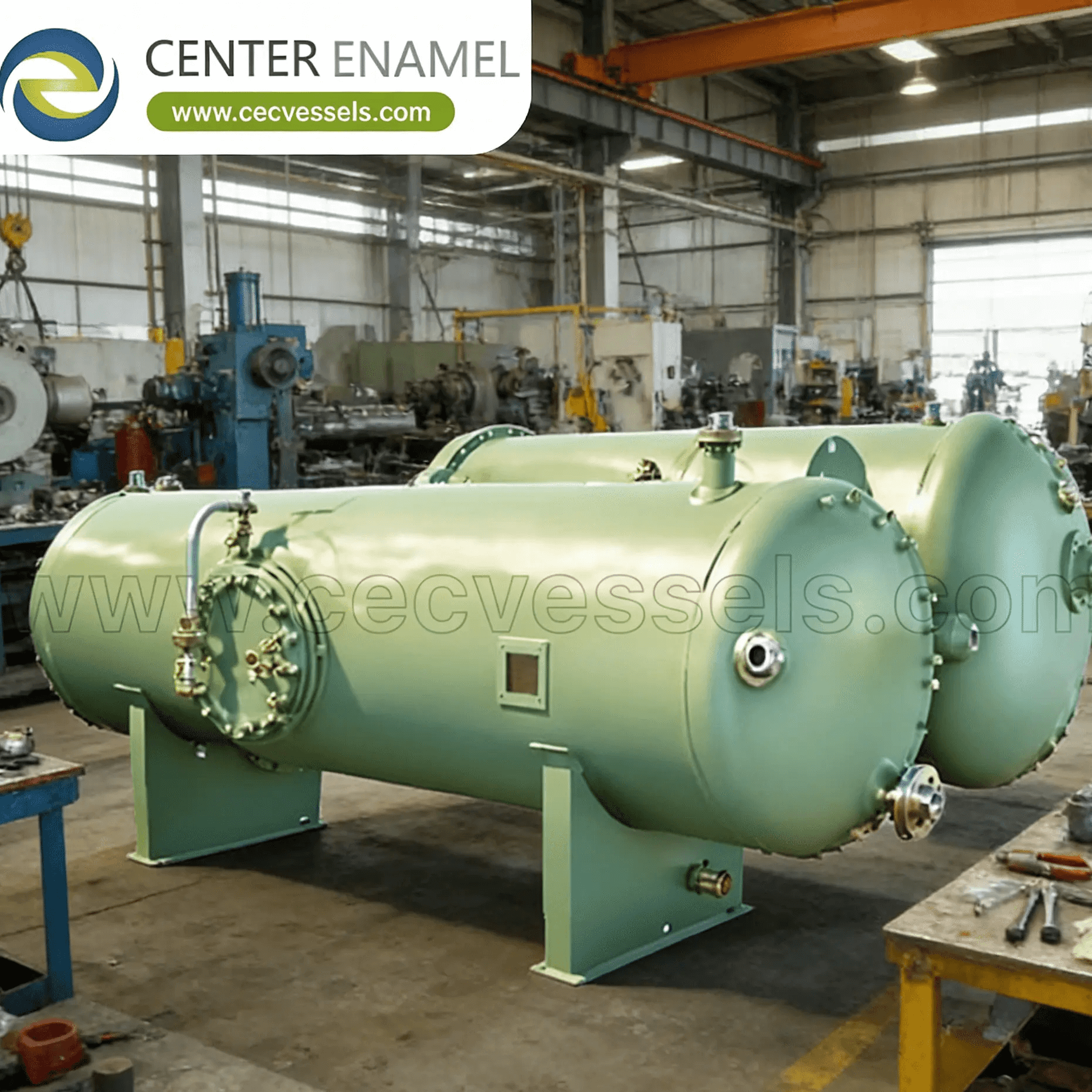
A heat exchanger functions as an essential thermal management unit designed to transfer heat efficiently between isolated fluid streams without allowing them to mix. In modern industrial ecosystems, energy conservation and thermal control directly dictate operational profitability, making these vessels indispensable infrastructure assets across countless heavy sectors. The primary objective of an industrial heat exchanger is either to heat a cold fluid using a high-temperature source or to cool a hot process medium to a safe, stable operating temperature. By utilizing advanced thermodynamic principles, these systems facilitate continuous heat transfer across a solid conducting barrier, transforming volatile thermal waste into highly efficient, reusable energy loops. This capability maximizes heat transfer coefficients while maintaining exceptionally steady pressure drops under continuous processing loads.
Ultimately, heat exchangers provide the critical operational equilibrium that modern facilities require to thrive, establishing a highly sustainable and energy-efficient framework for heavy industrial infrastructure worldwide.
As a premier China Process Thermal Heat Exchanger Manufacturer, Center Enamel integrates advanced metallurgical fabrication, digital thermal design optimization, and rigorous compliance with international pressure vessel standards to deliver high-efficiency heat transfer solutions across the globe.
Advanced Metallurgy & Craft Design Engineering
Craft design of pressure equipment relies heavily on rational matching of carbon steel and stainless steel to satisfy diversified industrial usage demands. Selecting the appropriate material combination ensures operational longevity, structural stability, and optimal thermal conductivity across various process environments.
Carbon Steel Engineering & Protective Coatings
Carbon steel maintains stable structural rigidity under long-cycle operation, with easy machining and low raw material cost. All carbon steel vessel surfaces receive anti-rust coating treatment to extend service life in ordinary workshop environments. Carbon steel heat exchangers are widely deployed in general chemical raw material processing, cooling water loops, and utility heat recovery systems.
Stainless Steel Fabrication & Passive Film Protection
Stainless steel requires fine polishing after forming to form dense passive films that resist corrosion from organic solvents and weak acid fluids. Specialized welding techniques are applied to preserve alloy elements and ensure maximum chemical resistance across tube sheets, channels, and shell connections. Stainless steel heat exchangers match hygienic production scenarios, pharmaceutical synthesis, and high-purity chemical processing.
Standardized Manufacturing & Quality Alignment
The whole production flow, from raw plate inspection to final assembly, follows unified fabrication specifications for both materials. Welding techniques are adjusted separately according to metal properties to eliminate structural defects on joints. Reasonable material classification and standardized processing jointly ensure stable sealing and long service life of finished heat exchanger units.
Standardized Manufacturing Workflow & Fabrication Precision
Our pressure vessel production follows a complete, orderly process with strict inspections embedded across our fabrication base. From raw material entry to final dispatch, every production step is governed by standardized operational procedures to ensure absolute structural integrity and defect-free execution.
Raw Material Qualification:Raw materials are inspected and confirmed qualified before being released to the cutting shop. Full material test certificates guarantee complete traceability from raw plates to completed vessels.
Forming & Modern Assembly:Forming, welding, and assembly are carried out under standard operating procedures in our modern assembly bays, ensuring precise shell roundness, baffle alignment, and tube sheet positioning.
Automated Welding & Ultrasonic Inspection:Certified welders execute precise joints using automated welding processes. All critical welded joints are fully checked using standard ultrasonic testing to ensure structural safety and joint efficiency.
Multi-Step Dimensional Checks:Dimensional accuracy and fit-up quality are verified at multiple steps using mechanical measurement tools.
Performance & Structural Testing:Following fabrication, vessels undergo tightness and performance testing on heavy-duty testing beds to check for structural strength and leak-tight operation.
Surface Treatment & Industrial Coating:The surface treatment department utilizes standard shot-blasting equipment to clean the steel before applying premium, rust-resistant industrial coatings or executing pickling and passivation for stainless steel alloys.
Final Comprehensive Verification:A final comprehensive inspection ensures all indicators, including dimensions and visual appearance, meet application requirements. Each process is controlled and recorded for full traceability from materials to finished products. Standardized workshop production and multi-level inspection ensure high structural strength, stable sealing performance, and long-term reliable use of our process thermal heat exchangers in modern industrial systems.
Rigorous Quality Assurance & Material Performance Testing
Material Performance Testing represents the foundational pillar of our verification process at Center Enamel, establishing the raw material baseline that supports our subsequent Non-Destructive Testing (NDT) and Pressure and Tightness Testing. We require our selected alloys to demonstrate optimal mechanical resilience and chemical authenticity. We achieve this through three specific material evaluations: notch impact testing, hardness testing, and Positive Material Identification (PMI).
Essential Material Verification Protocol
lNotch Impact Testing:Assesses the material's toughness and resistance to brittle fracture under sudden operational shocks or thermal shifts.
lHardness Testing:Confirms the metal's resistance to localized plastic deformation across welded zones and heat-affected areas.
lPositive Material Identification (PMI):Utilizes advanced spectroscopy to verify the precise chemical composition of the alloy, ensuring it matches strict design specifications.
These material tests guarantee that the vessel will respond perfectly to our NDT evaluations—such as localized RT or UT joint inspections—and will easily withstand the physical stresses applied during final pressure and tightness testing, including hydrostatic and pneumatic validations. By validating material performance at the molecular and mechanical levels, we ensure our process thermal heat exchangers possess intrinsic strength and absolute operational reliability.
Regulatory Compliance and Global Manufacturing Standards
With the continuous evolution of global industrialization and technical standards, countries worldwide have implemented strict manufacturing and regulatory policies for thermal processing equipment in the oil, petrochemical, and power generation industries. Establishing absolute compliance with these international standards ensures seamless integration, stable long-term operation, and effortless safety verification across global project sites.
Chinese National Standards (GB Framework)
In China, the petrochemical sectors strictly enforce the GB/T 150.1–150.4-2024 standards alongside NB/T 47004 for heat exchangers, requiring manufacturers to possess special equipment manufacturing licenses to ensure stable long-term operation under complex media conditions.
North American Standards (ASME BPVC)
The North American market relies heavily on the ASME Boiler and Pressure Vessel Code, particularly ASME Section VIII Division 1, where all process equipment entering oil refineries and processing plants must pass authorized registration and bear official certification stamps.
European Union Standards (PED & BS EN 13445)
The European region enforces the Pressure Equipment Directive (PED 2014/68/EU) alongside BS EN 13445, setting forth systematic legal requirements for material toughness, welding procedure qualifications, and compliance assessments.
By maintaining unified design and manufacturing protocols across GB, ASME, and EN standards, Center Enamel delivers process thermal heat exchangers capable of satisfying cross-border technical audits and operating smoothly anywhere in the world.
Customized Engineering & Thermal Design Optimization
Center Enamel’s design team excels at translating complex, bespoke industrial application requirements into secure, standard-compliant heat exchanger architectures. Operating within global frameworks, our engineers customize shell diameters, tube layouts, baffle spacings, and nozzle configurations to achieve optimal thermal efficiency.
Thermal-Hydraulic & Mechanical Calculations
The engineering team performs rigorous thermal-hydraulic calculations and mechanical evaluations to optimize heat transfer coefficients while managing pressure drops across fluid circuits. Stress analysis evaluates thermal expansion, mechanical loads, and flow-induced vibration, ensuring that every Process Thermal Heat Exchanger maintains structural integrity over decades of continuous operation.
Precision Component Engineering
Every detail of the heat exchanger's pressure-retaining components—including tube sheets, channels, floating heads, blind flanges, and heavy forged nozzles—is engineered to match strict standard ratings. Precision gasket seating surfaces and advanced tube-to-tubesheet joint welding prevent cross-contamination between shell-side and tube-side fluids.
Engineering Applications & Industrial Case Study
The real-world reliability of Center Enamel's vessel design and fabrication capabilities is reflected in successful engineering project deployments across critical industrial sectors globally.
Waste-to-Energy Incineration Project (Hebei, China)
For the Waste-to-Energy Incineration Project located in Hebei, China, we successfully engineered, fabricated, and deployed two massive sets of large-scale Landfill Leachate Storage and Treatment Tanks.
lProject Location: Hebei, China
lApplication Category: Industrial Leachate Storage & Multi-Stage Treatment Infrastructure
lMaterial Specification: Premium-Grade Carbon Steel with Advanced Protective Linings
lDesign Standards: GB 50341-2003 & GB 50128-2005
Technical Engineering & Material Protection
Engineered using premium-grade carbon steel, these specialized wastewater containment vessels feature advanced anti-corrosive linings designed to withstand the highly complex, abrasive, and acidic chemical profile characteristic of municipal landfill runoff. The structural engineering and fabrication processes were strictly aligned with China’s premier industrial standards, specifically GB 50341-2003 (Code for Design of Vertical Cylindrical Welded Steel Oil Tanks) and GB 50128-2005 (Code for Construction and Acceptance of Vertical Cylindrical Welded Steel Oil Tanks), ensuring peerless structural rigidity and structural longevity.
Operational Infrastructure Contribution
Applied directly within the facility’s critical wastewater treatment infrastructure, these massive storage sets play an indispensable role in biological processing, sediment separation, and environmental hazard containment. This heavy-duty pressure vessel solution successfully mitigates the risk of groundwater pollution, supporting the municipal waste plant in achieving sustainable environmental remediation goals.
Company Overview: Global Capabilities of Center Enamel
Shijiazhuang Zhengzhong Technology Co., Ltd (Center Enamel) is a preeminent, high-tech industrial enterprise recognized as a leading manufacturer in the global storage and containment sector. With decades of continuous engineering excellence and a steadfast commitment to technological innovation, the company has established a distinguished reputation for delivering robust steel vessels and high-performance pressure containment systems that support critical infrastructure worldwide.
Headquartered in China, the company functions as a comprehensive industrial backbone, blending advanced scientific research, custom structural engineering, and precision manufacturing within a single ecosystem. By serving as a trusted partner to multinational engineering, procurement, and construction (EPC) firms, Center Enamel plays a pivotal role in securing global supply chains, consistently transforming complex fluid management and chemical processing requirements into reliable, long-term operational containment solutions.
Why Partner with Center Enamel for Process Thermal Heat Exchangers
Choosing Center Enamel as your manufacturing partner ensures your project receives world-class thermal engineering, certified fabrication quality, and comprehensive lifecycle support:
lProven Thermal Engineering Leadership:Decades of specialized experience in thermal equipment design, custom alloy fabrication, and process heat recovery optimization.
lFull Multi-Standard Compliance:Certified compliance across ASME BPVC Section VIII, BS EN 13445, PED 2014/68/EU, and Chinese GB standards.
lTailored Process Matching:Every Process Thermal Heat Exchanger is custom tailored to match your specific thermal duty, fluid properties, and space constraints.
lTotal Quality & NDT Traceability:Step-by-step non-destructive testing, PMI alloy verification, impact testing, and dimensional tracking guarantee zero-defect delivery.
lGlobal EPC & Delivery Capabilities:Comprehensive logistics management, advanced field integration support, and dedicated after-sales service for seamless global project execution.


