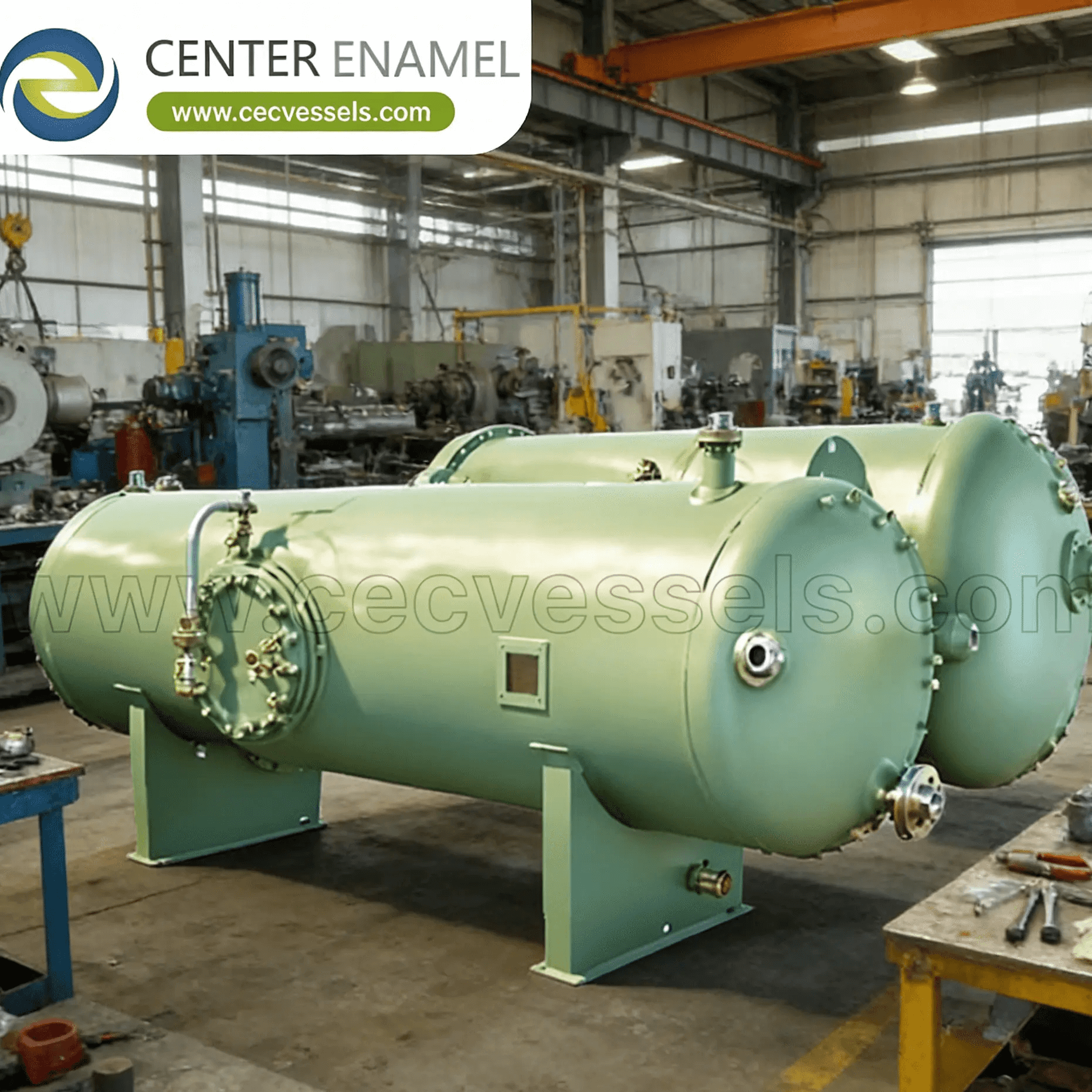
China Waste Recovery Pressure Vessel Manufacturer Delivering Pressure Equipment for Industrial Waste Recovery Systems
A waste recovery pressure vessel represents a foundational category of heavy-duty engineered equipment designed to safely contain fluids, gases, or vapors at designated operating pressures that differ from the ambient atmosphere. Within the global processing landscape, these specialized containers serve as the ultimate structural backbone, providing the secure operational boundaries required to execute intense thermodynamic operations, heat reclamation, and fluid separation. Engineered to withstand design internal or external forces seamlessly, a waste recovery pressure vessel is an indispensable product that ensures the stable handling of recycled process media, industrial effluents, and secondary thermal streams across countless manufacturing sectors.
Whether utilized for long-term storage, fluid separation, or chemical reclamation processing, the primary role of each container is to maintain absolute structural integrity under continuous operational stress. By locking in specified operating parameters, this product category serves as a reliable asset for industrial facilities, ensuring that high-capacity resource recycling and environmental treatment systems can be scaled up efficiently while maintaining stable containment parameters. For international procurement managers seeking long-term operational consistency, partnering with an experienced China waste recovery pressure vessel manufacturer ensures that every equipment configuration is precisely planned, modeled, and constructed to meet the exact mechanical requirements of industrial waste recovery systems.
Material Science and Manufacturing Craftsmanship
Material selection lays the foundation for the stable service of each waste recovery pressure vessel, with carbon steel and stainless steel serving as the two mainstream structural materials for industrial manufacturing.
Carbon Steel CharacteristicsCarbon steel boasts outstanding mechanical strength and stable processing performance, making it an excellent fit for general industrial media with weak corrosivity. Its good weldability and formability simplify forming and assembly procedures during fabrication. To ensure an extended service life in ordinary workshop or outdoor recovery environments, all carbon steel vessel surfaces receive a comprehensive anti-rust coating treatment. This protective barrier seals the metal substrate against moisture, ensuring that the container maintains its calculated structural thickness over decades of service.
Stainless Steel ApplicationsStainless steel targets production lines handling acidic, alkaline, or recovery-sensitive materials. Following the mechanical forming processes, stainless steel components undergo fine polishing and passivation to form dense passive films that inherently resist corrosion from organic solvents and complex industrial liquids. The smooth inner surfaces of stainless steel components also avoid medium residue and simplify regular cleaning, fully complying with standard operational procedures for modern processing sectors.
Standardized Processing LayoutStandardized manufacturing craft covers precise plate cutting, rolling, welding, heat treatment, and surface finishing. The vessel wall thickness and internal supporting structures are systematically matched to the material features to ensure long-term, steady operation. Products made from these two materials cover chemical, environmental, and secondary resource industries, delivering a balanced cost-to-service performance ratio for medium storage and reaction workflows.
Industry Evolution and Standards Compliance
The global pressure vessel sector keeps advancing alongside the overall upgrading of modern manufacturing. Diversified demands from the chemical, pharmaceutical, food, and environmental industries are continuously lifting international standards for equipment safety, structural rationality, and personalized customization. As a vital pioneer and participant in this changing landscape, a dedicated waste recovery pressure vessel manufacturer must anchor long-term growth on strong technical adaptation and a persistent craftsmanship spirit.
In response to these shifting dynamics, the industry actively promotes the deep integration of precise design philosophies and standardized manufacturing protocols. This integration helps drive the entire waste recovery pressure vessel industry to move toward higher product stability and significantly longer service cycles. By sticking to ingenuity-oriented research and development alongside stable quality control, manufacturers set reliable benchmarks for the industry. The core objective is to fuel sound, high-quality industrial progress, ensuring that modern containment equipment can perfectly adapt to the increasingly stringent regulatory environments and sophisticated processing demands found in global industrial supply chains today.
Specialized Engineering Teams and Core Competencies
Driven by a commitment to premium safety and global sustainability, Center Enamel operates an advanced, five-dimensional organizational structure built for international performance.
Research & Development Team:Our technical foundation relies on creating resilient material advancements and heavy-duty manufacturing technologies that lead the modern chemical and energy containment industry.
Consultative Marketing Team:Collaborating directly with stakeholders, our specialized marketing team leverages profound industry experience to structure comprehensive solutions that address unique operational parameters.
Analytical Design Team:These concepts are dynamically translated into secure physical specifications, ensuring that all equipment safety indicators, structural calculations, and regulatory codes are flawlessly embedded.
Disciplined Installation Team:Field transformation is managed by our global installation team, whose members apply a rigorous work style to execute complex vessel installations on-time.
Responsive After-Sales Team:The continuity of our quality promise is permanently sustained by our efficient after-sales team, which provides prompt diagnostic assistance and technical maintenance to clients globally.
Together, these five specialized departments form a single, powerful corporate mechanism dedicated to driving global engineering progress.
Advanced Design Engineering and Optimization
Designing robust pressure vessels is a highly precise science centered on rigid international manufacturing standards and rigorous structural verification. The specialized design team meticulously evaluates the chemical and mechanical compatibility of high-strength materials, selecting ideal grades mandated by international material specifications.
The engineering workflow focuses heavily on geometric optimization, where engineers calculate precise wall-thickness dimensions and optimal weld-joint configurations to withstand design internal and external pressures. Special attention is dedicated to the design of high-stress zones, such as flange ratings, gasket selections, and bolt-circle diameters, ensuring leak-free performance under regular operations. Our designers rigidly apply the mandatory safety factors and test pressure formulas dictated by global energy and chemical infrastructure directives. Through this detail-oriented methodology, the team effectively manages thermal expansion rates, fluid dynamics, and potential corrosion variables over the equipment’s calculated lifespan. The resulting code-compliant designs establish an exceptionally secure foundation, ensuring that each custom pressure vessel performs with maximum structural reliability and meets every rigid global compliance matrix.
Comprehensive Testing and Quality Assurance
Within our quality ecosystem, Non-Destructive Testing (NDT) serves as a critical bridge between our initial Material Performance Testing and final Pressure and Tightness Testing. While our material tests confirm the raw alloy's viability, our NDT ensures that our fabrication and welding processes have introduced no hidden internal flaws. -----+ We subject the butt-welded joints of our pressure vessels to localized radiographic testing (RT) or ultrasonic testing (UT), covering no less than 10% of the total length of each welded joint. Crucially, we mandatorily include all T-joint configurations in this localized NDT, as they are inherently prone to higher stress concentrations. All of our NDT procedures strictly comply with the stringent Chinese industry standards JB4730.2 and JB4730.3. For radiographic testing, we utilize technique class AB, requiring a quality grade of no less than Grade III to achieve compliance. For ultrasonic testing, we mandate technique class B, with a strict quality grade requirement of no less than Grade II for qualification. Passing these rigorous NDT benchmarks is a mandatory prerequisite before we allow any vessel to advance to final hydrostatic, hydraulic, pneumatic, or kerosene leak testing.
Industrial Waste Recovery Case ProfileIndustrial reclamation solutions demonstrate their true functional value through successful field deployments. By matching structural attributes to exact process parameters, an experienced China waste recovery pressure vessel manufacturer helps industrial plants streamline complex distribution workflows and maximize secondary utilization uptime.
Resource Recycling Project (Hubei, China)In the Hubei Chemical Industry Project, Center Enamel engineered and delivered a comprehensive suite of premium pressure vessels customized for sophisticated fluid handling and resource recovery. This robust deployment encompasses a diverse range of specialized equipment, including:
Meticulously fabricated from top-grade stainless steel and carbon steel, each vessel is designed to withstand specified industrial pressures while ensuring exceptional corrosion resistance and mechanical longevity. The entire manufacturing process strictly complied with the authoritative GB/T 150 standard governing pressure vessels in China, guaranteeing superior structural integrity, regulatory compliance, and operational stability. Tailored for full-scale integrated chemical fluid processing, efficient separation, and centralized steam distribution, these vessels serve as vital infrastructure within the facility. They optimize thermal efficiency, eliminate fluid impurities, and streamline complex distribution workflows, thereby empowering the client to maintain uninterrupted production, minimize energy losses, and achieve rigorous compliance with industrial environmental directives.
Company Profile: Shijiazhuang Zhengzhong Technology Co., Ltd (Center Enamel)Through a robust international sales network and a highly sophisticated logistics ecosystem, Shijiazhuang Zhengzhong Technology Co., Ltd (Center Enamel) has achieved a profound global footprint, successfully deploying its industrial vessels across over 100 countries and diverse geographic environments. The company serves an expansive global clientele spanning the oil and gas, petrochemical refining, pharmaceutical synthesis, power generation, and environmental wastewater treatment sectors.
Our dedicated pressure equipment product portfolio encompasses storage, reaction, heat exchange, separation, and vertical vessel types, which can be configured flexibly to meet the specific requirements of industrial waste recovery systems. As an established China waste recovery pressure vessel manufacturer, our facility relies on organized fabrication workflows, verified material processing, and qualified welding tracks to build long-term value. Driven by a client-centric philosophy, Center Enamel’s dedicated project management teams work in tight coordination with global partners, providing end-to-end technical support from initial conceptual drafting and thermodynamic calculation to secure international shipping and comprehensive after-sales guidance. By consistently pairing heavy-duty mechanical engineering with world-class customer service, Shijiazhuang Zhengzhong Technology Co., Ltd (Center Enamel) builds long-term, transparent partnerships, empowering the global industrial sector to achieve sustainable, efficient, and secure peak production capacity.
|