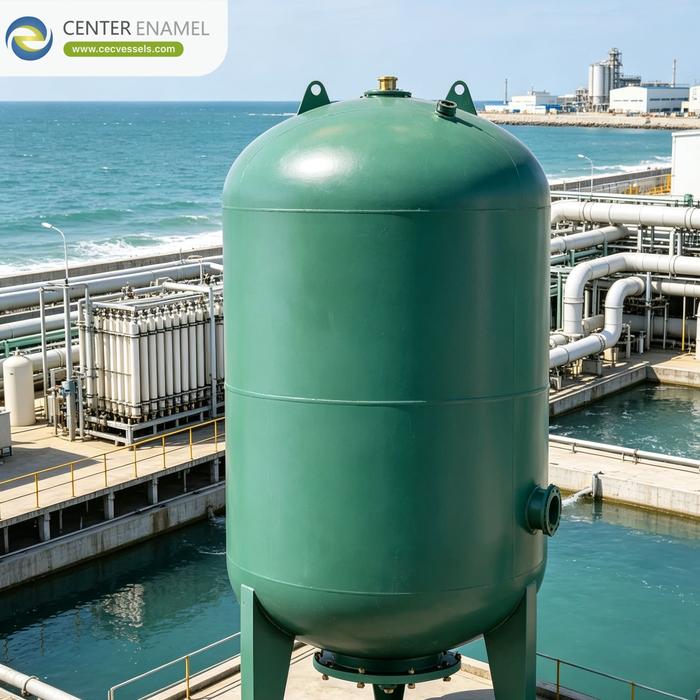
A chlorination reactor is an industrial process vessel used to carry out controlled chlorination reactions by bringing chlorine or chlorine-containing compounds into contact with a reactant under controlled mixing, temperature, and material conditions. Chlorination reactors are widely used in chemical, pharmaceutical, polymer, water treatment, and specialty chemical production.
What Is a Chlorination Reactor?
A chlorination reactor is a specialized reactor designed for chemical reactions in which chlorine is introduced into a process stream or reacts with an organic or inorganic compound. The reactor provides a controlled environment for reaction mixing, heat transfer, gas-liquid contact, temperature control, and reaction residence time.
Depending on the process, chlorine may be supplied as a gas, dissolved in a liquid, or introduced through a chlorine-containing reagent. Reactor design therefore depends on the reactants, reaction temperature, material compatibility, chlorine concentration, production capacity, and required residence time.
How Does a Chlorination Reactor Work?
A chlorination reactor works by controlling the contact between chlorine and the reactant while maintaining suitable process conditions. Chlorine or a chlorine-containing material is introduced into the reactor, while an agitator, gas distributor, or other mixing system promotes uniform contact throughout the reaction zone.
The main operating steps generally include reactant feeding, chlorine introduction, mixing, heat removal or heating, reaction control, and product discharge. Continuous and batch configurations can be selected according to production requirements.
For gas-liquid chlorination, the reactor must provide sufficient gas-liquid mass transfer. Proper gas distribution and agitation increase the contact area between chlorine and the liquid phase, helping maintain consistent reaction conditions.
What Materials Are Used for Chlorination Reactors?
The material of construction for a chlorination reactor depends on the chemical composition, chlorine concentration, operating temperature, process medium, and required corrosion resistance.
Common material options include glass-lined steel, stainless steel, nickel alloys, titanium, carbon steel with protective linings, and clad materials. Glass-lined reactors can provide a chemically resistant process surface for applications where the process medium is compatible with the lining.
For more demanding chemical environments, corrosion-resistant alloys or specialized linings may be selected. Material selection should consider both general corrosion and localized corrosion associated with chlorine-containing process streams.
How Is Temperature Controlled in a Chlorination Reactor?
Temperature control is an important part of chlorination reactor design because chlorination reactions can generate or absorb heat depending on the specific reaction.
A reactor may use an external jacket, internal heating or cooling coils, heat-transfer surfaces, or an external circulation loop to regulate temperature. The required heat-transfer area depends on the reaction heat load, operating temperature, process flow rate, and heat-transfer medium.
Accurate temperature monitoring helps maintain stable reaction conditions and can support consistent product quality in both batch and continuous chlorination processes.
How Does Mixing Work in a Chlorination Reactor?
Mixing promotes uniform distribution of chlorine and reactants throughout the reactor. An agitator can create circulation within the liquid phase and improve the contact between gaseous and liquid reactants.
For gas-liquid chlorination, reactor design may combine an agitator, gas sparger, distributor, baffle system, and controlled gas inlet. The selected configuration depends on liquid properties, gas flow rate, viscosity, reaction kinetics, and required mass-transfer performance.
Effective mixing can reduce concentration gradients and support more uniform reaction conditions throughout the vessel.
What Is Gas-Liquid Mass Transfer in Chlorination Reactors?
Gas-liquid mass transfer is the process by which chlorine moves from the gas phase into the liquid phase before reacting with the target substance.
The performance of gas-liquid transfer is affected by gas bubble size, agitation speed, interfacial area, liquid properties, gas flow rate, pressure, temperature, and reactor geometry. A suitable gas distribution system helps disperse chlorine through the liquid and provides sufficient gas-liquid contact.
For this reason, sparger design and agitator selection are important considerations when designing a chlorination reactor for gas-phase chlorine addition.
What Are the Main Types of Chlorination Reactors?
Batch chlorination reactors are commonly used when production requires flexible operating conditions, multiple formulations, or different reaction cycles. Reactants are charged into the vessel, chlorine is introduced under controlled conditions, and the product is discharged after the required reaction time.
Continuous chlorination reactors are designed for steady production. Reactants and chlorine are continuously introduced while the reacted material leaves the reactor at a controlled flow rate. These systems can provide consistent production conditions when the process is suitable for continuous operation.
Jacketed chlorination reactors incorporate a heat-transfer jacket around the vessel to support temperature regulation during the reaction.
Glass-lined chlorination reactors use a glass-lined internal surface to provide corrosion resistance for compatible chemical processes.
The appropriate reactor configuration depends on reaction kinetics, production capacity, heat-transfer requirements, material compatibility, and process control requirements.
What Factors Affect Chlorination Reactor Design?
The design of a chlorination reactor should consider several process and mechanical parameters. Important factors include:
Reaction chemistry: The reactants, chlorine source, reaction pathway, and reaction kinetics determine the required reactor configuration.
Operating temperature: Temperature affects reaction rate, heat-transfer requirements, and material selection.
Mixing requirements: Agitator type, impeller design, rotational speed, and baffle configuration affect fluid circulation and reactant distribution.
Gas-liquid mass transfer: Chlorine gas flow rate, gas dispersion, bubble size, and liquid properties influence mass-transfer performance.
Material compatibility: Reactor materials and internal components must be compatible with the process medium and operating conditions.
Reactor volume: Working volume and total vessel volume should provide the required residence time and production capacity.
Heat-transfer area: Jackets or internal coils should provide sufficient heat-transfer capacity for the process duty.
Instrumentation: Temperature, pressure, flow, level, and other process variables can be monitored according to the reactor application.
What Equipment Is Included in a Chlorination Reactor System?
A complete chlorination reactor system can include more than the reactor vessel itself. Depending on the process, the system may contain an agitator, chlorine feed system, gas distributor, heat-transfer system, temperature sensors, pressure instruments, control valves, condensers, pumps, piping, and product discharge equipment.
The reactor can also be integrated with feeding, separation, purification, condensation, or downstream processing equipment to create a complete chemical production system.
Where Are Chlorination Reactors Used?
Chlorination reactors are used across several industrial sectors where controlled chlorination reactions are required.
Typical applications include organic chemical synthesis, pharmaceutical intermediates, specialty chemicals, polymer production, water treatment chemicals, chlorinated solvents, and chemical raw material processing.
The reactor configuration varies according to the process. Some applications require batch processing and flexible operation, while others require continuous reaction and stable production rates.
Why Is Corrosion Resistance Important for Chlorination Reactors?
Corrosion resistance is an important consideration because chlorine and chlorine-containing compounds can interact with reactor materials and process components.
Material selection should consider the specific chemical composition, concentration, temperature, moisture content, and exposure conditions. Depending on the application, manufacturers may use glass linings, stainless steels, nickel-based alloys, titanium, or other corrosion-resistant materials.
The selected material should be evaluated for the actual process conditions rather than chosen only according to the general category of chlorination.
How Is a Chlorination Reactor Designed for Industrial Production?
Industrial chlorination reactor design combines process engineering with mechanical vessel design. Process engineers determine reaction volume, residence time, mixing requirements, heat-transfer duty, and material compatibility.
Mechanical design then considers vessel geometry, wall thickness, nozzle arrangement, agitator support, internal components, jacket configuration, and applicable design standards.
Engineering tools such as finite element analysis (FEA) can be used to evaluate mechanical stress and structural performance. Computational fluid dynamics (CFD) may also be used to study fluid circulation, mixing behavior, gas dispersion, and heat-transfer characteristics where detailed process analysis is required.
Which Standards Can Apply to Chlorination Reactor Manufacturing?
Depending on the project location and vessel classification, chlorination reactor manufacturing may follow applicable pressure-vessel and fabrication standards.
Commonly referenced standards can include ASME Section VIII, EN 13445, and GB/T 150, together with project-specific requirements for welding, inspection, testing, materials, and surface treatment.
The applicable standard should be determined according to the reactor design, operating conditions, jurisdiction, and customer specifications.
What Should You Consider When Selecting a Chlorination Reactor Manufacturer?
When selecting a chlorination reactor manufacturer, buyers should evaluate technical capabilities rather than relying only on general manufacturing claims.
Important considerations include material selection, reactor volume, heat-transfer design, agitator configuration, gas distribution, fabrication capabilities, welding quality, inspection procedures, applicable design standards, and customization capability.
A manufacturer should also be able to provide technical information covering the reactor's operating conditions, construction materials, dimensions, mixing system, heating or cooling system, and applicable inspection requirements.
Chlorination Reactor Manufacturer for Customized Industrial Systems
Center Enamel provides customized reactor and process equipment solutions for industrial chemical applications. Chlorination reactor configurations can be developed according to process requirements such as reactor capacity, material selection, mixing, heat transfer, gas-liquid contact, operating temperature, and applicable manufacturing standards.
The final reactor design should be matched to the specific chlorination process rather than based on a standard vessel configuration. Process conditions, chemical compatibility, production capacity, and equipment integration can all be considered during engineering and manufacturing.
Frequently Asked Questions About Chlorination Reactors
What is the main purpose of a chlorination reactor?
The main purpose of a chlorination reactor is to provide a controlled environment for chlorination reactions. It manages reactant contact, mixing, temperature, residence time, and other process conditions required for the reaction.
What materials are commonly used in chlorination reactors?
Common materials include glass-lined steel, stainless steel, nickel alloys, titanium, carbon steel with protective linings, and clad construction. The appropriate material depends on the actual process chemistry and operating conditions.
How is chlorine introduced into a reactor?
Chlorine can be introduced through a gas sparger, gas distributor, submerged injection system, or other engineered feed arrangement. The configuration depends on the reaction process and required gas-liquid mass transfer.
How is heat controlled in a chlorination reactor?
Heat can be controlled using a jacket, internal coils, external heat exchanger, or circulation system. Temperature sensors and control systems can regulate the heat-transfer medium according to the process requirements.
What is the difference between batch and continuous chlorination reactors?
A batch chlorination reactor processes a defined quantity of reactants during each production cycle, while a continuous chlorination reactor continuously receives feed and discharges product. The choice depends on production volume, reaction kinetics, process flexibility, and operating requirements.
What industries use chlorination reactors?
Chlorination reactors are used in chemical manufacturing, pharmaceutical intermediate production, specialty chemicals, polymer processing, water treatment chemical production, and other industrial synthesis applications.
How do you select a chlorination reactor?
Selection should consider reaction chemistry, production capacity, reactor volume, operating temperature, material compatibility, mixing requirements, gas-liquid mass transfer, heat-transfer duty, reactor configuration, and applicable design standards.
Can a chlorination reactor be customized?
Yes. A custom chlorination reactor can be configured according to process volume, vessel dimensions, material construction, agitator type, gas distribution system, jacket or coil arrangement, instrumentation, and applicable manufacturing standards.


