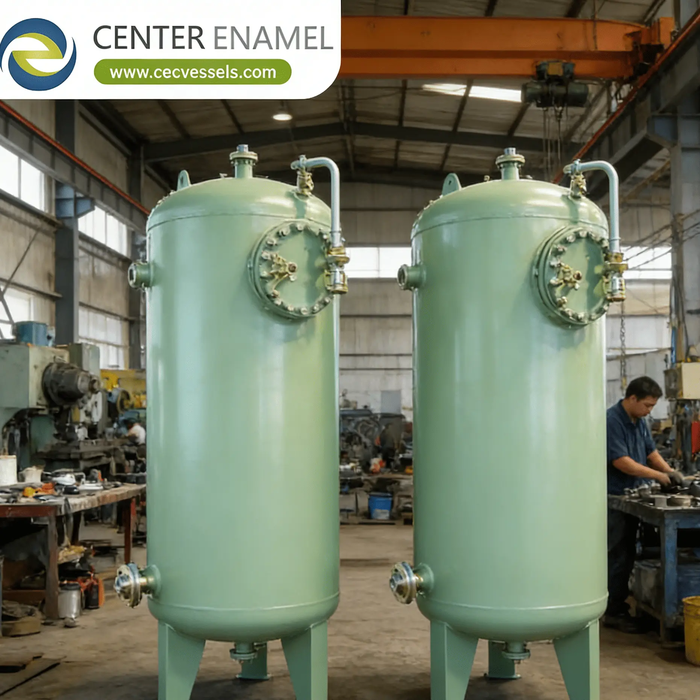
A Coalescing Separator is an industrial separation vessel designed to remove dispersed liquid droplets from another liquid phase. In oil field production, it is commonly used for oil-water separation, crude oil dehydration, and liquid purification.
What Is a Coalescing Separator?
A Coalescing Separator is a separation device that helps small droplets of one liquid combine into larger droplets so they can be separated more easily from another immiscible liquid.
In oil field production, crude oil commonly contains water, suspended solids, and other contaminants. Some water droplets are small enough to remain dispersed in crude oil for an extended period, making conventional gravity separation less effective.
A Coalescing Separator uses specialized internal coalescing media to encourage small dispersed droplets to contact one another and merge. Once the droplets become larger, their separation from the continuous liquid phase becomes easier.
A typical Coalescing Separator for oil field applications may include a coalescing filter element, separation filter element, liquid collection section, inlet and outlet connections, drainage system, and other internal components.
This design makes coalescing separation useful for applications where simple settling is not sufficient to achieve the required liquid separation performance.
How Does a Coalescing Separator Work?
The working principle of a Coalescing Separator is based on combining small droplets into larger droplets before completing the final separation.
The process can generally be divided into several stages.
1. Fluid Inlet
The oil-water mixture enters the Coalescing Separator through the inlet connection. The inlet structure is designed to distribute the incoming fluid and reduce excessive turbulence.
2. Preliminary Separation
Larger water droplets and heavier suspended materials can begin separating from the oil phase as the flow enters the vessel.
3. Coalescing Filtration
The fluid then passes through the Coalescing Filter Element. Small dispersed water droplets contact the filter media and are retained on the surface or within the structure of the coalescing material.
4. Droplet Coalescence
As additional droplets reach the coalescing media, they combine with previously captured droplets. Small droplets gradually become larger droplets.
5. Separation
The larger droplets can then move away from the coalescing media and separate from the continuous oil phase.
6. Liquid Collection
Separated water accumulates in the lower collection area of the vessel and can be removed through a suitable drain system.
7. Treated Oil Outlet
The treated oil exits through the outlet after passing through the required separation stages.
The two-stage concept of coalescing and final separation is an important feature of many industrial Coalescing Separators. Similar designs are widely used in oil purification systems, where coalescing elements combine small water droplets and separation elements provide the final phase separation.
What Are the Main Components of a Coalescing Separator?
The configuration of a Coalescing Separator depends on the application, but several components are commonly included.
1. Coalescing Filter Element
The Coalescing Filter Element provides the surface and structure needed for small droplets to contact and combine. Its design depends on the fluid characteristics and required separation performance.
2. Separation Filter Element
The Separation Filter Element provides an additional separation stage after the droplets have grown through coalescence.
3. Pressure Vessel
The vessel provides the containment structure for the separation process and is designed according to the required operating conditions and applicable standards.
4. Inlet System
The inlet distributes the incoming oil-water mixture and helps establish suitable internal flow conditions.
5. Liquid Collection Section
The separated water or other liquid phase accumulates in a designated collection area before drainage.
6. Drainage System
A drainage arrangement allows the separated liquid to be removed from the vessel.
7. Differential Pressure Monitoring
Depending on the equipment configuration, differential pressure monitoring can be used to identify changes in filter resistance and support maintenance planning.
8. Internal Baffles and Flow Distribution Components
Internal structures can help control fluid movement and reduce turbulence, supporting more stable separation performance.
Why Is a Coalescing Separator Used in Oil Field Production?
Oil field production generates complex fluid streams containing crude oil, water, gas, and suspended materials. Produced water can also contain dispersed oil droplets and other contaminants.
A Coalescing Separator can be integrated into an oil field processing system to improve liquid-liquid separation.
Important applications include:
1. Crude Oil Dehydration
Water naturally occurs in many crude oil production streams. Removing dispersed water can improve crude oil quality and support downstream transportation and processing.
2. Oil-Water Separation
A Coalescing Separator can promote the separation of dispersed water from oil by increasing droplet size before final separation.
3. Produced Water Treatment
Produced water generated during oil and gas extraction can contain dispersed oil. Coalescing technology can be used as part of a produced water treatment process.
4. Oil Purification
Coalescing separation can help remove water contamination from various oil streams.
5. Fuel and Hydrocarbon Treatment
Coalescing technology is also used in applications involving fuels and hydrocarbon liquids where water removal is required.
6. Lubricating Oil Treatment
Water contamination can affect the performance of industrial oils. Coalescing separation can be incorporated into oil purification systems to support water removal.
Center Enamel's existing coalescing separator product information also identifies applications including fuel purification, crude oil dehydration, lubricant oil reclamation, produced water treatment, chemical processing, petrochemical applications, and power generation.
How Does a Coalescing Separator Remove Water From Oil?
The separation of water from oil is one of the most common applications of a Coalescing Separator.
Oil and water are immiscible liquids, but production processes can create very small water droplets dispersed throughout crude oil.
The separation process generally follows these steps:
1. Small water droplets enter the separator with the crude oil.
2. The fluid passes through the Coalescing Filter Element.
3. Small water droplets contact the coalescing media.
4. Multiple droplets combine to form larger water droplets.
5. The larger water droplets become easier to separate from the oil.
6. Separated water moves toward the collection section.
7. Water is drained from the vessel while treated oil continues toward the outlet.
This approach is particularly useful when the incoming liquid contains dispersed droplets that cannot be efficiently removed through gravity separation alone.
What Is the Difference Between a Coalescing Separator and a Gravity Separator?
A gravity separator relies primarily on differences in density and sufficient residence time to separate different phases.
A Coalescing Separator adds a coalescing stage that helps small dispersed droplets combine into larger droplets.
The main differences include:
1. Separation Mechanism
A gravity separator primarily relies on gravitational settling, while a Coalescing Separator uses coalescing media in addition to gravitational separation.
2. Droplet Size
Gravity separation is generally more effective for relatively large droplets. Coalescing technology can assist with smaller dispersed droplets.
3. Equipment Configuration
A coalescing system normally contains specialized internal media, while a basic gravity separator may rely primarily on vessel geometry and internal flow-control structures.
4. Application
Gravity separation can be suitable for free liquid separation, while Coalescing Separators are often selected when finer dispersed liquid droplets need additional separation assistance.
The actual equipment selection should depend on fluid properties, droplet size distribution, flow rate, required outlet quality, and operating conditions.
What Is the Role of the Coalescing Filter Element?
The Coalescing Filter Element is one of the most important internal components of a Coalescing Separator.
Its primary function is to provide a controlled medium through which the contaminated liquid passes.
Small droplets contact the media and gather together. As the droplets become larger, they can separate more readily from the continuous liquid phase.
The performance of a coalescing element can be influenced by:
1. Filter media characteristics
2. Droplet size
3. Oil viscosity
4. Water concentration
5. Flow rate
6. Interfacial properties
7. Temperature
8. Suspended solids concentration
For this reason, the coalescing element should be selected according to the actual characteristics of the process fluid rather than treated as a standard component for every application.
What Factors Affect Coalescing Separator Performance?
The performance of a Coalescing Separator depends on both equipment design and process conditions.
Several factors should be considered.
1. Fluid Properties
Oil viscosity, density, water content, interfacial characteristics, and the presence of solids can influence separation behavior.
2. Droplet Size
Larger droplets are generally easier to separate than very small dispersed droplets. Coalescing media are particularly useful for increasing the effective droplet size.
3. Flow Rate
The separator should be designed according to the expected process flow rate. Excessive flow velocity can reduce effective separation.
4. Temperature
Temperature can influence oil viscosity and other fluid properties. These changes may affect separation performance.
5. Solids Loading
Sand, scale, corrosion products, and other suspended solids can accumulate on internal components and filter media.
6. Emulsion Characteristics
Stable oil-water emulsions may require a specifically engineered separation approach. The nature of the emulsion should be considered during equipment selection.
7. Internal Flow Distribution
Proper inlet design and flow distribution can reduce turbulence and support more consistent contact with the coalescing media.
How Should a Coalescing Separator Be Selected?
Selecting a Coalescing Separator requires a detailed understanding of the process conditions.
Before choosing equipment, customers should provide as much technical information as possible.
1. Process Flow Rate
The manufacturer needs the normal, minimum, and maximum flow rates where available.
2. Fluid Composition
Information about crude oil, water, gas, solids, and other components helps determine the appropriate separation configuration.
3. Water Content
The amount of water entering with the oil is an important parameter for determining the required separation capacity.
4. Operating Temperature
Temperature affects fluid viscosity and separation characteristics.
5. Operating Pressure
The separator vessel should be designed according to the specified operating and design conditions.
6. Required Outlet Quality
The required water content or oil quality after separation should be clearly specified.
7. Installation Conditions
Available space, orientation, piping connections, foundation conditions, and maintenance access should be considered.
8. Material Requirements
Materials should be selected according to the process fluid, temperature, operating conditions, corrosion considerations, and project standards.
9. Applicable Standards
The pressure vessel design and manufacturing requirements should be confirmed before production.
What Materials Are Used for Coalescing Separators?
Material selection for a Coalescing Separator depends on the fluid, operating conditions, design requirements, and applicable standards.
Common vessel materials may include carbon steel and stainless steel.
The selection process should consider:
1. Process fluid composition
2. Operating temperature
3. Design pressure
4. Corrosion characteristics
5. Mechanical requirements
6. Fabrication requirements
7. Applicable design standards
Center Enamel states that its coalescing separator pressure vessels can be manufactured using materials including carbon steel and stainless steel, with equipment designed according to project requirements.
What Industries Use Coalescing Separators?
Although Coalescing Separators are strongly associated with oil and gas processing, their applications extend across several industries.
1. Oil and Gas
Crude oil dehydration, produced water treatment, fuel purification, and oil-water separation are important applications.
2. Petrochemical Industry
Coalescing technology can be integrated into liquid purification and separation processes.
3. Chemical Industry
The equipment can be used for liquid-liquid separation and solvent-related applications.
4. Power Generation
Coalescing separators can be used for fuel treatment and oil conditioning applications.
5. Industrial Oil Purification
Hydraulic oil, turbine oil, and other industrial oils can require water removal.
6. Wastewater Treatment
Coalescing technology can be incorporated into systems for removing dispersed oil from industrial wastewater.
Coalescing Separator Applications in Oil Field Production
Oil field production is one of the important applications for Coalescing Separators because produced fluids often contain multiple phases and contaminants.
A typical application may include the following process sequence:
1. Well Fluid Collection
The produced fluid is collected from the wellhead or production system.
2. Primary Separation
Bulk gas, oil, and water may be separated through upstream process equipment.
3. Coalescing Separation
The Coalescing Separator receives an oil-water stream requiring additional liquid-liquid separation.
4. Water Collection
Separated water is collected and directed toward treatment, reinjection, or another designated process.
5. Oil Processing
The treated oil moves toward additional processing, storage, transportation, or refining.
6. Downstream Treatment
Additional equipment can be used when further purification or treatment is required.
This integrated approach allows the Coalescing Separator to function as one component within a larger oil field processing system rather than as an isolated treatment device.
How Can Coalescing Separators Support Produced Water Treatment?
Produced water is an important by-product of oil and gas production. Depending on the field and production conditions, produced water can contain dispersed oil and other contaminants.
A Coalescing Separator can be used as part of a produced water treatment train to help remove dispersed oil before subsequent treatment.
The general process can include:
1. Produced water enters the separator.
2. Larger oil droplets begin to separate.
3. Smaller dispersed oil droplets contact coalescing media.
4. Oil droplets combine into larger droplets.
5. Larger oil droplets separate from the water phase.
6. Separated oil is collected.
7. Treated water continues to downstream treatment equipment.
Recent research has also investigated fibrous coalescence technology for oilfield-produced water, including its potential role in reducing equipment footprint and energy consumption in certain treatment configurations.
How Can Coalescing Separators Be Maintained?
Regular maintenance is important for maintaining consistent Coalescing Separator performance.
Recommended maintenance considerations include:
1. Inspect Filter Elements
Coalescing and separation elements should be inspected according to the manufacturer's maintenance recommendations.
2. Monitor Differential Pressure
Changes in differential pressure can indicate increasing resistance caused by accumulated solids or other contaminants.
3. Remove Accumulated Liquid
Separated water and other collected liquids should be drained according to the operating procedure.
4. Remove Solids
If the incoming fluid contains sand or other suspended solids, accumulated material should be removed periodically.
5. Inspect Internal Components
The vessel internals, baffles, filter supports, connections, and drainage system should be inspected during scheduled maintenance.
6. Replace Filter Elements When Required
Coalescing media are consumable components in many systems and may require replacement depending on operating conditions and contamination levels.
7. Check External Connections
Nozzles, valves, instruments, drains, and piping connections should be inspected as part of routine equipment maintenance.
What Are the Advantages of a Coalescing Separator?
A properly designed Coalescing Separator can provide several benefits for industrial liquid-liquid separation.
1. Improved Droplet Separation
The coalescing stage helps small dispersed droplets combine into larger droplets that are easier to separate.
2. Compact Separation Process
Coalescing media can improve separation performance without relying exclusively on long gravity settling distances.
3. Improved Oil Quality
Removing water from oil can support crude oil dehydration and oil purification requirements.
4. Protection of Downstream Equipment
Reducing water and contaminant carryover can help reduce the load on downstream process equipment.
5. Flexible Applications
Coalescing technology can be applied to oil-water separation, fuel purification, produced water treatment, and other liquid-liquid separation processes.
6. Customizable Design
Industrial separators can be customized according to process conditions, vessel dimensions, materials, internal components, and applicable standards.
Why Choose Center Enamel for a Coalescing Separator?
Center Enamel provides customized Coalescing Separators and pressure vessel solutions for industrial liquid-liquid separation applications.
Our engineering approach focuses on matching the separator design with the actual process conditions.
Key capabilities include:
1. Customized Engineering
Our engineers can develop separator configurations according to flow rate, fluid properties, operating temperature, operating pressure, vessel dimensions, and required separation performance.
2. Pressure Vessel Manufacturing
We manufacture industrial pressure vessels and separation equipment for applications across oil and gas, petrochemical, chemical, power generation, and other industries.
3. Material Selection
We can evaluate carbon steel, stainless steel, and other suitable materials according to the process environment and project specifications.
4. International Design Standards
Our pressure vessel manufacturing capabilities cover standards including ASME BPVC, BS EN 13445, and GB/T 150.1-150.4-2024, according to project requirements.
5. Manufacturing and Quality Inspection
Our production process includes material inspection, fabrication, welding, dimensional inspection, non-destructive testing, and other quality control procedures as required by the project.
6. International Project Support
We provide technical communication and project support for customers requiring customized separation equipment for international industrial projects.
What Information Does a Coalescing Separator Manufacturer Need?
Before requesting a quotation, customers should prepare the basic process information.
The following information can help a Coalescing Separator Manufacturer develop an appropriate proposal:
1. Fluid type
2. Oil composition
3. Water concentration
4. Flow rate
5. Operating temperature
6. Operating pressure
7. Design pressure
8. Required outlet quality
9. Solid content
10. Installation location
11. Inlet and outlet connection requirements
12. Vessel material requirements
13. Applicable design standard
14. Required delivery schedule
Providing complete technical information helps the manufacturer determine the appropriate vessel configuration and coalescing technology.
Frequently Asked Questions About Coalescing Separators
What Is a Coalescing Separator Used For?
A Coalescing Separator is used to separate dispersed liquid droplets from another immiscible liquid. Common applications include oil-water separation, crude oil dehydration, fuel purification, lubricant oil treatment, and produced water treatment.
How Does a Coalescing Separator Work?
A Coalescing Separator allows small dispersed droplets to contact specialized coalescing media and combine into larger droplets. The larger droplets can then be separated from the continuous liquid phase and collected.
What Is a Coalescing Filter Element?
A Coalescing Filter Element is an internal component designed to promote the combination of small liquid droplets. It is a key part of many coalescing separation systems.
Can a Coalescing Separator Remove Water From Crude Oil?
Yes. Coalescing Separators can be used for crude oil dehydration by promoting the combination and subsequent separation of dispersed water droplets from crude oil.
What Is the Difference Between a Coalescing Separator and an Oil-Water Separator?
An oil-water separator is a broader term for equipment used to separate oil and water. A Coalescing Separator specifically uses coalescing media or elements to promote the combination of small droplets and improve liquid-liquid separation.
Can Coalescing Separators Be Customized?
Yes. Industrial Coalescing Separators can be customized according to flow rate, fluid properties, operating conditions, vessel dimensions, materials, internal components, connections, and applicable standards.
What Industries Use Coalescing Separators?
Major applications include oil and gas, petrochemical processing, chemical processing, power generation, fuel treatment, industrial oil purification, and wastewater treatment.
How Often Should a Coalescing Separator Be Maintained?
Maintenance frequency depends on the fluid characteristics, solids concentration, flow rate, filter loading, operating conditions, and manufacturer's recommendations. Differential pressure and filter condition should be monitored to determine when maintenance is required.
Customized Coalescing Separator Solutions for Oil Field Production
A Coalescing Separator provides an effective approach to liquid-liquid separation by combining small dispersed droplets into larger droplets before final separation. This principle makes the technology useful for crude oil dehydration, oil-water separation, produced water treatment, fuel purification, and other industrial applications.
For oil field production, the correct equipment design depends on the characteristics of the produced fluid, flow rate, water content, temperature, pressure, droplet size, solids concentration, and required outlet quality.
As a Coalescing Separator Manufacturer, Center Enamel provides customized pressure vessel and separation solutions based on project-specific requirements. Our engineering and manufacturing capabilities support customized vessel design, material selection, fabrication, inspection, and technical documentation.
Contact Center Enamel with your Coalescing Separator requirements, including flow rate, fluid composition, operating conditions, vessel material, and applicable standards, to discuss a suitable separation solution for your oil field production application.


