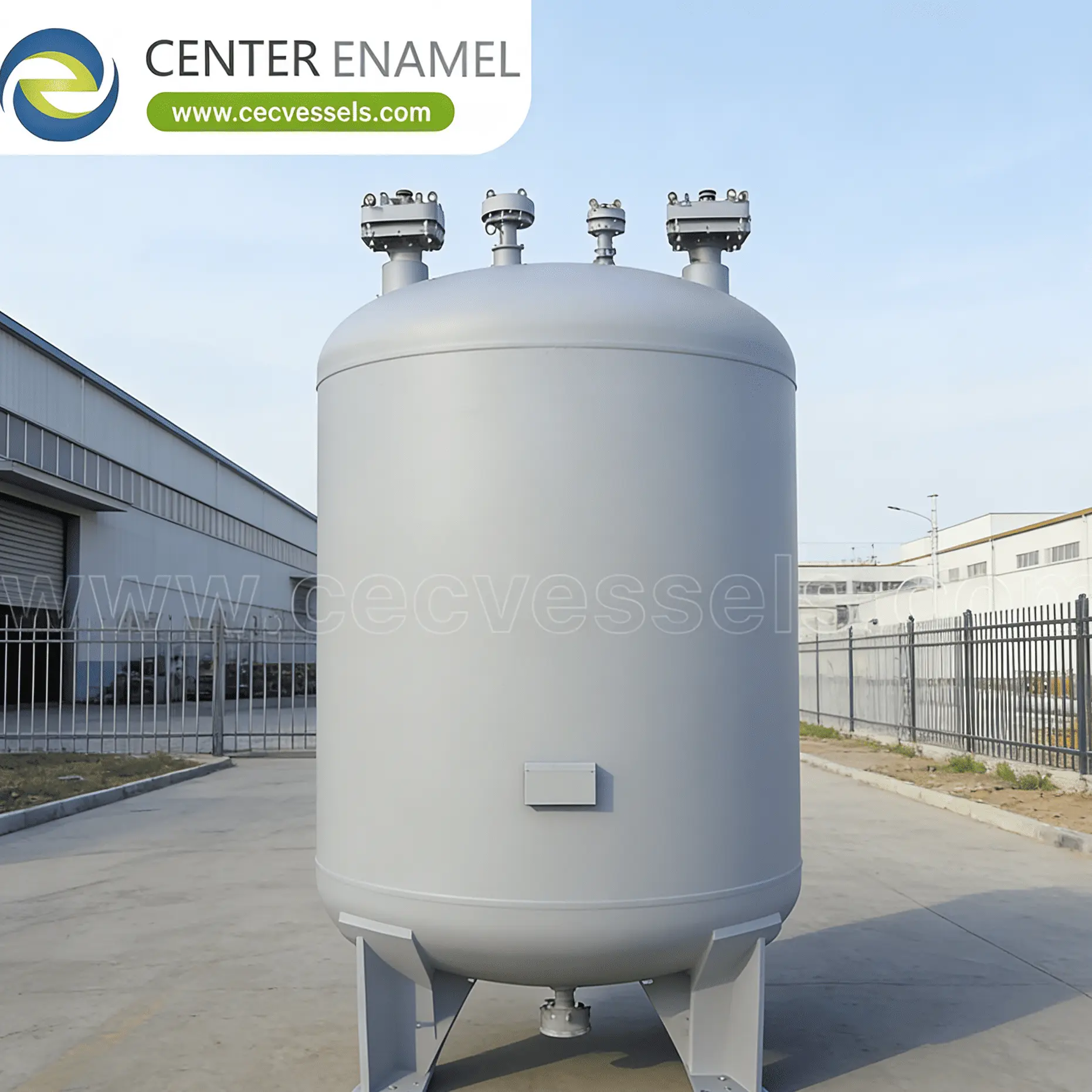
Common Types of Mixing in Reactors
Mixing is an important part of many reactor processes. It helps distribute materials evenly, maintain consistent composition, improve heat transfer, and support efficient chemical reactions. Different types of mixing are selected according to material viscosity, process requirements, reactor size, and the desired flow pattern. Understanding the types of mixing available can help engineers select a suitable mixing reactor and agitator configuration for a specific application. What Is Mixing in a Reactor? Mixing in a reactor refers to the controlled movement of materials inside the vessel to achieve a more uniform distribution of liquids, solids, gases, temperature, or dissolved components. In a typical stirred reactor, an agitator is mounted on a shaft and driven by a motor. The rotating agitator creates circulation within the vessel. The actual mixing pattern depends on the impeller design, rotational speed, liquid properties, reactor geometry, and internal components such as baffles. Different agitators generate different axial, radial, or combined flow patterns, making each type suitable for particular process conditions. In industrial reactor systems, mixing may be required for liquid blending, solid suspension, gas dispersion, emulsification, heat transfer, or maintaining uniform reaction conditions. Why Is Mixing Important in a Reactor? Proper mixing allows materials to remain distributed throughout the reactor instead of separating into different zones. This is particularly important when a process involves multiple ingredients or when consistent temperature and composition are required. Mixing can support several functions, including: Uniform distribution of liquid components Suspension of solid particles Dispersion of gases into liquids Improved heat transfer Better contact between reactants Consistent temperature distribution Uniform concentration throughout the vessel The required mixing intensity depends on the process. A gentle mixing action may be sufficient for simple liquid blending, while more intensive circulation may be required for dispersion or emulsification. Common Types of Mixing in Reactors There are many types of mixing mechanisms used in industrial reactors. The following are some of the most common options.
Paddle Mixing
Paddle mixers use relatively broad, flat blades mounted on a rotating shaft. Depending on their design and installation, the blades can generate radial or axial movement within the reactor. Paddle mixing is generally suitable for applications that require moderate circulation and relatively gentle agitation. It can be used for liquid blending, maintaining suspension, and supporting heat transfer. Because the paddle structure is comparatively simple, it can also be considered for processes where straightforward mechanical mixing is required. Typical applications include chemical processing, food production, water treatment, and other industrial liquid-processing operations.
Anchor Mixing
Anchor mixers are designed with blades that follow the shape of the reactor wall. The relatively large diameter of the anchor allows the agitator to move material near the vessel wall as well as through the central area. This type of mixing is particularly suitable for viscous materials. In some applications, scrapers may be installed on the anchor blades to help remove material from the vessel wall. Anchor mixing can improve material circulation and support heat transfer in processes involving viscous products. It is commonly used for adhesives, coatings, polymers, creams, pastes, and other thick materials. The relatively low rotational speed and large sweeping area make anchor agitators suitable when complete bulk movement is more important than high-speed dispersion.
Ribbon Mixing
Ribbon mixers use helical blades arranged around a central shaft. The helical configuration creates movement in different directions, helping circulate material throughout the reactor. Ribbon mixing is one of the common types of mixing for highly viscous materials. The agitator can move material both vertically and horizontally, depending on its configuration. This type of mixing reactor is often used for products such as pastes, creams, concentrated solutions, polymer materials, and other dense mixtures. Ribbon agitators can also help maintain relatively uniform temperature distribution when the reactor is equipped with a heating or cooling jacket.
Propeller Mixing
Propeller mixers use blades similar in appearance to marine propellers. They are designed primarily to generate axial flow, moving liquid along the shaft direction. Propeller mixing is commonly used for low-viscosity liquids where rapid circulation and blending are required. The agitator can move a large volume of liquid through the reactor and create a consistent circulation pattern. Typical applications include liquid blending, water treatment, fermentation, chemical processing, and other processes involving relatively fluid materials. Propeller mixers are often selected when the main requirement is effective bulk circulation rather than processing highly viscous materials.
Turbine Mixing
Turbine mixers generally consist of several blades attached to a hub or disk. Different turbine configurations can generate radial, axial, or combined flow. Turbine mixing is widely used because the agitator can be adapted to different process requirements. Flat-blade turbine designs are commonly associated with radial flow, while pitched-blade configurations can provide stronger axial circulation. Turbine mixers can be used for liquid-liquid blending, gas dispersion, solid suspension, and other processes where controlled circulation and dispersion are required. In chemical processing, turbine mixing reactors are often designed according to the physical properties of the materials and the desired degree of circulation.
Helical Screw Mixing
Helical screw mixers use a spiral-shaped blade to move material through the reactor. Their design is particularly useful for viscous products and materials that require strong vertical circulation. The screw can move material upward or downward while simultaneously promoting lateral movement. This creates a continuous circulation path within the reactor. Helical screw mixing can be used for dense liquids, slurries, pastes, and other materials that are difficult to circulate with conventional high-speed impellers. This type of mixing is also suitable when the process requires controlled movement of material through different regions of the vessel.
Magnetic Mixing
Magnetic mixing uses magnetic coupling to transfer rotational movement from the drive system to the internal agitator. This configuration can reduce the need for a conventional mechanical shaft seal. Magnetic mixing is commonly considered for applications where a closed and clean processing environment is important. It is frequently associated with pharmaceutical, biotechnology, food, and laboratory processes. The agitator can provide controlled circulation while maintaining separation between the drive mechanism and the process material.
Dual-Agitator Mixing
Some mixing reactor applications require more than one type of mixing action. A dual-agitator system combines two agitators or two different mixing mechanisms within the same vessel. For example, a reactor may use a slow-speed anchor for bulk circulation together with a higher-speed disperser for localized mixing. This arrangement allows different mixing functions to take place in one vessel. The slower agitator can maintain overall circulation while the faster agitator provides additional dispersion. Dual-agitator systems are useful for complex formulations, specialty chemicals, coatings, cosmetics, and other processes involving materials with different mixing requirements.
High-Shear Mixing
High-shear mixers are designed to generate intensive localized fluid movement. They typically use specially shaped rotating elements that create strong shear within a limited region of the reactor. This type of mixing is often used for emulsification, dispersion, particle size reduction, and homogenization. High-shear mixing can help distribute one phase into another more finely. For example, it may be used when two liquids need to form a stable emulsion or when solid particles need to be dispersed evenly throughout a liquid. A high-shear mixer can also be combined with a conventional agitator when both bulk circulation and intensive localized mixing are required.
Static Mixing
Static mixers are different from conventional mechanical agitators because they contain stationary internal elements rather than rotating blades. Material flows through the mixer and is divided, redirected, and recombined by the internal elements. The movement of the process fluid provides the energy required for mixing. Static mixing is commonly used in continuous processes where two or more fluid streams need to be blended. It can also be used for gas-liquid dispersion and inline chemical processing. Because there is no rotating shaft or motor-driven impeller, static mixers can have a relatively simple mechanical configuration. Axial and Radial Mixing Patterns In addition to different agitator designs, types of mixing can also be described according to the flow pattern produced inside the reactor. Axial mixing moves material primarily parallel to the agitator shaft. Propellers and some pitched-blade agitators commonly generate this type of circulation. Radial mixing moves material outward from the shaft toward the reactor wall before the fluid circulates through the vessel. Turbine agitators are commonly associated with radial flow. Some agitators generate a combination of axial and radial movement. Selecting the appropriate flow pattern depends on the material properties and process objective. Factors to Consider When Selecting a Mixing Reactor Choosing the right mixing reactor requires consideration of several process parameters. Material viscosity is one of the most important factors. Low-viscosity liquids can often be mixed effectively with propellers or turbines, while viscous materials may require anchors, ribbons, or helical screw agitators. The mixing objective is another important consideration. Simple blending requires a different mixing arrangement from gas dispersion, emulsification, solid suspension, or heat transfer. Reactor size and geometry should also be considered. As vessel volume increases, the agitator diameter, shaft arrangement, motor capacity, and internal configuration may need to be adjusted to maintain suitable circulation. Material characteristics are equally important. Density, viscosity, solids content, miscibility, and temperature can all influence the appropriate type of mixing. For industrial applications, engineers may also evaluate agitator speed, impeller diameter, baffle arrangement, shaft configuration, and power requirements before finalizing the reactor design. Mixing Reactor Applications Mixing reactors are used across many industries because controlled material circulation is required in a wide range of processes. In the chemical industry, mixing reactors can be used for blending, synthesis, dissolution, neutralization, and other processing operations. In the pharmaceutical and biotechnology industries, mixing equipment can support formulation, suspension, solution preparation, and controlled processing. In the food and beverage industry, reactors and mixing vessels can be used for sauces, liquid products, ingredients, emulsions, and other formulations. Mixing reactors are also used in environmental engineering, water treatment, specialty chemicals, polymers, coatings, and material processing. The agitator design is normally selected according to the specific process rather than using one universal type for every application. How to Select the Right Type of Mixing The selection process should begin with a clear understanding of the material and the purpose of mixing. For low-viscosity liquid blending, propeller or turbine agitators may provide suitable circulation. For viscous materials, anchor or ribbon mixing can provide broader movement through the reactor. If the process involves gas dispersion or solid suspension, turbine-based systems may be considered. For emulsification or fine dispersion, a high-shear mixer can be added to the reactor. For continuous processes, static mixing may provide an alternative to mechanically driven agitators. In more complex processes, a combination of agitators can be used to provide both bulk circulation and localized mixing. The final configuration should be determined through process analysis and reactor design. Choosing an Efficient Mixing Solution for Industrial Reactors The types of mixing used in a reactor have a direct relationship with material properties, process objectives, reactor geometry, and operating conditions. Paddle, anchor, ribbon, propeller, turbine, helical screw, magnetic, dual-agitator, high-shear, and static mixing systems each provide different flow characteristics. A suitable mixing reactor should therefore be designed around the actual process requirements rather than simply selecting an agitator based on vessel size. By evaluating viscosity, density, mixing purpose, flow pattern, material characteristics, and production scale, engineers can select an appropriate mixing configuration for consistent and efficient processing. For industrial reactor projects, customized agitator and vessel configurations can also be developed to match specific production requirements and process conditions.
|