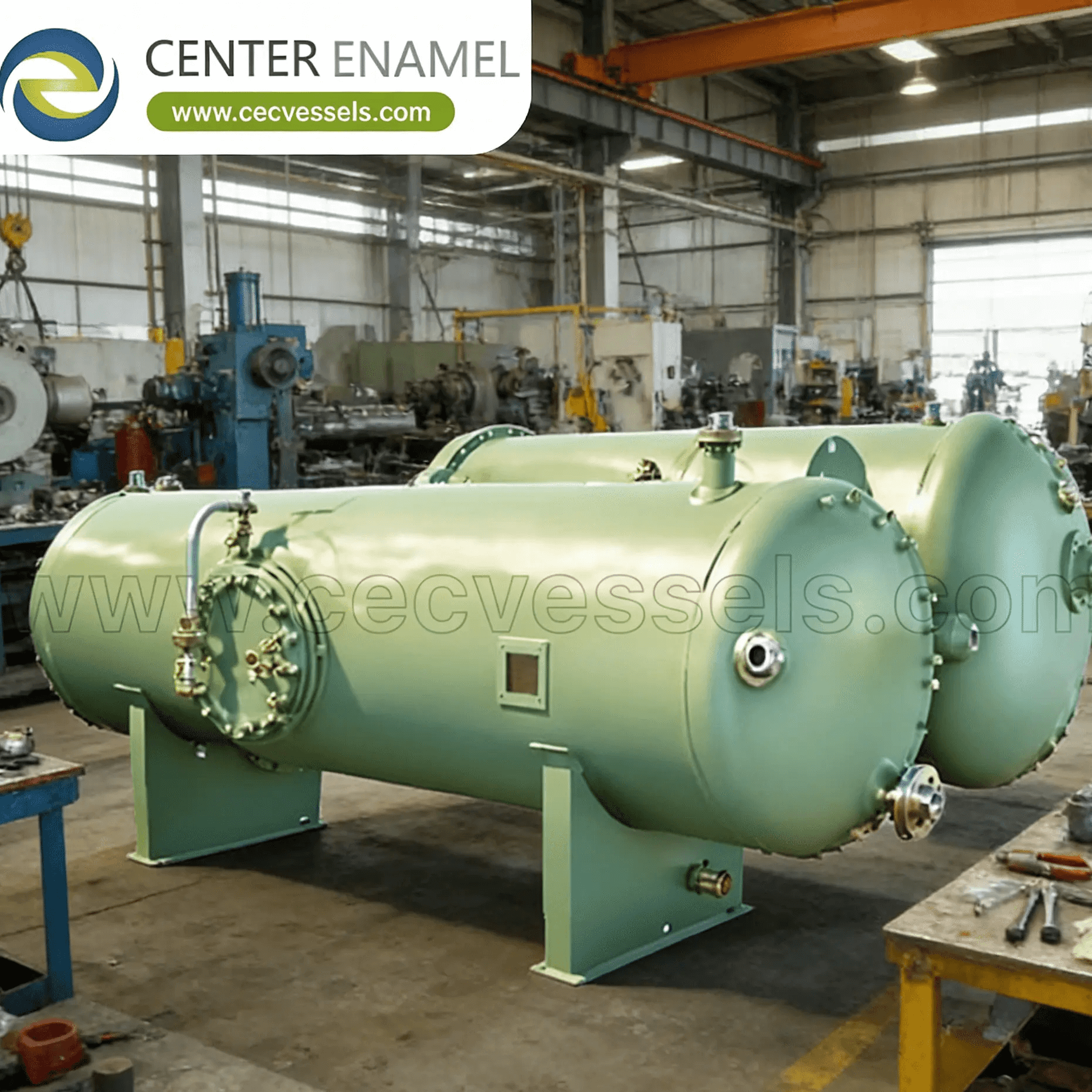
Control and Optimization for a Petrochemical Reactor
Modern industrial chemistry relies heavily on precision and reliability. Among various production units, the petrochemical reactor serves as the core vessel where fundamental molecular transformations take place, converting raw hydrocarbons into valuable industrial products with remarkable efficiency.
The pursuit of perfection in chemical engineering has always driven the evolution of process control systems. Historically, traditional feedback loops provided basic stabilization for fundamental variables such as reactor temperature and jacket cooling flow rates. However, as industrial facilities expanded in scale and complexity, the limitations of conventional single-loop controllers became increasingly apparent. Modern petrochemical processes exhibit intricate multivariable dynamics, where thermal output, reaction rates, and reactant residence times interact in complex ways. Consequently, designing sophisticated control and optimization strategies has become a paramount objective for contemporary chemical engineers and control theorists alike.
This article provides a comprehensive examination of modern control methodologies and optimization techniques tailored specifically for petrochemical reactors. By integrating robust numerical modeling, advanced feedback structures, and steady-state economic optimization, plant operators can achieve unprecedented levels of operational consistency. The subsequent sections will delve into the fundamental technological characteristics of these reactors, establish the theoretical framework for advanced control systems, analyze multivariable interaction management, and outline practical implementation pathways that ensure long-term facility sustainability and product quality.
Technological Characteristics of Petrochemical Reactors
Understanding the internal dynamics of a petrochemical reactor requires a detailed examination of both its physical structure and thermodynamic behavior. At its core, the reactor facilitates endothermic or exothermic reactions within a continuous flow environment. Feedstock materials, consisting of gaseous or liquid hydrocarbons, enter the reaction zone where thermal energy and catalytic agents facilitate molecular rearrangement.
One defining technological characteristic of these reactors is their distributed parameter nature. Temperature gradients form naturally across the axial and radial dimensions of the reaction vessel. Maintaining uniform temperature distribution is essential to prevent localized overheating or incomplete conversion. Advanced sensor arrays strategically positioned throughout the reactor vessel monitor these thermal profiles in real time, feeding continuous data streams into the central processing unit.
Furthermore, fluid dynamics within the reactor dictate the residence time distribution of the reactants. Turbulent flow patterns ensure thorough mixing of incoming hydrocarbon streams with existing catalytic or reactive media. The reactor geometry, including internal baffling and catalyst pellet distribution, is meticulously engineered to minimize channeling and dead zones. Recognizing these intrinsic physical properties enables control engineers to formulate mathematical models that accurately mirror physical reality, laying a solid foundation for subsequent control algorithm development.
Mathematical Modeling and Process Dynamics
Effective control design invariably begins with rigorous mathematical modeling. To capture the complex behavior of a petrochemical reactor, engineers construct differential equation systems based on conservation laws of mass, momentum, and energy. These fundamental equations describe how reactant concentrations and internal temperatures evolve over time under varying operating conditions.
The conservation of mass ensures that the total quantity of chemical species entering, reacting within, and exiting the reactor is accurately accounted for. Reaction kinetics dictate the rate of conversion, often following Arrhenius temperature dependencies where reaction velocity increases exponentially with thermal energy input. Energy balances account for both the heat of reaction and external thermal exchanges facilitated by cooling jackets or heat exchangers. Because petrochemical reactions frequently involve multiple simultaneous pathways, the resulting mathematical model typically consists of a system of coupled nonlinear differential equations.
Linearizing these nonlinear models around specific operating points allows for the application of classical control analysis techniques. However, because industrial reactors operate across a broad spectrum of conditions, linear approximations alone are often insufficient. Modern approaches incorporate state estimators and observer structures that continuously reconcile model predictions with real-time sensor measurements. This synergy between theoretical modeling and empirical data assimilation ensures that the control system maintains high fidelity regardless of minor disturbances in feedstock quality or ambient conditions.
Advanced Control Strategies for Industrial Plants
To manage the intricate multivariable nature of petrochemical reactors, standard proportional-integral-derivative controllers are frequently augmented or replaced by advanced control architectures. Model predictive control has emerged as a premier methodology for industrial applications due to its ability to handle multi-input multi-output systems with explicit operational constraints.
Model predictive control algorithms utilize the internal process model to predict future reactor behavior over a finite time horizon. By solving a constrained optimization problem at each sampling instant, the controller computes an optimal sequence of manipulated variables, such as feed flow rates and heating or cooling utilities. This proactive approach anticipates thermal excursions or concentration fluctuations before they manifest significantly within the vessel, thereby dampening disturbances and maintaining tight regulation around desired setpoints. In addition to model predictive control, cascade control structures are frequently deployed to manage fast-moving secondary disturbances. For instance, temperature control loops often utilize cooling jacket flow as a secondary manipulated variable, allowing rapid correction of thermal fluctuations before they affect the primary reaction zone. Adaptive control techniques are also integrated to compensate for gradual catalyst deactivation over extended operational cycles. As catalytic activity slowly declines, the adaptive controller automatically adjusts internal tuning parameters to preserve consistent reactor performance without requiring manual intervention from plant operators.
Economic Optimization and Steady-State Operation
Beyond maintaining stability and safety, a primary objective of modern petrochemical plant operation is economic optimization. Reactors consume substantial amounts of thermal and electrical energy while transforming raw materials into high-value products. Identifying the most profitable operating point involves balancing product yield against energy consumption and catalyst depreciation costs.
Steady-state economic optimization algorithms operate hierarchically above the real-time regulatory control layer. At predetermined intervals, the optimization engine evaluates market prices for feedstocks and final products, along with current utility costs. It then computes the ideal setpoints for reactor temperatures and flow rates that maximize overall profitability while respecting all equipment design limits. These optimized setpoints are seamlessly transmitted to the underlying control layer, guiding the reactor toward its most economically advantageous operating regime.
Multi-objective optimization frameworks further refine this process by simultaneously considering economic return, environmental efficiency, and equipment longevity. By treating these objectives as competing yet harmonizable criteria, plant engineers can identify Pareto-optimal operating regions. This holistic perspective ensures that the petrochemical facility operates not only profitably but also in complete harmony with modern industrial efficiency standards.
Implementation Framework and Practical Integration
Translating theoretical control algorithms and optimization models into a functioning industrial reality requires a robust hardware and software integration framework. Modern petrochemical plants rely on distributed control systems that interface directly with field instruments, actuators, and safety interlock systems.
The implementation process begins with rigorous software simulation using digital twin environments. Before deploying new control logic to physical hardware, engineers test the algorithms against simulated reactor models under various operational scenarios, including start-up, shutdown, and load transition phases. This virtual commissioning phase ensures that potential logic errors or tuning discrepancies are identified and resolved in a risk-free environment. Once simulation validation is complete, the control software is deployed to industrial-grade controllers equipped with redundant processing units and reliable communication protocols. Fieldbus networks transmit high-resolution sensor data to the control system while executing precise valve adjustments with minimal latency. Operator interface screens are designed following human-centered engineering principles, presenting complex reactor data through intuitive graphical dashboards, trend charts, and alarm management systems. Comprehensive training programs ensure that plant operating personnel are thoroughly familiar with the advanced control functionalities, enabling them to supervise automated routines effectively and respond adeptly to extraordinary operational anomalies.
Future Perspectives and Conclusion
The field of petrochemical reactor control and optimization continues to evolve rapidly, driven by ongoing advancements in computing power, sensor technology, and data analytics. Emerging methodologies, such as machine learning integration and hybrid modeling, promise to further elevate the precision and adaptability of industrial control systems.
By combining rigorous first-principles mathematical modeling with data-driven machine learning algorithms, future control systems will be capable of predicting complex chemical behaviors with even greater accuracy. These innovations will enable petrochemical facilities to achieve tighter product quality distributions, lower energy consumption footprints, and extended equipment operational lifespans.
In conclusion, the systematic integration of advanced numerical control solutions, model predictive architectures, and economic optimization frameworks is essential for the modern petrochemical industry. Through careful attention to reactor dynamics, multivariable interaction management, and robust implementation practices, facilities can maintain peak performance, ensuring sustainable and efficient chemical production for years to come.
|