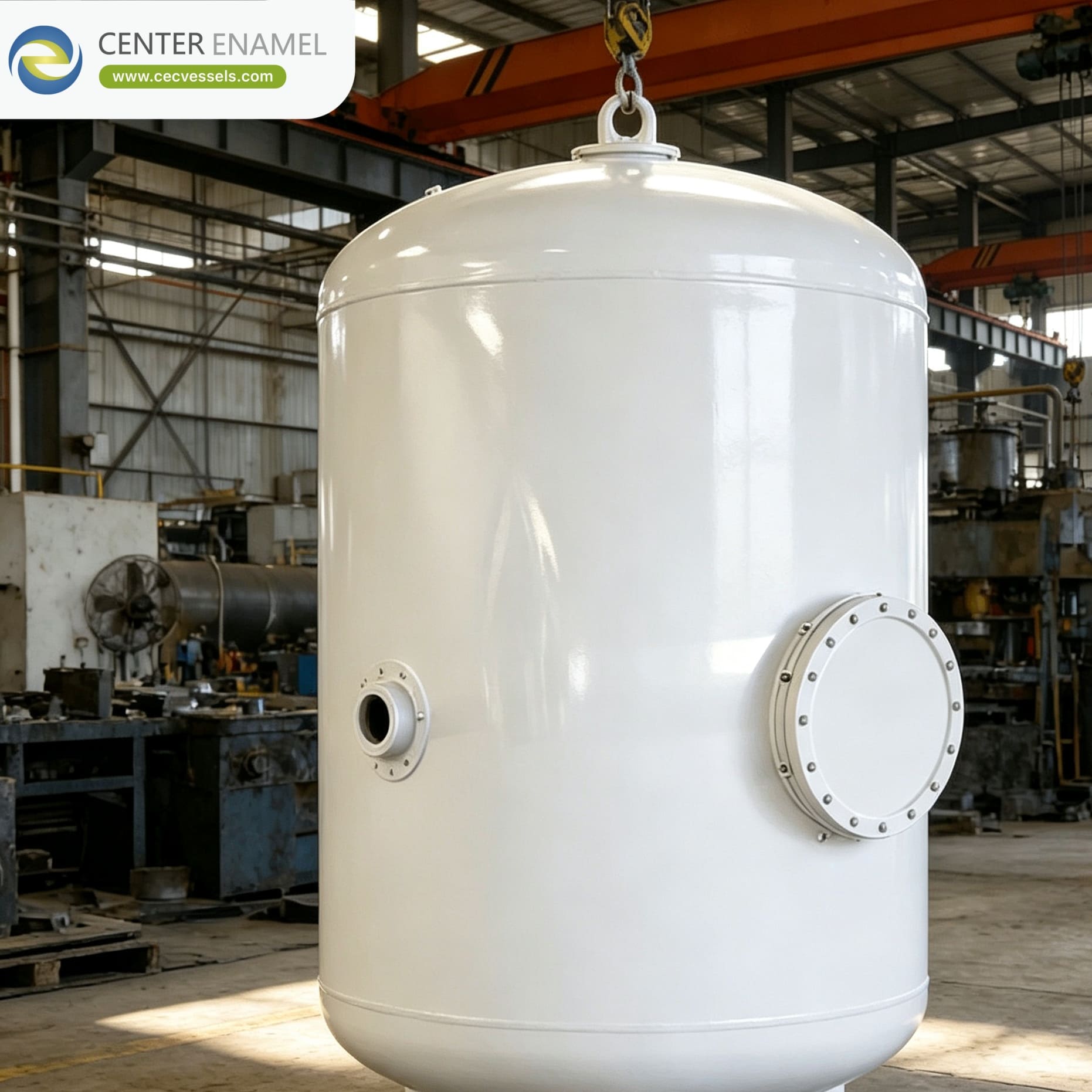
Diesel Storage Tank for Reliable Fuel Storage and Industrial Supply Management
Fuel supply reliability begins with the tank. A diesel storage tankfrom Center Enamel is designed to hold its contents in clean condition, keep quantity visible and support the transfer routine of an industrial site without demanding constant attention. Reliability here means clean fuel, visible quantity and a routine that needs little intervention. Construction and Capacity PlanningThe first decision is size, and size comes from consumption, delivery interval and reserve policy. A tank that is too small forces frequent deliveries; one that is too large ties up capital and lets fuel sit longer than necessary. Center Enamel works from the daily draw, the acceptable reserve and the delivery vehicle capacity to set a working volume, then adds the outage needed for level control and thermal movement. The shell is built from rolled steel panels with stiffening selected for the tank height, and the base is designed for the site conditions. Foundation interface, anchor points and nozzle elevations are agreed early, so the diesel storage tankfits the plot without site rework. Where delivery access is restricted, panel sizes are set so that each piece can be carried through the available opening. Enamel and Epoxy Coating SystemsThe internal surface decides how long the tank holds clean fuel. Glass-fused-to-steel panels are vitrified in a furnace, producing a hard, continuous enamel layer that resists attack from fuel and condensate and keeps the steel isolated from the product. Fusion-bonded epoxy offers a smooth, chemically resistant lining for bolted and welded tanks alike. Both systems are applied under controlled conditions, with coating thickness and continuity checked before assembly. Externally, the tank receives a protective coating suited to the site climate, and the colour can be specified to suit the plant. The result is a diesel storage tankwhose surface stays intact through many filling cycles. Coating samples are retained for each batch, so later damage can be repaired with a compatible material. Filling, Transfer and Level MonitoringDay-to-day operation is about knowing what is inside and moving it safely. Filling is arranged through a top inlet with a dip pipe or a bottom connection, and the transfer pump set is sized for the site's dispensing rate. Level is measured by radar, hydrostatic sensor or float gauge, with a local indicator for the driver and a signal for the control room. Volume, temperature and, where required, water-layer detection are displayed together so the operator sees the whole picture at a glance. High and low level signals drive the fill and transfer logic, which prevents overflow and keeps the diesel storage tankwithin its working band. The fill line discharges below the liquid surface, which keeps incoming fuel from disturbing the settled layer. Vent, Access and Nozzle DesignEvery tank breathes as it is filled and drawn down, so the vent must be sized for the maximum transfer rate and positioned to keep weather out. Manways, ladders, platforms and roof hatches are arranged for inspection and cleaning, and the roof structure is designed to carry them. Nozzles for fill, draw-off, return, level instruments and sampling are placed to avoid short-circuiting between inlet and outlet, which would let incoming fuel bypass the tank volume. Gaskets and bolting are matched to the service, and all connections are marked on the drawing so site piping can be prefabricated. Thoughtful access design is what keeps a diesel storage tankeasy to look after. Inspection, Cleaning and Long-Term ReliabilityLong service comes from a simple routine: visual checks on coating and seals, periodic measurement of level instrument accuracy, and cleaning at intervals set by fuel quality. Sludge and water collected at the low point are removed through a drain arranged for the purpose, and the internal surface is inspected through the manway when the tank is opened. Bolted enamel tanks can be extended or relocated panel by panel, which protects the investment when the site layout changes. With this routine, the diesel storage tankremains a stable asset rather than a recurring maintenance item. A log of cleaning dates, fuel batches and inspection findings turns maintenance into a planned activity with a visible history. Site Preparation and Installation SequenceA storage tank project runs on a sequence: foundation, base ring, shell erection, roof, nozzles, coating repair, testing and connection. Center Enamel provides drawings that state the order, the anchor arrangement and the tolerances the foundation must meet, so civil work and tank delivery can proceed in parallel. The as-built drawing set includes nozzle schedules and coating records, which the site keeps for inspection and future modification. Bolted enamel tanks are assembled panel by panel with controlled bolting, which allows installation without heavy lifting equipment on confined sites. After assembly the interior is inspected, damaged coating is repaired with the approved compound, and the tank is filled for a tightness check before commissioning. Working with Center EnamelAs a China Diesel Storage Tankr Manufacturer, Center Enamel supplies bolted enamel, epoxy-lined and welded tanks together with nozzles, ladders and accessories. Coating, fabrication and testing are handled in-house, and delivery is coordinated with foundation and piping schedules. |