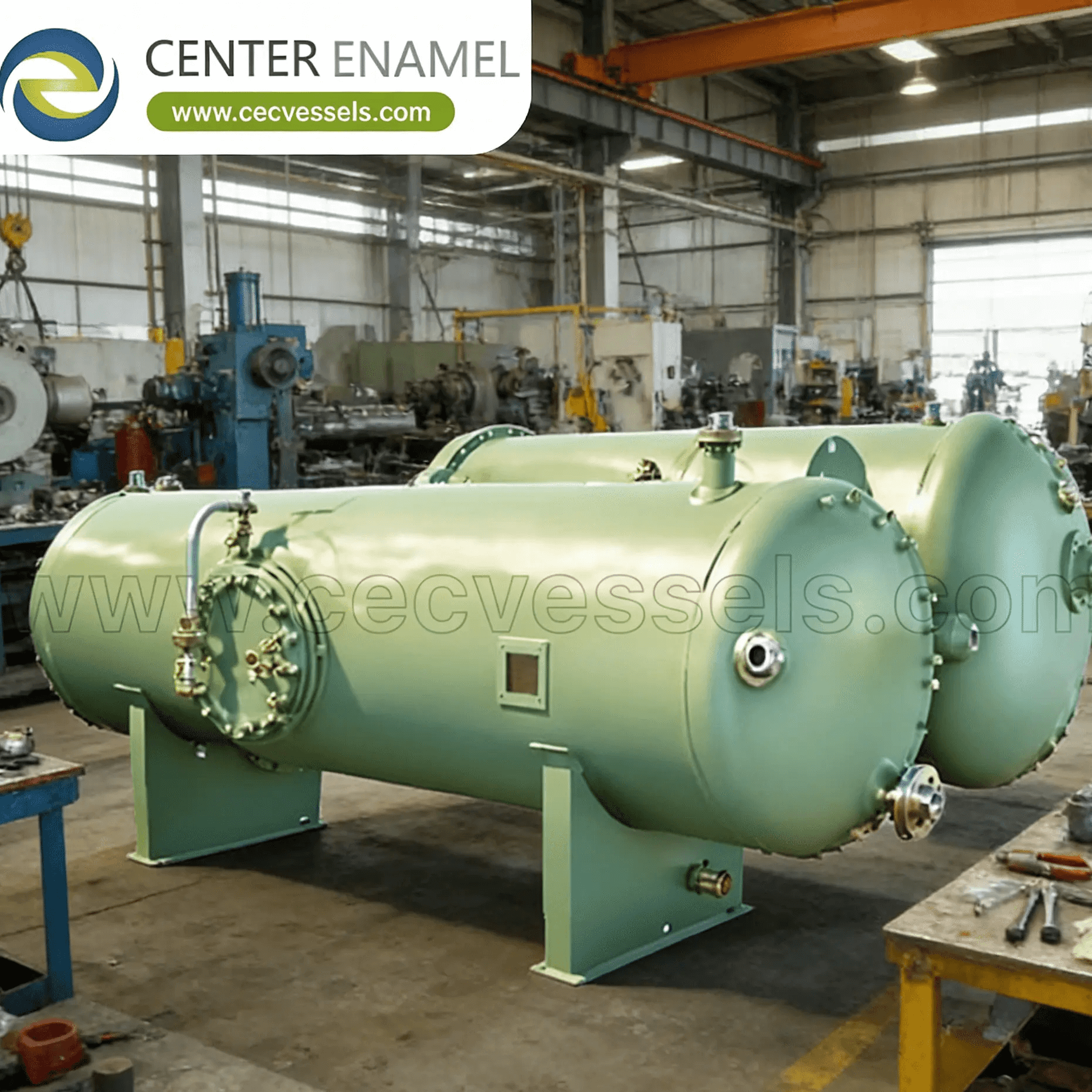
What Is The Difference Between Fired And Unfired Vessels?
In industrial fluid and thermal processing, engineering teams categorize containment equipment based on how heat is introduced into the system. Pressure vessels are primary components engineered to hold liquids, gases, or vapors at pressures different from the ambient atmosphere, and they are broadly divided into fired and unfired classifications. As an established Fired Pressure Vessel Manufacturer and Unfired Pressure Vessel Manufacturer, Center Enamel develops high-performance vessel systems designed to meet diverse operational layouts. By adhering to international engineering codes like ASME BPVC, BS EN 13445, and GB/T 150.1-150.4-2024, these vessels ensure structural integrity and consistent performance for global industrial partners. Thermodynamic Definitions and Core Functions
The fundamental difference between a fired pressure vessel and an unfired pressure vessel lies in the source of thermal energy and how it interacts with the vessel shell.
A fired pressure vessel is directly exposed to a radiant heat source, typically from the combustion of fuels such as natural gas, oil, or coal, or from electrical heating elements. The flame or high-temperature combustion gas comes into direct contact with the exterior or interior heating surfaces of the vessel. The primary goal is to generate steam or heat process fluids under intense, direct thermal conditions, which requires localized material considerations to manage the direct radiant heat.
An unfired pressure vessel, conversely, does not receive direct heat from a combustion process. Any heat transfer that occurs within an unfired vessel comes from an auxiliary medium, such as steam, hot oil, or chemical process fluids circulating through internal tubes, jackets, or plates. The vessel shell itself is isolated from direct flames, and the temperature distribution across the metal structure is significantly more uniform than that of a fired system. Heat Transfer Mechanisms and Thermal StressThe distinct heating methods create significant differences in how a China Fired Pressure Vessel Manufacturer and a China Unfired Pressure Vessel Manufacturer approach the engineering of the vessel shell and internal structures.
In a fired pressure vessel, radiant heat transfer dominates the primary thermal zone. This creates intense temperature gradients across the metal walls located closest to the burners. The metal must be capable of conducting heat rapidly while maintaining structural stability under localized thermal expansion. The engineering focus is on preventing hotspots and ensuring that fluid circulation inside the vessel is constant, which keeps the metal temperatures within allowable limits.
In an unfired pressure vessel, convective and conductive heat transfer are the primary mechanisms. Because the heating medium is already contained and regulated before entering the vessel, the thermal gradient across the shell is predictable and even. The design focus shifts toward maximizing the efficiency of the internal surface area, regulating fluid velocities, and ensuring leak-proof sealing between separate fluid streams. Structural Design and Material Differences
The mechanical layout of each vessel type is highly customized to support its specific thermal category, directly affecting the selection of steel grades, wall thicknesses, and structural supports.
1. Metallurgical ConsiderationsFired vessels require specialized steel alloys that resist thermal fatigue, oxidation, and creep over long service intervals. Unfired vessels, depending on the chemical nature of the process fluid, often utilize standard carbon steel or high-grade stainless steel like 304 or 316L, focusing more on corrosion resistance and product purity rather than extreme flame contact resistance. 2. Wall Thickness and Shell GeometryBecause fired units experience direct flame impingement, their wall thicknesses are calculated with conservative structural margins to accommodate potential localized material wear. Unfired units utilize highly optimized shell geometries, utilizing precise formulas from international standards to achieve maximum containment efficiency with minimal material weight. 3. Inspection and Access OpeningsFired vessels require specialized access ports, peep holes, and burner mounts to facilitate regular inspection of the firebox and radiant zones. Unfired vessels prioritize process nozzles, sanitary manways, and sight glasses that allow operators to monitor fluid levels and internal blending or separation cycles. Mechanical Components of Advanced Industrial Vessels
Every pressure vessel produced by Center Enamel is a precision-engineered unit built for heavy-duty industrial service, featuring components tailored to its specific heating classification:
Vessel Shell and Heads: The primary containment body, manufactured from premium steel alloys according to GB/T 150.1-150.4-2024 standards to ensure uniform distribution of pressure loads.
Firetubes and Watertubes: In fired designs, these internal tubes direct combustion gases through the fluid or route the fluid directly through the combustion chamber.
Tube Bundles and Shell Jackets: In unfired designs, these components circulate heating or cooling fluids around the primary process stream without mixing.
Tubesheets: Thick, CNC-machined plates that secure the internal tube ends and form a secure mechanical barrier preventing fluid cross-contamination.
Support Skirts and Saddles: Heavy-duty structural bases designed to support the total operational weight while allowing the vessel to expand naturally during thermal cycles.
Reinforced Connection Nozzles: Precision ports designed to handle high volumetric inflow rates and facilitate secure piping integration. Diverse Industrial Applications
The selection between fired and unfired vessels is a core architectural decision across a wide array of global sectors served by Center Enamel:
Petrochemical and Oil Refining: Utilizing fired heaters and boilers to bring crude oil fractions to distillation temperatures, while using unfired refinery condensers and phase separators to cool and isolate the resulting products.
Chemical Synthesis Production: Implementing unfired agitated reactors and jacketed blending vessels to regulate delicate exothermic and endothermic chemical reactions using steam utilities.
Power Plant Utilities: Deploying fired steam boilers to generate primary motive steam, and unfired feed-water heat exchangers and condensate tanks to reclaim energy from the cycle.
Environmental Wastewater Management: Employing unfired oil-water separators and leachate storage vessels to perform initial gravity separation and fluid purification.
Food and Beverage Processing: Utilizing sanitary stainless steel unfired vessels for pasteurization, fermentation, and batch cooking where direct flame would damage product quality.
Large-Scale Aquaculture: Employing unfired liquid-to-liquid heat exchangers and vertical treatment tanks to maintain precise water temperature profiles. Integration within Industrial Process Networks
Both fired and unfired vessels operate as critical nodes within comprehensive fluid and energy management networks. Center Enamel provides a comprehensive range of equipment that works in tandem with these units:
Steam Distribution Cylinders: Organizing and directing the high-temperature steam generated by fired boilers to various unfired process vessels throughout a facility.
Condensate Tanks: Collecting the hot water discharged from unfired heat exchangers and steam jackets for recycling back into the fired boiler loop, conserving valuable energy.
Phase Separators: Working in sequence with thermal vessels to isolate newly formed vapor or liquid fractions from process streams post-heating or post-cooling.
Coalescing Oil Separators: Purifying auxiliary fluids to prevent grease or organic oils from building up on the outer surfaces of unfired tube bundles.
Resin Tanks and Fiber Adsorption Tanks: Providing specialized water treatment to ensure that the water entering both fired boilers and unfired exchangers is free of scale-forming minerals. Engineering Design Standards and Global Compliance
The reliability of both fired and unfired vessels is guaranteed by strict adherence to international fabrication codes. Center Enamel ensures that every component is built to the highest performance benchmarks.
ASME Boiler and Pressure Vessel Code (BPVC)The ASME code divides these systems clearly. Section I covers the rules for power boilers (fired vessels), while Section VIII provides the exact equations for unfired pressure vessels. As a certified manufacturer, Center Enamel ensures that its designs comply with the specific section required for the target application, providing long-term operational security.
GB/T 150.1-150.4-2024The GB/T 150 series is the national standard for metal pressure vessels in China. The 2024 update represents the latest advancements in structural analysis, material science, and fabrication quality. Adhering to these standards ensures that our products are optimized for modern industrial requirements and domestic project compliance.
BS EN 13445For the European market, BS EN 13445 provides harmonized rules for unfired pressure vessels, placing a heavy emphasis on material fatigue and stress analysis to ensure the vessel remains reliable throughout decades of continuous cycle loading.
Our high-performance pressure vessels serve a vast industrial landscape, from petroleum refining and chemical processing to food, dairy, and brewing. We deliver precision-engineered solutions for pharmaceuticals, power generation, and wastewater treatment, ensuring compliance with the world’s most stringent safety codes. Our systems are designed for peak efficiency and longevity, empowering global partners to excel in even the most challenging environments.
1. Chemical Industry Project lProject Location: Hubei, China lPressure Vessels: Resin tanks, Coalescing oil separators, Fiber adsorption tanks, Compressed air storage tanks, Condensate tanks, and Steam distribution cylinders lMaterial: Stainless Steel and Carbon Steel. lDesign Standards: GB/T 150 (Pressure Vessels) lApplication: Integrated chemical fluid processing, separation, and steam distribution for chemical plants
2. Seawater Desalination Project lProject Location: Malta lPressure Vessels: Concentrated Sulfuric Acid Storage Tanks (Vertical layout) lMaterial: Carbon Steel lDesign Standards: EN 13445 lApplication: Storage of 98% concentrated sulfuric acid.
3. Waste-to-Energy Incineration Project lProject Location: Hebei, China lPressure Vessels: Large-scale Landfill Leachate Storage and Treatment Tanks (2 Sets) lMaterial: Carbon Steel lDesign Standards: GB 50341-2003 and GB 50128-2005. lApplication: Wastewater Treatment
4. Aquaculture Wastewater Treatment Project lProject Location: Sichuan, China lPressure Vessels: Vertical Wastewater Treatment Vessels (Φ 6×16.5 m (h) 1 set; Φ 7.6×16.5 m (h) 1 set) lMaterial: Carbon Steel lDesign Standards: National standard for vertical cylindrical storage tanks. lApplication: Aquaculture Wastewater Treatment
Maintenance and Structural Longevity
To ensure both fired and unfired vessels continue to operate at peak efficiency, regular maintenance and operational verification are essential. For ASME-certified vessels, requirements typically include:
Refractory and Burner Inspection: For fired vessels, regularly checking the internal refractory lining and burner alignment to prevent localized hotspots from weakening the vessel shell.
Tube Bundle Cleaning and Descaling: For unfired vessels, periodically flushing the internal tubes or jackets to remove mineral scale, algae, or mud that can form an insulating layer and reduce heat transfer performance.
Tubesheet Joint Inspections: Checking the expanded or welded tube-to-tubesheet joints using non-destructive testing (NDT) to ensure no fluid cross-contamination is occurring.
Safety Valve Calibration: Regularly testing the pressure relief valves attached to the vessel shell to ensure they are set to the correct discharge pressure, protecting the structural integrity of the overall system.
The Center Enamel Manufacturing Advantage
Choosing Center Enamel as your processing partner means gaining access to a leader in technical innovation and high-quality fabrication across both vessel classifications.
Advanced Computational EngineeringOur team utilizes Finite Element Analysis (FEA) and Computational Fluid Dynamics (CD) to simulate exactly how fluid streams enter the shell, interact with heat sources, and transfer energy. This allows us to optimize the wall thicknesses and structural reinforcement paths before production begins.
Precision Fabrication and Automated WeldingWe utilize automated welding lines and CNC machining for plate rolling, head forming, tubesheet drilling, and nozzle placement. This commitment to precision ensures that our vessels meet the strict inspection criteria of GB/T 150-2024 and ASME codes.
Comprehensive Quality AssuranceEvery industrial unit produced by Center Enamel undergoes a battery of tests, including radiographic inspection of weld seams and multi-stage hydrostatic testing, to verify its structural integrity and leak-proof performance before global delivery. Summary of Vessel Selection Strategies
In conclusion, understanding the difference between fired and unfired vessels is vital for building an optimized industrial process system. Fired units excel at primary high-temperature thermal generation through direct fuel combustion, while unfired units are the standard choice for secondary processing, heat exchange, phase separation, and bulk fluid storage using regulated utility streams. By adhering to strict international design standards like ASME BPVC and the updated GB/T 150.1-150.4-2024, Center Enamel delivers high-performance solutions in both configurations, ensuring long-term operational efficiency and durability for our global industrial partners. Looking for a reliable pressure vessel partner? From complex chemical systems to large-scale environmental projects, we turn your requirements into high-performance reality. Submit your design parameters or project specs now, and we will have a dedicated engineer reach out to you as soon as possible to discuss the next steps.
|