What Is a Tubular Reactor and How Is It Different from a Plug Flow Reactor?
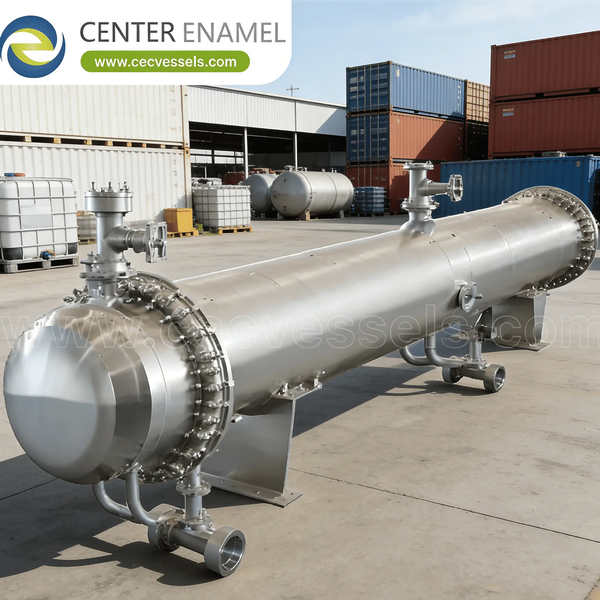
A tubular reactor is a continuous-flow reactor in which reactants move through a tube while chemical conversion takes place along the reactor length. Tubular reactors are widely used in chemical, petrochemical, pharmaceutical, polymer, and other industrial processes. Although many tubular reactors are designed to approximate plug flow behavior, a tubular reactor and a plug flow reactor are not technically identical. A tubular reactor mainly describes the physical equipment, while plug flow describes an idealized pattern of fluid movement and reaction. What Is a Tubular Reactor? A tubular reactor is a continuous reactor that uses a tube, pipe, or cylindrical passage as the main reaction zone. Reactants continuously enter the reactor through an inlet, move through the reaction path, undergo chemical conversion, and leave through an outlet. The basic configuration can range from a single long tube to multiple tubes arranged in parallel. Depending on the process requirements, the reactor may also include catalysts, heating or cooling systems, insulation, mixing elements, or other internal components. One of the main characteristics of a tubular reactor is that reaction conditions can change along the reactor length. As the feed travels from the inlet toward the outlet, reactant concentration, product concentration, temperature, and other process conditions may change. Unlike a conventional stirred tank reactor, a tubular reactor does not normally rely on an agitator to mix the entire reactor volume. Instead, the process material moves continuously through the reaction path. The term tubular reactor therefore primarily describes the physical configuration of the equipment. The actual flow behavior inside the tube depends on reactor geometry, operating conditions, fluid properties, and internal design. How Does a Tubular Reactor Work? The working principle of a tubular reactor is based on continuous material flow and reaction along a defined path. First, the required feed materials are introduced continuously through the reactor inlet. Depending on the process, the feed may contain one or more liquid streams, gas streams, or a combination of different phases. As the feed moves through the tube, the reactants interact and undergo chemical reactions. The reaction does not necessarily occur at the same rate throughout the reactor because the concentration of reactants and products can change with position. Near the inlet, the concentration of the primary reactants is generally higher. As the material travels through the reactor, reactants are consumed and products are formed. The resulting composition at the outlet can therefore be significantly different from the composition at the inlet. Residence time is another important factor. The material must remain in the reaction zone for a suitable period to achieve the required conversion. Reactor length, internal volume, flow rate, and flow characteristics all influence the residence time. Temperature control may also be required. Depending on the reaction, the tubular reactor can be designed with external heating, cooling, a jacket, a surrounding heat-transfer medium, or a multitubular configuration. At the outlet, the reacted material can be transferred to downstream equipment for cooling, separation, purification, concentration, or further processing. What Is a Plug Flow Reactor? A plug flow reactor, commonly abbreviated as PFR, is an idealized reactor model used to describe continuous flow through a tubular passage. In the ideal PFR model, the fluid is considered to move through the reactor as a series of small fluid elements or "plugs." There is assumed to be little or no mixing in the axial direction between fluid elements at different positions. At the same time, the fluid is considered well mixed across the cross-section under the ideal model. As the fluid moves through the reactor, the composition changes continuously because the chemical reaction proceeds along the flow path. This creates a concentration profile from the reactor inlet to the outlet. The PFR model is useful for understanding and predicting reactor performance. Engineers can use it to evaluate how flow conditions, reaction kinetics, reactor volume, residence time, and conversion are related. Many practical tubular reactors are designed to approximate plug flow behavior, which is why the terms tubular reactor and plug flow reactor are sometimes used interchangeably. However, technical references point out that not every tubular reactor behaves as an ideal PFR. Is a Tubular Reactor the Same as a Plug Flow Reactor? A tubular reactor and a plug flow reactor are closely related, but they describe different concepts. A tubular reactor primarily describes the physical equipment. It indicates that the reaction takes place in a tubular flow path. A plug flow reactor describes an idealized flow model. It assumes that fluid elements move through the reactor with negligible axial mixing and that the reaction conditions change progressively along the reactor. The relationship can therefore be understood as follows:
This distinction is important in reactor engineering. A real tubular reactor may experience axial dispersion, velocity variations, heat-transfer effects, or other deviations from ideal plug flow. Therefore, engineers need to consider the actual process conditions when designing or evaluating a tubular reactor. What Is the Difference Between a Tubular Reactor and a PFR?
The distinction also affects reactor design and process modeling. A tubular reactor is selected and manufactured according to physical requirements such as dimensions, material, heat transfer, flow rate, and process capacity. The PFR model is then used when appropriate to analyze the expected reaction behavior. In practical chemical engineering, a tubular reactor may therefore be operated as an approximation of a PFR. What Are the Main Types of Tubular Reactors? Tubular reactors can be configured in different ways depending on the reaction process, production capacity, heat-transfer requirements, catalyst arrangement, and available installation space. Straight Tubular Reactors A straight tubular reactor uses a relatively direct tube as the reaction path. This configuration has a simple structure and can be suitable for continuous reaction processes where a straightforward flow path is required. Coiled Tubular Reactors A coiled tubular reactor uses a long tube arranged in a coil. The coiled configuration can provide a long reaction path within a relatively compact installation area. Multitubular Reactors A multitubular reactor contains multiple tubes arranged in parallel. This configuration can provide a large reaction area while allowing heat transfer through or around the tubes. Multitubular designs are particularly useful when temperature control is an important part of the process. They can also provide flexibility when a larger reaction capacity is required. Packed Tubular Reactors A packed tubular reactor contains catalyst particles or other solid materials inside the reaction tube. The feed passes through the packed material while the desired reaction takes place. Packed tubular configurations are widely associated with heterogeneous catalytic processes because the catalyst provides a surface for the reaction. What Are the Main Components of a Tubular Reactor?
What Factors Affect Tubular Reactor Design? Tubular reactor design involves several important process and engineering factors. Reaction Kinetics Reaction kinetics determine how quickly the reactants are converted into products. The reaction rate influences the required reactor volume and residence time. Flow Rate The feed flow rate affects material velocity and residence time inside the reactor. Changes in flow rate can therefore influence conversion and overall reactor performance. Tube Length and Diameter Tube dimensions determine the available reaction volume and influence the flow characteristics. A longer tube can provide a longer reaction path, while tube diameter affects flow velocity and heat-transfer conditions. Residence Time Residence time describes how long the reacting material remains inside the reaction zone. The required residence time depends on the reaction rate and desired conversion. Heat Transfer Many industrial reactions require controlled heating or cooling. Tubular reactors can be designed with appropriate heat-transfer arrangements to maintain the required process temperature. Material Selection The reactor material must be compatible with the process fluid and operating environment. Stainless steel, carbon steel, and other engineering materials can be considered depending on the chemical properties and process requirements. Process Capacity Production capacity affects the required reactor volume, number of tubes, flow rate, and overall equipment configuration. A single tubular reactor may be suitable for one process, while a multitubular arrangement may be more appropriate for larger continuous production. What Are the Applications of Tubular Reactors? Tubular reactors are used in a wide range of industrial processes because they can support continuous operation and controlled residence time. Chemical Processing Tubular reactors are used for continuous chemical synthesis and conversion processes. They can be designed for different liquid-phase and gas-phase reactions. Petrochemical Processing Tubular reactors are used in various petrochemical and hydrocarbon processing applications. Their continuous flow configuration can support processes that require controlled reaction time and temperature. Polymer Production Some polymerization processes use tubular reactor configurations to provide continuous material flow and controlled reaction conditions. Pharmaceutical Manufacturing Tubular reactors can support continuous synthesis in pharmaceutical and fine chemical production. Continuous processing can provide a controlled reaction environment and consistent material flow. Catalytic Reactions Tubular reactors can be combined with catalyst beds for heterogeneous catalytic reactions. The feed passes through the catalyst-containing reaction zone while conversion takes place along the reactor length. Gas-Phase Reactions Tubular configurations are commonly used for gas-phase reactions because the continuous tube provides a defined flow path and can be designed with appropriate heat-transfer arrangements. Liquid-Phase Reactions Tubular reactors can also be used for liquid-phase reactions where continuous feed, residence time control, and heat transfer are important process considerations. What Are the Advantages of Tubular Reactors? Tubular reactors offer several characteristics that make them useful for continuous industrial processing. Continuous Operation Reactants can be continuously fed into the reactor while products are continuously discharged. This makes tubular reactors suitable for continuous production processes. Defined Flow Path The tubular configuration provides a clearly defined path for the process material. Reactor length and internal volume can be designed according to process requirements. Controlled Residence Time Flow rate and reactor dimensions can be selected to provide an appropriate residence time for the reaction. Efficient Use of Reactor Volume For suitable reaction kinetics and flow conditions, tubular configurations can provide efficient use of the available reaction volume. Heat-Transfer Flexibility Tubular reactors can be designed with heating or cooling arrangements to control reaction temperature. Scalable Configurations The design can range from a single tube to multiple tubes operating in parallel, allowing the reactor configuration to be adapted to different production requirements. Simple Mechanical Structure A basic tubular reactor can have a relatively simple mechanical configuration because it does not normally require an internal agitator for bulk mixing. How Does a Tubular Reactor Compare with a CSTR?
How Is Tubular Reactor Performance Evaluated?
How Do You Select a Tubular Reactor for an Industrial Process?
Why Choose Center Enamel for Tubular Reactor Manufacturing?
How Does a Tubular Reactor Support Continuous Chemical Processing? A tubular reactor provides a continuous reaction path in which reactants move through a tube while chemical conversion takes place along the reactor length. Its configuration makes it suitable for a wide range of chemical, petrochemical, pharmaceutical, polymer, and catalytic processes. Although tubular reactors and plug flow reactors are closely related, they should not always be treated as exactly the same term. A tubular reactor describes the physical equipment, while a plug flow reactor describes an idealized flow pattern. Many tubular reactors are designed to approximate plug flow behavior, but actual performance depends on reactor geometry, flow conditions, reaction kinetics, residence time, heat transfer, and process configuration. Understanding the relationship between tubular reactors and PFRs helps engineers select an appropriate reactor configuration and develop equipment according to specific production requirements. For customized Tubular Reactor solutions, Center Enamel can provide engineering and fabrication support based on the requirements of each industrial process. |