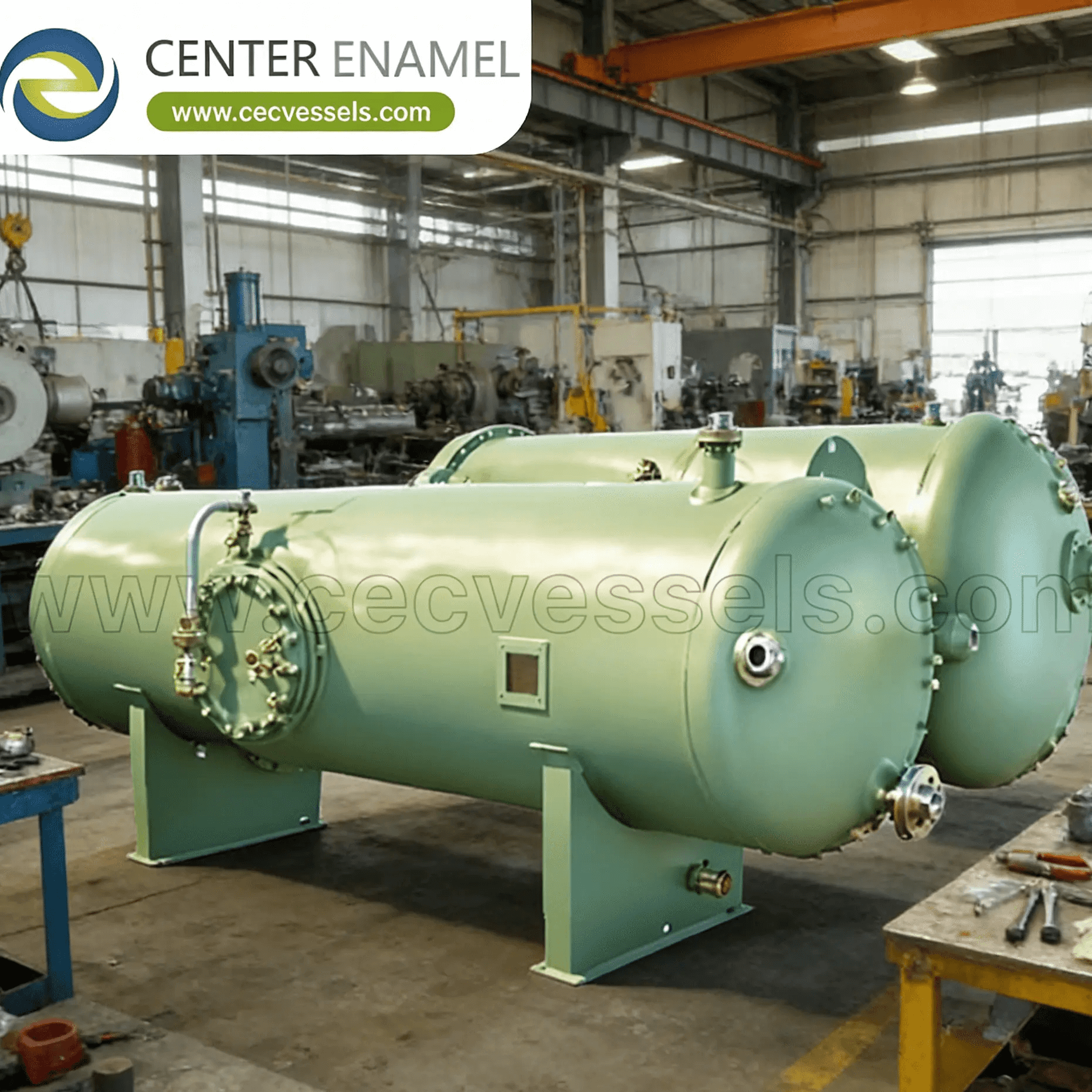
What Are The Different Types Of Water Separators
Industrial manufacturing plants, commercial processing lines, and environmental management facilities rely heavily on precise fluid purification systems to separate water from oil, grease, and suspended organic components. Selecting an optimal fluid processing configuration requires a comprehensive evaluation of the distinct mechanical designs available, the concentration of secondary components, and the international manufacturing standards governing vessel fabrication. As an experienced Water Separator Manufacturer, Center Enamel develops highly optimized horizontal and vertical separation units, multi-phase settling chambers, and customized treatment components. By aligning every stage of material selection, mechanical calculation, and structural fabrication with premier international benchmarks like the ASME Code, European BS EN standards, and China national specifications, a leading China Water Separator Manufacturer delivers the exact processing efficiency, structural longevity, and cross-border regulatory compliance required to optimize factory utility networks.
The Fundamental Purpose of Fluid Phase SeparationIn large-scale industrial activities, process water streams and effluent discharges rarely exist as pure liquid volumes. They typically carry diverse mixtures of non-emulsified hydrocarbons, free-floating fats, heavy greases, and fine mineral particles that must be extracted before the water can be recycled or routed to municipal treatment grids.
A specialized Water Separator utilizing advanced physical properties allows facilities to isolate these unblended substances without requiring heavy doses of expensive chemical flocculants. Because oils and water possess distinct density profiles and do not naturally blend at a molecular level, a mechanical containment unit creates the exact physical environment needed to accelerate gravity settlement. The heavier water phase collects along the lower baseline of the internal chamber, while the lighter organic layers rise to the upper fluid boundary, allowing separate extraction paths to function simultaneously.
Core Structural Classifications of Water SeparatorsTo satisfy the specific volumetric capacities and physical configurations of different processing plants, manufacturers design equipment across several primary technological classifications:
1. Coalescing Plate SeparatorsCoalescing plate configurations represent the standard for high-efficiency continuous purification systems. These units contain specialized internal packs consisting of closely spaced, corrugated non-metallic or stainless steel plates. As the oily mixture flows horizontally through the plate matrices, the narrow channels force the fluid into a laminar flow profile. This structured path encourages tiny, entrained oil droplets to impinge upon the plate surfaces, where they merge into larger globules that rapidly break free and float to the liquid surface.
2. Vertical Gravity InterceptorsVertical gravity structures are frequently integrated into municipal treatment loops and utility facility networks where floor space is limited. Operating primarily on standard Stokes Law calculations, these deep vertical columns provide a steady, uniform upward fluid velocity that allows free oil particles to separate from the main water stream naturally. This configuration minimizes the physical layout footprint on the factory floor and provides simplified bottom draining channels for dense sediment removal.
3. Hydrocyclone Water SeparatorsFor processes demanding high throughput capacities within a ultra-compact physical boundary, hydrocyclone configurations offer significant operational advantages. These systems use an engineered tangential inlet to drive incoming fluid into a high-speed rotational vortex inside a conical chamber. The resulting centrifugal forces push the heavier water phase outward against the exterior shell walls, while the lighter oil components gather at the central core of the vortex and flow out through a dedicated upper extraction nozzle.
4. Dissolved Air Flotation (DAF) SystemsWhen dealing with extremely fine or emulsified oil droplets that resist standard gravity settling, facilities deploy flotation units. These systems inject pressurized water containing dissolved air into the main separation chamber, releasing millions of micro-bubbles. These micro-bubbles attach directly to the suspended organic particles and oil droplets, giving them extra buoyancy and lifting them rapidly to the surface, where a mechanical skimmer assembly removes the accumulated foam layer.
Detailed Engineering Comparison MatrixTo assist procurement professionals and plant managers in evaluating the core attributes of each separation methodology, the following table compares the mechanical capabilities of the standard classifications:
Key Mechanical Components of Industrial Separator VesselsA high-performance process vessel developed by an elite manufacturer is an integrated network of precision-fabricated sub-components, each designed to maximize internal fluid dynamics and maintain absolute material containment:
Heavy-Duty External Shell Casing: The primary structural body of the vessel, fabricated from rolled carbon steel or stainless steel plates joined with full-penetration automated welds that undergo rigorous radiographic verification.
Formed Curved End Cover Heads: Forged ellipsoidal or torispherical dished covers engineered to distribute internal stress profiles uniformly across the metal structure, in strict accordance with GB/T 150 specifications.
Internal Coalescing Matrix Packs: Closely spaced parallel plates positioned inside the main chamber to maximize contact surface area, encouraging small droplets to merge into larger, easily separated layers.
Internal Weir Plates and Baffles: Structural barriers welded inside the vessel floor to establish precise liquid level zones, allowing lighter components to spill over into dedicated extraction chambers.
Precision Connection Nozzles: Forged metal ports that accommodate high volumetric fluid entry velocities and ensure smooth integration with factory piping manifolds.
Removable Access Manways: Sealed hatch covers that allow maintenance crews to enter the vessel interior for periodic inspection, manual cleaning, or plate pack replacement.
Automated Scum Skimmer Mechanisms: Motorized blades that continuously sweep across the upper fluid boundary to clear accumulated oil layers into discharge troughs.
The Crucial Role of Metallurgy and Surface ProtectionThe long-term performance and structural stability of an industrial water separator depend fundamentally on the metallurgy and protective coatings chosen for its construction. Because separation vessels frequently handle aggressive process water, variable chemical blends, or volatile organic compounds, matching the steel chemistry to the fluid characteristics is an essential engineering milestone.
High-strength carbon steel grades, such as SA516 Grade 70 or Q345R, provide excellent structural toughness for bulk utility storage, steam distribution cylinders, and standard non-corrosive fluid circuits. However, when handling brackish water, chemical feedstocks, or organic fluids, engineers specify premium stainless steel alloys like 316L, which incorporate molybdenum to provide superior resistance against localized pitting and chemical degradation. Furthermore, combining the mechanical strength of steel with advanced non-metallic protective barriers represents a major technical advantage. Center Enamel specializes in advanced protective surfaces, including Glass-Fused-to-Steel and advanced enamel coatings, which fuse the mechanical strength of steel with the exceptional chemical inertness of glass, creating an interior boundary that remains completely unaffected by corrosive media over multiple decades of service.
Strategic Integration with Industrial Process NetworksIndustrial separation equipment does not operate as isolated hardware; it serves as a central processing node within comprehensive engineering and energy management layouts. Center Enamel provides a comprehensive range of equipment that works in tandem with these units:
Steam Distribution Cylinders: Organizing and directing high-temperature steam lines from primary boilers to various vessel jackets, preheaters, or exchanger networks across the facility.
Condensate Tanks: Collecting hot purified water and process fluids discharged from thermal steam loops for recycling, supporting overall facility resource conservation.
Primary Process Vessels: Integrating thermal exchange and separation equipment directly with storage tanks and primary chemical systems to maintain strict kinetic control during fluid transport.
Coalescing Fluid Separators: Purifying auxiliary fluids, compressed air streams, and cooling water loops to prevent grease or organic oils from coating heat transfer surfaces, preserving thermal conductivity.
Resin Tanks and Fiber Adsorption Tanks: Providing advanced upstream water treatment to ensure that utility cooling loops and processing water remain entirely free of scale-forming minerals.
Engineering Design Standards and Global ComplianceThe reliability of a high-performance industrial water management network is guaranteed by strict adherence to international fabrication codes, which define the exact design rules and quality verification protocols required for structural safety.
ASME Boiler and Pressure Vessel Code (Section VIII)The ASME code is globally recognized as the foundational benchmark for pressure and thermal equipment fabrication. It establishes exact parameters for material stress margins, nozzle reinforcement layouts, and certified welder qualifications. Brands with official ASME authorization demonstrate that their internal quality systems can consistently produce units capable of managing continuous fluid processing cycles over extensive service lifespans.
GB/T 150.1-150.4-2024The newly updated national standard for metal pressure vessels in China reflects the latest technological advancements in finite element analysis, modernized steel grade certifications, and automated welding quality parameters. Complete alignment with this updated framework ensures full regulatory compliance and seamless integration within modern industrial utility grids.
BS EN 13445This harmonized European standard regulates the design, fabrication, and testing of unfired pressure vessels across the Eurozone. It emphasizes advanced design-by-analysis methodologies, allowing engineers to optimize wall thickness profiles and minimize material fatigue under continuous operational cycles.
Sourcing Strategies for Global Procurement ProfessionalsProcuring industrial thermal and separation equipment requires a thorough evaluation of long-term operational variables to secure an optimal return on investment. Sourcing professionals must look beyond initial capital costs and carefully analyze the total cost of ownership, which includes energy consumption, maintenance frequencies, and component reliability. The foremost consideration is the physical property analysis of both processing fluids under minimum and maximum operating temperatures. Engineers must evaluate fluid viscosity, density, specific heat capacity, and thermal conductivity. Highly viscous materials require specific flow channel dimensions compared to low-viscosity utilities to prevent excessive pressure drops across the system, which would otherwise necessitate larger, energy-consuming pump installations.
The fouling potential of the processing media represents another vital decision factor. Fluids prone to mineral scaling or sediment deposition require configurations that facilitate rapid inspection and mechanical cleaning. Shell and tube units with removable tube bundles allow maintenance crews to extract the internal core for direct power-washing, while gasketed plate systems can be unbolted and expanded to clean individual plates, reducing production downtime. Global Supply Chain Evolution and Future OutlookThe international market for industrial separation and thermal systems is experiencing structural changes driven by the need for enhanced energy efficiency and decentralized manufacturing. Industrial operations are increasingly focused on recovering low-grade waste thermal energy from effluent lines and exhaust streams to reduce overall plant fuel consumption and lower operational costs. This has shifted engineering demand toward highly optimized, custom-engineered recovery and treatment networks. As industrial infrastructure expands within developing economic zones, procurement professionals require agile suppliers capable of navigating regional shipping regulations and multi-code technical documentation. China Water Separator Manufacturer organizations have adapted by upgrading their testing facilities, employing computerized fluid simulation software, and establishing comprehensive material traceability records. This digital integration ensures that fabricated components match design models exactly before leaving the production floor.
The integration of smart monitoring technologies represents the next developmental stage for industrial separator vessels. Built-in sensor arrays can track temperature differentials, interfacial oil-water boundaries, and pressure variances in real time, feeding data into predictive maintenance software. This allows plant operators to identify early-stage fouling or scaling patterns and plan maintenance activities during standard scheduled shutdowns, eliminating unexpected interruptions.
In conclusion, establishing a reliable fluid separation installation requires partnering with a manufacturer that possesses deep material science expertise, advanced technical production tools, and strict adherence to international safety codes. Sourcing specialized hardware that maximizes phase separation efficiency while maintaining material compliance provides long-term operational security. Center Enamel continues to support global industrial infrastructure by producing high-performance processing hardware that meets strict international criteria, helping facilities worldwide achieve long-term efficiency and operational success.
Looking for a reliable pressure vessel partner? From complex chemical systems to large-scale environmental projects, we turn your requirements into high-performance reality. Submit your design parameters or project specs now, and we will have a dedicated engineer reach out to you as soon as possible to discuss the next steps. |