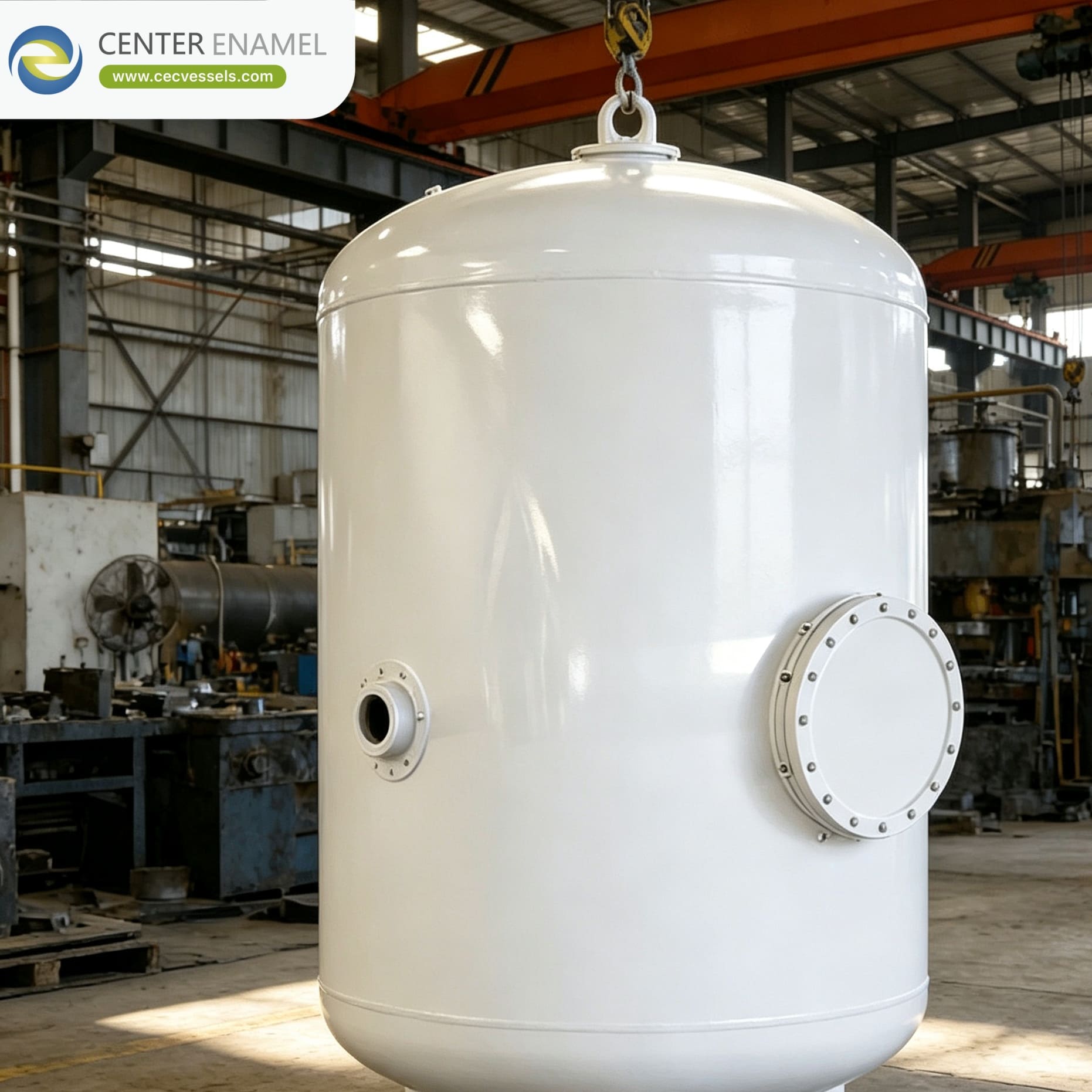
Distillation Column: Key Components and Functions
A distillation columnis essential equipment for separating liquid mixtures into individual components based on differences in volatility. Widely used in petroleum refining, petrochemical production, and chemical manufacturing, it combines heat transfer and vapor-liquid contact to produce separated streams with specific purity requirements. Understanding the key components and functions of distillation columnshelps engineers select suitable equipment, improve separation performance, and support stable industrial production. What Is a Distillation Column?A distillation column, also known as a distillation tower, separates the components of a liquid mixture through repeated vaporization and condensation. When a mixture is heated, components with greater volatility tend to enter the vapor phase more readily than less volatile components. As vapor rises through the column, it contacts descending liquid. This interaction transfers components between the vapor and liquid phases, gradually enriching different sections of the column with different substances. In distillation in the industry, this process is used to separate complex mixtures into useful products, recover solvents, purify chemical feedstocks, and refine petroleum fractions. The performance of a distillation column depends on several factors, including feed composition, operating temperature, internal design, reflux ratio, and the physical properties of the mixture. Key Components of a Distillation Column and Their FunctionsA complete distillation column systemtypically includes a vertical shell, internal separation devices, a reboiler, a condenser, a reflux drum, feed connections, and product outlets. Each component contributes to the overall separation process. 1. Column ShellThe column shellis the main vertical structure that houses the internal equipment and provides space for vapor-liquid contact. Its dimensions depend on the required processing capacity, separation duty, and selected internal configuration. The shell must also accommodate connections for feed streams, product outlets, instrumentation, and maintenance access. Depending on the process conditions and materials being handled, the shell may be manufactured from carbon steel, stainless steel, or specialized alloys. For a chemical column, material selection should consider operating temperature, chemical compatibility, and the properties of the process fluid. 2. Trays or PackingTrays and packingare internal components that promote contact between rising vapor and descending liquid. They provide the surface area and contact stages required for effective separation. There are two common configurations:
lTray columns:Use horizontal plates installed at different heights. Common designs include sieve trays, valve trays, and bubble-cap trays. lPacked columns:Use structured or random packing to create a large contact surface between vapor and liquid. Tray columns are often selected for applications requiring convenient access to internal stages and flexible operation. Packed columns can provide efficient mass transfer with relatively low pressure drop, depending on the packing design and operating conditions. The choice between trays and packing depends on throughput, separation requirements, liquid distribution, fouling tendency, and maintenance considerations. 3. ReboilerThe reboilersupplies heat to the liquid collected near the bottom of the column. Part of this liquid vaporizes and returns to the column as rising vapor. This vapor provides the upward flow required for vapor-liquid mass transfer. The reboiler therefore plays a central role in controlling separation performance and energy consumption. Common reboiler configurations include kettle reboilers and thermosiphon reboilers. The appropriate design depends on the process fluid, heat-transfer requirements, available utilities, and circulation characteristics. 4. CondenserThe condenseris generally installed at the top of the distillation system. It removes heat from the overhead vapor, converting some or all of that vapor into liquid. The condensed liquid may be collected as a product, returned to the column as reflux, or divided between these two streams. Condenser design depends on vapor composition, condensation temperature, cooling-water availability, and the required product condition. Proper heat-transfer capacity helps maintain stable operation and supports the desired separation results. 5. Reflux DrumThe reflux drumcollects liquid produced by the overhead condenser. It provides a controlled inventory of liquid for reflux and overhead product withdrawal. A portion of the collected liquid returns to the upper section of the column as reflux, while the remaining portion may be removed as the overhead product. Reflux improves separation by increasing contact between descending liquid and rising vapor. The reflux ratio, which compares the reflux flow rate with the overhead product flow rate, is an important operating parameter affecting product purity and energy demand. 6. Feed Inlet and Product OutletsThe feed inletintroduces the mixture into the column at a selected location. The feed tray or feed distribution arrangement should match the thermal and physical condition of the incoming stream. Distillation columns may also contain intermediate product outlets, known as side draws. These allow selected fractions to be withdrawn at different heights. The overhead outlet typically removes the more volatile fraction, while the bottom outlet removes the less volatile material. The actual product composition depends on the mixture, operating conditions, and column configuration. 7. Instrumentation and Control SystemsInstrumentation and control systemsmonitor and regulate key operating variables, including temperature, liquid level, flow rate, and operating pressure. Temperature measurements at different column locations help operators assess separation performance. Flow controllers regulate feed, reflux, and product withdrawal, while level controls maintain suitable liquid inventories in the reflux drum and bottom section. These systems help keep the column operating consistently as feed conditions or production requirements change. How Does a Distillation Column Work?The operating principle of a distillation columncan be explained through five basic steps:
lFeed introduction:The liquid mixture enters the column at the designated feed point. lHeating and vaporization:The reboiler heats the bottom liquid and generates vapor that rises through the column. lVapor-liquid contact:Rising vapor contacts descending liquid on trays or across packing, allowing components to transfer between phases. lCondensation and reflux:Overhead vapor enters the condenser, and part of the resulting liquid returns to the column as reflux. lProduct collection:Separated streams are withdrawn from the top, bottom, or intermediate locations according to the process requirements.
Repeated vapor-liquid contact creates a composition gradient along the column. More volatile components tend to concentrate toward the top, while less volatile components tend to concentrate toward the bottom. The actual separation depends on relative volatility, the number of effective separation stages, reflux conditions, and heat input. Types of Distillation Columns Used in IndustryDifferent distillation columnsare designed for different separation duties. Fractional Distillation ColumnA fractional distillation columnseparates mixtures containing multiple components with different volatilities. It is widely used in petroleum refining and petrochemical processing. Batch Distillation ColumnA batch distillation columnprocesses a fixed quantity of feed during each production cycle. It is suitable for specialty chemicals, fine chemicals, and applications involving multiple formulations or relatively small production volumes. Continuous Distillation ColumnA continuous distillation columnreceives feed and removes products continuously during normal operation. It is commonly used in large-scale chemical plants and refineries that require steady production. Packed Distillation ColumnA packed distillation columnuses structured or random packing instead of conventional trays. It is often considered for applications requiring substantial vapor-liquid contact area and relatively low pressure drop. The most appropriate configuration depends on feed characteristics, product specifications, plant capacity, and operating requirements. Applications of Distillation Columns in IndustryDistillation in the industrysupports a broad range of manufacturing and separation processes.
lPetroleum refining:A distillation tower refinerysystem separates crude oil into fractions such as naphtha, kerosene, diesel-range streams, and heavier fractions according to the refinery process. lPetrochemical production:Distillation separates and purifies hydrocarbon feedstocks, intermediates, and finished chemicals. lChemical manufacturing:A chemical columncan separate solvents, recover process liquids, and purify reaction products. lPharmaceutical production:Distillation supports solvent recovery and the purification of selected process materials. lFood and beverage processing:Distillation can concentrate or separate volatile compounds in suitable production processes. lEnvironmental and resource recovery:Distillation systems can recover reusable solvents from selected industrial streams, supporting material reuse.
The resulting distillation productsdepend on the feed mixture, column design, and operating conditions. Product streams may require additional treatment to meet final specifications. How to Select the Right Distillation ColumnSelecting a suitable distillation columnrequires evaluating both process requirements and equipment design. Key considerations include:
lFeed composition:Identify the components, concentrations, and relevant physical properties of the incoming mixture. lSeparation targets:Define the required product purity, recovery rate, and acceptable composition of each outlet stream. lProcessing capacity:Determine the required feed throughput and expected operating range. lInternal configuration:Compare tray and packing options based on separation efficiency, liquid distribution, and maintenance needs. lMaterial selection:Choose construction materials compatible with the process fluid and operating temperature. lHeat integration:Evaluate reboiler and condenser duties, available utilities, and opportunities to reduce energy consumption. lControl requirements:Establish the instrumentation needed to maintain stable operation and consistent product quality. lMaintenance access:Consider inspection openings, internal component removal, and practical maintenance arrangements.
A well-designed system balances separation performance, operating costs, equipment durability, and production flexibility. Final equipment specifications should be established through process calculations and engineering review. Frequently Asked QuestionsWhat is the main function of a distillation column?The main function of a distillation columnis to separate liquid mixtures into components or fractions based on differences in volatility. It is widely used for purification, fractionation, and solvent recovery. What is the difference between a distillation column and a distillation tower?The terms distillation columnand distillation towergenerally describe the same type of separation equipment. “Tower” is commonly used for large vertical units in refineries, while “column” is widely used across chemical engineering and industrial processing. What are the main components of a distillation column?The main components typically include the column shell, trays or packing, reboiler, condenser, reflux drum, feed inlet, product outlets, and instrumentation. Additional equipment depends on the process design. What determines the efficiency of a distillation column?Efficiency depends on factors such as relative volatility, vapor-liquid contact, the number of effective separation stages, reflux ratio, feed condition, and heat-transfer performance. Which industries use distillation columns?Distillation columnsare used in petroleum refining, petrochemical manufacturing, chemical processing, pharmaceutical production, and selected food and beverage applications. Improving Separation Performance Through Proper Equipment DesignA distillation columnintegrates heat transfer, vapor-liquid contact, and controlled product withdrawal to separate complex liquid mixtures. Its shell, internals, reboiler, condenser, reflux drum, and control systems must work together to achieve the required product quality. By matching the column configuration, construction materials, and operating conditions to the process requirements, manufacturers can develop reliable separation systems for refinery, petrochemical, and chemical production applications.
|