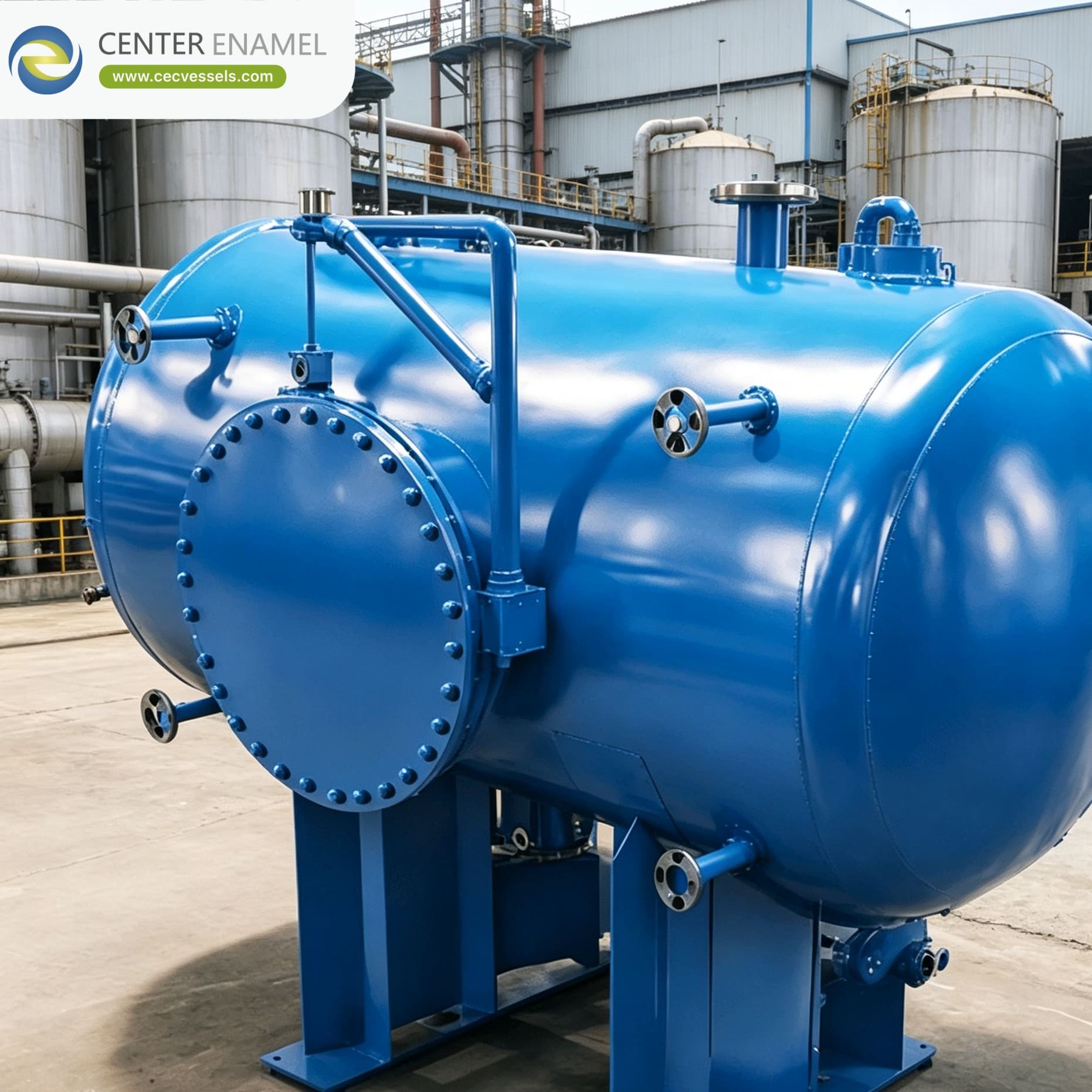
Double-Effect Evaporator for Energy-Efficient Industrial Concentration
A Double-Effect Evaporatoris an industrial evaporation system designed to remove water or another solvent from a liquid solution and increase the concentration of the remaining material. It consists of two connected evaporation stages, known as effects, that work together to make more efficient use of thermal energy. The defining feature of a double-effect system is the reuse of secondary vapor. In the first effect, an external heating medium supplies thermal energy to the feed liquid. Part of the liquid evaporates and produces secondary vapor. Instead of allowing this vapor to leave the process without further use, it is directed to the heating side of the second effect. The second effect uses the recovered vapor as its heating source. Because the second effect operates at a lower boiling temperature, the vapor generated in the first effect can provide useful heat for additional evaporation. This two-stage arrangement allows thermal energy to be used more than once during the evaporation process. Compared with a single-effect system, a double-effect configuration can improve steam economy while maintaining a relatively straightforward process structure. Center Enamel provides customized industrial evaporation equipment according to feed characteristics, evaporation capacity, concentration requirements, material selection, and overall production conditions. How Does a Double-Effect Evaporator Work?The working principle of a Double-Effect Evaporatoris based on sequential evaporation and thermal energy reuse. The feed liquid first enters the first effect through a suitable feed distribution system. A heating medium transfers thermal energy through the heat-transfer surface, causing part of the liquid to evaporate. As evaporation takes place, secondary vapor is generated. This vapor contains useful latent heat and is transferred to the heating chamber of the second effect. The second effect receives the secondary vapor and uses its thermal energy to evaporate additional water or solvent from the process liquid. Since the second effect operates under different thermal conditions from the first effect, the vapor from the first stage can continue to provide useful heat. The liquid becomes progressively more concentrated as it passes through the two effects. After the second stage, the concentrated product can be discharged or transferred to downstream processing equipment. Depending on the process configuration, the final vapor may be sent to a condenser or another heat recovery system. Condensate can also be collected and managed through a dedicated condensate recovery system. This process allows the supplied heating energy to participate in two evaporation stages, providing improved thermal utilization for industrial concentration. Two-Stage Evaporation ProcessA double-effect system consists of two coordinated evaporation stages. First EffectThe first effect is the initial evaporation stage. Feed liquid enters the system and receives heat from the primary heating medium. As the liquid is heated, a portion of the solvent evaporates. The resulting vapor is collected and transferred toward the heating side of the second effect. At the same time, the partially concentrated liquid continues through the process. The first effect therefore performs two functions: concentrating the feed liquid and generating the secondary vapor required for the next stage. Second EffectThe second effect receives vapor generated by the first effect. The vapor transfers its latent heat to the process liquid through the heat-transfer surface. Additional solvent is evaporated, increasing the concentration of the liquid. After the second effect, the concentrated product reaches the required process concentration or moves to another stage for additional treatment. The two effects therefore operate as a connected thermal system, with vapor generated in the first stage becoming a useful heating source for the second stage. Main Components of a Double-Effect EvaporatorA complete Double-Effect Evaporatorincludes several components that work together to provide continuous evaporation and concentration. Feed PreheaterA feed preheater can be used to increase the temperature of incoming liquid before it enters the main evaporation system. Using available thermal energy to preheat the feed can improve the overall thermal balance and prepare the liquid for efficient evaporation. First-Effect EvaporatorThe first-effect evaporator provides the initial heat-transfer and evaporation area. Its heating surface is designed according to the required evaporation capacity, feed properties, temperature conditions, and material selection. Second-Effect EvaporatorThe second effect receives secondary vapor from the first effect and uses it as a heating source. Its configuration is developed according to the required evaporation duty and the thermal relationship between the two effects. Vapor-Liquid SeparatorsVapor-liquid separators separate generated vapor from concentrated liquid. Effective separation allows the vapor to move efficiently between the two effects while the concentrated material continues toward the product outlet. CondensersA condenser can be integrated into the downstream section of the evaporation system to condense final vapor. The specific condenser configuration depends on the process flow, cooling medium, and overall system requirements. Circulation PumpsPumps can be used to transfer feed liquid, concentrated product, condensate, or other process streams. The pump configuration is selected according to flow rate, material properties, equipment layout, and process requirements. PLC Control SystemA PLC-based control system can monitor and coordinate important process parameters such as temperature, flow rate, liquid level, and other operating conditions. Automated control helps maintain consistent process conditions and simplifies equipment operation. Center Enamel's evaporation systems can incorporate feed preheaters, evaporator bodies, vapor-liquid separators, condensers, pumps, condensate recovery, and PLC control according to the specific process configuration. Energy Efficiency of Double-Effect EvaporationOne of the main advantages of a Double-Effect Evaporatoris improved utilization of thermal energy. In a single-effect system, fresh heating steam or another heat source is used for one evaporation stage. Once the heating energy has been transferred and the resulting vapor is condensed, much of its remaining thermal value is not reused within another evaporation effect. A double-effect system changes this arrangement by transferring the secondary vapor from the first effect to the heating side of the second effect. This allows the thermal energy supplied to the first effect to contribute to evaporation in both stages. The result is improved steam economy and reduced fresh heating energy requirements. According to Center Enamel's published evaporator information, a double-effect evaporator can use approximately 0.6 tons of steam per ton of water evaporated, compared with approximately 1.1 tons for a single-effect evaporator, depending on the actual operating conditions and system design. The actual energy performance depends on feed concentration, target concentration, evaporation capacity, heat-transfer area, temperature distribution, process configuration, and other design parameters. Flexible Feed ConfigurationsDifferent materials require different process arrangements. A Double-Effect Evaporatorcan therefore be configured with different feed methods. Forward FeedIn a forward-feed arrangement, the feed enters the first effect and then moves toward the second effect. This configuration can be suitable when the material characteristics and temperature profile support direct movement through the two stages. Backward FeedIn a backward-feed system, the material moves through the effects in the opposite direction relative to the heating medium. This arrangement can be considered for materials whose viscosity or concentration characteristics require a different process flow. Parallel FeedParallel-feed operation distributes the feed between the evaporation effects rather than moving all material sequentially through both stages. This configuration can be used for specific production requirements and process layouts. Mixed FeedA mixed-feed arrangement combines characteristics of different feed configurations. The appropriate feed method is selected according to material viscosity, concentration behavior, thermal requirements, production capacity, and final product specifications. Center Enamel provides customized process configurations according to these parameters. Applications of Double-Effect EvaporatorsA Double-Effect Evaporatorcan be used across a wide range of industrial concentration processes. Food and Beverage ProcessingFood manufacturers use evaporation equipment to concentrate fruit juices, plant extracts, liquid ingredients, syrups, and other food products. The two-stage evaporation process can provide continuous concentration while making efficient use of thermal energy. Dairy ProcessingEvaporation is commonly used in dairy processing to concentrate milk and other liquid dairy products before further processing or drying. A customized evaporation system can be designed around the required feed flow rate, concentration level, material properties, and hygiene requirements. Pharmaceutical ManufacturingPharmaceutical production may use evaporation equipment for suitable process solutions, extracts, and intermediate materials. Equipment materials, internal surfaces, process connections, and cleaning arrangements can be selected according to the specific application. Chemical ProcessingChemical manufacturers can use double-effect evaporation for liquid concentration, solvent removal, material recovery, and process volume reduction. The system can be integrated with reactors, storage vessels, heat exchangers, separators, pumps, and other process equipment. Environmental ApplicationsDouble-effect evaporation can also be applied to selected wastewater treatment and liquid reduction processes. By removing water from a liquid stream, the system can produce a more concentrated material for subsequent treatment or resource recovery. Center Enamel identifies chemical processing, food and beverage production, pharmaceutical manufacturing, wastewater treatment, and resource recovery among the applications of its evaporation equipment. Material Selection for Double-Effect EvaporatorsMaterial selection is an important part of Double-Effect Evaporatordesign because the equipment comes into direct contact with process liquids, vapor, condensate, and cleaning media. Stainless steel is commonly selected for many evaporation applications because of its corrosion resistance, cleanable surface, and compatibility with a wide range of industrial materials. Depending on the process requirements, grades such as AISI 304 and 316L can be considered. Carbon steel and clad materials may also be suitable for specific applications. The final material selection should take into account the chemical composition of the feed, operating temperature, concentration, cleaning requirements, and expected service conditions. Center Enamel's manufacturing capabilities cover carbon steel, stainless steel, and clad materials, with different surface treatment options available according to application requirements. Customized Double-Effect Evaporator DesignEvery evaporation project has different process parameters. Therefore, a customized Double-Effect Evaporatorcan be designed according to the actual production requirements. Important parameters include feed flow rate, initial concentration, target concentration, evaporation capacity, material viscosity, heat-transfer requirements, available heating medium, condensate handling, and installation space. The heat-transfer area is selected according to the required evaporation duty. The evaporator dimensions, piping, pumps, separators, condensers, instrumentation, and control system can then be coordinated around the complete process. Center Enamel develops customized evaporation equipment according to feed characteristics, evaporation capacity, concentration requirements, material selection, and overall production conditions. This customized approach allows the equipment to be integrated into existing production lines or incorporated into new industrial processing facilities. Center Enamel as a Double-Effect Evaporator ManufacturerWhen selecting a Double-Effect Evaporator Manufacturer, engineering experience, manufacturing capability, equipment customization, and project support are important considerations. Center Enamel provides industrial process equipment and customized engineering solutions for applications across chemical processing, food and beverage, biopharmaceuticals, petrochemicals, and environmental protection. The company integrates research and development, engineering design, manufacturing, transportation, installation, commissioning, and after-sales support. Its product portfolio includes reaction vessels, heat exchange vessels, separation vessels, storage vessels, and other industrial process equipment. For double-effect evaporation projects, Center Enamel can develop equipment according to the customer's feed characteristics, required evaporation capacity, final concentration, material requirements, heating conditions, and process configuration. This integrated manufacturing and engineering capability enables the equipment to be coordinated with upstream and downstream process units. Manufacturing and Quality CapabilitiesThe performance of a Double-Effect Evaporatordepends on the coordinated design and fabrication of the evaporator bodies, heating surfaces, separators, piping, pumps, condensers, instrumentation, and control systems. Center Enamel provides industrial equipment manufactured from carbon steel, stainless steel, and clad materials. Surface treatments can also be selected according to the requirements of different applications. The company supports customized equipment production and provides project services covering design, manufacturing, transportation, installation, commissioning, and after-sales support. Its engineering capabilities allow process parameters to be considered from the early design stage, helping coordinate thermal performance, material selection, equipment dimensions, and process integration. Efficient Industrial Concentration with Center EnamelA Double-Effect Evaporatorprovides a practical solution for industrial liquid concentration by combining two evaporation stages with secondary vapor reuse. The first effect uses the primary heating source to evaporate part of the feed liquid, while the second effect utilizes the vapor generated during the first stage. This two-stage thermal cascade improves heat utilization and can reduce fresh steam requirements compared with single-effect evaporation. The system can be configured with different feed arrangements, heat-transfer surfaces, vapor-liquid separators, condensers, pumps, condensate recovery systems, and automated controls according to the application. Center Enamel provides customized evaporation equipment for food and beverage processing, dairy production, pharmaceutical manufacturing, chemical processing, wastewater treatment, resource recovery, and other industrial applications. As a China Double-Effect Evaporator Manufacturer, Center Enamel combines engineering design, manufacturing, process integration, installation, commissioning, and after-sales support to develop evaporation systems around specific customer requirements. For industrial users seeking a Double-Effect Evaporator Manufactureror a China Double-Effect Evaporator Manufacturer, Center Enamel can provide customized two-stage evaporation equipment based on feed properties, evaporation capacity, target concentration, material selection, thermal conditions, and overall production requirements.
|