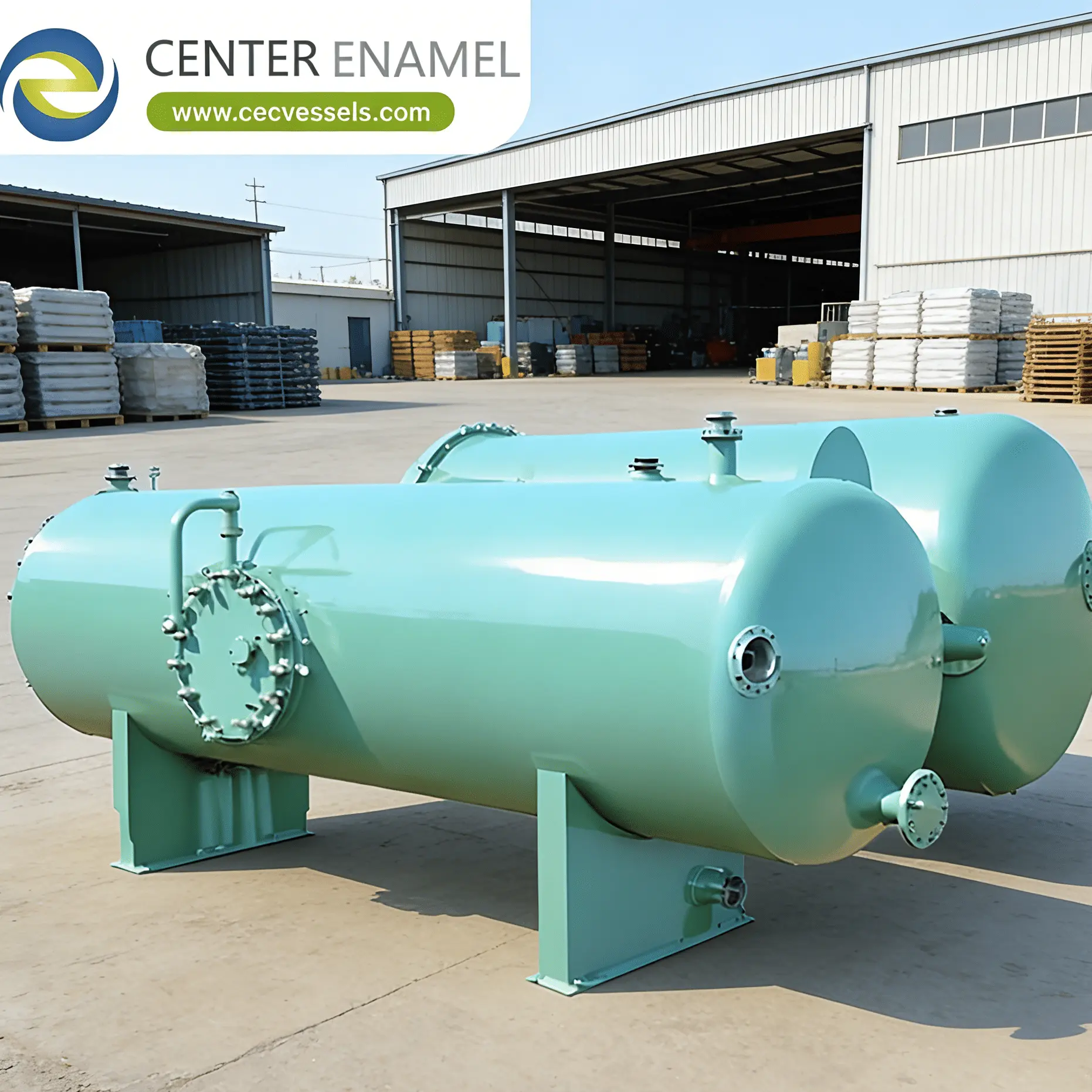
Etherification Reactor Reaction Equipment for Etherification Processes
Etherification is an important chemical process used to produce ethers and other valuable chemical products for applications across chemical manufacturing, pharmaceuticals, fuels, solvents, coatings, and specialty materials. At the center of this process is the etherification reactor, which provides a controlled environment where selected raw materials can react under carefully managed operating conditions. An Etherification Reactor is designed to support efficient contact between reactants while maintaining stable temperature, mixing, residence time, and material compatibility. Depending on the production process, the reactor can be configured with an agitator, heating or cooling system, feed connections, discharge nozzles, instrumentation, and other customized components. As an experienced China Etherification Reactor Manufacturer, Center Enamelprovides customized reaction equipment designed according to process requirements, production capacity, material characteristics, and operating conditions. Through appropriate engineering design and manufacturing control, an Etherification Reactor can become an important part of a reliable and efficient etherification production line. What Is an Etherification Reactor? An Etherification Reactor is specialized reaction equipment used to facilitate etherification reactions. Etherification generally involves the formation of an ether bond through the reaction of suitable organic compounds. The exact reaction mechanism depends on the selected raw materials, catalyst system, reaction temperature, and production process. The reactor provides the physical space necessary for reactants to achieve sufficient contact and reaction. Its internal configuration can be adapted to different production requirements. For example, an agitator can improve material circulation and mixing, while a jacket or internal heat-transfer system can provide controlled heating or cooling. Compared with general-purpose chemical reactors, an Etherification Reactor is designed around the characteristics of the specific etherification process. Factors such as reaction kinetics, viscosity, heat-transfer requirements, feed composition, catalyst compatibility, and product discharge conditions all influence the final equipment configuration. For industrial production, customized reactor engineering helps manufacturers achieve consistent operating conditions and stable product quality. How Does an Etherification Reactor Support the Etherification Process? The performance of an etherification reactor depends on the effective coordination of several process parameters. Temperature control is one of the most important considerations because etherification reactions often require a defined temperature range to achieve suitable reaction efficiency. A heating or cooling jacket can be incorporated around the reactor shell. Heat-transfer media circulate through the jacket to adjust the temperature of the reaction mixture. This configuration allows operators to maintain a more consistent process environment throughout the reaction cycle. Mixing is another important function. The agitator distributes raw materials throughout the reactor and promotes uniform contact between different components. Depending on the physical characteristics of the reaction materials, different agitator configurations can be selected. Residence time also affects the reaction process. Reactor volume, feed rate, discharge arrangement, and operating procedures can be coordinated to provide the required reaction time. Instrumentation can further support process control by monitoring parameters such as temperature, liquid level, and other relevant operating conditions. These systems allow the reactor to operate according to the established process design. Key Components of an Etherification Reactor An Etherification Reactor can contain several functional components depending on the production process. The reactor vessel is the main body of the equipment and provides the reaction chamber. Its dimensions and volume are determined according to production capacity and process requirements. The agitator system supports efficient mixing. Different impeller designs can be selected according to liquid viscosity, mixing requirements, and reaction characteristics. The heating and cooling system provides temperature regulation. A jacket is commonly integrated into the reactor structure to allow controlled heat transfer. Nozzles and process connections are arranged according to the requirements of raw material feeding, catalyst addition, product discharge, instrumentation, cleaning, and maintenance. Mechanical seals and sealing components are selected according to the reactor operating environment. Proper sealing design supports reliable operation and helps maintain the intended process conditions. Instrumentation connections can also be integrated into the reactor design. These connections allow temperature sensors, level instruments, sampling systems, and other monitoring devices to be installed according to the process configuration. Material Selection for Etherification Reactors Material selection is an important part of Etherification Reactor design. The appropriate material depends on the reaction medium, temperature, catalyst, cleaning requirements, and expected service conditions. Stainless steel is widely selected for chemical reaction equipment because of its corrosion resistance, clean internal surface, and compatibility with many organic and chemical processing applications. Different stainless steel grades can be considered according to the properties of the process medium. Carbon steel can also be used for selected applications where the process medium and operating conditions are compatible with the material. Its mechanical properties and manufacturing flexibility make it suitable for many general industrial applications. For more demanding processes, specialized materials or material combinations may be considered. The selection process should evaluate the chemical composition of the reaction medium, operating temperature, cleaning procedure, and long-term equipment requirements. As an Etherification Reactor Manufacturer, Center Enamelcan develop material specifications according to the customer's process information and equipment requirements. Design Considerations for Etherification Reaction Equipment Effective reactor design begins with a clear understanding of the production process. Before manufacturing, engineers need to evaluate reactor capacity, reaction temperature, material characteristics, mixing requirements, heating or cooling requirements, and connection configuration. Reactor volume should correspond to the required production capacity and reaction cycle. A suitable volume provides sufficient space for the reaction process while supporting efficient material utilization. The agitator should be selected based on the physical characteristics of the reaction mixture. Low-viscosity and high-viscosity liquids may require different mixing arrangements. The impeller diameter, rotation speed, shaft configuration, and motor selection can therefore be customized. Heat-transfer design is also important. The heating or cooling area should provide adequate thermal exchange for the required process. Jacket configuration, heat-transfer medium, and operating temperature can be considered during engineering. The reactor head and nozzle arrangement should also match the process layout. Proper positioning can simplify material feeding, instrumentation installation, cleaning, maintenance, and product discharge. These design considerations allow an Etherification Reactor to be integrated effectively into the overall production system. Manufacturing Process of an Etherification Reactor The manufacturing process of an Etherification Reactor begins with engineering confirmation and material preparation. Based on approved drawings and technical specifications, suitable steel plates and components are selected. Raw materials are inspected before fabrication. Material specifications, dimensions, and surface conditions are checked to ensure they correspond with the approved design. The vessel shell and heads are then cut and formed according to the engineering drawings. Welding processes are performed using qualified procedures, with attention given to dimensional accuracy and joint quality. After the main vessel structure is completed, components such as nozzles, supports, jackets, agitator connections, and other accessories are installed. Surface treatment is selected according to the material and application. Stainless steel equipment may receive appropriate cleaning, polishing, pickling, or passivation procedures when required. Carbon steel equipment can receive suitable surface protection according to the intended service environment. Inspection is performed throughout the manufacturing process. Dimensional inspection, weld inspection, surface inspection, and other applicable quality-control procedures are completed before final delivery. The finished Etherification Reactor is then prepared for shipment according to project requirements. Customized Etherification Reactor Solutions Different etherification processes can require different reactor configurations. For this reason, standardized equipment may not always provide the most suitable solution for a specific production line. Customized reactor design allows important parameters to be adjusted according to the customer's process requirements. These parameters can include reactor volume, vessel diameter, shell height, material grade, agitator type, motor capacity, jacket configuration, nozzle arrangement, insulation, instrumentation connections, and support structure. For batch production, the reactor can be configured to support repeated charging, mixing, reaction, sampling, and discharge operations. For continuous processes, the equipment configuration can be adapted to the required feed and discharge arrangement. The internal surface finish can also be selected according to production requirements. In applications where clean processing is important, an appropriate stainless steel grade and surface treatment can help support easier cleaning and product handling. A customized Etherification Reactor therefore provides greater flexibility for different production capacities and process conditions. Quality Control in Etherification Reactor Manufacturing Quality control is integrated throughout the reactor manufacturing process rather than being limited to the final inspection stage. Material inspection verifies that the selected steel and components match the approved specifications. Fabrication inspections monitor dimensions, forming accuracy, welding quality, and component installation. Weld inspection procedures can be applied according to the equipment design and applicable standards. These may include visual inspection and appropriate non-destructive examination methods. Dimensional checks confirm that the vessel, nozzles, supports, and other components correspond with the approved engineering drawings. Testing procedures are selected according to the equipment design and applicable requirements. Final inspection evaluates the overall structure, connections, surface treatment, accessories, and documentation. This systematic quality-control approach helps ensure that the completed Etherification Reactor is manufactured consistently and is ready for integration into the customer's production system. Why Choose a Professional China Etherification Reactor Manufacturer? Selecting an experienced Etherification Reactor Manufacturer can simplify the transition from process requirements to finished equipment. Professional manufacturers can support equipment design, material selection, fabrication, inspection, and project coordination. A China Etherification Reactor Manufacturer with established engineering and manufacturing capabilities can provide customized solutions for different industrial applications. The manufacturing process can be organized around the customer's technical specifications, production capacity, installation conditions, and process requirements. Center Enamelcombines engineering design and equipment manufacturing to provide customized reaction equipment for industrial customers. Our manufacturing capabilities cover different types of chemical process equipment, with reactor configurations developed according to individual project requirements. From initial technical communication to manufacturing and final inspection, our team focuses on maintaining consistency between engineering specifications and finished equipment. Etherification Reactor Applications in Modern Industry Etherification reactors are used in a wide range of chemical processing applications. They can support the production of ethers, solvents, specialty chemicals, additives, and intermediate products. In chemical manufacturing, reactors provide controlled reaction environments for converting selected raw materials into value-added products. In pharmaceutical and fine chemical production, customized stainless steel reactors can be configured according to specific production and cleaning requirements. In resin and polymer-related industries, reaction equipment can be designed with suitable mixing and temperature-control systems to accommodate different material characteristics. Etherification technology can also be incorporated into processes involving fuel additives, specialty solvents, coatings, and other chemical products. Because production processes vary significantly, the reactor configuration should always be developed according to the actual process requirements rather than relying on a single universal design. Center Enamelas an Etherification Reactor Manufacturer Center Enamelis a professional manufacturer of customized process equipment serving chemical and industrial applications. Our equipment engineering approach combines vessel fabrication, process requirements, material selection, component integration, and quality inspection. For Etherification Reactor projects, our engineering team can work with customers to determine the appropriate reactor capacity, material, agitator configuration, heating and cooling system, nozzle arrangement, and supporting components. Our manufacturing capabilities support the production of customized vessels for different industrial applications. We can also coordinate surface treatment, inspection, testing, and related documentation according to project requirements. As a China Etherification Reactor Manufacturer, Center Enamelfocuses on providing practical and professionally engineered reaction equipment that can be integrated into modern chemical production facilities. The combination of customized design and controlled manufacturing enables each reactor to be developed around the actual requirements of the customer's process. Supporting Efficient Etherification Production with Customized Equipment An Etherification Reactor is more than a vessel for holding chemical materials. It is an integrated piece of reaction equipment that brings together mixing, temperature regulation, material compatibility, process connections, and equipment engineering. For modern etherification processes, selecting the appropriate reactor configuration can support consistent production, efficient material handling, and reliable process control. Material selection, agitator design, heat-transfer arrangements, vessel dimensions, and instrumentation should all be considered as part of the overall equipment design. With professional engineering and manufacturing capabilities, Center Enamelprovides customized Etherification Reactor solutions for chemical processing applications. As a China Etherification Reactor Manufacturer, we can develop equipment according to project-specific requirements and provide a complete manufacturing process from engineering design to final inspection. For customers looking for an experienced Etherification Reactor Manufacturer, customized reactor engineering provides a practical way to match reaction equipment with production requirements and create a more suitable foundation for efficient etherification processing.
|