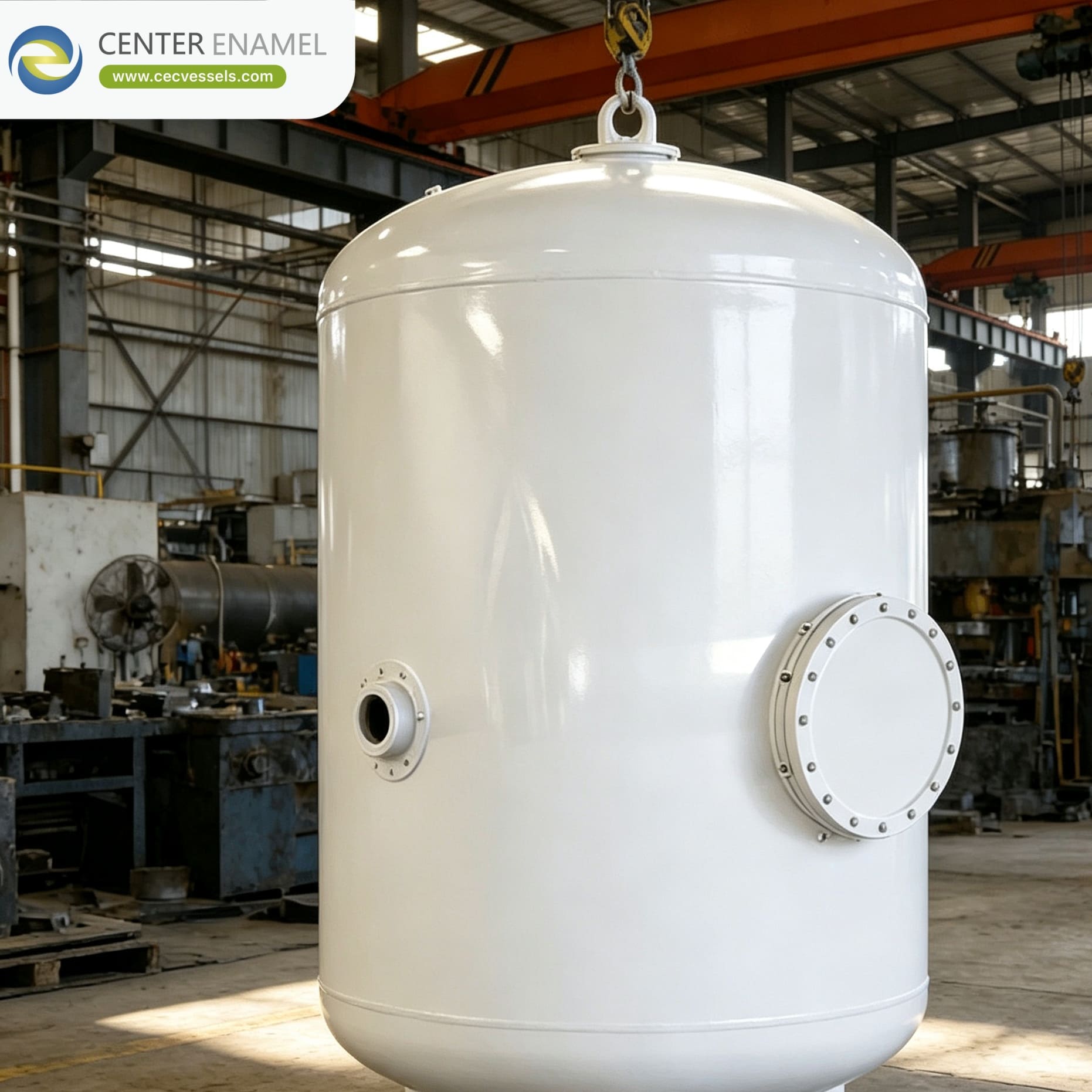
Industrial Wastewater Evaporator for Efficient Water Recovery and Wastewater Concentration
An Industrial Wastewater Evaporatoris a process system that removes water from industrial wastewater through evaporation, producing a concentrated liquid stream and vapor that can be condensed for potential water recovery. It helps manufacturers reduce wastewater volume and improve resource utilization. Industrial wastewater from chemical processing, pharmaceutical manufacturing, food production, and other industrial operations may contain dissolved salts, organic compounds, and other non-volatile substances. Evaporation can separate much of the water from these components, depending on the wastewater composition and operating conditions. Center Enamel provides industrial evaporation equipment solutions designed around feed characteristics, treatment capacity, energy requirements, and plant integration needs. How Does an Industrial Wastewater Evaporator Work?An industrial wastewater evaporatoruses thermal energy to convert part of the water in a wastewater stream into vapor. The vapor is separated from the concentrated liquid and may be condensed into recovered water for reuse or additional treatment. A typical evaporation process includes the following steps:
lWastewater feeding:Wastewater enters the system at a controlled flow rate. Pretreatment may be required to remove suspended solids, oils, or other components that affect evaporation performance. lHeat transfer:The wastewater receives heat through a suitable heat exchanger or evaporation chamber. lWater evaporation:A portion of the water changes into vapor, increasing the concentration of the remaining liquid. lVapor separation:A vapor-liquid separator separates generated vapor from entrained liquid droplets. lCondensation and water recovery:The vapor is condensed, and the resulting condensate is collected for quality testing and potential reuse. lConcentrate discharge:The concentrated wastewater is transferred for further treatment, crystallization, material recovery, or appropriate disposal.
The final process configuration depends on wastewater composition, evaporation capacity, target concentration, and the intended use of recovered water. Which Evaporation Technologies Are Suitable for Industrial Wastewater?Different evaporation technologies provide different benefits in terms of energy consumption, circulation, operating flexibility, and concentration capability. Selecting the right system requires evaluating the wastewater properties and the overall treatment objectives. Mechanical Vapor Recompression EvaporatorA Mechanical Vapor Recompression (MVR) Evaporatorrecovers the thermal energy contained in secondary vapor generated during evaporation. A mechanical compressor raises the vapor temperature so it can be reused as a heating medium. Key advantages include:
lReduced demand for external heating steam under suitable operating conditions. lImproved thermal energy utilization through vapor recycling. lContinuous wastewater concentration capability. lIntegration with condensate recovery and downstream treatment systems. MVR technology is often considered for industrial wastewater streams requiring continuous evaporation and efficient energy use. The system should be designed according to feed composition, vapor characteristics, fouling tendency, and available electrical power. Multi-Effect EvaporatorA Multi-Effect Evaporatoruses several evaporation stages to reuse vapor from one stage as the heating source for another. Each effect operates under conditions that allow heat to be transferred between stages. This arrangement can reduce fresh steam consumption compared with a conventional single-effect system. Double-effect, triple-effect, and quadruple-effect configurations can be evaluated according to evaporation capacity, utility availability, and investment requirements. Multi-effect evaporation is suitable for various industrial concentration processes, including selected chemical wastewater and salt-containing streams. Forced-Circulation EvaporatorA Forced-Circulation Evaporatoruses pumps to move liquid through the heat-transfer system at a controlled circulation rate. It is frequently considered for concentrated liquids, wastewater streams with crystallization potential, and applications requiring carefully managed circulation. When the wastewater contains substantial dissolved solids, forced circulation can help maintain fluid movement and support stable heat transfer. The design must account for solids content, scaling tendency, circulation requirements, and the intended concentrate characteristics. What Are the Main Benefits of Industrial Wastewater Evaporation?An appropriately designed Industrial Wastewater Evaporatorcan support several objectives within an industrial water management strategy. Water Recovery and ReuseEvaporation separates water from many dissolved and non-volatile substances. The resulting condensate may be reused as process water, cleaning water, or utility water after suitable quality verification and any necessary additional treatment. Water reuse potential depends on volatile contaminants, condensate quality, and the requirements of the receiving process. Wastewater Volume ReductionRemoving water increases the concentration of the remaining substances and reduces the volume of liquid requiring further treatment. This can help reduce the capacity required for downstream storage, transportation, or concentrate management. Energy EfficiencyMVR and multi-effect evaporation systems improve thermal energy utilization by recovering and reusing vapor. Actual energy performance depends on feed properties, temperature requirements, evaporation capacity, equipment configuration, and utility costs. Resource RecoverySome wastewater streams contain recoverable salts, minerals, or valuable process materials. Evaporation can increase their concentration before crystallization or other separation processes. Recovery feasibility depends on chemical composition, product purity requirements, and process economics. Key Design Considerations for an Industrial Wastewater EvaporatorChoosing an Industrial Wastewater Evaporator Manufacturerrequires evaluating the complete process rather than equipment capacity alone.
lWastewater composition:Determine the concentrations of dissolved solids, organic compounds, suspended particles, and other relevant constituents. lFeed flow rate:Establish the average and peak wastewater volumes to define the required treatment capacity. lTarget concentration:Specify the desired concentrate concentration or final liquid volume. lMaterial selection:Select carbon steel, stainless steel, or other suitable materials according to chemical compatibility, corrosion characteristics, and operating conditions. lFouling and scaling control:Evaluate pretreatment, cleaning arrangements, circulation, and operating conditions based on the wastewater characteristics. lCondensate quality:Identify the intended reuse application and the quality requirements for recovered water. lEnergy consumption:Compare steam demand, electricity consumption, heat recovery potential, and overall operating costs. lPlant integration:Consider available installation space, utilities, piping connections, control systems, and downstream treatment equipment.
Accurate process data helps engineers determine the appropriate evaporation technology and establish realistic performance expectations. Applications of Industrial Wastewater EvaporatorsIndustrial wastewater evaporationcan be applied across a range of manufacturing sectors.
lChemical manufacturing:Concentrating process wastewater and selected liquid residues before further treatment. lPharmaceutical production:Processing compatible wastewater streams generated during manufacturing and cleaning operations. lFood and beverage processing:Concentrating wastewater or liquid by-products with suitable compositions. lElectronics and metal processing:Treating selected rinse waters and mineral-containing wastewater streams. lSalt and mineral processing:Concentrating dissolved salts before crystallization or recovery. lIndustrial parks:Supporting centralized wastewater treatment and water recovery systems.
Each application requires a process assessment to determine whether evaporation is technically and economically appropriate. Pretreatment and downstream polishing may be necessary to meet the required water quality or concentrate management standards. Why Choose Center Enamel for Industrial Wastewater Evaporation Equipment?Center Enamel provides industrial evaporation equipment solutions for applications involving liquid concentration, wastewater volume reduction, and thermal energy recovery. Its evaporator portfolio includes MVR, multi-effect, forced-circulation, and other evaporation configurations for different process requirements. As a China Industrial Wastewater Evaporator Manufacturer, Center Enamel can evaluate project requirements to develop an equipment configuration suited to the wastewater stream and plant operating conditions. When discussing a project with Center Enamel, buyers should provide the wastewater composition, flow rate, initial concentration, target concentration, required water recovery rate, available utilities, and installation conditions. These details help establish the required evaporation capacity, appropriate equipment configuration, material specifications, and potential integration with pretreatment, crystallization, or condensate treatment systems. Frequently Asked Questions About Industrial Wastewater EvaporatorsWhat is the primary purpose of an industrial wastewater evaporator?Its primary purpose is to remove water from industrial wastewater, reduce liquid volume, and concentrate dissolved substances. The process may also produce condensate suitable for reuse after quality testing and any required additional treatment. Can an industrial wastewater evaporator recover reusable water?Yes. The vapor generated during evaporation can be condensed into water. Its suitability for reuse depends on the presence of volatile compounds, condensate quality, and the requirements of the intended application. Which evaporator is best for industrial wastewater treatment?MVR evaporators are often considered when thermal energy recovery is important. Multi-effect systems can improve steam economy, while forced-circulation evaporators may suit concentrated streams or applications involving crystallization. The best option depends on wastewater characteristics and project objectives. How can energy consumption be reduced?Potential approaches include MVR vapor recycling, multi-effect heat utilization, feed preheating, and effective heat integration. The appropriate combination depends on available utilities and the required evaporation duty. What information is required for equipment selection?Important information includes wastewater composition, flow rate, solids content, initial and final concentrations, condensate reuse requirements, operating conditions, and available utilities. Advancing Industrial Water Recovery with Center EnamelAn Industrial Wastewater Evaporatorcan help manufacturers reduce wastewater volume, recover potentially reusable water, and concentrate dissolved materials for further processing. MVR, multi-effect, and forced-circulation technologies offer different approaches to meeting these objectives. Center Enamel supports industrial evaporation projects through equipment engineering and customized configuration based on process requirements. By matching the evaporation technology to wastewater properties, energy availability, and water recovery targets, manufacturers can develop a more efficient and integrated industrial wastewater management system.
|