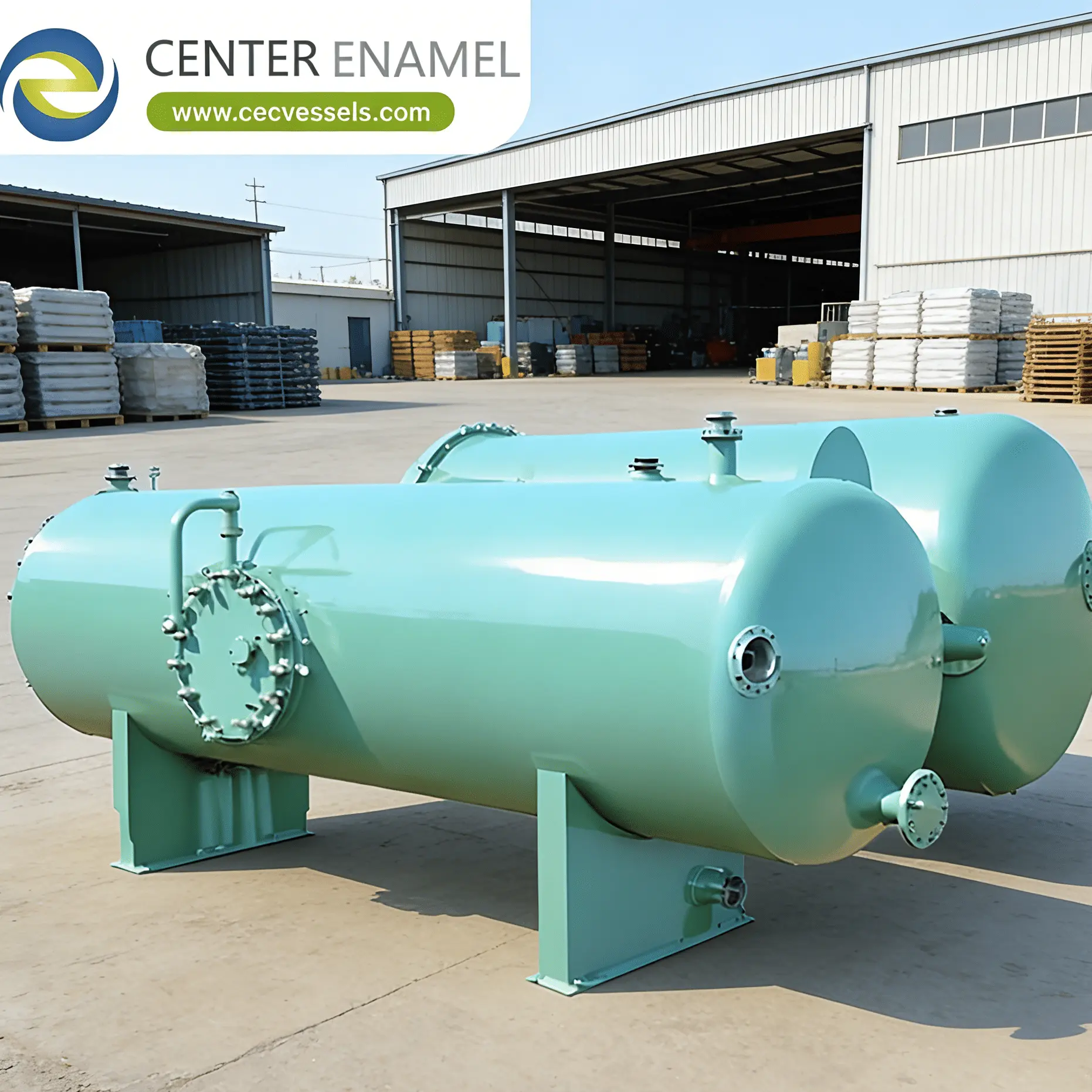
Quadruple-Effect Evaporator for High-Efficiency Industrial Liquid Concentration
A Quadruple-Effect Evaporatoris an industrial evaporation system that uses four connected evaporation stages to concentrate liquid materials and improve thermal energy utilization. It works by reusing vapor generated in one effect as the heating medium for the next effect, reducing the need for fresh steam throughout the process. This equipment is suitable for industries that need to remove water or other volatile components from liquid mixtures. Common applications include chemical manufacturing, food processing, pharmaceutical production, wastewater treatment, and salt processing. Compared with a single-effect evaporator, a quadruple-effect system makes more extensive use of available thermal energy. Each effect operates under specific temperature conditions, allowing vapor from the preceding stage to provide heat for further evaporation. Center Enamel offers industrial equipment solutions designed around different production requirements, process conditions, and equipment integration needs. How Does a Quadruple-Effect Evaporator Work?The working principle of a Quadruple-Effect Evaporatorinvolves sequential evaporation and heat reuse across four connected effects. First Effect: Initial EvaporationThe feed liquid enters the first effect, where a heating medium supplies the energy needed to evaporate part of its volatile content. As the liquid receives heat, vapor is generated and separated from the remaining liquid. The partially concentrated liquid continues through the process, while the generated vapor is directed toward the heating section of the second effect. The first stage establishes the initial evaporation conditions according to the feed temperature, flow rate, and material characteristics. Second Effect: Secondary Vapor UtilizationThe second effect uses vapor generated by the first effect as its heating source. The temperature conditions are arranged to maintain an appropriate temperature difference for heat transfer. As evaporation continues, the liquid becomes more concentrated. Vapor produced in the second effect then supplies thermal energy to the third effect. This sequential arrangement improves the utilization of the heat introduced into the system. Third Effect: Continued Liquid ConcentrationIn the third effect, the liquid undergoes further evaporation. The operating conditions are selected according to the material's boiling characteristics, concentration requirements, and heat-transfer performance. The concentration of the liquid increases as additional volatile components are removed. The resulting vapor is then directed to the fourth effect for further heat recovery. Fourth Effect: Final ConcentrationThe fourth effect completes the main evaporation sequence. Vapor from the third effect provides the thermal energy required for additional evaporation. Once the target concentration is reached, the concentrated product is discharged for storage or further processing. Vapor from the final effect can be directed to a condenser or another suitable vapor-handling system. By connecting four evaporation stages, the system improves heat utilization and supports efficient industrial concentration. Key Advantages of a Quadruple-Effect EvaporatorImproved Energy EfficiencyThe main advantage of a Quadruple-Effect Evaporatoris its ability to reuse secondary vapor as a heating medium. Instead of requiring fresh steam for every evaporation stage, the system transfers available thermal energy from one effect to the next. This arrangement can reduce steam consumption per unit of water evaporated compared with single-effect evaporation. Actual energy performance depends on the feed properties, operating temperatures, heat losses, and equipment configuration. Continuous ProductionA quadruple-effect system can be designed for continuous feed and product discharge. This arrangement supports stable processing for industrial plants that handle large volumes of liquid materials. When integrated with appropriate pumps, instruments, and automatic controls, the system can maintain consistent operating conditions and help regulate the concentration process. Flexible Concentration ControlDifferent industrial applications require different final product concentrations. A properly configured evaporation system can adjust feed flow, heating conditions, and discharge rates to match production requirements. Monitoring temperature, liquid level, flow rate, and other relevant parameters helps maintain consistent processing conditions. Integrated Equipment ConfigurationA quadruple-effect evaporator can be integrated with feed tanks, heat exchangers, condensers, pumps, and downstream processing equipment. A coordinated layout helps connect the evaporation process with the wider production line. Equipment dimensions and component arrangements can be selected according to available installation space and project specifications. Industrial Applications of Quadruple-Effect EvaporatorsA Quadruple-Effect Evaporatorserves a variety of industries that require liquid concentration and efficient water removal. Chemical ManufacturingChemical manufacturers use evaporation to concentrate aqueous solutions, chemical intermediates, and process liquids. The equipment configuration depends on the solution composition, required concentration, and compatibility of construction materials. Heat-transfer surfaces and circulation arrangements should be selected according to the properties of the specific chemical stream. Food and Beverage ProcessingEvaporation is widely used to concentrate liquid ingredients, extracts, syrups, and other products. A quadruple-effect system can support continuous concentration while improving thermal energy utilization. For temperature-sensitive materials, the operating conditions should be selected to maintain the required product quality. Cleaning requirements and hygienic design are also important considerations. Pharmaceutical ProductionPharmaceutical and fine chemical manufacturers may use evaporation to concentrate process solutions and liquid intermediates. Equipment selection should account for material compatibility, temperature control, cleaning procedures, and applicable production requirements. Industrial Wastewater TreatmentSome industrial wastewater streams contain dissolved substances that can be concentrated through evaporation. A quadruple-effect system can reduce liquid volume and support subsequent treatment or material recovery. The system design depends on wastewater composition, solids content, and the required treatment objectives. Salt and Mineral ProcessingSalt-containing solutions may require concentration before crystallization or further separation. A quadruple-effect evaporator can be incorporated into a process line with suitable circulation equipment and downstream crystallization systems. How to Select a Quadruple-Effect Evaporator ManufacturerSelecting a suitable Quadruple-Effect Evaporator Manufacturerrequires evaluating process requirements, equipment configuration, and long-term operating needs. Feed Composition and Processing CapacityFeed composition influences boiling behavior, viscosity, heat-transfer performance, and material selection. Important information includes the feed flow rate, initial concentration, operating temperature, and desired final concentration. These parameters help determine the evaporation capacity and the required heat-transfer area. Thermal Energy RequirementsThe available steam supply, operating temperature range, and heat recovery requirements affect the arrangement of the four effects. Engineers should evaluate the temperature difference across each stage to determine an appropriate system configuration. Construction MaterialsConstruction materials should be compatible with the process liquid and the intended operating conditions. Stainless steel and other suitable industrial materials may be considered according to corrosion resistance, cleanliness requirements, and project specifications. Automation and MaintenanceThe control system should support coordinated operation of the evaporation stages, including temperature regulation, liquid-level monitoring, and product discharge. The equipment layout should also provide suitable access for inspection, cleaning, and routine maintenance. Why Choose Center Enamel for Industrial Evaporation Equipment?When evaluating a China Quadruple-Effect Evaporator Manufacturer, industrial buyers should consider engineering capabilities, equipment integration, fabrication quality, and project-specific customization. Center Enamel provides industrial equipment solutions for customers with different process and production requirements. A suitable evaporation system should be developed according to the feed properties, evaporation capacity, target concentration, available utilities, and installation conditions. Depending on the project scope, the complete arrangement may include evaporation bodies, heating sections, vapor separators, condensers, pumps, piping, instrumentation, and control systems. Customized equipment planning helps align the evaporation system with upstream and downstream processes. Material specifications and operating parameters should be confirmed according to the actual application and relevant project standards. Providing accurate process information allows the equipment configuration to be evaluated more effectively. Customers can prepare feed composition, expected throughput, initial and final concentrations, operating schedules, and installation details for technical discussions. Center Enamel aims to support industrial projects with equipment solutions that match defined processing requirements and production objectives. Optimize Industrial Liquid Concentration with Center EnamelA Quadruple-Effect Evaporatorprovides an effective method for concentrating industrial liquids through four connected evaporation stages and sequential heat recovery. Its applications extend across chemical processing, food production, pharmaceutical manufacturing, wastewater treatment, and mineral processing. The right equipment configuration depends on feed characteristics, required evaporation capacity, final concentration, thermal efficiency, and integration with existing facilities. Center Enamel welcomes inquiries from industrial customers seeking evaporation equipment solutions tailored to their production needs. Share your process requirements and target concentration to begin evaluating a suitable quadruple-effect evaporation system for your facility.
|