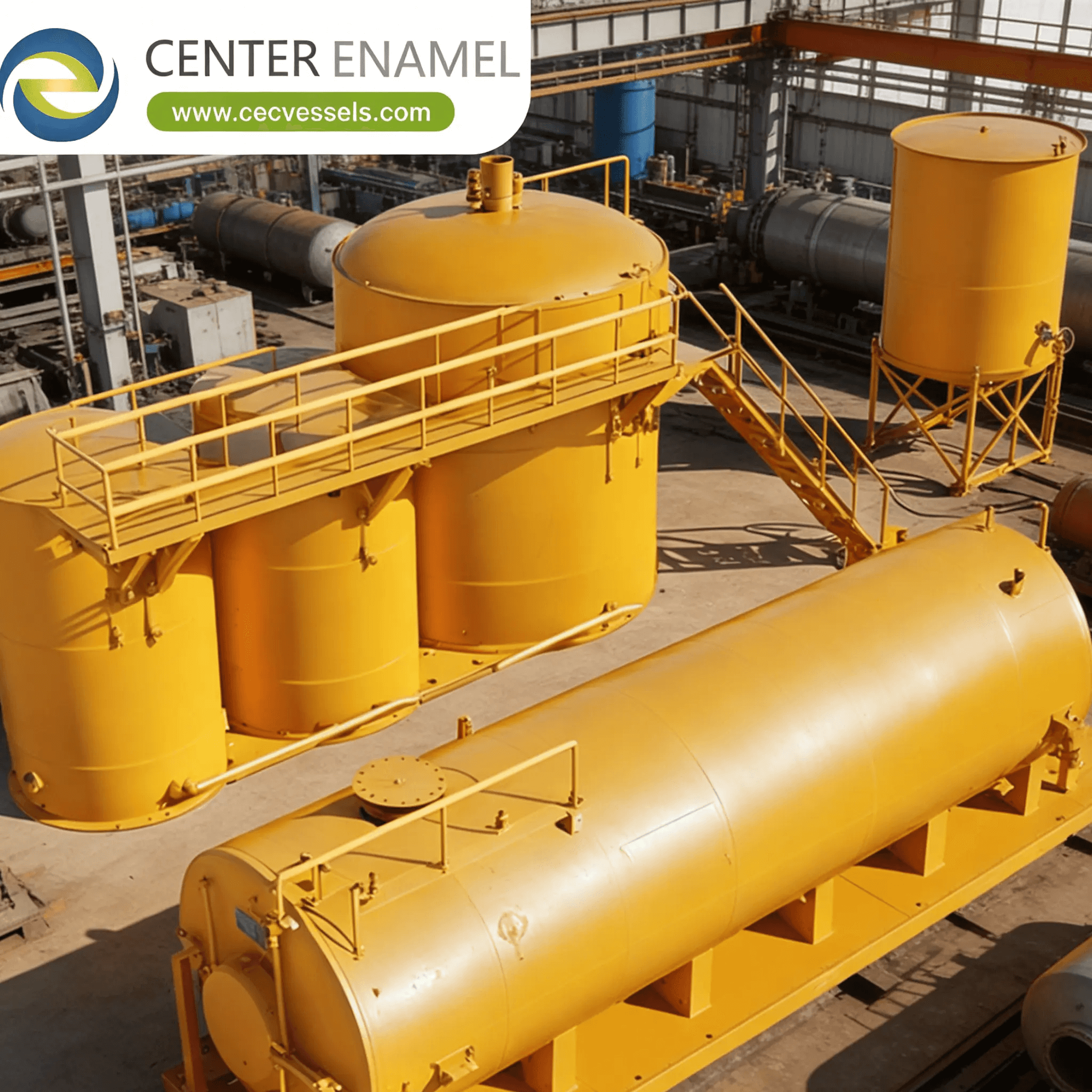
Quadruple-Effect Falling Film Evaporator Four-Effect Operation for Enhanced Steam Economy
A Quadruple-Effect Falling Film Evaporator is a multi-stage industrial evaporation system designed to concentrate liquid materials through four interconnected falling film evaporation effects. It combines the advantages of falling film operation with multi-effect heat utilization, making it suitable for continuous liquid concentration processes. In a falling film evaporator, the feed liquid is distributed across the upper section of a heat-transfer surface and flows downward as a thin film. Thermal energy passes through the heat-transfer surface, causing part of the solvent to evaporate while the concentrated liquid continues moving downward. The four-effect configuration allows vapor generated in one effect to be reused as the heating source for the next effect. The first effect receives the primary heating medium, while vapor from the first effect supplies thermal energy to the second effect. Vapor from the second effect is then used in the third effect, followed by the same principle between the third and fourth effects. This combination of thin-film evaporation and four-stage heat reuse can improve steam economy while supporting continuous and efficient liquid concentration. How Does Four-Effect Falling Film Evaporation Work? The working principle begins when the feed liquid enters the distribution system at the top of the first evaporation effect. A suitable distributor spreads the liquid evenly over the heat-transfer tubes or surfaces. The liquid then flows downward along the internal surface as a thin film. Because the film is relatively thin, thermal energy can be transferred efficiently from the heating medium through the heat-transfer surface to the process liquid. As the liquid moves downward, part of the solvent evaporates. The generated vapor is separated from the concentrated liquid and directed toward the heating section of the second effect. The second effect uses the vapor from the first effect as its heating source. Additional solvent is evaporated from the liquid film, generating new vapor for the third effect. The process continues through the third and fourth effects. By using generated vapor successively, the system makes better use of the available thermal energy. The final concentrated liquid leaves the fourth effect and can be sent to a subsequent processing stage, while condensed heating media and generated vapor are managed through the corresponding condensate and vapor systems. Why Does a Quadruple-Effect Falling Film Evaporator Improve Steam Economy? Steam economy is one of the key reasons for using a multi-effect evaporation system. In a single-effect evaporator, the heating medium is mainly used for one evaporation stage. In a four-effect system, generated vapor can be reused across multiple effects. The first effect receives the primary heating source. The vapor generated during this stage still contains useful thermal energy, so it can be transferred to the second effect. The same principle applies from the second effect to the third and from the third to the fourth. This repeated utilization allows the evaporation system to make more effective use of the initial heating energy. The actual steam economy depends on feed concentration, evaporation capacity, temperature differences, heat-transfer efficiency, vapor losses, and system configuration. Therefore, the four effects should be engineered as an integrated thermal system rather than treated as four independent evaporators. For industrial users, this configuration can be suitable for processes where large quantities of liquid need to be concentrated while optimizing the utilization of steam. What Are the Advantages of Falling Film Operation? The falling film configuration is particularly suitable for liquid concentration because the process liquid flows downward as a thin film over the heat-transfer surface. The thin liquid film provides a large contact area for heat transfer. It can also support relatively short residence time, which is useful for temperature-sensitive materials and continuous processing applications. The falling film principle allows the evaporation process to be distributed over the length of the heat-transfer surface. When the liquid is evenly distributed, the available heat-transfer area can be effectively utilized. The system can also provide continuous feed and discharge, making it suitable for industrial production lines that require stable processing capacity. For liquids with appropriate flow characteristics, falling film evaporation can provide efficient heat transfer and compact equipment arrangements. The distributor design is particularly important because uniform liquid distribution at the top of each effect helps establish a consistent liquid film across the heat-transfer surface. What Are the Main Components of a Quadruple-Effect Falling Film Evaporator? A Quadruple-Effect Falling Film Evaporator contains four primary evaporation effects together with heat-transfer, vapor separation, circulation, and control components. Each effect normally includes a falling film heat-transfer section, evaporation chamber, liquid distribution system, and vapor-liquid separation area. The liquid distributor is positioned at the upper part of the evaporator and distributes feed liquid evenly across the heat-transfer tubes. Its design is closely related to the quality of the falling film. The heat-transfer tubes provide the surface through which thermal energy passes. Their diameter, length, material, arrangement, and total surface area can be selected according to the process requirements. Vapor separators separate generated vapor from concentrated liquid before the vapor moves to the next effect. The system can also include pumps, condensate piping, vapor piping, feed pumps, discharge pumps, valves, temperature sensors, level instruments, flow meters, sampling points, and control systems. Each component is coordinated with the four-effect configuration to create a complete evaporation system. How Is a Quadruple-Effect Falling Film Evaporator Designed? The design of the system begins with the characteristics of the feed liquid and the required final concentration. Important parameters include feed flow rate, initial concentration, final concentration, evaporation capacity, viscosity, boiling characteristics, heat sensitivity, operating temperature, heating medium, and available installation space. The total evaporation duty is distributed across the four effects. Each effect is then designed according to its individual thermal and material conditions. The heat-transfer area is an important design parameter. Sufficient surface area must be provided to transfer the required amount of thermal energy while maintaining suitable liquid film operation. The liquid distribution system is designed to provide uniform feed distribution. The vapor separation system is also sized according to the expected vapor flow. The four effects must be thermally coordinated so that vapor from one stage can provide useful heating energy for the following stage. Piping layouts are designed to connect the four effects while supporting appropriate vapor, liquid, and condensate movement. Instrumentation and control components can be integrated according to the customer's automation requirements. This process-based design approach allows the Quadruple-Effect Falling Film Evaporator to be adapted to different industrial concentration applications. Which Materials Are Used for Falling Film Evaporators? Material selection is an important consideration for evaporation equipment because concentrated liquids can have different chemical characteristics from their original feed solutions. Stainless steel is commonly used for falling film evaporators because it provides corrosion resistance, a smooth process surface, and good suitability for applications requiring regular cleaning. Different stainless steel grades can be selected according to the process medium and application requirements. For food, pharmaceutical, and selected chemical applications, suitable stainless steel construction can support clean processing and maintenance. Carbon steel can be used for suitable structural components or process applications where the material is compatible with the operating medium. Material selection should cover the entire evaporation system, including heat-transfer tubes, evaporation chambers, vapor separators, piping, nozzles, supports, and other wetted components. A professional Quadruple-Effect Falling Film Evaporator Manufacturer can evaluate the process medium and recommend suitable materials for individual equipment components. What Industries Use Quadruple-Effect Falling Film Evaporators? Quadruple-Effect Falling Film Evaporators are used in industries where continuous liquid concentration and efficient thermal utilization are important. In the chemical industry, they can be used to concentrate process solutions, recover dissolved materials, and prepare liquids for downstream processing. In food and beverage production, falling film evaporation can be used for concentrating liquid extracts, dairy-related products, fruit-based solutions, and other food ingredients. Pharmaceutical applications may use falling film evaporation for selected concentration processes where controlled thermal treatment and suitable equipment materials are required. Environmental applications can include concentration and volume reduction of selected industrial process liquids and wastewater streams. Other applications include salt processing, mineral-related processing, organic chemical production, pulp and paper processing, and specialty liquid concentration. The equipment configuration can be adjusted according to the characteristics of the material and the required production capacity. How Is a Quadruple-Effect Falling Film Evaporator Manufactured? The manufacturing process starts with engineering design and material preparation. After the technical specifications and drawings are approved, the required materials are inspected and prepared for fabrication. Steel plates and tubes are cut and processed according to the engineering drawings. Components such as evaporation bodies, heating chambers, vapor separators, distributors, supports, and nozzles are then fabricated. Rolling, forming, welding, machining, and assembly procedures are carried out according to the relevant manufacturing requirements. The heat-transfer section receives particular attention because the quality and geometry of the heat-transfer surfaces directly influence evaporation performance. The falling film distributor is also carefully fabricated and inspected to ensure that it corresponds with the design requirements. During assembly, the four effects are connected through vapor, liquid, and condensate piping. Major equipment dimensions and connection positions are checked against the approved drawings. Surface treatment is selected according to the material and application. Stainless steel components can receive appropriate surface finishing, while carbon steel components can receive suitable surface preparation and protective coating when required. The completed system undergoes final inspection before packaging and shipment. How Does Center Enamel Control Equipment Quality? Center Enamel applies quality control throughout the manufacturing process of industrial evaporation equipment. Incoming materials are inspected against relevant specifications and supporting documentation before entering fabrication. During production, dimensional inspection and welding quality checks are performed at appropriate stages. For applicable components, non-destructive testing can be performed according to project requirements and relevant standards. Inspection methods may include ultrasonic testing, radiographic testing, dye penetrant testing, or other suitable methods. Heat-transfer components, liquid distributors, vapor separators, nozzles, supports, and piping connections are checked during assembly. Final inspection includes dimensional verification, visual inspection, connection checks, and applicable functional or tightness testing based on the equipment specification. Manufacturing and inspection records can be prepared according to customer requirements, supporting traceability throughout the production process. Why Choose a Quadruple-Effect Falling Film Evaporator Manufacturer? Selecting a Quadruple-Effect Falling Film Evaporator Manufacturer requires consideration of engineering experience, fabrication capacity, customization capability, material selection, quality control, and project support. A four-effect falling film system is a coordinated process installation rather than a single vessel. The four evaporation effects, distributors, heat-transfer surfaces, vapor separators, pumps, piping, valves, and instrumentation must be designed to work together. An experienced manufacturer can evaluate the feed characteristics and develop a suitable configuration for evaporation capacity, concentration requirements, heat-transfer conditions, and plant layout. Manufacturing capability is also important because the quality of the heat-transfer components and liquid distribution system directly influences the operation of the falling film process. For international projects, familiarity with applicable technical standards and documentation requirements can also support effective project coordination. Why Choose Center Enamel as a China Quadruple-Effect Falling Film Evaporator Manufacturer? Shijiazhuang Zhengzhong Technology Co., Ltd. (Center Enamel) is an industrial equipment manufacturer integrating research and development, engineering design, manufacturing, and global sales. Center Enamel operates a production and R&D base covering more than 150,000 square meters, equipped with automated production equipment, precision laser cutting systems, automatic rolling machinery, material testing facilities, and other manufacturing resources. Our engineering team can develop customized Quadruple-Effect Falling Film Evaporator systems according to feed flow rate, initial and final concentration, evaporation capacity, material characteristics, heating conditions, and installation requirements. The equipment can be configured with four falling film effects, customized heat-transfer surfaces, liquid distributors, vapor separators, pumps, piping, valves, instruments, and supporting structures. Center Enamel provides integrated technical support from engineering design and material preparation through fabrication, inspection, assembly, transportation, and after-sales service. With experience serving customers in more than 100 countries, Center Enamel can support different industrial applications and project requirements. For customers searching for a Quadruple-Effect Falling Film Evaporator Manufacturer or China Quadruple-Effect Falling Film Evaporator Manufacturer, Center Enamel provides customized four-effect evaporation systems designed around specific industrial concentration requirements. Four-Effect Operation for Enhanced Steam Economy A Quadruple-Effect Falling Film Evaporator combines the thin-film heat-transfer principle with four-stage evaporation to provide an efficient approach to industrial liquid concentration. The falling film configuration allows process liquid to move as a thin layer over the heat-transfer surface, while the four-effect arrangement enables vapor generated in one stage to be reused as a heating source for the following stage. This combination can improve steam utilization and support continuous evaporation for chemical, food, pharmaceutical, environmental, and other industrial applications. The appropriate system design depends on feed flow rate, concentration, evaporation capacity, material properties, heat-transfer requirements, heating conditions, and plant layout. Center Enamel provides customized Quadruple-Effect Falling Film Evaporator solutions based on individual project requirements. Customers can provide feed characteristics, evaporation capacity, initial and final concentration, heating conditions, and installation information, allowing our engineering team to develop a suitable four-effect falling film evaporation system.
|