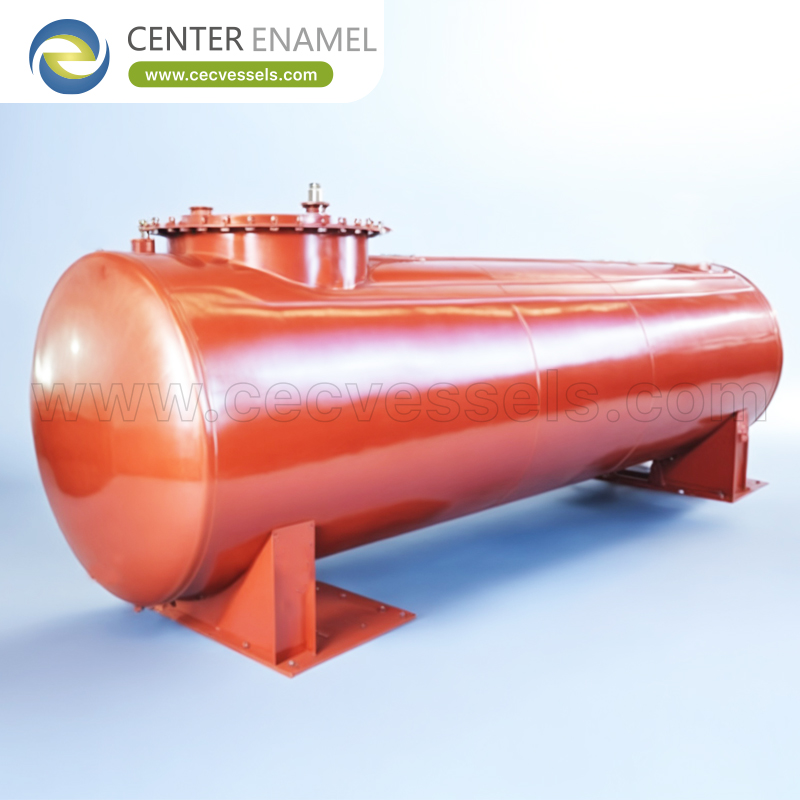
Horizontal Skid-Mounted MVR Evaporator Layout and Process Configuration Considerations
A Horizontal Skid-Mounted MVR Evaporator is an industrial evaporation system designed to concentrate process liquids while recovering and reusing secondary vapor through mechanical vapor recompression technology. MVR stands for Mechanical Vapor Recompression. During operation, vapor generated from the evaporation process is compressed by a mechanical vapor compressor. The compressed vapor increases in temperature and can then be reused as the heating source for continued evaporation. The horizontal skid-mounted configuration places major components in a horizontal arrangement and integrates them onto a prefabricated skid. Depending on the process design, the system may include an evaporator body, vapor separator, compressor, heat exchanger, circulation equipment, pumps, piping, valves, instrumentation, and control components. This configuration provides a practical solution for industrial facilities that require continuous liquid concentration, water removal, or volume reduction while maintaining a compact equipment arrangement. How Does an MVR Evaporator Work?The MVR evaporation process begins when the feed liquid enters the evaporation system. Heat is transferred to the liquid, causing part of the solvent, normally water, to evaporate. The generated secondary vapor is separated from the concentrated liquid and directed toward the mechanical vapor compressor. The compressor raises the vapor temperature so that the recovered vapor can be reused within the evaporation system. The recompressed vapor enters the heating side of the evaporator heat exchanger. Heat is transferred from the vapor to the process liquid, generating additional evaporation. Because the vapor is continuously recovered and reused, the MVR system can reduce the need for continuous external steam consumption compared with conventional evaporation systems. The concentrated liquid is discharged when it reaches the required concentration. Depending on the process, the system can operate continuously with automated control of feed flow, liquid level, temperature, concentration, and other process parameters. Why Use a Horizontal Skid-Mounted Configuration?The equipment layout has an important influence on installation, maintenance, piping, and overall plant integration. A horizontal skid-mounted configuration provides several practical benefits for industrial evaporation projects. The first benefit is equipment integration. Major components can be assembled and connected on a common skid before delivery. This allows the manufacturer to coordinate piping, valves, instruments, and equipment interfaces during the fabrication stage. The second benefit is convenient transportation and installation. Since the system is assembled as a modular unit, the customer can reduce the amount of onsite assembly work required after delivery. A horizontal arrangement can also provide convenient access to pumps, valves, heat exchangers, and other components. This can be useful for facilities where equipment accessibility is an important consideration. The final configuration should always be determined according to evaporation capacity, available installation space, process flow, equipment dimensions, maintenance requirements, and customer specifications. Horizontal Skid-Mounted MVR Evaporator LayoutA well-designed layout should consider both the process sequence and the physical relationship between major components. A typical system may include the following sections: Feed SystemThe feed system transfers the process liquid into the evaporator. Feed pumps, pipelines, valves, filters, and measurement instruments can be arranged according to the characteristics of the liquid and required flow rate. The feed system should provide stable and controllable material flow so that the evaporation section can operate consistently. Evaporation SectionThe evaporation section is responsible for transferring heat to the feed liquid and generating vapor. Heat-transfer surfaces can be selected according to the liquid characteristics, concentration requirements, and evaporation capacity. The evaporator configuration may vary depending on the application. Falling-film, forced-circulation, and other evaporation arrangements can be considered according to process conditions. Vapor Separation SectionAfter evaporation, vapor and concentrated liquid need to be separated effectively. A vapor separator can be incorporated into the system to improve vapor quality before the vapor reaches the mechanical compressor. Proper separation helps reduce liquid carryover and supports stable vapor recompression. Mechanical Vapor CompressorThe compressor is a central component of an MVR system. It receives secondary vapor from the evaporation process and increases its temperature for reuse as a heating medium. Compressor selection depends on vapor flow, temperature difference, evaporation capacity, process characteristics, and system configuration. Concentrate Discharge SystemThe concentrated liquid is collected and discharged through a dedicated outlet. Pumps, control valves, pipelines, and concentration monitoring equipment can be incorporated according to the production requirements. The discharge system should be coordinated with the upstream evaporation process to maintain stable operation. Process Configuration ConsiderationsThe process configuration of a Horizontal Skid-Mounted MVR Evaporator should be developed around the actual characteristics of the feed liquid. Important parameters include feed flow rate, initial concentration, target concentration, evaporation capacity, boiling temperature, viscosity, solids content, material compatibility, and required product quality. The evaporation capacity determines the size and arrangement of the main heat-transfer equipment. Feed characteristics influence the selection of the evaporator type, circulation method, materials, and cleaning configuration. Temperature management is another important consideration. The evaporation system should maintain suitable temperature conditions throughout the process so that heat transfer and vapor recompression remain coordinated. The process flow should also minimize unnecessary piping and equipment connections. A clear arrangement can improve material flow, reduce installation complexity, and make equipment operation easier to manage. Heat Transfer and Vapor RecompressionHeat transfer is at the center of the MVR evaporation process. The evaporator must provide sufficient heat-transfer area to achieve the required evaporation capacity. The mechanical vapor compressor allows the system to recover thermal energy from secondary vapor. Instead of continuously discharging the generated vapor, the system redirects it through the compressor and returns the recovered heat to the evaporation cycle. This operating principle is one of the main reasons MVR technology is widely considered for industrial liquid concentration and water evaporation applications. The heat exchanger, compressor, separator, pumps, and control system must therefore be considered as an integrated process rather than independent components. Materials for MVR Evaporator ManufacturingMaterial selection should correspond to the feed liquid, operating temperature, concentration, cleaning requirements, and expected service conditions. Stainless steel is commonly selected for MVR evaporators because it provides good corrosion resistance and a clean process-contact surface. Different stainless steel grades can be considered according to the characteristics of the processed liquid. For applications involving compatible industrial liquids, carbon steel can also be considered for selected components or structural sections. Surface finishing may include mechanical polishing, pickling, passivation, or suitable protective treatment depending on the material and application. A professional Horizontal Skid-Mounted MVR Evaporator Manufacturer should evaluate material selection together with process conditions rather than selecting materials only according to equipment cost. Manufacturing Process of a Skid-Mounted MVR EvaporatorManufacturing quality directly influences equipment consistency and system integration. The manufacturing process begins with raw material verification. Materials are checked against approved engineering specifications before fabrication. Components are then cut, formed, rolled, machined, and assembled according to detailed drawings. Heat-transfer components, separators, piping sections, supports, and skid structures are fabricated according to the planned configuration. Welding and assembly procedures are controlled throughout production. Dimensional inspections confirm the position of major components, nozzles, supports, connections, and skid interfaces. Piping is assembled according to the process flow diagram and equipment layout. Valves, instruments, pumps, and other components are positioned to support operation and maintenance. After assembly, the equipment undergoes inspection and specified functional checks. Surface treatment and finishing are completed according to the selected material and customer requirements. The complete skid can then be prepared for transportation and installation at the customer's facility. Applications of Horizontal Skid-Mounted MVR EvaporatorsMVR evaporators are suitable for various industries requiring continuous liquid concentration or water evaporation. Chemical ProcessingChemical production can generate process liquids that require concentration or solvent removal. MVR technology can provide continuous evaporation for suitable chemical solutions. Pharmaceutical ProductionPharmaceutical manufacturing may require controlled evaporation and concentration of process liquids. Stainless steel construction and customized process connections can support applications where clean processing conditions are important. Food and BeverageMVR evaporation can be used for concentrating food ingredients, liquid products, and process streams. Equipment configuration can be adapted to product characteristics and cleaning requirements. Wastewater TreatmentIndustrial wastewater streams can contain significant quantities of water that need to be separated from dissolved or suspended materials. MVR evaporation can support wastewater volume reduction and concentrate production in suitable treatment systems. Other Industrial ApplicationsAdditional applications include salt-containing liquids, chemical solutions, industrial process water, and other streams where evaporation is an appropriate separation method. The actual configuration should be developed according to the feed composition, evaporation capacity, concentration target, and downstream treatment requirements. Advantages of Skid-Mounted MVR System IntegrationSkid-mounted construction allows the manufacturer to integrate multiple components before the equipment reaches the project site. This approach can simplify onsite installation because major equipment, piping, valves, and instruments are already arranged according to the approved layout. A prefabricated skid can also improve consistency between engineering drawings and the physical equipment. Interfaces can be checked during manufacturing before shipment, helping the installation team connect the system according to predefined requirements. For projects with limited installation time or specific plant layouts, skid-mounted equipment can provide greater flexibility. The horizontal configuration can further support convenient access to process components and provide a practical arrangement for facilities with suitable floor space. Center Enamel as a Horizontal Skid-Mounted MVR Evaporator ManufacturerShijiazhuang Zhengzhong Technology Co., Ltd., known as Center Enamel, is an industrial equipment manufacturer integrating research and development, engineering design, manufacturing, and international project services. The company's product portfolio includes MVR evaporators, reactors, pressure vessels, heat exchangers, separators, Glass-Fused-to-Steel tanks, Fusion Bonded Epoxy tanks, and other process equipment. As a Horizontal Skid-Mounted MVR Evaporator Manufacturer, Center Enamel can develop equipment configurations according to process capacity, feed characteristics, evaporation requirements, material selection, equipment arrangement, and installation conditions. The engineering team can coordinate the evaporator, vapor separator, mechanical compressor, heat exchanger, pumps, piping, valves, instrumentation, and skid structure as an integrated system. Center Enamel has an established manufacturing facility and international project experience, supporting customers across different industrial sectors and geographical markets. Customized MVR Evaporator SolutionsEvery evaporation project has different process requirements. A customized design can therefore provide a closer match between the equipment and the customer's production system. Customers can provide information such as feed flow rate, feed concentration, target concentration, evaporation capacity, liquid composition, operating temperature, required materials, available installation space, and utility conditions. Based on these parameters, the engineering team can determine a suitable evaporator configuration and process layout. The skid can also be designed with customized piping arrangements, pump selections, instrumentation, control interfaces, cleaning connections, and maintenance access. This approach allows the MVR evaporator to integrate with upstream and downstream equipment more efficiently. Choosing a China Horizontal Skid-Mounted MVR Evaporator ManufacturerWhen selecting a China Horizontal Skid-Mounted MVR Evaporator Manufacturer, customers should consider engineering capability, manufacturing experience, process understanding, customization capacity, quality management, and international project support. A qualified manufacturer should be able to evaluate the complete evaporation process rather than focusing only on individual equipment components. Center Enamel combines engineering design, equipment manufacturing, process integration, and project support to provide customized evaporation solutions for different industrial applications. Its international experience allows the technical team to communicate with customers about equipment specifications, process configuration, installation requirements, transportation arrangements, and project coordination. Horizontal MVR Evaporation for Integrated Industrial ProcessingA Horizontal Skid-Mounted MVR Evaporator combines mechanical vapor recompression with an integrated equipment layout to provide a practical solution for continuous liquid concentration and water evaporation. The horizontal skid-mounted arrangement brings the main evaporation, separation, compression, heat-transfer, pumping, piping, and control components together into a coordinated system. This can simplify transportation, installation, equipment integration, and maintenance planning. For chemical, pharmaceutical, food, environmental, and other industrial applications, the appropriate MVR configuration should be determined according to the feed characteristics, evaporation capacity, concentration requirements, material selection, and available plant space. Center Enamel provides customized MVR evaporator solutions supported by engineering design, manufacturing capabilities, process equipment integration, and international project experience. With the right layout and process configuration, a horizontal skid-mounted system can become an effective part of a modern industrial evaporation process. |