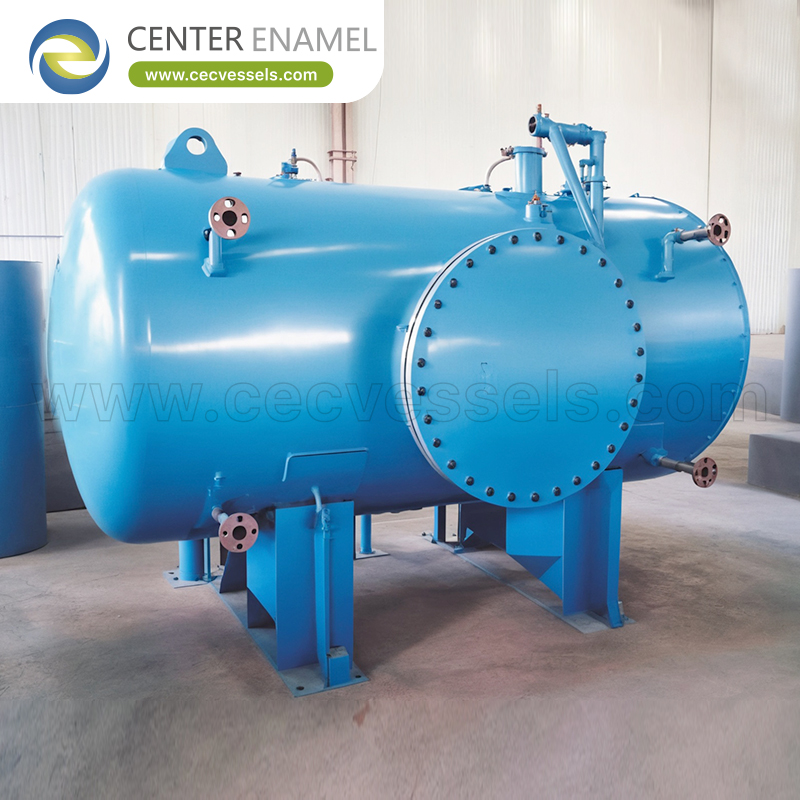
Shell and Tube Heat Exchangers for Transesterification Reaction Cooling in Chemical Processing
In the chemical processing industry, transesterification reactions are a fundamental step in producing biodiesel, lubricants, and various esters. These reactions typically involve the interaction of triglycerides with alcohols under the presence of a catalyst, producing esters and glycerol as byproducts. The reaction process is highly exothermic, and effective cooling is essential to maintain optimal temperature, ensuring reaction selectivity, yield, and safety. Shell and tube heat exchangers play a vital role in reaction cooling due to their structural strength, adaptability, and thermal efficiency. Specifically designed to handle the unique challenges of transesterification reactors, these heat exchangers enable precise temperature regulation critical for process stability. Shijiazhuang Zhengzhong Technology Co., Ltd (Center Enamel), a prominent China shell and tube heat exchangers manufacturer, provides customized shell and tube heat exchangers engineered to meet the stringent demands of transesterification reaction cooling. Center Enamel combines advanced design, superior manufacturing capabilities, and strict quality control to deliver optimal thermal management solutions to chemical processors worldwide. Structural Composition and Working Principle of Shell and Tube Heat Exchangers in Reaction CoolingShell and tube heat exchangers used in transesterification reaction cooling operate on the principle of heat exchange between a heated reaction mixture and a cooling medium. The design comprises several critical components tailored to withstand chemically aggressive environments and frequent thermal cycles. ShellThe shell encloses the tube bundle and contains the cooling medium, often water, chilled glycol solutions, or other heat transfer fluids. The shell’s robust construction utilizes corrosion-resistant alloys or coated carbon steels, suitable for long-term exposure to moisture and process conditions. The shell is engineered to endure thermal stress induced by frequent temperature variations during reaction startup and shutdown. Tube BundleThe tube bundle, fabricated from stainless steel or other corrosion-resistant metals, carries the hot reaction fluid or cooling medium depending on design configuration. The extensive surface area provided by the tube bundle enables rapid heat dissipation from the exothermic reaction fluid to the coolant. Tube diameters, wall thickness, pitch, and length are optimized based on reaction volumes and cooling requirements. Tube Sheets and BafflesTube sheets fasten tubes securely, providing leak-proof separation between fluids. Baffles guide fluid flow on the shell side, increasing heat transfer efficiency and reducing fouling by promoting turbulence. In chemical processing applications, baffle arrangements are carefully designed to accommodate viscous fluids and prevent sediment accumulation. Heads and Channel CoversHeads provide fluid inlet and outlet points on the tube side and are often designed for ease of maintenance. Removable heads facilitate tube bundle inspection and cleaning, essential in preventing catalyst deposition or biofilm growth common in transesterification processes. Working PrincipleIn reaction cooling, the hot reaction mixture flows on one side—commonly the tube side—while cooling fluids pass on the other. The controlled removal of heat maintains desired reaction temperatures, preventing overheating that could degrade reactants or catalysts and compromise reaction efficiency.
Industrial Significance of Effective Cooling in Transesterification ReactionsTransesterification reactions are foundational in producing biodiesel, esters, and various chemical intermediates critical to the chemical processing industry. These reactions typically involve the transformation of triglycerides with alcohol in the presence of catalysts, releasing a significant amount of heat. Effective thermal management, therefore, is indispensable to maintain optimal reaction conditions, ensuring product quality, yield, longevity of equipment, and process safety. Optimizing Reaction SelectivityOne of the key challenges in transesterification is maintaining reaction selectivity—the ability to favor the desired chemical pathways to maximize the formation of target esters. Excessive heat generation can disrupt this delicate balance by accelerating undesired side reactions that produce impurities and reduce product purity. Elevated temperatures promote the formation of byproducts such as soaps and free fatty acids, complicating downstream separation and refining processes. Therefore, precise temperature control through efficient reaction cooling is critical to preserve reaction integrity and yield consistently high-purity end products. Maximizing YieldTemperature deviations, whether fluctuations or sustained overheating, significantly hinder reaction kinetics and equilibrium conversions. Transesterification reactions exhibit temperature-dependent rate constants; operating outside ideal temperature zones can reduce the conversion efficiency of triglycerides to esters, leading to lower yields. By efficiently removing excess heat and stabilizing reaction temperatures, shell and tube heat exchangers facilitate conditions that drive reactions towards completion. This ensures maximal throughput while minimizing raw material wastage, optimizing economic returns for plants. Ensuring Catalyst LongevityCatalysts, often precious metals or specialized compounds, are integral to the efficiency and speed of transesterification reactions. However, catalysts can degrade rapidly at elevated temperatures, suffering from sintering, poisoning, or structural damage. Uncontrolled heat buildup accelerates these degradation mechanisms, leading to frequent catalyst replacement, increased downtime, and higher operational expenses. Proper heat exchanger design for reaction cooling ensures temperature profiles conducive to catalyst stability, extending catalyst life and enhancing plant profitability through reduced maintenance and replacement costs. Maintaining SafetyTransesterification reactions can exhibit strong exothermic behavior; without effective cooling, reactors risk thermal runaway, where heat generation uncontrollably exceeds removal capacity. Such scenarios pose significant safety hazards, including vessel overpressure, decomposition reactions, potential fires, or explosions. Efficient shell and tube heat exchangers provide stable, responsive thermal regulation that mitigates these safety risks by preventing temperature excursions and enabling safe reactor operation under variable feedstock and operating conditions. Through these critical industrial impacts, shell and tube heat exchangers emerge as indispensable components providing precise thermal management necessary for optimizing transesterification processes.
Center Enamel’s Engineering and Manufacturing ExcellenceFounded on advanced engineering principles and supported by a 150,000㎡ manufacturing facility, Center Enamel’s heat exchangers comply with international codes such as ASME BPVC, BS EN 13445, and GB/T 150.1-150.4-2024. The company’s R&D team uses simulation tools to optimize heat exchanger designs specifically for challenging chemical processing environments. Sophisticated fabrication processes incorporating automated welding, precision machining, and strict quality controls ensure each unit’s reliability and longevity. Center Enamel’s commitment to quality reduces downtime and maintenance costs for chemical processors.
Technical Advantages of Center Enamel’s Heat Exchangers in Transesterification CoolingCenter Enamel’s shell and tube heat exchangers are engineered with multiple advanced features to address the strict requirements of transesterification reaction cooling, combining chemical robustness, thermal efficiency, and operational convenience. Chemical CompatibilityTransesterification involves aggressive chemical media, including alcohols, catalysts, fatty acids, and esters, many of which are corrosive to standard materials. Center Enamel selects alloys such as stainless steel grades 316L, duplex stainless steels, and other corrosion-resistant materials for tubes, shells, and internals. These materials resist pitting, crevice corrosion, and stress corrosion cracking, ensuring long-term service even in chemically challenging environments. Protective coatings and surface treatments further augment corrosion endurance, providing a robust barrier against chemical attack. Thermal EfficiencyAchieving efficient heat removal is pivotal for maintaining proper reaction temperatures. Center Enamel optimizes tube diameters, lengths, and geometrical arrangements—whether triangular or square pitch patterns—to maximize surface area for heat exchange. The advanced baffling designs direct coolant flow to induce turbulence without excessive pressure drops, enhancing convective heat transfer coefficients. These design considerations minimize thermal resistance and promote uniform cooling, preventing localized overheating and hot spots within reactors. The resultant thermal efficiency translates to better reaction control, reduced energy consumption, and increased productivity. Easy MaintenanceProcess fouling, particularly by catalyst residues or biochemical deposits, can deteriorate heat exchanger performance over time. Center Enamel addresses this through design features emphasizing accessibility: removable channel heads, split shell constructions, and easily extractable tube bundles enable rapid inspection, cleaning, and repairs. These features minimize maintenance-related downtime, saving operating costs and extending exchanger lifespans. Moreover, the smooth tube surfaces and optimized flow patterns reduce fouling propensity, allowing extended operational cycles. Scalable SolutionsTransesterification reaction capacities vary widely, from small pilot plants to large-scale continuous production facilities. Recognizing this diversity, Center Enamel offers scalable heat exchanger models ranging from compact units to large custom-engineered assemblies. The flexible design parameters—tube count, shell diameter, length, and pressure ratings—are tailored to match precise cooling loads, reactor volumes, and processing modes (batch, semi-batch, continuous). This scalability ensures clients receive solutions perfectly matched to their operational requirements and future expansion plans.
Industry Applications and Case StudiesBiodiesel ProductionShell and tube heat exchangers cool fatty acid methyl ester reactions, ensuring product consistency. Center Enamel’s exchangers have enabled clients to increase biodiesel yield by 12% while reducing catalyst consumption. Lubricant SynthesisPrecise cooling maintains reaction conditions vital for lubricant viscosity and quality. Customized heat exchangers meet strict process specifications, improving operational uptime. Specialty Esters ManufacturingReaction cooling controls molecular weight distribution and purity. Center Enamel’s modular heat exchangers support flexible scaling in specialty chemical plants.
Comprehensive Quality Assurance and Customer SupportCenter Enamel implements rigorous and systematic quality assurance protocols that ensure every shell and tube heat exchanger delivered meets or exceeds customer expectations and international safety standards. The company’s quality management system integrates multiple verification stages from raw material sourcing to final product delivery. Multi-Stage Inspection and Testing
Material Traceability: Each batch of raw materials used in fabrication is fully traceable to certified suppliers, with detailed documentation of chemical composition and mechanical properties. This traceability guarantees the use of materials suitable for high-temperature, corrosive chemical environments.
Dimensional and Visual Inspections: Throughout manufacturing, precise dimensional measurements and visual inspections detect deviations early, preventing defects in welds, fabrication joints, and assembly alignments while maintaining strict adherence to design specifications.
Non-Destructive Testing (NDT): Center Enamel employs ultrasonic testing, radiographic inspection, magnetic particle inspection, and dye penetrant testing across critical welds and components to identify and rectify surface and subsurface flaws without compromising the structural integrity of heat exchangers.
Pressure and Leak Testing: Hydrostatic and pneumatic pressure tests are performed to simulate operating conditions, validating the containment capabilities of exchangers. These tests expose any weaknesses in pressure boundaries or seals before shipment.
Thermal Performance Validation: Using controlled environments, heat exchangers are tested under simulated operating conditions to confirm heat transfer efficiencies and fluid dynamics meet or surpass design values.
Post-Sale Services and Customer EngagementCenter Enamel’s commitment continues well beyond the purchase with comprehensive post-sale services designed to maximize equipment performance and lifespan:
Installation Supervision: Highly trained engineers provide on-site installation guidance, ensuring proper setup, alignment, and integration with existing plant systems. This step safeguards against installation errors that could jeopardize performance or safety.
Commissioning Support: The commissioning phase sees Center Enamel’s experts working closely with client staff to calibrate operating parameters, optimize fluid flow, and verify correct thermal performance, ensuring seamless transition to full operational capacity.
Operator Training: Tailored training workshops educate client operators and maintenance teams on best practices in operation, inspection, routine maintenance, and troubleshooting, empowering clients to maintain optimal equipment health independently.
Preventative Maintenance Programs: Center Enamel offers customized maintenance schedules based on operational data and usage patterns, incorporating predictive diagnostics to pre-emptively address wear or fouling issues, reducing unplanned downtime.
Technical Assistance and Rapid Response: A dedicated global support team provides prompt technical consultation, remote diagnostics, and guidance for any operational challenges. This real-time support minimizes disruption and enhances equipment reliability.
Spare Parts Management: Center Enamel maintains strategic inventories of critical replacement parts, ensuring swift dispatch and delivery worldwide. This proactive parts management reduces lead times for repairs and keeps client operations running smoothly.
Customer-Centric PhilosophyThroughout the product lifecycle, Center Enamel fosters transparent communication channels, soliciting client feedback to refine service offerings and technical solutions continuously. The company views every client relationship as a partnership aimed at joint success, supporting industries in achieving sustainability and economic objectives.
Commitment to Sustainability and Future InnovationCenter Enamel is deeply invested in advancing technologies that enable industries to reduce environmental impacts while improving operational efficiency. The company’s research and development programs prioritize innovation, digital transformation, and sustainable materials. Material Innovations
Ongoing material science research explores novel alloys and composite coatings that offer superior resistance to high-temperature corrosion, erosion, and thermal fatigue common in chemical processing environments. These advancements extend equipment life and reduce replacement frequency, contributing to resource conservation.
Digital Monitoring and Smart Systems
Center Enamel is integrating digital sensors and IoT (Internet of Things) technologies into heat exchangers, allowing for real-time monitoring of temperature gradients, pressure drops, and flow rates. These smart devices enable predictive maintenance, alerting operators to deviations that might indicate fouling or damage, thereby preventing failures before they occur.
Data analytics platforms process monitored data to provide actionable insights into equipment performance, energy consumption, and maintenance needs, enabling clients to optimize plant operations for sustainability targets.
Predictive Maintenance Strategies
Coupling sensor data with machine learning algorithms, Center Enamel develops predictive maintenance models that accurately forecast component wear cycles and failure probabilities. This approach minimizes costly emergency repairs and downtime, enabling planned maintenance activities aligned with actual equipment condition.
Environmental Sustainability Alignment
The company’s R&D aligns with international climate initiatives such as the Paris Agreement by developing heat exchangers that maximize energy recovery from chemical processes, significantly reducing industrial carbon footprints.
Center Enamel continually improves manufacturing processes to reduce waste, energy use, and emissions, reflecting corporate responsibility towards global environmental stewardship.
Collaborative Innovation
Partnering with universities, research institutions, and industrial leaders, Center Enamel fosters collaborative research projects exploring emerging materials, additive manufacturing techniques, and advanced thermal management solutions.
These collaborations accelerate the deployment of next-generation heat exchangers that anticipate the evolving needs of industrial energy and chemical systems.
Final Thoughts and Future OutlookShijiazhuang Zhengzhong Technology Co., Ltd (Center Enamel) stands as a leader in delivering shell and tube heat exchangers tailored for the demanding environment of transesterification reaction cooling in chemical processing. By combining deep process understanding, advanced material selection, and sophisticated design and manufacturing capabilities, Center Enamel’s solutions enable chemical plants to achieve superior reaction control, increased yields, operational safety, and reduced lifecycle costs. Looking forward, Center Enamel is committed to continuous innovation in materials science, digital monitoring integration, and sustainable manufacturing practices. These efforts aim to further enhance thermal management, operational efficiency, and environmental compliance across the chemical industry’s evolving landscape, supporting clients worldwide in transforming industrial challenges into growth opportunities.
|