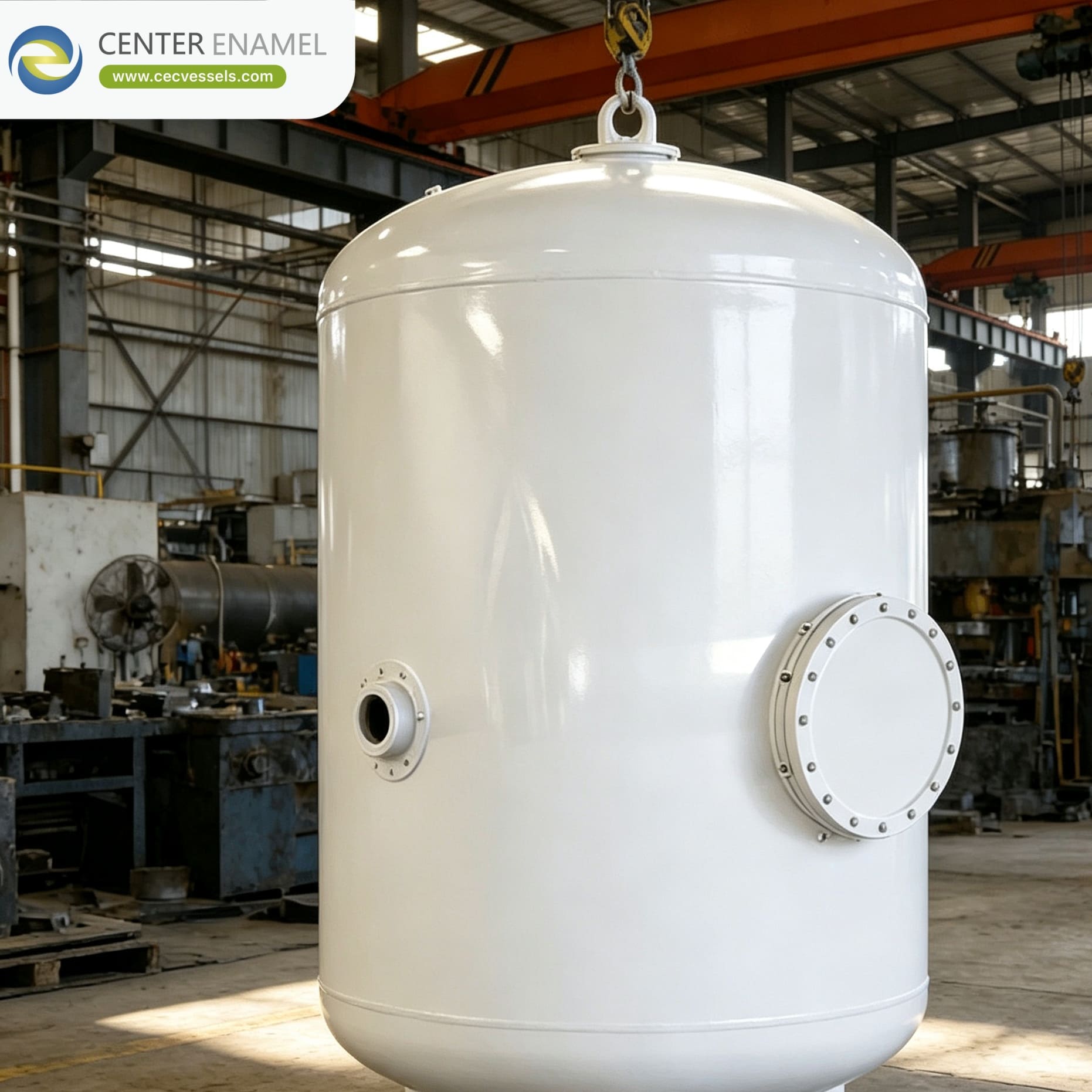
Quadruple-Effect Falling Film Evaporator for Efficient Liquid Concentration
A Quadruple-Effect Falling Film Evaporatoris a continuous thermal evaporation system designed to concentrate liquid solutions through four interconnected evaporation effects. It combines falling-film heat transfer with multi-effect vapor utilization, allowing thermal energy generated during evaporation to be reused in subsequent stages. In a falling-film evaporator, the feed liquid is distributed across the upper section of vertical heat-transfer tubes. The liquid then flows downward along the internal tube surfaces as a thin film. As heat passes through the tube walls, part of the liquid evaporates while the remaining liquid becomes progressively more concentrated. The four-effect arrangement extends this evaporation principle through four connected stages. Vapor generated in the first effect can provide heating energy for the second effect, while vapor from the second effect can support the third effect. The same principle continues into the fourth effect. This sequential use of thermal energy helps improve steam utilization compared with single-effect evaporation. For industrial applications requiring continuous concentration, the Quadruple-Effect Falling Film Evaporatorprovides a combination of efficient heat transfer, thermal energy reuse, controlled residence time, and flexible process integration. How Does a Quadruple-Effect Falling Film Evaporator Work?The working principle of a Quadruple-Effect Falling Film Evaporatoris based on four key processes: feed distribution, falling-film heat transfer, vapor generation, and staged vapor reuse. First, the feed liquid enters the distribution system above the heating tubes. The distribution system is designed to introduce the liquid evenly across the tube surfaces. Uniform distribution is important because it helps maintain a stable thin film throughout the heat-transfer area. The liquid then moves downward under gravity. As it travels along the heated tube walls, thermal energy causes part of the volatile component, commonly water, to evaporate. The resulting vapor and concentrated liquid are separated in the evaporation chamber. The vapor produced by the first effect is directed toward the heating section of the second effect. The second effect operates at a lower evaporation temperature, allowing the available vapor energy to be reused. This sequence continues through the third and fourth effects. At the end of the process, the concentrated liquid is collected and transferred to the next production stage. Depending on the application, the concentrated product may proceed to crystallization, drying, formulation, storage, or additional processing. This four-stage configuration allows one thermal input to contribute to evaporation across multiple effects, improving overall thermal utilization. Why Use Falling Film Evaporation for Liquid Concentration?The main characteristic of Falling Film Evaporationis the formation of a thin liquid film over the heat-transfer surface. Compared with a large liquid pool, a thin film creates a short distance for heat transfer and provides a large effective surface area. The liquid flows downward continuously, while heat is transferred through the tube walls. Because the film is relatively thin, heat can move efficiently into the process liquid, supporting rapid evaporation. Another important characteristic is short residence time. The liquid passes through the heating tubes as it moves downward, which can reduce the time that the product remains exposed to elevated temperatures. This characteristic is particularly useful for food, beverage, pharmaceutical, and other products where controlled thermal exposure is important. The falling-film configuration also supports continuous processing. Feed can enter continuously, concentrated liquid can leave continuously, and vapor can move sequentially between evaporation effects. For these reasons, falling-film technology is widely considered for industrial liquid concentration where efficient heat transfer and continuous operation are required. Four Effects in a Quadruple-Effect EvaporatorA Quadruple-Effect Falling Film Evaporatorcontains four interconnected evaporation stages, with each effect performing a specific part of the concentration process. First EffectThe first effect receives the primary heating energy. Feed liquid enters the system and begins evaporation as it flows downward through the heating tubes. A portion of the volatile component is converted into vapor, while the liquid concentration increases. Second EffectThe second effect receives vapor generated by the first effect as its heating source. The liquid continues to evaporate while becoming more concentrated. Reusing vapor allows the thermal energy from the previous stage to contribute to the next stage. Third EffectThe third effect continues the staged concentration process. Vapor from the second effect provides thermal energy for evaporation in the third stage, further reducing the amount of fresh heating energy required for the complete process. Fourth EffectThe fourth effect completes the four-stage evaporation sequence. The concentrated product is collected from this stage or transferred to downstream equipment according to the production process. The specific flow arrangement can be customized according to feed properties, concentration requirements, viscosity, temperature sensitivity, and production objectives. Main Components of a Quadruple-Effect Falling Film EvaporatorA complete Quadruple-Effect Falling Film Evaporatorconsists of multiple interconnected components designed to work as an integrated evaporation system. Feed Distribution SystemThe feed distribution system introduces liquid evenly into the heating tubes. Proper distribution helps maintain a consistent liquid film and supports effective use of the available heat-transfer surface. Falling Film Heat-Transfer TubesHeat-transfer tubes provide the primary evaporation surface. Liquid flows downward along the inner tube walls while thermal energy passes through the tube material. Vapor-Liquid SeparatorsVapor-liquid separators separate generated vapor from concentrated liquid. The separated vapor can then be directed toward the next effect, while the concentrated liquid continues through the process. Condensate SystemThe condensate system collects condensed heating vapor and can be integrated with heat recovery or water reuse processes. Depending on the application, recovered condensate can be returned to the plant utility system. Circulation PumpsPumps can be used to transfer feed, concentrated product, condensate, or other process liquids. Pump configuration is selected according to the process flow arrangement. Automatic Control SystemModern evaporator systems can incorporate sensors, flow meters, temperature measurement, liquid-level monitoring, and automated valves. Center Enamel's evaporator systems can integrate PLC-based automatic control for continuous process monitoring and adjustment. Energy Efficiency of a Quadruple-Effect Falling Film EvaporatorOne of the main advantages of a Quadruple-Effect Falling Film Evaporatoris its ability to reuse vapor energy across multiple evaporation stages. In a single-effect system, the heating energy is primarily used for one evaporation stage. In a multi-effect configuration, vapor produced in one effect becomes a useful heating source for the next effect. This creates a cascading thermal-energy utilization process. With four effects, the evaporation system can use the available latent heat successively across four stages. This reduces the amount of fresh steam needed per unit of evaporated water compared with a single-effect configuration. Center Enamel's published technical information describes a four-effect system as having a steam consumption ratio of approximately 0.25–0.30 kg steam per kg of water evaporated under the stated design conditions. Actual performance depends on feed properties, operating conditions, heat-transfer area, and process configuration. This energy-saving characteristic makes the Quadruple-Effect Falling Film Evaporatorsuitable for facilities where evaporation represents a significant part of overall utility consumption. Flexible Feed Flow ConfigurationsA Quadruple-Effect Falling Film Evaporatorcan be configured with different feed arrangements according to the properties of the processed liquid. Forward-Feed ConfigurationIn a forward-feed arrangement, the liquid moves from the first effect toward the fourth effect. The concentrated liquid therefore progresses in the same general direction as the vapor flow. This arrangement can be considered for applications involving heat-sensitive materials because the feed enters the system at the stage with the highest available temperature and is less concentrated during the earlier heating stages. Backward-Feed ConfigurationIn a backward-feed arrangement, feed enters a later effect and progresses toward an earlier effect. This configuration can be useful for products whose viscosity increases significantly as concentration rises. Parallel-Feed ConfigurationIn parallel-feed systems, fresh feed is distributed to multiple effects. Concentrated product can then be collected from individual stages according to the process requirements. Mixed-Feed ConfigurationMixed-feed arrangements combine characteristics of forward-feed and backward-feed systems. This allows engineers to balance concentration requirements, heat-transfer conditions, product properties, and energy utilization. Applications of Quadruple-Effect Falling Film EvaporatorsThe Quadruple-Effect Falling Film Evaporatoris applicable to a wide range of industrial liquid concentration processes. Food and Beverage ProcessingFood and beverage manufacturers use evaporation to concentrate milk, fruit juices, extracts, liquid ingredients, and other products. Falling-film technology provides continuous processing and controlled thermal exposure. Pharmaceutical ProcessingPharmaceutical production may require the concentration of aqueous solutions and process liquids. Short residence time and controlled evaporation conditions can support product quality requirements. Chemical ProcessingChemical manufacturers use evaporation systems for concentration, solvent removal, volume reduction, and recovery of valuable process materials. Salt and Mineral ProcessingEvaporation can be used to concentrate mineral-containing solutions before crystallization or further separation. Multi-effect evaporation provides a practical approach to reducing thermal energy consumption. Wastewater TreatmentIn industrial wastewater treatment, evaporation can reduce liquid volume and concentrate dissolved substances. Multi-effect systems can also be integrated into water recovery and zero-liquid-discharge process arrangements. Materials and CustomizationMaterial selection is an important consideration when specifying a Quadruple-Effect Falling Film Evaporator. The appropriate material depends on the chemical composition of the feed, temperature conditions, cleaning requirements, and expected operating environment. Center Enamel's published product information identifies stainless steel materials such as AISI 304 and AISI 316L, as well as specialized alloys, for applicable evaporator configurations. Surface finishing options can also be selected according to process requirements. Equipment dimensions, heat-transfer area, tube arrangement, vapor separators, pumps, condensers, instrumentation, and control systems can be designed according to the customer's process parameters. Center Enamel as a Quadruple-Effect Falling Film Evaporator ManufacturerCenter Enamel provides industrial evaporation and process equipment solutions for applications including chemical processing, food and beverage production, pharmaceutical manufacturing, and environmental treatment. As a Quadruple-Effect Falling Film Evaporator Manufacturer, Center Enamel combines process engineering, equipment fabrication, heat-transfer design, automatic control integration, and project support. Its evaporator systems can be customized according to evaporation capacity, feed characteristics, concentration target, temperature requirements, and process configuration. For customers searching for a China Quadruple-Effect Falling Film Evaporator Manufacturer, Center Enamel can provide customized evaporation equipment and integrated process solutions. The company states that its engineering team works with international standards including ASME, EN 13445, and GB 150 for applicable equipment design. Efficient Liquid Concentration with Four-Effect EvaporationA Quadruple-Effect Falling Film Evaporatorcombines thin-film heat transfer with four-stage thermal energy reuse to provide an efficient solution for continuous liquid concentration. Its falling-film design supports rapid heat transfer and relatively short residence time, while the four-effect configuration allows vapor generated during evaporation to be reused through successive stages. Center Enamel provides customized evaporator systems designed around specific feed characteristics, evaporation capacity, concentration requirements, materials, flow configuration, and automation needs. For industrial facilities seeking efficient and continuous concentration equipment, a Quadruple-Effect Falling Film Evaporatorcan be integrated into food, pharmaceutical, chemical, mineral processing, and wastewater treatment systems.
|