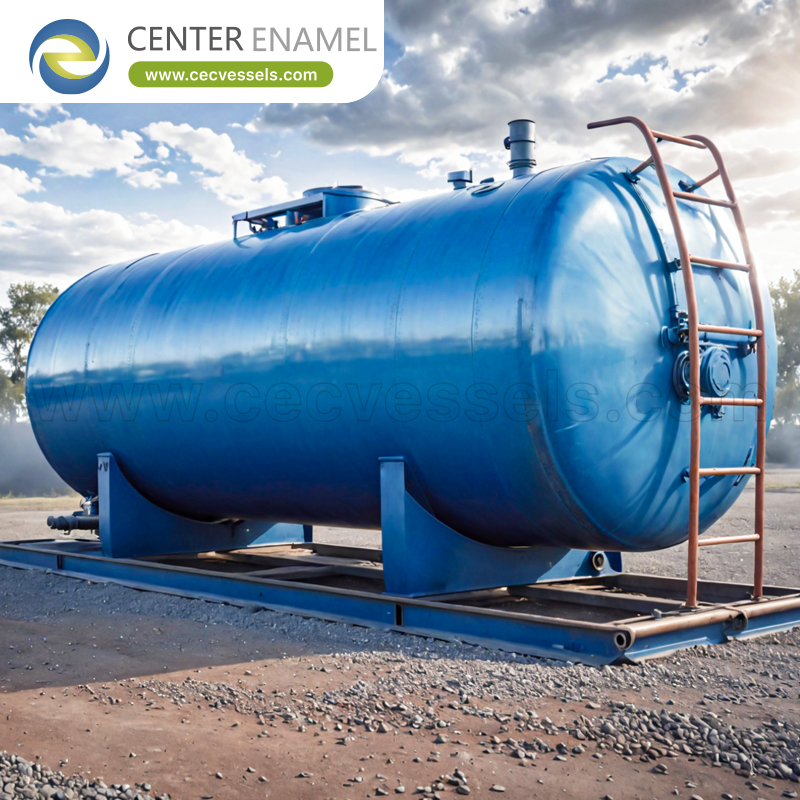
A Fluidized Bed Reactor suspends solid particles in an upward-flowing gas or liquid to create intensive contact between the fluid and solid phases. This reactor configuration provides effective mixing, heat transfer, and mass transfer for many industrial chemical processes.
What Is a Fluidized Bed Reactor?
A Fluidized Bed Reactor is a type of multiphase reactor in which solid particles are suspended by an upward-flowing fluid. The solid particles can function as catalysts, reactants, adsorbents, heat-transfer media, or carrier materials depending on the process.
When the upward fluid velocity reaches the required level, the drag force of the fluid supports the particles and the packed bed changes into a fluidized state. The particles then move throughout the reactor, creating behavior that resembles a boiling fluid.
This continuous movement provides strong contact between the solid particles and the gas or liquid phase. As a result, Fluidized Bed Reactors are widely used when a process requires efficient heat transfer, mass transfer, mixing, or continuous handling of solid materials.
In catalytic processes, the fluidized particles may consist of catalyst pellets or fine catalyst particles. In other applications, the bed can contain sand, biomass particles, mineral particles, polymer particles, or other solid materials.
How Does a Fluidized Bed Reactor Work?
The operating principle of a Fluidized Bed Reactor depends on controlling the flow of the fluid through a bed of solid particles.
The basic operating process includes the following stages:
1. Solid Bed Loading
Solid particles are introduced into the lower section of the reactor and initially form a packed bed.
2. Fluid Introduction
A gas or liquid enters through the lower part of the reactor and passes upward through a distributor.
3. Particle Fluidization
As the fluid velocity increases, the upward force acting on the particles increases. When the required fluidization condition is reached, the particles become suspended and begin to move.
4. Mixing and Contact
The fluidized particles move throughout the reaction zone, increasing contact between the fluid and solid phases.
5. Chemical Reaction
Reactants contact the catalyst or solid reactant, allowing the desired reaction to take place.
6. Heat Transfer
The movement of particles promotes heat distribution throughout the bed, helping maintain a more uniform temperature profile.
7. Product Removal
Reaction products leave the reactor through the outlet, while solid particles may remain in the bed or circulate through an external separation and return system.
The transition from a packed bed to a fluidized bed is associated with the minimum fluidization velocity, which is an important operating parameter in fluidized-bed design.
What Is Minimum Fluidization Velocity?
Minimum Fluidization Velocity is the approximate fluid velocity at which the upward force generated by the fluid becomes sufficient to suspend the particles in the bed.
Below this condition, the particles generally remain in a packed or partially supported state. Once the required velocity is reached, the particles become suspended and the pressure drop across the bed approaches the condition associated with supporting the bed weight.
The required velocity depends on several factors:
1. Particle Size
Smaller particles generally require different fluidization conditions from larger particles.
2. Particle Density
The density difference between the particles and fluid affects the force required for suspension.
3. Fluid Density
The density of the gas or liquid influences the hydrodynamic behavior of the bed.
4. Fluid Viscosity
Viscosity affects the resistance to fluid flow through the particle bed.
5. Particle Shape
Particle shape and surface characteristics influence drag and particle movement.
6. Bed Geometry
Reactor diameter, distributor configuration, and bed height also influence fluidization behavior.
Proper determination of fluidization conditions is essential for maintaining stable reactor operation.
What Are the Main Types of Fluidized Bed Reactors?
Different Fluidized Bed Reactor configurations are selected according to the required particle circulation, reaction conditions, flow regime, and process objectives.
1. Bubbling Fluidized Bed Reactor
A Bubbling Fluidized Bed Reactor operates with gas velocities that maintain a dense fluidized bed while gas bubbles pass through the particle phase.
This configuration is commonly associated with good mixing and temperature control. It can be used for catalytic reactions, combustion, biomass conversion, gasification, and other processes involving solid particles.
The basic configuration normally includes a reaction vessel, distributor plate, solid bed, fluid inlet, and product outlet.
2. Circulating Fluidized Bed Reactor
A Circulating Fluidized Bed Reactor operates at higher fluid velocities so that particles become entrained in the upward-flowing gas.
The solids leaving the reactor can be captured by a cyclone or another particle separation system and returned to the reaction zone.
This continuous circulation allows the system to maintain a high solids throughput and is widely used in processes requiring continuous catalyst or solid-particle circulation.
3. Fast Fluidized Bed Reactor
A Fast Fluidized Bed Reactor operates in a regime where a significant quantity of solid particles is carried upward by the gas stream.
Solid circulation and gas-solid contact are important characteristics of this configuration. It is commonly associated with circulating systems used for chemical conversion, combustion, gasification, and catalyst circulation.
4. Gas-Solid Fluidized Bed Reactor
A Gas-Solid Fluidized Bed Reactor uses gas as the fluidizing medium and solid particles as the fluidized phase.
This configuration is widely applied to catalytic cracking, gasification, combustion, polymerization, and other gas-solid reactions.
5. Liquid-Solid Fluidized Bed Reactor
A Liquid-Solid Fluidized Bed Reactor uses an upward-flowing liquid to suspend solid particles.
This configuration can be used in catalytic processes, wastewater treatment, biochemical processes, and other liquid-solid reaction systems.
What Are the Main Components of a Fluidized Bed Reactor?
The configuration of a Fluidized Bed Reactor depends on the process, but several components are commonly included.
1. Reactor Vessel
The reactor vessel contains the fluidized bed and provides the reaction space.
2. Distributor Plate
The Distributor Plate distributes the incoming gas or liquid across the bottom of the bed. Its design strongly influences flow distribution and fluidization quality. Research on bubbling fluidized beds shows that distributor geometry and open area can affect bed pressure drop and fluidization behavior.
3. Fluidizing Medium Inlet
The inlet system introduces the gas or liquid required to fluidize the solid particles.
4. Solid Particle Bed
The bed contains the catalyst, reactant, carrier, adsorbent, or other solid material required by the process.
5. Reaction Zone
The reaction zone provides the space where the fluid and solid phases interact and the chemical reaction takes place.
6. Disengagement Section
The upper section can provide additional space for separating entrained solid particles from the outgoing gas stream.
7. Cyclone Separator
In circulating configurations, a Cyclone Separator can capture solid particles carried out of the reactor and return them to the bed.
8. Heat Transfer Components
Depending on the process, internal heat-transfer surfaces can be incorporated to add or remove heat from the fluidized bed.
9. Solids Feeding and Discharge System
Continuous processes may require equipment for feeding fresh particles and removing spent or processed solids.
10. Instrumentation
Temperature, pressure, flow, and differential pressure measurements can be used to monitor reactor operation.
What Are the Main Fluidization Regimes?
The behavior of a Fluidized Bed Reactor changes as fluid velocity increases.
Important fluidization regimes include:
1. Fixed Bed
At relatively low fluid velocity, the particles remain essentially stationary and the system behaves like a packed bed.
2. Minimum Fluidization
As the fluid velocity increases, the particles become suspended and the bed reaches the minimum fluidization condition.
3. Bubbling Fluidization
Further increases in gas velocity can produce bubbles moving through the fluidized bed.
4. Turbulent Fluidization
At higher velocities, the bed surface becomes less clearly defined and particle movement becomes more vigorous.
5. Fast Fluidization
At still higher velocities, increasing quantities of particles become entrained in the fluid stream.
6. Pneumatic Transport
At sufficiently high velocities, particles can be transported primarily with the gas stream rather than forming a dense fluidized bed.
The exact transition between these regimes depends on particle characteristics, fluid properties, reactor geometry, and operating conditions.
Why Are Fluidized Bed Reactors Used in Industry?
The main reason for using a Fluidized Bed Reactor is the strong interaction between the fluid and solid phases.
Important benefits include:
1. Efficient Heat Transfer
The continuous movement of particles promotes heat transfer throughout the bed. This can help maintain relatively uniform temperature conditions.
2. Effective Mass Transfer
The large contact area between the fluid and particles supports efficient mass transfer.
3. Good Mixing
Particle movement promotes mixing within the reaction zone and reduces large temperature gradients.
4. Continuous Solid Handling
Some fluidized systems allow solids to be continuously introduced, removed, or circulated during operation.
5. Catalyst Circulation
Circulating configurations allow catalyst particles to move between reaction and regeneration sections when required.
6. Temperature Control
The strong heat-transfer characteristics make fluidized beds suitable for reactions that generate or consume substantial amounts of heat.
What Are the Applications of Fluidized Bed Reactors?
Fluidized Bed Reactors are used across chemical, petrochemical, energy, environmental, pharmaceutical, and materials industries.
1. Fluid Catalytic Cracking
Fluid catalytic cracking uses a circulating catalyst system to convert heavier hydrocarbon fractions into lighter products.
The reactor and catalyst regeneration system operate together, with catalyst particles continuously circulated between the two sections.
2. Polymerization
Gas-phase Fluidized Bed Reactors are widely associated with the production of polymers such as polyethylene and polypropylene.
In these systems, polymer particles and catalyst are maintained in a fluidized state while gaseous monomers are introduced into the reaction zone.
3. Biomass Pyrolysis
Fluidized beds can provide rapid heat transfer to biomass particles and are therefore used in thermal conversion processes such as fast pyrolysis.
4. Gasification
Fluidized bed technology can be used for converting solid feedstocks into combustible or synthesis gases.
5. Combustion
Fluidized beds are used in combustion systems where strong mixing and heat transfer are required.
6. Calcination
Fluidized systems can provide controlled contact between solid materials and heated gases during calcination processes.
7. Chemical Processing
Fluidized reactors can be used for oxidation, reduction, catalytic reactions, and other gas-solid processes.
8. Wastewater Treatment
Fluidized-bed bioreactors can use suspended carrier particles to maintain a high concentration of microorganisms and promote contact between biomass and wastewater.
9. Pharmaceutical Processing
Fluidized beds can also be used for drying, coating, and granulation of particulate materials. Modern fluidization technology is applied to chemical, pharmaceutical, energy, and materials processes.
What Are the Advantages of a Fluidized Bed Reactor?
A properly designed Fluidized Bed Reactor offers several process advantages.
1. High Heat Transfer Rate
Continuous particle movement creates effective heat exchange between the solid and fluid phases.
2. High Mass Transfer Rate
Fluid-solid contact can provide favorable mass-transfer conditions.
3. Uniform Temperature Distribution
Intensive mixing can reduce significant temperature differences within the bed.
4. Continuous Operation
Many fluidized systems are designed for continuous reactant feeding and product removal.
5. Catalyst Regeneration
Circulating systems can allow catalyst to move continuously between reaction and regeneration sections.
6. Large Processing Capacity
Fluidized beds can handle substantial quantities of solid material and feed in suitable industrial applications.
7. Flexible Solid Handling
Solid particles can be fed, withdrawn, recycled, or regenerated according to the process design.
What Are the Limitations of Fluidized Bed Reactors?
Although Fluidized Bed Reactors provide strong heat and mass transfer, their design and operation require careful control.
Important considerations include:
1. Particle Entrainment
Fine particles can leave the reaction zone with the gas stream, requiring suitable particle recovery equipment.
2. Particle Attrition
Continuous particle movement can cause mechanical wear and generate smaller particles over time.
3. Complex Hydrodynamics
Gas-solid flow patterns can be complex, especially in large-scale circulating systems.
4. Distributor Design
Poor fluid distribution can create uneven fluidization and reduce process consistency.
5. Catalyst Loss
Catalyst particles carried out of the reactor need to be effectively recovered and, where applicable, returned to the reaction system.
6. Scale-Up Requirements
Changes in reactor diameter, particle properties, gas velocity, and solids circulation can influence fluidization behavior during scale-up.
These factors should be considered during process design rather than treated as isolated equipment issues.
How Is a Fluidized Bed Reactor Designed?
The design of a Fluidized Bed Reactor requires coordination between reaction requirements, particle characteristics, fluid dynamics, heat transfer, and mechanical design.
Important design considerations include:
1. Process Capacity
The required feed rate and production capacity determine the overall reactor size and configuration.
2. Particle Properties
Particle size, density, shape, porosity, and mechanical properties affect fluidization behavior.
3. Fluidizing Velocity
The gas or liquid velocity must be selected according to the desired fluidization regime.
4. Distributor Design
The distributor must provide suitable flow distribution across the reactor cross-section.
5. Bed Height
The bed height influences residence time, solids inventory, pressure drop, and gas-solid contact.
6. Heat Transfer Requirements
Heat generated or consumed by the reaction must be considered when selecting internal heat-transfer surfaces or external heating and cooling systems.
7. Solid Circulation
Circulating systems require suitable particle recovery, return, and discharge arrangements.
8. Particle Separation
Cyclones, filters, or other separation devices may be needed to recover particles from the outlet gas.
9. Materials
Material selection should consider process chemistry, temperature, mechanical loads, abrasion, corrosion conditions, and applicable project requirements.
10. Instrumentation and Control
Temperature, pressure, flow, and bed behavior should be monitored to maintain the required operating conditions.
What Is the Difference Between a Fluidized Bed Reactor and a Fixed Bed Reactor?
Both Fluidized Bed Reactors and fixed-bed reactors can be used for heterogeneous catalytic reactions, but their solid-phase behavior is different.
1. Catalyst Movement
In a fixed-bed reactor, catalyst particles remain stationary. In a Fluidized Bed Reactor, the particles are suspended and move continuously.
2. Heat Transfer
Fluidized beds generally provide stronger particle mixing and heat transfer.
3. Mass Transfer
The movement of particles and fluid can enhance contact between the two phases.
4. Catalyst Regeneration
Fluidized systems can be designed for continuous catalyst circulation and regeneration, which can be useful for catalysts that deactivate during operation.
5. Equipment Configuration
Fluidized systems generally require additional components such as a distributor, particle disengagement section, and, in circulating designs, cyclone and solids-return equipment.
The appropriate reactor depends on the reaction kinetics, catalyst properties, heat-transfer requirements, operating mode, and process configuration.
What Factors Affect Fluidized Bed Reactor Performance?
Several process parameters influence the performance of a Fluidized Bed Reactor.
1. Particle Size
Particle size affects fluidization velocity, entrainment, mixing, and reaction contact.
2. Particle Density
Particle density influences the fluidization regime and required fluid velocity.
3. Fluid Velocity
Changes in velocity can move the bed from fixed-bed behavior through bubbling and turbulent regimes toward fast fluidization.
4. Bed Temperature
Temperature influences reaction kinetics, fluid properties, and particle behavior.
5. Gas or Liquid Composition
The composition of the fluidizing medium affects reaction performance and fluid-solid interactions.
6. Residence Time
Gas and solid residence times influence conversion and product formation.
7. Solids Circulation Rate
In circulating systems, solids circulation affects catalyst inventory, heat transfer, and reaction performance.
8. Distributor Performance
Uniform fluid distribution is essential for stable fluidization.
How Does a Fluidized Bed Reactor Handle Catalyst Circulation?
Catalyst circulation is particularly important in Circulating Fluidized Bed Reactors and fluid catalytic cracking systems.
The general process can include:
1. Fresh or regenerated catalyst enters the reaction zone.
2. Reactants contact the circulating catalyst.
3. The catalyst participates in the reaction.
4. Gas and catalyst leave the main reaction zone.
5. A cyclone or particle separator captures entrained catalyst.
6. The recovered catalyst is returned to the reaction or regeneration system.
7. Catalyst can be regenerated and circulated back into the reactor.
This continuous circulation enables the reactor and catalyst regeneration system to operate as an integrated process.
What Industries Use Fluidized Bed Reactors?
The versatility of Fluidized Bed Reactor technology allows it to serve a broad range of industries.
1. Petrochemical Industry
Applications include catalytic cracking and other catalytic conversion processes.
2. Polymer Industry
Fluidized-bed gas-phase polymerization is used for producing polymers such as polyethylene and polypropylene.
3. Chemical Industry
Fluidized beds are used for oxidation, reduction, catalytic conversion, calcination, and other chemical processes.
4. Energy Industry
Applications include combustion, gasification, biomass conversion, and chemical looping.
5. Environmental Industry
Fluidized-bed systems can be used in wastewater treatment and solid waste conversion.
6. Pharmaceutical Industry
Fluidization technology can support drying, coating, and granulation processes.
7. Materials Industry
Fluidized beds can be used for particle processing, coating, thermal treatment, and related applications.
How Does Center Enamel Design and Manufacture Fluidized Bed Reactors?
Center Enamel provides customized Fluidized Bed Reactors for industrial reaction and process applications.
Our engineering approach considers the complete operating environment rather than treating the reactor vessel as an isolated component.
1. Process-Based Reactor Design
Our engineers consider feed characteristics, reaction requirements, fluidizing medium, solids properties, heat-transfer requirements, reactor dimensions, and process capacity when developing the equipment configuration.
2. Internal Component Design
Important components such as the Distributor Plate, internal heat-transfer surfaces, solids inlet, solids outlet, gas outlet, and particle separation systems can be designed according to the process requirements.
3. CFD and Engineering Analysis
Computational tools can be used during engineering development to study fluidization patterns, flow distribution, and heat-transfer behavior where appropriate.
The design of distributor plates and reactor internals is particularly important because flow distribution has a direct influence on fluidization quality.
4. Pressure Vessel Manufacturing
Center Enamel manufactures industrial process equipment and pressure vessels for chemical, petrochemical, environmental, food and beverage, and biopharmaceutical applications.
5. Applicable Standards
Our pressure vessel engineering and manufacturing capabilities include standards such as ASME BPVC, BS EN 13445, and GB/T 150.1-150.4-2024, according to project requirements.
6. Quality Inspection
Manufacturing quality control can include raw material inspection, welding inspection, dimensional inspection, non-destructive testing, pressure testing, and final inspection according to the applicable project specifications.
7. Customized Manufacturing
Each Fluidized Bed Reactor can be developed according to the customer's process conditions, vessel dimensions, materials, internal configuration, connection requirements, and applicable standards.
What Information Should You Provide to a Fluidized Bed Reactor Manufacturer?
Before requesting a quotation for a Fluidized Bed Reactor, customers should provide detailed process information whenever available.
1. Process description
2. Feed composition
3. Feed flow rate
4. Fluidizing gas or liquid
5. Solid particle type
6. Particle size and density
7. Operating temperature
8. Operating pressure
9. Required production capacity
10. Reaction residence time
11. Heat input or heat removal requirements
12. Catalyst information
13. Solids circulation requirements
14. Material requirements
15. Applicable design standards
16. Installation conditions
This information allows the manufacturer to evaluate the reactor configuration and develop equipment that matches the actual process.
Frequently Asked Questions About Fluidized Bed Reactors
What Is a Fluidized Bed Reactor Used For?
A Fluidized Bed Reactor is used for gas-solid, liquid-solid, and multiphase processes that benefit from intensive mixing and heat and mass transfer. Applications include catalytic cracking, polymerization, gasification, combustion, biomass conversion, calcination, and wastewater treatment.
How Does a Fluidized Bed Reactor Work?
A Fluidized Bed Reactor passes a gas or liquid upward through solid particles. When the fluid reaches the required velocity, the particles become suspended and behave like a fluidized mass, increasing contact between the fluid and solid phases.
What Are the Main Types of Fluidized Bed Reactors?
The main configurations include Bubbling Fluidized Bed Reactors, Circulating Fluidized Bed Reactors, fast fluidized beds, gas-solid fluidized beds, and liquid-solid fluidized beds.
What Is a Bubbling Fluidized Bed Reactor?
A Bubbling Fluidized Bed Reactor maintains a dense fluidized bed in which gas bubbles pass through the solid particles. It is commonly used for combustion, gasification, catalytic processes, and biomass conversion.
What Is a Circulating Fluidized Bed Reactor?
A Circulating Fluidized Bed Reactor operates at higher fluid velocities that entrain particles into the gas stream. The particles are then separated and returned to the reactor or another process section.
What Is Minimum Fluidization Velocity?
Minimum Fluidization Velocity is the approximate fluid velocity at which the upward fluid force becomes sufficient to suspend the solid particles and establish fluidized-bed behavior.
Why Is a Distributor Plate Important?
The Distributor Plate controls how the fluid enters the particle bed. Proper distribution helps create more uniform fluidization and stable reactor operation.
What Is the Difference Between a Fluidized Bed Reactor and a Fixed Bed Reactor?
The main difference is the movement of the solid phase. Catalyst particles remain stationary in a fixed-bed reactor, while particles are suspended and continuously mixed in a Fluidized Bed Reactor.
Can Fluidized Bed Reactors Be Customized?
Yes. A Fluidized Bed Reactor can be customized according to process capacity, fluidizing medium, particle properties, reactor dimensions, materials, heat-transfer requirements, internal components, and applicable design standards.
What Industries Use Fluidized Bed Reactors?
Fluidized Bed Reactors are used in petrochemical processing, chemical manufacturing, polymer production, energy, environmental treatment, pharmaceutical processing, and materials processing.
Customized Fluidized Bed Reactor Solutions
A Fluidized Bed Reactor uses the movement of solid particles to create intensive contact between fluid and solid phases. Its combination of mixing, heat transfer, mass transfer, and continuous solid handling makes it suitable for a wide range of industrial processes.
The correct reactor configuration depends on the process chemistry, feed characteristics, particle properties, fluid velocity, heat-transfer requirements, solids circulation, reactor capacity, and required operating conditions.
For projects requiring a customized Fluidized Bed Reactor, Center Enamel provides engineering and manufacturing services based on specific process requirements. Our capabilities cover reactor vessel design, internal component configuration, material selection, fabrication, inspection, and project documentation.
Contact Center Enamel with your Fluidized Bed Reactor requirements, including process flow rate, fluidizing medium, particle characteristics, operating temperature, operating pressure, reactor capacity, and applicable standards, to discuss a suitable reactor configuration.


