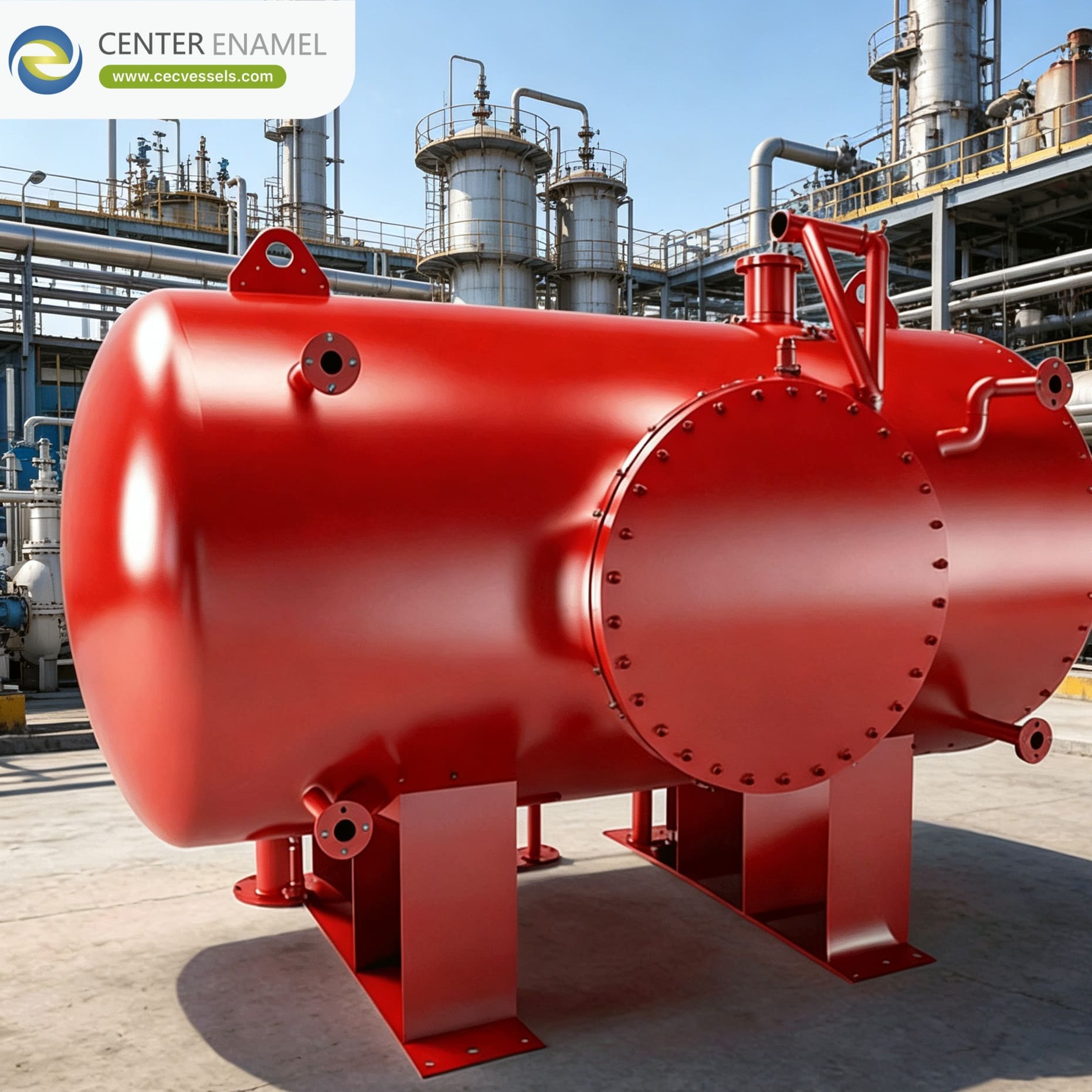
Forced-Circulation MVR Evaporator for High-Concentration Applications
A Forced-Circulation MVR Evaporatoris an industrial evaporation system that combines forced liquid circulation with Mechanical Vapor Recompression (MVR) technology. It is designed for continuous evaporation, concentration, crystallization, and liquid volume reduction in various industrial processes. The forced-circulation system uses a circulation pump to continuously move process liquid through an external heat exchanger. This arrangement provides controlled liquid flow and consistent heat transfer even as the liquid becomes increasingly concentrated. At the same time, MVR technology recovers the thermal energy contained in secondary vapor. The generated vapor is directed to a mechanical vapor compressor, where its temperature and usable thermal energy are increased. The compressed vapor is then returned to the heating side of the evaporator and reused for further evaporation. This combination makes the system particularly suitable for concentrated, viscous, crystallizing, or solids-containing liquids. Center Enamel develops customized forced-circulation MVR evaporation systems according to feed composition, viscosity, evaporation capacity, concentration requirements, heat-transfer conditions, and plant configuration. How Does a Forced-Circulation MVR Evaporator Work?The working principle begins with the introduction of feed liquid into the evaporation system. Depending on the process design, the feed can first pass through a preheater to recover available thermal energy and increase its temperature. The liquid then enters the forced-circulation loop. A circulation pump continuously moves the process liquid through an external heat exchanger. Inside the heat exchanger, thermal energy is transferred to the circulating liquid. A portion of the volatile component, usually water, evaporates as the liquid reaches the required evaporation condition. The generated secondary vapor is separated from the concentrated liquid through a vapor-liquid separator. Instead of being discharged directly, the vapor is directed to the MVR compressor. The compressor increases the temperature and thermal energy of the secondary vapor. The compressed vapor then returns to the heating side of the heat exchanger, where it transfers its thermal energy to the circulating liquid. As the evaporation process continues, the liquid becomes progressively more concentrated. A controlled amount of concentrated product is discharged from the circulation loop, while the remaining liquid continues circulating through the heat-transfer system. The basic process can be summarized as: Feed → Preheating → Forced Circulation → Heat Transfer → Evaporation → Vapor-Liquid Separation → Vapor Compression → Vapor Reuse → Concentrate Discharge This continuous circulation and vapor-reuse process provides an integrated approach to industrial evaporation and thermal energy recovery. Main Components of a Forced-Circulation MVR EvaporatorA complete Forced-Circulation MVR Evaporatorconsists of several interconnected components. Each component contributes to liquid circulation, evaporation, vapor recovery, heat transfer, or process control. Feed SystemThe feed system introduces the process liquid into the evaporator at a controlled flow rate. A preheater can be incorporated when heat recovery from condensate or other process streams is required. Feed flow is selected according to evaporation capacity, initial concentration, and production requirements. Circulation PumpThe circulation pump is one of the key components of a forced-circulation system. It continuously moves process liquid through the heat exchanger and evaporation chamber. Pump capacity is selected according to liquid viscosity, flow rate, solids content, heat-transfer requirements, and system configuration. External Heat ExchangerThe external heat exchanger transfers thermal energy to the circulating liquid. Separating the main heat-transfer surface from the evaporation chamber provides flexibility in circulation and heat-transfer design. Tubular heat exchangers and other customized configurations can be selected according to the process liquid and required evaporation capacity. Vapor-Liquid SeparatorThe vapor-liquid separator separates generated vapor from concentrated liquid. Effective separation helps direct vapor toward the MVR compressor while allowing concentrated liquid to remain within the circulation loop. The separator size and configuration are selected according to vapor flow, liquid properties, and evaporation capacity. MVR CompressorThe mechanical vapor compressor is the central component responsible for vapor energy recovery. It receives secondary vapor generated during evaporation and increases its temperature and usable thermal energy. The compressed vapor is then reused as the heating medium. Condensate SystemAs compressed vapor transfers thermal energy to the process liquid, it condenses on the heating side of the heat exchanger. The resulting condensate can be collected for reuse, water recovery, or further treatment depending on the overall plant configuration. Control SystemA PLC-based control system can coordinate feed flow, circulation, temperature, liquid level, vapor compression, concentrate discharge, and other process parameters. Automated control allows the different components of the evaporation system to operate as an integrated process package. Why Use Forced Circulation for High-Concentration Liquids?As evaporation proceeds, the concentration of dissolved or suspended materials increases. In some processes, this can also increase liquid viscosity or change the flow characteristics of the process stream. Forced circulation uses a mechanical pump to maintain continuous liquid movement. The circulation rate can therefore be selected according to viscosity, solids content, concentration range, and evaporation capacity. The external heat exchanger also provides flexibility in heat-transfer design. The circulation flow and heat-transfer surface can be coordinated according to the characteristics of the process liquid. This configuration is suitable for liquids containing dissolved salts, suspended solids, concentrated chemical solutions, and other process streams where controlled circulation is important. Center Enamel's forced-circulation evaporator systems are designed for applications involving concentrated and viscous materials, crystallizing liquids, and industrial wastewater. Energy Efficiency Through Mechanical Vapor RecompressionOne of the main features of MVR technology is the reuse of secondary vapor. During conventional evaporation, vapor generated from the process can be condensed after leaving the evaporation system. Its thermal energy may therefore not be fully reused. An MVR system takes a different approach. The generated secondary vapor is collected and sent to a mechanical vapor compressor. The compressor increases the vapor temperature and thermal energy so that it can be reused as a heating medium. This creates a continuous thermal energy recovery cycle. The compressor requires electrical energy, while the system can reduce the need for continuous fresh steam input depending on the process configuration. The actual energy performance depends on factors such as evaporation capacity, feed concentration, boiling temperature, temperature lift, compressor efficiency, heat-transfer area, and process design. MVR evaporation can therefore be considered for industrial facilities where thermal energy recovery and reduced steam consumption are important parts of the evaporation process. Applications of Forced-Circulation MVR EvaporatorsA Forced-Circulation MVR Evaporatorcan be applied to a wide range of industrial concentration and resource-recovery processes. Chemical ProcessingChemical manufacturers can use forced-circulation MVR systems for concentrating chemical solutions, recovering process materials, and processing concentrated liquid streams. The evaporator can be manufactured from suitable materials according to the chemical composition, temperature, concentration, and cleaning requirements of the process. Industrial Wastewater TreatmentIn industrial wastewater treatment, evaporation can be used to concentrate dissolved materials and reduce liquid volume. A forced-circulation configuration can be integrated with crystallizers, condensers, storage tanks, pumps, and other treatment equipment to create a complete concentration system. Salt and Inorganic Solution ConcentrationSalt-containing solutions can require controlled circulation as concentration increases. A forced-circulation MVR system can continuously move the liquid through the heat exchanger while recovering vapor energy. The equipment can be further integrated with crystallization systems when solid product recovery is part of the process. Food and Beverage ProcessingMVR evaporation can be applied to selected food and beverage liquid concentration processes. Equipment materials, heat-transfer surfaces, circulation systems, and cleaning arrangements can be customized according to the processed material and production requirements. Pharmaceutical ProcessingPharmaceutical liquid concentration can require carefully controlled temperature and material compatibility. A customized MVR evaporator can incorporate suitable stainless-steel materials, process instrumentation, circulation systems, and heat-transfer configurations according to the application. Brine and Resource RecoveryMVR technology can also be used for brine concentration, water recovery, and resource-recovery processes. The evaporation system can be integrated with condensate recovery and crystallization equipment according to the required final products and process flow. Forced-Circulation MVR Evaporator Design ConsiderationsThe design of a Forced-Circulation MVR Evaporatorshould begin with detailed process information. Feed Flow RateFeed flow determines the required evaporation capacity and influences the size of the heat exchanger, circulation pump, separator, and MVR compressor. Initial and Final ConcentrationThe initial feed concentration and target final concentration determine the amount of liquid that needs to be evaporated. These parameters are essential for calculating heat-transfer requirements and circulation capacity. Liquid ViscosityViscosity can change as the concentration increases. The circulation pump and heat exchanger should therefore be selected according to the expected viscosity range throughout the evaporation process. Solids ContentDissolved salts or suspended solids can influence circulation, heat transfer, and final product handling. The system configuration should account for the expected solids concentration. Heat-Transfer AreaThe required heat-transfer area depends on evaporation capacity, temperature difference, heat-transfer coefficient, liquid properties, and overall process conditions. MVR Compressor CapacityThe compressor should be selected according to secondary vapor flow, required temperature lift, evaporation capacity, and system operating conditions. Material SelectionMaterial selection depends on the chemical composition of the feed, concentrated product, operating temperature, and cleaning requirements. Stainless steel can be used for many chemical, food, pharmaceutical, and wastewater applications, while other material configurations can be considered according to specific process requirements. Forced-Circulation MVR Evaporator vs. Conventional EvaporationA conventional single-effect evaporator generally uses an external heat source to provide the thermal energy required for evaporation. A forced-circulation MVR evaporator combines mechanical circulation with vapor energy recovery. The process liquid is continuously circulated through an external heat exchanger, while secondary vapor is compressed and reused as a heating medium. Center Enamel's evaporator portfolio includes single-effect, multi-effect, and MVR systems. The company's product information identifies forced-circulation MVR equipment as particularly suitable for highly viscous materials, crystallizing materials, evaporation, concentration, crystallization, and industrial wastewater desalination. The choice between these configurations depends on evaporation capacity, feed properties, concentration requirements, available utilities, energy objectives, and overall plant design. For concentrated liquids where continuous circulation and vapor energy recovery are important, forced-circulation MVR technology provides a combined evaporation solution. Forced-Circulation MVR Evaporator Manufacturing by Center EnamelAs a Forced-Circulation MVR Evaporator Manufacturer, Center Enamel provides customized evaporation equipment based on individual process requirements. The engineering process begins with information about the feed liquid, including flow rate, concentration, viscosity, density, solids content, evaporation capacity, target concentration, and process temperature. Based on these parameters, Center Enamel can configure the evaporator body, circulation pump, external heat exchanger, vapor-liquid separator, MVR compressor, condensate system, piping, valves, instrumentation, and control system. The company can also customize equipment materials according to the process medium. Stainless steel and other suitable materials can be selected according to chemical compatibility and production requirements. Center Enamel's manufacturing capabilities cover process equipment design, fabrication, assembly, inspection, and project support. The company also provides related evaporators, including single-effect, double-effect, triple-effect, quadruple-effect, and MVR configurations. Customized MVR Evaporation SolutionsA standardized evaporator configuration may not be suitable for every industrial liquid. Feed composition, viscosity, concentration, solids content, evaporation capacity, and final product requirements can vary significantly between projects. For this reason, customized equipment design is an important part of MVR evaporation engineering. Center Enamel can customize the circulation system, heat-transfer area, compressor capacity, separator configuration, condensate system, material selection, and control system according to project requirements. The equipment can also be integrated with upstream and downstream process equipment, including feed tanks, preheaters, crystallizers, condensers, storage vessels, pumps, and automated control systems. This integrated approach allows the Forced-Circulation MVR Evaporator to become part of a complete industrial evaporation and resource-recovery system. Selecting a China Forced-Circulation MVR Evaporator ManufacturerWhen selecting a China Forced-Circulation MVR Evaporator Manufacturer, customers can evaluate engineering capability, manufacturing capacity, material options, equipment customization, quality control, and project support. The manufacturer should be able to evaluate the complete process rather than selecting the evaporator only according to nominal evaporation capacity. Important technical information includes feed flow, initial concentration, target concentration, viscosity, solids content, evaporation temperature, available heat source, required evaporation capacity, condensate requirements, and downstream processing. Center Enamel provides customized evaporation systems according to these process parameters. Its engineering approach combines equipment design with manufacturing, inspection, assembly, and project coordination. For international industrial projects, the company can provide customized process equipment and related technical documentation according to the applicable project requirements. Efficient High-Concentration Evaporation with Center EnamelA Forced-Circulation MVR Evaporatorcombines controlled liquid circulation, external heat transfer, mechanical vapor recompression, and continuous concentration into one integrated evaporation system. The forced-circulation configuration is particularly suitable for concentrated and viscous liquids, crystallizing materials, salt-containing solutions, and industrial wastewater. The circulation pump maintains continuous liquid movement, while the external heat exchanger provides controlled thermal transfer. MVR technology further improves thermal energy utilization by compressing and reusing secondary vapor as a heating medium. This makes the system suitable for applications where energy recovery and continuous evaporation are important. As a China Forced-Circulation MVR Evaporator Manufacturer, Center Enamel provides customized evaporation systems for chemical processing, industrial wastewater treatment, food and beverage production, pharmaceutical processing, salt concentration, crystallization, and resource recovery. Customers can provide feed characteristics, evaporation capacity, target concentration, viscosity, solids content, material requirements, and plant conditions. Based on these parameters, Center Enamel can develop a customized forced-circulation MVR evaporation system designed for efficient high-concentration liquid processing.
|