Heat Exchanger Selection Guide for Oil & Gas Engineers
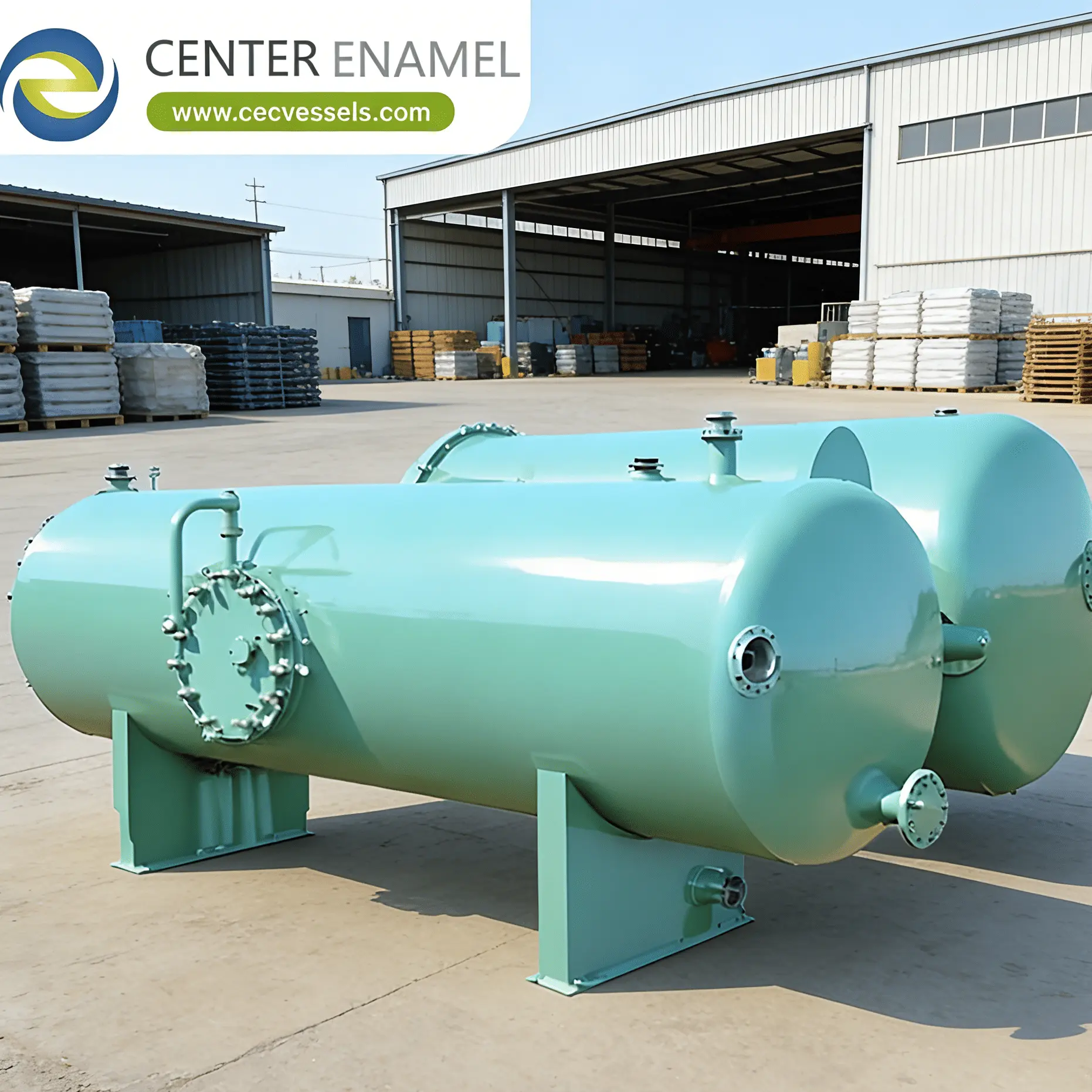
Industrial production facilities, oil field infrastructure networks, and petrochemical processing operations require precise thermal regulation assets to optimize system runtime and balance fuel consumption loops. Partnering with a dedicated Oil and Gas Heat Exchanger Manufacturer ensures that every thermal transformation unit maintains the exact material uniformity, internal geometric flow controls, and strict compliance baselines needed to stabilize factory utility loops. As an established expert in technical material design and equipment fabrication, Center Enamel develops custom process vessels, storage enclosures, and specialized heat transfer shells optimized for heavy processing environments. Sourcing these heavy mechanical assets from an elite China Oil and Gas Heat Exchanger Manufacturer allows engineering procurement teams to integrate dependable thermal management hardware that fully complies with international construction codes and enhances long-term processing efficiency.
Foundational Selection Criteria for Energy Sector Heat ExchangersWithin modern energy facilities, selecting the appropriate thermal conversion hardware requires a detailed assessment of fluid properties, layout restrictions, and general thermodynamic requirements. Rather than treating heat transfer hardware as isolated inventory components, oil and gas engineers view these enclosures as integrated assets that directly affect the thermal equilibrium of the entire production plant.
The primary objective during the early selection stage is to establish a clear profile of the processing fluids that will interact across the internal heat transfer surfaces. Engineers must compile accurate data regarding liquid or vapor densities, fluid viscosities across a range of temperatures, and the specific thermal conductivity of each stream to calculate the total required heat transfer area.
Furthermore, structural footprints and installation environments introduce rigid physical constraints. Offshore production platforms require highly compact, low-weight configurations to conserve structural deck space, whereas large onshore processing facilities prioritize extended mechanical runtimes, ease of physical cleaning access, and low long-term maintenance costs over strict equipment dimensions.
Core Thermal Configurations and Engineering Trade-OffsTo meet diverse plant layout parameters and varying fluid behaviors, thermal management hardware is developed across several standard design configurations, each possessing unique operational characteristics:
1. Shell and Tube LayoutsThe traditional shell and tube design remains highly favored for processing raw crude fractions and handling large fluid volumes. Its heavy cylindrical outer casing houses a dense network of parallel tubes, providing exceptional structural durability and simple mechanical maintenance. Engineers select this configuration when processing fluids carry significant concentrations of suspended solids, as the removable end channels allow technicians to clean individual tube paths without altering the main utility connections.
2. Compact Plate FormatsPlate heat exchangers utilize tightly compressed, corrugated metal sheets to create alternating parallel flow pathways for hot and cold fluid streams. This layout provides an exceptionally high surface-area-to-volume ratio, allowing facilities to achieve high thermal efficiency within a small physical footprint. Engineers select plate formats for low-viscosity fluid cooling, chemical additive loops, and utility water systems where floor space is limited.
3. Fin-Fan Air CoolersWhen local facilities lack access to continuous liquid cooling media grids or operate in regions facing strict water conservation regulations, air-cooled fin-fan systems become essential. These systems direct hot process fluids through rows of externally finned tube bundles while automated fan arrays force ambient air across the outer finned surfaces to achieve thermal reduction.
Mechanical Architecture and Flow Path Comparison MatrixTo assist plant design teams in selecting the optimal configuration for specific process streams, the following table lists the core physical characteristics of standard heat transfer geometries:
Essential Sub-Components of Industrial Heat Transfer EquipmentAn industrial-grade thermal transfer system built by an elite manufacturer is an assembly of precision-machined sub-components designed to facilitate uniform heat transfer and maintain absolute material containment:
Outer Cylindrical Shell: The heavy-gauge primary protective container housing the internal thermal components, fabricated from certified steel plates with verified full-penetration welds.
Internal Tube Bundles: A network of straight or U-shaped metal tubes that provide the physical interface for cross-fluid thermal transmission while preventing physical fluid mixing.
Machined Tubesheet Plates: Thick circular steel plates precision-drilled to receive and secure tube ends, forming a completely secure, liquid-tight boundary between the shell and tube fluids.
Transverse Flow Baffles: Internal steel plates positioned inside the shell to alter fluid direction, increasing fluid turbulence and cross-flow velocities across the outer tube surfaces.
Formed Channel End Caps: Removable front and rear covers that direct the tube-side fluid uniformly into the designated tube passes while providing easy access for cleaning.
Precision Distribution Nozzles: Forged metal ports engineered to handle high volumetric fluid entry velocities and ensure smooth integration with facility utility piping networks.
Sealed Inspection Flanges: Heavy bolting assemblies designed to facilitate quick equipment opening during planned maintenance intervals, allowing manual tube scrubbing or internal cleaning.
Material Science and Advanced Surface Integrity ManagementThe service longevity and operational reliability of an oil and gas heat exchanger are directly influenced by the metallurgy and surface treatments selected during the design phase. Because raw energy streams frequently carry dissolved oxygen, corrosive chemicals, organic acids, or variable pH profiles, matching the structural material to the fluid chemistry is essential. For general utility storage, pre-treated fluid storage, and non-corrosive industrial loops, high-strength carbon steels like SA516 Grade 70 or Q345R provide a highly durable and cost-effective structural foundation. To shield the bare steel from oxidation and moisture degradation, the interior surfaces receive specialized thick-film coatings, such as chemical-resistant epoxy linings, which create a smooth, hydrophobic barrier that prevents rust and maintains fluid purity.
When processing brackish water mixtures, corrosive chemical solutions, or sour gas lines, engineers specify premium stainless steel alloys such as 304L or 316L. The inclusion of molybdenum in 316L stainless steel provides native resistance against localized pitting and crevice corrosion, ensuring the container walls remain free from degradation over decades of continuous operation. Manufacturing Excellence and Quality Assurance by Center EnamelCenter Enamel has earned a prominent position in the international industrial supply chain by expanding its core operations from advanced material engineering into comprehensive process vessel, storage shell, and thermal equipment fabrication. As a reliable Pressure Vessel Manufacturer, the company integrates custom engineering design, state-of-the-art production infrastructure, and stringent quality control systems to deliver high-performance hardware to global markets.
A primary technical advantage of Center Enamel is its deep expertise in high-durability surface protections and advanced metallurgy. For fluid networks handling aggressive chemical solutions, corrosive utility water, or processing streams prone to mineral scaling, the company utilizes premium stainless steel alloys alongside proprietary protective technologies. These advanced coatings chemically bond the structural strength of steel with the inert resistance of glass, forming an internal barrier that prevents corrosion and significantly extends the service lifespan of the equipment.
Additionally, Center Enamel utilizes sophisticated digital engineering tools, including Finite Element Analysis and Computational Fluid Dynamics, to simulate fluid routing patterns and thermal distribution profiles inside the shell before physical assembly begins. This rigorous engineering depth ensures that internal deflection baffles, tube bundles, and fluid nozzles are completely optimized to maximize thermal transformation precision while minimizing flow resistance across the system.
Regulatory Certification Codes and Construction StandardsTo ensure that industrial heat exchangers can safely operate within continuous manufacturing loops, all design and manufacturing stages must comply with the strict parameters established by leading engineering reference codes.
ASME Boiler and Pressure Vessel Code (Section VIII)The ASME code represents the leading international standard for pressure-retaining industrial components. Section VIII provides the exact mathematical formulas for calculating minimum shell thicknesses, nozzle reinforcement zones, and structural load margins. Holding an official ASME authorization confirms that a manufacturer maintains complete material traceability, utilizes qualified welding procedures, and performs exhaustive radiographic inspections on all pressure-retaining seams.
GB/T 150.1-150.4-2024The newly updated national standard for metal pressure vessels in China integrates the latest engineering updates regarding finite element calculation rules, modern material classifications, and automated testing methods. Adherence to GB/T 150.1-150.4-2024 ensures full compliance with local regulatory frameworks and guarantees that vessels meet the requirements of modern industrial utility grids.
BS EN 13445This harmonized European standard governs the design, fabrication, and testing of unfired pressure vessels across European economic sectors. It focuses heavily on detailed stress-analysis methodologies, allowing engineering teams to optimize material usage while ensuring the completed equipment maintains full fatigue resistance under prolonged operational cycles.
Strategic Integration with Secondary Process SystemsHigh-efficiency thermal exchange hardware does not operate as isolated components; it serves as a central processing node within comprehensive engineering and fluid management layouts. Center Enamel designs and constructs a wide variety of supporting pressure vessels and process equipment to create unified, high-efficiency processing installations:
Steam Distribution Cylinders: Organizing and directing bulk steam lines from central factory boilers to separate heat exchanger shells, vessel jackets, and preheating systems across the facility.
Condensate Collection Tanks: Accumulating hot purified water and condensed steam from thermal cycles, enabling immediate resource recycling to minimize plant fuel consumption.
Coalescing Fluid Separators: Extracting oil droplets, grease, and suspended moisture from steam lines or compressed air loops to keep heat transfer surfaces completely clean.
Water Treatment Resin and Adsorption Tanks: Purifying incoming boiler feedwater to eliminate scale-forming minerals, protecting internal components from sediment accumulation.
Sourcing Strategies for Procurement ProfessionalsSourcing heavy industrial thermal equipment requires procurement professionals to balance initial capital investments with long-term operational efficiency and equipment longevity. Evaluating a potential manufacturing partner requires examining their engineering depth, manufacturing infrastructure, and cross-border logistics experience.
The initial stage of procurement involves a detailed mapping of the chemical and physical characteristics of both processing fluids. Sourcing teams must provide accurate data regarding fluid viscosity, operating temperatures, volumetric flow rates, thermal conductivity, and the concentration of suspended solids. This technical data ensures the engineering team can select the appropriate internal geometry and surface metallurgy to prevent premature fouling or fluid bypass during field operation. Global Supply Chain Dynamics and Future OutlookThe global market for industrial thermal management systems is entering a transformative era focused on resource conservation, automated process control, and decentralized manufacturing networks. Industrial operations are shifting away from generic off-the-shelf equipment toward highly specialized, custom-engineered process units designed to maximize the recovery of valuable heat energy and clean reusable water directly from effluent lines. To meet these changing global market requirements, manufacturing organizations in China have made significant investments to upgrade their production facilities. Modern production facilities utilize advanced laser cutting systems, computerized welding controls, and non-destructive digital testing laboratories to ensure absolute dimensional accuracy. This digital manufacturing workflow guarantees that custom-built vessel shells and tube sheets align perfectly with original engineering software models.
The upcoming development milestone involves integrating smart sensor infrastructure directly into the exchanger casing walls. Built-in electronic monitoring arrays can track internal temperatures, layer boundaries, and flow pressure drops in real time, transmitting this performance data into central facility management systems. This continuous data stream allows factory operators to identify early signs of mineral scaling or tube fouling and schedule maintenance actions during standard planned shutdowns, eliminating unexpected processing interruptions.
In conclusion, establishing a reliable fluid processing installation requires partnering with a manufacturer that possesses deep material science expertise, advanced technical production tools, and strict adherence to international safety codes. Sourcing specialized hardware that maximizes processing efficiency while maintaining material compliance provides long-term operational security. Center Enamel continues to support global industrial infrastructure by producing high-performance processing hardware that meets strict international criteria, helping facilities worldwide achieve long-term efficiency and operational success.
|