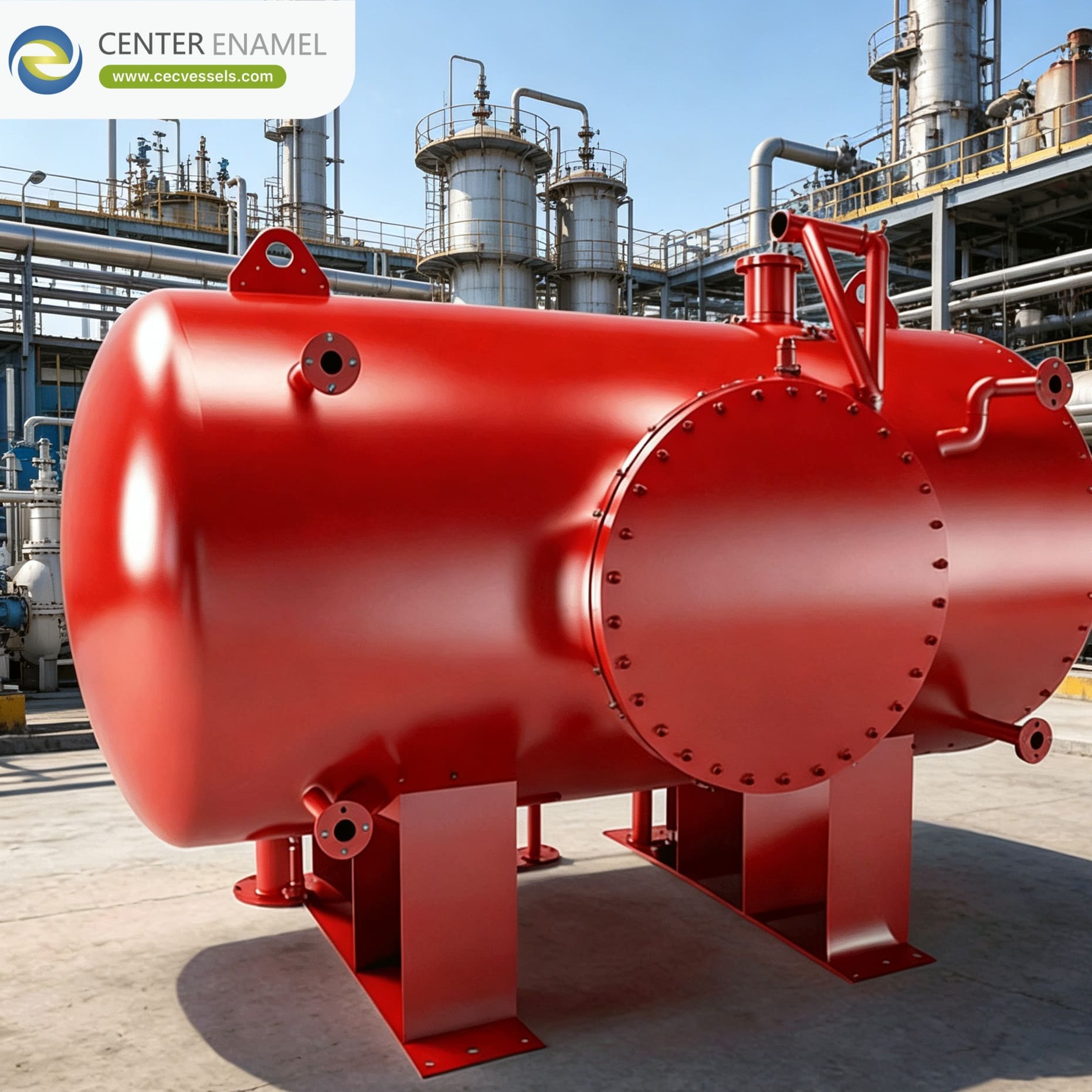
Heat Exchangers Used as Evaporators and Condensers
A heat exchangeris designed to transfer thermal energy between two fluids. Depending on the process requirements, it can operate as an evaporator or a condenser by facilitating a change in the physical state of a working fluid. In refrigeration, HVAC, chemical processing, and industrial cooling systems, these two functions are essential. An evaporator absorbs heat and converts liquid into vapor, while a condenser releases heat and converts vapor into liquid. Although their operating purposes are opposite, both rely on heat transfer principles and can use similar equipment structures. What Is a Heat Exchanger Evaporator?A heat exchanger evaporatoris equipment that absorbs heat from a surrounding medium or process fluid, causing a working liquid to evaporate. During operation, the liquid enters the heat exchanger and absorbs thermal energy through the heat transfer surface. As its temperature and energy increase, the liquid changes into vapor. The main functions of an evaporator include: lHeat Absorption:Transfers thermal energy from water, air, or another process medium to the working fluid. lLiquid Vaporization:Converts liquid into vapor through heat absorption. lProcess Cooling:Reduces the temperature of the fluid supplying heat to the evaporator. lThermal Management:Maintains the required temperature conditions in refrigeration and industrial production systems. For example, in a chilled water system, refrigerant absorbs heat from circulating water inside an evaporator. The water becomes cooler and returns to the cooling distribution system, while the refrigerant evaporates and continues through the refrigeration cycle. What Is a Condensing Heat Exchanger?A condensing heat exchangerremoves thermal energy from vapor and converts it into liquid. It is commonly used in refrigeration systems, steam applications, chemical processing, and industrial vapor recovery. When vapor enters the heat exchanger, it transfers heat to a cooler medium flowing through another channel. As heat is removed, the vapor condenses and forms liquid. Its main functions include: lHeat Rejection:Transfers thermal energy from vapor to cooling water, air, or another medium. lVapor Condensation:Changes vapor into liquid through heat removal. lLiquid Recovery:Collects condensate for reuse or further processing. lEnergy Recovery:Allows thermal energy released during condensation to be recovered in suitable system configurations. In a refrigeration system, the condenser receives hot refrigerant vapor from the compressor. After releasing heat to the cooling medium, the refrigerant becomes liquid and moves toward the expansion device. What Is the Difference Between an Evaporator and a Condenser?Both evaporators and condensers are specialized heat exchangers, but they perform opposite phase-change functions.
The primary distinction is the direction of heat transfer and the resulting phase change. An evaporator requires a heat source, whereas a condenser requires a cooling medium. What Types of Heat Exchangers Can Be Used as Evaporators and Condensers?Different heat exchanger structures can perform both evaporation and condensation duties. The final configuration depends on fluid characteristics, heat transfer capacity, equipment dimensions, and process requirements. 1. Brazed Plate Heat ExchangerA brazed plate heat exchangerconsists of multiple corrugated metal plates joined together through a brazing process. The plates form separate channels for the working fluid and cooling or heating medium. As an Evaporator: The refrigerant absorbs heat from water or another process fluid and evaporates inside the exchanger. Its compact design and large heat transfer surface make it suitable for chillers and heat pump systems. As a Condenser: The same equipment type can release heat from refrigerant vapor to water or glycol. The vapor condenses as it moves through the heat transfer channels. Typical Applications:Compact refrigeration units, heat pumps, packaged chillers, and HVAC systems. 2. Semi-Welded Plate Heat ExchangerA semi-welded plate heat exchangercombines welded plate pairs with gasketed connections. This configuration provides different sealing arrangements for the two fluid circuits. As an Evaporator: It can be used in industrial refrigeration systems, including applications involving ammonia. The design supports heat absorption and refrigerant evaporation while providing access for maintenance on the serviceable side. As a Condenser: It can also condense refrigerant vapor by transferring heat to circulating water or another cooling medium. Typical Applications:Industrial refrigeration, cold storage, food processing, and ammonia cooling systems. 3. Fully Welded Plate Heat ExchangerA fully welded plate heat exchangeruses welded construction to create the heat transfer channels without relying on conventional gaskets throughout the main plate pack. As an Evaporator: It can support evaporation duties involving selected industrial fluids and process conditions that require a welded construction. As a Condenser: It transfers heat from vapor to a cooling medium, allowing condensation in chemical processing, energy recovery, and industrial thermal systems. Typical Applications:Chemical processing, industrial energy recovery, and specialized thermal applications. 4. Spiral Heat ExchangerA spiral heat exchangercontains two spiral-shaped flow channels formed by metal plates. Its flow arrangement can be useful for handling certain viscous fluids and process streams with suspended materials. As an Evaporator: It can be applied in specialized industrial evaporation processes where process fluid characteristics influence equipment selection. As a Condenser: It can cool process vapor and recover liquid, particularly in applications where the cooling medium has a tendency to accumulate deposits. Typical Applications:Wastewater treatment, chemical production, sludge processing, and industrial vapor recovery. 5. Shell and Tube Heat ExchangerA shell and tube heat exchangerconsists of a bundle of tubes installed inside a cylindrical shell. The two fluid streams flow through separate passages and exchange thermal energy through the tube walls. As an Evaporator: It is widely used in large chillers and industrial refrigeration systems. Refrigerant absorbs heat from water or another process medium and changes into vapor. As a Condenser: It transfers heat from steam or refrigerant vapor to cooling water. The resulting condensate is collected and discharged for reuse or further processing. Typical Applications:Power generation, chemical plants, industrial refrigeration, and large-scale cooling systems. Comparison of Heat Exchanger Types for Evaporator and Condenser Applications
Not every model is automatically suitable for both duties. Plate geometry, materials, flow arrangement, and thermal design must be adapted to the specific application. What Are the Industrial Applications of Evaporators and Condensers?Heat exchangers operating as evaporators and condensers are widely used in different industries. 1. Refrigeration and HVAC Evaporators absorb heat from indoor air or circulating chilled water, while condensers release heat to air or cooling water. Together, they support the refrigeration cycle in air conditioners, chillers, and heat pumps. 2. Chemical Processing Evaporators concentrate liquid products by removing part of their water or solvent content. Condensers recover vapor and convert it into liquid for collection, reuse, or further separation. 3. Power Generation Steam condensers convert turbine exhaust steam into water. The recovered condensate can return to the feedwater system. Heat exchangers also support cooling and heat recovery throughout the facility. 4. Food and Beverage Manufacturing Evaporators are used for juice concentration, dairy processing, and liquid product concentration. Condensers recover vapor generated during evaporation and help manage thermal energy. 5. Pharmaceutical Production Evaporators and condensers support solvent recovery, product concentration, distillation, and temperature-controlled manufacturing operations. 6. Industrial Wastewater Treatment Evaporation systems can separate water from wastewater streams, while condensers collect the resulting vapor as liquid water for further treatment or reuse. How to Select the Right Heat Exchanger?Selecting a suitable heat exchanger requires evaluating the actual process conditions and intended thermal function. Important considerations include: lThermal Duty:Determine the required heat absorption or heat rejection capacity. lFluid Properties:Evaluate composition, flow rate, viscosity, and thermal characteristics lOperating Temperatures:Identify inlet and outlet temperatures and the required temperature difference. lMaterial Selection:Choose suitable materials based on corrosion resistance and fluid compatibility. lEquipment Configuration:Compare plate, spiral, shell and tube, and welded designs. lMaintenance Requirements:Consider cleaning access, inspection arrangements, and expected service conditions. lSystem Integration:Ensure compatibility with pumps, pipelines, storage vessels, and existing process equipment. A complete engineering evaluation helps determine the appropriate heat exchanger structure for reliable thermal performance. Frequently Asked Questions1. Can one heat exchanger be used as both an evaporator and a condenser? Yes. Some heat exchanger designs can perform either function, depending on their configuration and operating conditions. However, the same unit is not necessarily suitable for switching between both duties without redesign or operational adjustments. 2. What is the main difference between a heat exchanger evaporator and a condenser? An evaporator absorbs heat and changes liquid into vapor, while a condenser releases heat and changes vapor into liquid. 3. Which heat exchanger is commonly used for industrial evaporation? Shell and tube, plate, and other specialized heat exchangers are used depending on the process fluid, evaporation capacity, and operating requirements. 4. What cooling media are used in a condensing heat exchanger? Common cooling media include water, air, glycol solutions, and other process-compatible fluids. 5. Why is material selection important for evaporators and condensers? Materials affect thermal conductivity, corrosion resistance, fluid compatibility, and equipment service life. The appropriate selection depends on the working fluid and process environment. Integrated Heat Transfer Solutions for Industrial ProcessesHeat exchangers used as evaporators and condensers play essential roles in refrigeration, chemical production, power generation, and industrial thermal management. Although their heat transfer functions are opposite, both support efficient energy exchange and process circulation. Center Enamelprovides industrial equipment solutions for chemical processing, storage, and related applications. For projects involving evaporation, condensation, and thermal management, selecting suitable process vessels and supporting equipment according to fluid properties, material requirements, and system configuration helps achieve effective integration with industrial production systems.
|