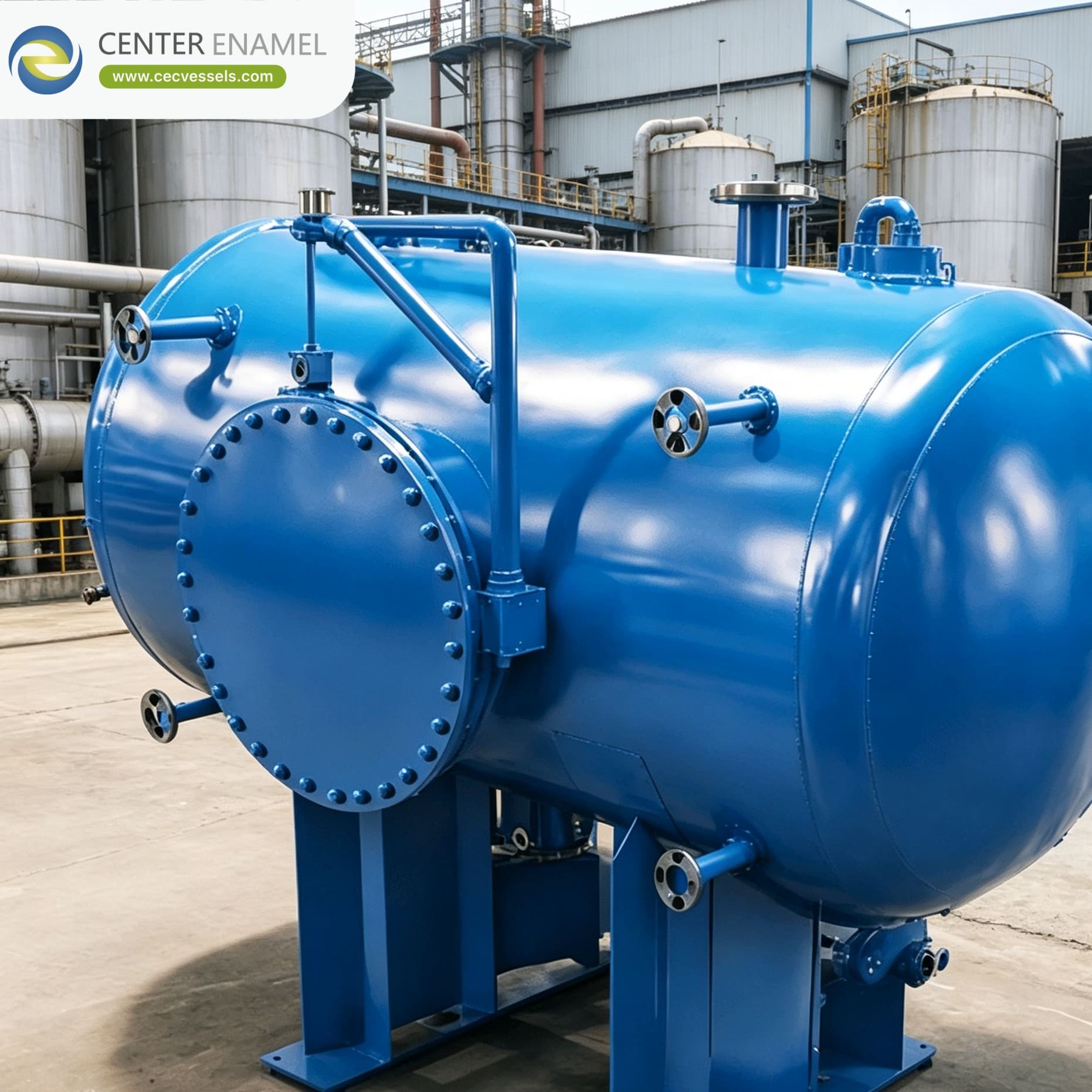
A Viscous Fluid Heating Vesselis industrial process equipment designed to heat, blend, and maintain the temperature of thick liquids and materials with high viscosity. It combines a vessel structure, heating system, and mixing mechanism to support consistent thermal processing and effective material circulation.
Viscous materials are commonly found in chemical manufacturing, resin production, adhesives, coatings, food processing, cosmetics, and pharmaceutical applications. These materials may require controlled heating to achieve suitable flow characteristics, improve mixing performance, or prepare them for subsequent production stages.
Compared with a standard storage tank, a viscous fluid heating vessel is designed to provide more effective temperature management and material movement. Depending on the application, it may incorporate a jacketed heating structure, internal coils, an agitator, insulation, and temperature monitoring instruments.
Heat transfer equipment may also be incorporated into the wider processing system to supply heating energy or recover thermal energy from other process streams. Selecting suitable equipment helps manufacturers coordinate heating, mixing, and downstream material handling.
Center Enamel provides industrial equipment solutions for customers seeking vessel configurations that match their material properties, processing requirements, and production capacity.
How Does a Viscous Fluid Heating Vessel Work?
A Viscous Fluid Heating Vesseltransfers thermal energy to the process material while mixing helps distribute heat throughout the vessel.
The process begins when the viscous material enters the vessel. A heating medium, such as hot water, steam, or thermal oil, circulates through the jacket or internal heating coils. Heat passes through the vessel wall or coil surfaces and warms the material inside.
At the same time, an agitator moves the material through the vessel. This circulation helps reduce temperature differences between different regions and promotes more uniform heating.
As the material temperature increases, its viscosity may decrease, depending on its composition and temperature characteristics. Improved flow can help the agitator circulate the material more effectively and support consistent processing.
The heating system and agitator should be designed together. Heating capacity, mixing speed, impeller configuration, vessel geometry, and material properties all influence overall performance.
In some production systems, an external Heat Exchangersupplies or removes thermal energy from a circulating fluid. For example, a heat exchanger can transfer energy from a hot utility stream to a heating medium used by the vessel. This arrangement allows the vessel and the wider thermal processing system to operate as coordinated components.
Temperature sensors and control instruments can monitor operating conditions and regulate the heating medium to maintain the desired process temperature.
What Are the Main Components of a Viscous Fluid Heating Vessel?
The configuration of a Viscous Fluid Heating Vesseldepends on the material being processed and the required heating and mixing performance. Several components are particularly important.
Vessel Body
The vessel body provides the space for material loading, heating, and mixing. Its dimensions and internal geometry should accommodate the required batch volume, material characteristics, and agitator arrangement.
Stainless steel is commonly selected for applications requiring corrosion resistance and convenient cleaning. Carbon steel and other suitable materials may be considered for processes with different material compatibility and operating requirements.
The final material selection should reflect the chemical composition of the fluid, processing temperature, and applicable production specifications.
Heating Jacket or Internal Heating Coils
A heating jacket surrounds part or all of the vessel body and provides a passage for the heating medium. Internal heating coils can also be used to transfer thermal energy through additional heat transfer surfaces.
The choice depends on the required heating capacity, vessel dimensions, fluid viscosity, and available utilities.
An appropriately designed heating arrangement helps distribute thermal energy effectively while supporting the required temperature range. For systems with external heating circuits, a separate heat exchanger may be used to control the temperature of the circulating medium.
Agitator and Mixing System
The agitator is essential when processing thick liquids. It moves the material throughout the vessel and helps distribute heat from the heated surfaces into the bulk liquid.
Different impeller designs serve different purposes. Anchor agitators are often suitable for viscous materials because they move material near the vessel wall. Helical ribbon agitators can promote axial circulation, while other impeller configurations may be appropriate for specific blending requirements.
The correct selection depends on viscosity, batch size, mixing objectives, and the material's behavior during heating.
Temperature Control System
Temperature sensors monitor the material or heating medium, depending on the process design. A control system can adjust heating input to maintain the required operating temperature.
Accurate monitoring helps operators coordinate heating and mixing, maintain repeatable batch conditions, and improve process consistency.
Insulation and Supporting Equipment
Insulation helps reduce heat loss from the vessel surface and supports stable temperature maintenance. Depending on the application, the system may also include a motor and gearbox, piping connections, valves, a discharge outlet, and a supporting frame.
These components should be coordinated to meet production, installation, and maintenance requirements.
How Can Heat Exchangers Support Viscous Fluid Heating Systems?
A heat exchanger can complement a viscous fluid heating vessel by transferring thermal energy between separate fluid streams. While the vessel provides space for material heating and mixing, an external heat exchanger can help manage the temperature of heating or cooling media within the broader production system.
Shell and Tube Heat Exchanger
A Shell and Tube Heat Exchangerconsists of a bundle of tubes enclosed within a cylindrical shell. One fluid flows through the tubes, while the other flows around the tubes on the shell side. Heat passes through the tube walls without direct mixing between the two fluids.
This type of heat exchanger is widely used in chemical processing, petrochemical production, and other industrial thermal management applications. It may be suitable for heating utility fluids, cooling process streams, condensing vapor, or recovering heat, depending on the design and operating conditions.
In a viscous fluid processing plant, a shell and tube heat exchanger may be installed as part of an external thermal circuit rather than directly replacing the heating jacket or agitator. The system configuration should account for fluid properties, required heat duty, temperature range, flow rates, material compatibility, and maintenance access.
When selecting this equipment, engineers should evaluate the required heat transfer area, tube arrangement, pressure drop, cleaning requirements, and compatibility with the process medium.
How Do External Heat Exchangers Improve Thermal Efficiency?
External heat exchangers can help transfer energy from one process stream to another, reducing the need for additional heating or cooling where suitable temperature conditions exist.
For example, heat from a hot process stream may be used to preheat a utility fluid serving a heating vessel. In other applications, an external heat exchanger can cool a process stream before the next production stage.
The potential benefits depend on the temperature difference between streams, heat transfer characteristics, operating schedules, and the overall process layout. Proper integration helps manufacturers coordinate vessel heating with other thermal operations.
How Does a Viscous Fluid Heating Vessel Improve Heating Efficiency?
Heating viscous materials requires an appropriate balance between thermal energy transfer and material circulation. Several design factors contribute to efficient operation.
Promote Uniform Temperature Distribution
Thick liquids often circulate more slowly than low-viscosity fluids. Without suitable mixing, material near the heating surface may reach a different temperature from material farther away.
An appropriately selected agitator helps move material between the heated wall and the center of the vessel. This circulation supports more consistent temperature distribution throughout the batch.
Increase Effective Heat Transfer
Heating performance depends on the available heat transfer area, temperature difference, material properties, and movement of the liquid near the heating surface.
A suitable jacket or coil arrangement provides the required heat transfer area, while effective agitation helps improve material circulation. Coordinating these elements can shorten heating time under appropriate operating conditions.
Where an external heat exchanger is included, its heat transfer capacity should be matched to the vessel's heating demand and the characteristics of the circulating medium.
Maintain Suitable Viscosity for Processing
Many industrial materials become easier to mix or transfer as their temperature rises. Heating can therefore help prepare resins, adhesives, waxes, and other viscous products for blending, pumping, or discharge.
The operating temperature should be selected according to the material's properties and the requirements of the next processing stage.
Reduce Unnecessary Heat Loss
Insulation and effective temperature control help retain thermal energy within the system. Properly designed piping and heating circuits also support consistent delivery of the heating medium.
Where waste heat is available, integrating a suitable heat exchanger may further improve energy utilization by transferring recoverable heat to another process stream.
Which Industries Use Viscous Fluid Heating Vessels?
A Viscous Fluid Heating Vesselcan be adapted to a wide range of industrial applications.
Chemical and Resin Manufacturing
Chemical plants use heating vessels to prepare and process resins, polymer solutions, additives, and specialty chemicals. Controlled heating and mixing support material blending, viscosity adjustment, and preparation for subsequent production stages.
Heat exchangers may also be used in these facilities for process heating, cooling, and thermal energy recovery. The vessel material, heating arrangement, and agitator design should match the chemical properties and flow characteristics of the process material.
Adhesives and Coatings
Adhesives, sealants, paints, and coatings may require heating to achieve suitable viscosity and consistent ingredient distribution.
A heating vessel equipped with an appropriate agitator can support material preparation before transfer to filling, packaging, or further processing equipment. Temperature control is especially important when processing materials whose viscosity changes significantly with temperature.
Food and Beverage Processing
Some food products, syrups, sauces, and other thick ingredients require heating and mixing during preparation. A suitable vessel can support temperature adjustment and uniform blending.
For food applications, equipment design should account for hygiene requirements, cleaning procedures, material compatibility, and the intended processing conditions.
Pharmaceutical and Cosmetic Manufacturing
Creams, gels, ointments, lotions, and selected pharmaceutical formulations may require controlled heating and mixing to achieve the desired consistency.
Equipment specifications should reflect the formulation, temperature sensitivity, cleaning requirements, and applicable production standards. Where external thermal circuits are used, heat transfer equipment should also be selected to meet the required process conditions.
Wax and Specialty Material Processing
Wax, lubricants, and other specialty materials may require heating to improve flow and support accurate transfer. A suitable heating vessel can maintain the material within the temperature range needed for processing and discharge.
How Do You Select a Viscous Fluid Heating Vessel Manufacturer?
Choosing a suitable Viscous Fluid Heating Vessel Manufacturerrequires a clear understanding of the material and production process.
Define the Processing Requirements
First, determine the working volume, batch size, heating temperature, and required heating time. These parameters help establish the vessel dimensions and heating capacity.
Provide information about the material's viscosity, density, composition, and temperature-dependent behavior. This information is important for selecting an appropriate agitator and estimating mixing requirements.
Evaluate the Heating System
Identify the heating medium and available utilities. The system may use steam, hot water, thermal oil, or another suitable heating arrangement, depending on the process.
If an external heat exchanger is required, the supplier should understand its role in the overall thermal circuit. The equipment specification should identify the required heat duty, inlet and outlet temperatures, flow rates, and material compatibility.
Review Material Selection and Maintenance
Consider material selection, insulation, temperature control, discharge design, and cleaning requirements. The vessel should also integrate with upstream and downstream equipment.
For heat exchangers, maintenance access, cleaning methods, fouling characteristics, and inspection requirements should be considered during the design stage.
Assess Manufacturing and Engineering Capabilities
When evaluating a China Viscous Fluid Heating Vessel Manufacturer, review engineering experience, fabrication quality, customization options, and technical documentation.
For projects involving external thermal processing equipment, buyers may also compare a China Heat Exchangers Manufactureror a China Shell and Tube Heat Exchangers Manufactureraccording to the required equipment type, technical specifications, manufacturing capabilities, and project coordination needs.
A suitable supplier should understand the intended application and provide equipment configurations aligned with the complete process rather than focusing on vessel capacity alone.
For international procurement, technical communication, production schedules, quality documentation, and export coordination may also influence supplier selection.
Why Work with Center Enamel?
Center Enamel provides industrial equipment solutions for projects that require application-specific vessel configurations and coordinated process equipment.
When planning a viscous fluid heating vessel, customers should evaluate the vessel body, heating arrangement, agitator design, material compatibility, and temperature control as an integrated system.
Where external heat exchangers are needed, their function and specifications should be coordinated with the vessel's heating requirements and the wider production process. This helps establish a clearer equipment scope and supports practical system integration.
Center Enamel can support equipment planning by considering the intended material, operating temperature, working volume, mixing requirements, and installation layout. Defining these parameters helps establish a practical configuration for chemical processing, resin preparation, liquid blending, and other industrial applications.
How Can a Viscous Fluid Heating Vessel Deliver Consistent Processing Results?
A well-designed Viscous Fluid Heating Vesselcombines controlled heating, suitable agitation, and effective insulation to process thick liquids efficiently. The right configuration helps improve temperature uniformity, support consistent material properties, and prepare viscous products for downstream operations.
Heat exchangers can complement these vessels by supplying or recovering thermal energy in integrated industrial systems. A Shell and Tube Heat Exchangermay be suitable for specific external heating, cooling, condensation, or heat recovery duties, depending on the process requirements.
Equipment selection should be based on viscosity, working volume, heating requirements, material compatibility, and production objectives. By coordinating these factors during the engineering stage, manufacturers can select equipment suited to their specific applications.
Center Enamel supports industrial equipment planning with solutions tailored to project requirements, helping customers identify suitable vessel configurations for chemical manufacturing, resin processing, food production, cosmetics, and other industries handling viscous materials.


