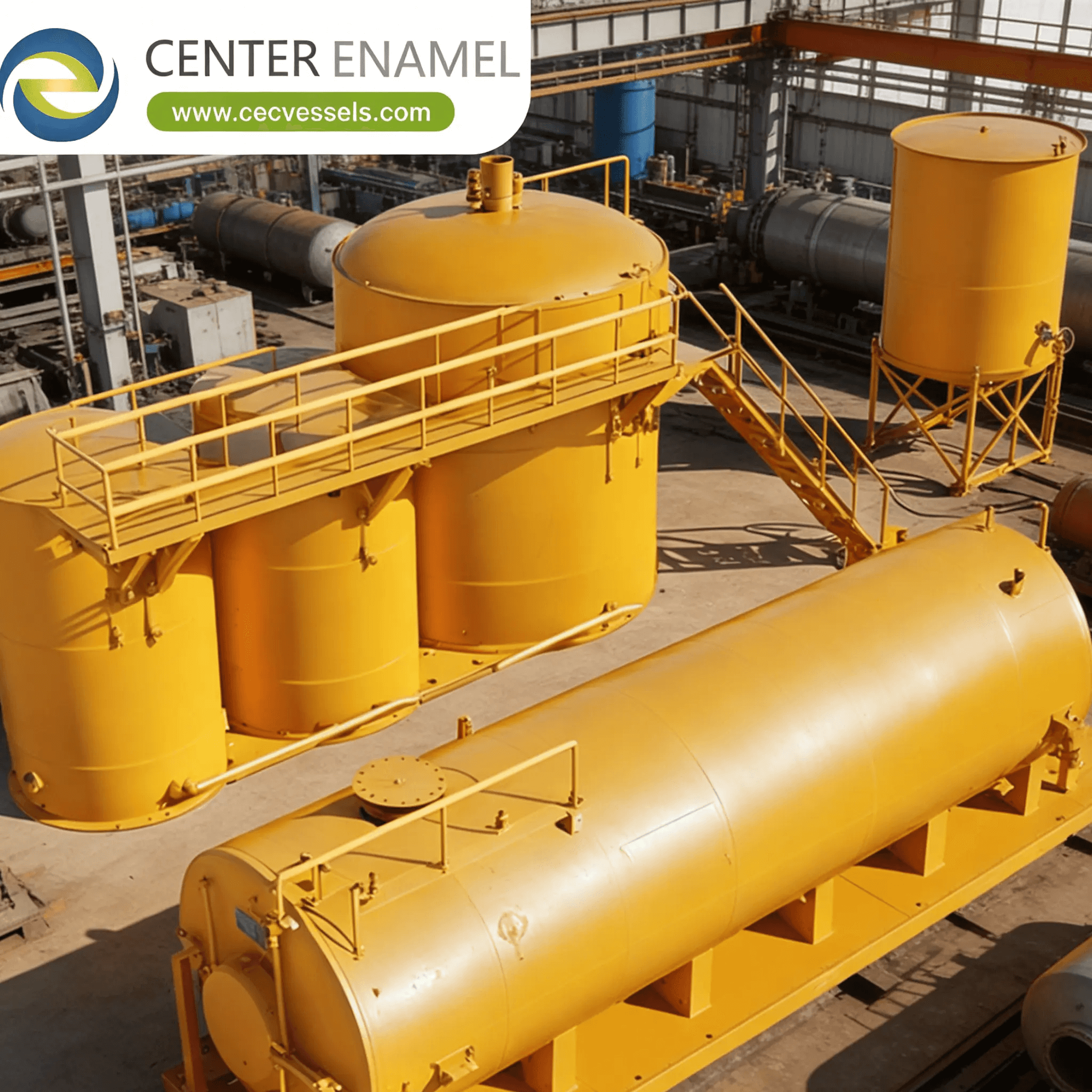
Horizontal Skid-Mounted MVR Evaporator for Modular Industrial Evaporation
A Horizontal Skid-Mounted MVR Evaporator is an integrated thermal evaporation system designed to concentrate liquid solutions while improving energy utilization and simplifying installation. MVR, or Mechanical Vapor Recompression, recycles secondary vapor generated during evaporation and compresses it for reuse as a heating medium. This reduces the need for continuous fresh steam and supports efficient industrial evaporation. The horizontal skid-mounted configuration places the main evaporation equipment, heat exchanger, vapor-liquid separator, circulation components, piping, valves, instruments, and control systems on a common structural skid. Compared with equipment arranged as separate field-installed units, this modular configuration provides a compact and organized process package. The system can be customized according to feed composition, evaporation capacity, concentration requirements, viscosity, boiling characteristics, and final product specifications. It is suitable for wastewater concentration, chemical processing, food and beverage production, pharmaceutical applications, salt solutions, and other industrial liquid concentration processes. As a China Horizontal Skid-Mounted MVR Evaporator Manufacturer, Center Enamel focuses on customized process equipment design, fabrication, assembly, testing, and project support for industrial evaporation applications. Working Principle of an MVR EvaporatorThe working principle of an MVR evaporator is based on the reuse of secondary vapor generated during the evaporation process. First, the feed liquid enters the evaporator through a controlled feeding system. Depending on the process design, the feed may pass through a preheating section before entering the main evaporation area. Preheating helps utilize available thermal energy and establishes suitable conditions for efficient evaporation. Inside the evaporator, heat is transferred from the heating medium to the process liquid. A portion of the liquid changes into vapor, while the remaining liquid becomes progressively more concentrated. The generated secondary vapor contains reusable thermal energy. Instead of simply condensing and releasing this energy, the MVR system directs the vapor toward a mechanical vapor compressor. The compressor increases the vapor's temperature and enthalpy so that it can return to the heating side of the evaporator. The recompressed vapor then provides heat for continued evaporation. As the process continues, the same thermal energy can be circulated through the system, significantly improving steam utilization. A vapor-liquid separator separates concentrated liquid from the generated vapor before the vapor enters the recompression section. Condensate generated from the heating side can also be collected for recovery or reuse according to the process requirements. This closed-loop thermal concept is one of the main reasons MVR technology is widely considered for energy-efficient industrial evaporation. Why Choose a Horizontal Skid-Mounted Configuration?The horizontal arrangement offers several practical advantages for industrial process integration. By positioning the evaporation equipment horizontally on a common skid, the complete system can be organized according to the available plant layout and connection requirements. Compact Modular DesignThe skid-mounted structure integrates multiple components into a coordinated process package. This reduces the need for extensive on-site equipment arrangement and provides a clearly defined installation footprint. Simplified Transportation and InstallationMajor equipment and auxiliary components can be assembled before shipment. After delivery, the skid can be positioned at the designated installation area and connected with process piping, utilities, electrical systems, and other plant interfaces. Efficient Equipment IntegrationA Horizontal Skid-Mounted MVR Evaporator can integrate the evaporator body, heat exchanger, separator, compressor, pumps, valves, instruments, piping, and control components. This creates a coordinated system rather than a collection of independent machines. Flexible Process LayoutThe horizontal configuration can be adapted to different factory layouts. Equipment arrangement, nozzle orientation, piping connections, skid dimensions, and auxiliary components can be customized according to project requirements. Easier Maintenance AccessA well-organized horizontal skid can provide convenient access to pumps, valves, instruments, heat-transfer components, and other service points. Maintenance areas can be considered during the design stage to support routine inspection and servicing. Main Components of a Horizontal Skid-Mounted MVR EvaporatorA complete MVR evaporation package normally consists of several interconnected process components. Feed SystemThe feed system delivers the process liquid into the evaporation unit at a controlled flow rate. Feed pumps, valves, filters, and instruments can be selected according to the properties of the liquid. Preheating SystemPreheating raises the feed temperature by utilizing available thermal energy. Depending on the process, condensate or other recovered heat sources can be used to improve overall thermal efficiency. EvaporatorThe evaporator provides the primary heat-transfer area where liquid is converted into vapor. Falling-film, forced-circulation, or other configurations can be selected according to feed characteristics and concentration requirements. Vapor-Liquid SeparatorThe separator removes liquid droplets from the generated vapor and helps produce a cleaner vapor stream for the recompression process. Its internal configuration can be designed according to flow rate and process conditions. MVR CompressorThe mechanical vapor compressor is the central component of the MVR system. It recompresses secondary vapor so that the vapor can be reused as a heating medium. Condensate Collection SystemCondensate from the heating side can be collected and directed toward recovery, reuse, or further treatment. Proper condensate management contributes to efficient water and thermal resource utilization. Circulation SystemPumps and associated piping maintain the required liquid circulation rate. Circulation design is particularly important for solutions with higher concentration or viscosity. Control SystemSensors, valves, flow meters, temperature instruments, level instruments, and PLC-based controls can be integrated into the skid. The control system helps coordinate feeding, evaporation, vapor recompression, liquid circulation, and condensate recovery. Material Selection for MVR Evaporation EquipmentMaterial selection is an important part of Horizontal Skid-Mounted MVR Evaporator design because the equipment may handle different chemical compositions, concentrations, temperatures, and viscosities. Stainless steel is commonly selected for process-contact components when corrosion resistance, cleanliness, and smooth internal surfaces are important. Grades such as 304 or 316L can be considered according to the characteristics of the process liquid. Carbon steel can also be used for structural skid frames, external components, or process applications where the medium is compatible with the material. Surface treatment can be applied to exposed carbon steel components according to the installation environment. For specialized applications, material selection may include clad materials or other corrosion-resistant solutions. The final material specification should be determined according to feed composition, chloride content, acidity or alkalinity, operating temperature, concentration level, and cleaning requirements. Center Enamel can evaluate the application conditions and recommend suitable materials for different components of the evaporation package. Manufacturing Process of a Skid-Mounted MVR EvaporatorThe manufacturing process begins with engineering confirmation and material preparation. Technical specifications, process requirements, equipment dimensions, material grades, and connection details are reviewed before fabrication. Raw materials are inspected before entering production. Plate cutting, forming, machining, component fabrication, and assembly are completed according to approved manufacturing drawings. Heat-transfer components are fabricated with attention to dimensional accuracy and surface quality. Evaporator bodies, separators, piping assemblies, support structures, and auxiliary equipment are then assembled according to the designed process configuration. The skid frame is manufactured to provide a stable foundation for the complete evaporation system. Major components are positioned on the skid according to the engineering layout, while piping and instrumentation are arranged to provide organized process connections. Surface treatment is selected according to the material and application. Stainless steel components may receive appropriate cleaning, pickling, or passivation treatment where required, while carbon steel structures can receive suitable protective coating systems. Before shipment, the assembled equipment can undergo dimensional inspection, component verification, connection inspection, instrumentation checks, and functional testing according to the project specification. Quality Inspection and TestingQuality control covers materials, fabrication, assembly, and final equipment verification. Material certificates and specifications are reviewed to confirm that the selected materials correspond with the approved design. Dimensional inspection verifies the major equipment dimensions, nozzle positions, skid interfaces, and component alignment. Welded components can be inspected using appropriate non-destructive testing methods according to the applicable project requirements. Visual inspection, liquid penetrant testing, ultrasonic testing, or other suitable methods may be selected according to component type and applicable standards. Heat-transfer components receive particular attention because efficient thermal performance depends on proper fabrication and assembly. Piping and instrument connections are also inspected to confirm correct installation. The completed skid is checked against engineering drawings before delivery. Where required, factory assembly and functional verification can be conducted to reduce installation work at the customer's facility. Applications of Horizontal Skid-Mounted MVR EvaporatorsHorizontal Skid-Mounted MVR Evaporators can be used across a wide range of industries requiring liquid concentration or water removal. Chemical IndustryChemical plants can use MVR evaporation systems to concentrate process solutions, recover reusable liquid, and reduce the volume of process streams. Wastewater TreatmentMVR evaporators can support industrial wastewater concentration and water recovery processes. They can be integrated into broader wastewater treatment systems where thermal separation is required. Food and BeverageThe technology can be applied to the concentration of food ingredients, extracts, process liquids, and other solutions where controlled evaporation is required. Pharmaceutical ProcessingWith appropriate material selection and hygienic design, evaporation equipment can be customized for pharmaceutical and fine chemical processing. Salt and Mineral ProcessingMVR systems can concentrate salt-containing solutions and support crystallization or resource recovery processes when combined with suitable downstream equipment. Hubei Chemical Industry ProjectCenter Enamel has experience supplying customized process equipment for chemical industry applications. In a chemical industry project in Hubei, China, the company engineered and supplied a range of process vessels and related equipment, including resin tanks, coalescing oil separators, fiber adsorption tanks, compressed air storage tanks, condensate tanks, and steam distribution cylinders. The project required coordinated equipment design, material selection, fabrication, inspection, and delivery. Stainless steel and carbon steel were selected according to the service requirements of different equipment. This type of project demonstrates the importance of integrated engineering capabilities when supplying thermal and fluid-processing equipment. The experience gained from chemical process equipment manufacturing can also support the engineering of customized evaporation systems, including skid-mounted configurations. For an MVR evaporation project, similar engineering considerations can be applied to equipment layout, material selection, heat-transfer components, piping, instrumentation, and factory assembly. Center Enamel as a Horizontal Skid-Mounted MVR Evaporator ManufacturerShijiazhuang Zhengzhong Technology Co., Ltd (Center Enamel) specializes in the research, development, manufacturing, and supply of industrial process equipment. Its product portfolio includes pressure vessels, separators, heat exchange equipment, reaction vessels, storage vessels, and evaporators. The company provides integrated services covering engineering design, research and development, manufacturing, installation, commissioning, and after-sales support. Its manufacturing capabilities cover carbon steel, stainless steel, and other material configurations for different industrial applications. For customers seeking a China Horizontal Skid-Mounted MVR Evaporator Manufacturer, Center Enamel can develop customized equipment according to process capacity, feed characteristics, concentration requirements, heat-transfer conditions, material specifications, plant layout, and utility requirements. The modular skid concept allows the major process components to be coordinated during engineering and manufacturing. This approach helps create a complete evaporation package that is easier to transport, install, connect, and integrate into existing industrial facilities. Customized Horizontal MVR Evaporation SolutionsEvery industrial evaporation project has different feed characteristics and process objectives. For this reason, a Horizontal Skid-Mounted MVR Evaporator should be designed around the actual operating requirements rather than selected only by nominal capacity. Important design information may include feed flow rate, feed concentration, target concentration, liquid composition, viscosity, boiling point, required evaporation capacity, heat-transfer requirements, condensate recovery requirements, available utilities, and installation space. Based on these parameters, the evaporation configuration, heat-transfer area, vapor separator, compressor capacity, circulation system, material selection, skid dimensions, and control system can be coordinated into one complete solution. As an experienced Horizontal Skid-Mounted MVR Evaporator Manufacturer, Center Enamel supports customized engineering for chemical processing, wastewater treatment, food and beverage, pharmaceutical, mineral processing, and other industrial evaporation applications. The combination of MVR technology and modular skid integration provides a practical approach to efficient liquid concentration, thermal energy reuse, and streamlined industrial equipment installation.
|