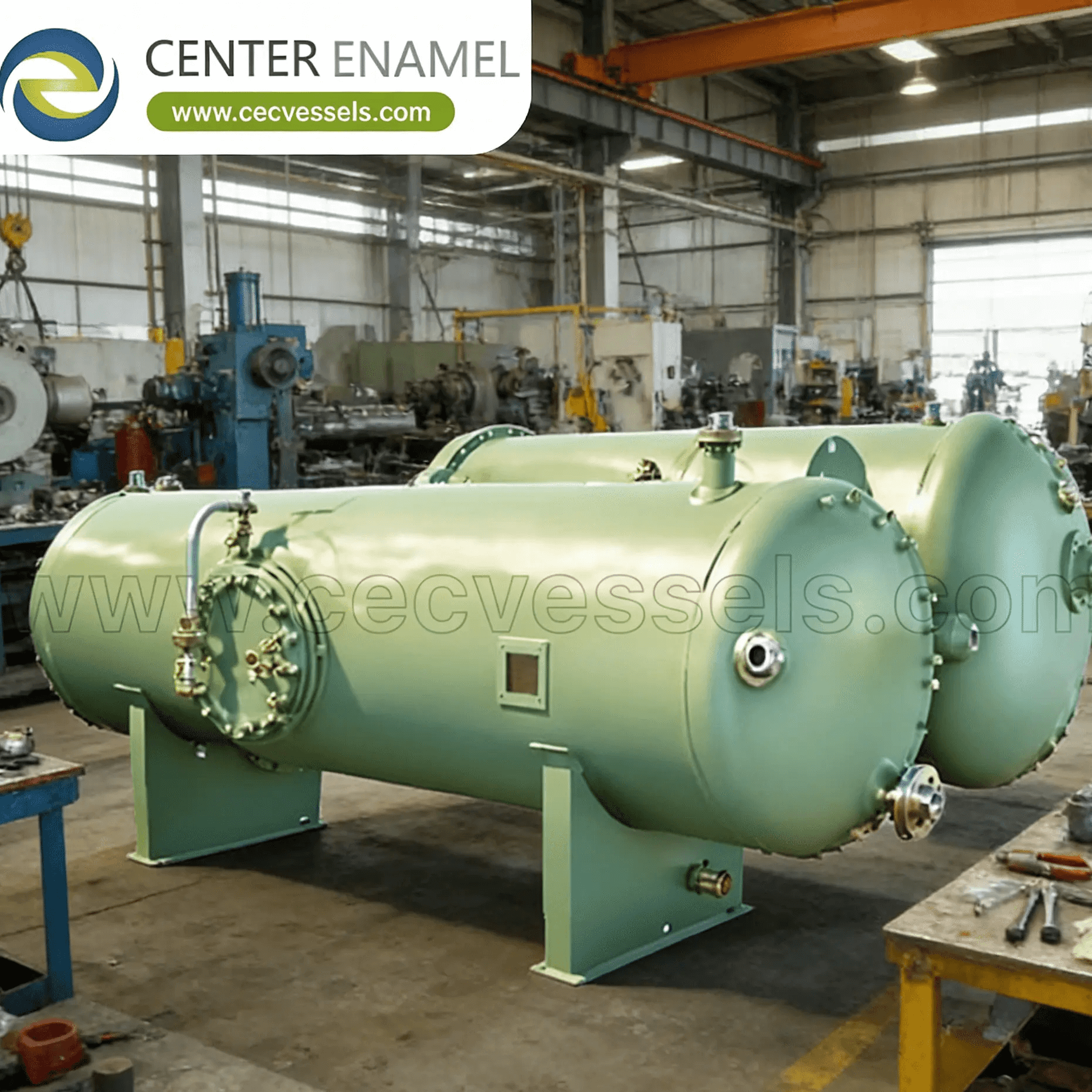
How Does a Pressure Vessel Work?
A pressure vessel works by containing a fluid inside a specially designed enclosed structure and maintaining defined operating conditions. Depending on the application, it can store, separate, process, or transfer liquids and gases. Pressure vessels are widely used in oil and gas, chemical processing, water systems, power generation, and industrial manufacturing. Their working principle depends on the relationship between the contained fluid, vessel geometry, internal components, and process connections. What Is a Pressure Vessel?A pressure vessel is an engineered container designed to hold liquids, gases, vapors, or mixtures under specified pressure conditions. The pressure vessel means more than a simple storage container. It can also function as process equipment for separation, reaction, heating, cooling, filtration, and fluid handling. A typical pressure vessel includes a shell, heads, nozzles, supports, and, depending on its application, internal components. Common pressure vessel configurations include:
lVertical pressure vessels lHorizontal pressure vessels lSpherical pressure vessels lSeparator vessels lReactor vessels lFilter vessels lProcess drums lHeat exchanger vessels
The exact design depends on what the vessel needs to contain and what process function it needs to perform. How Does a Pressure Vessel Work?The basic pressure vessel working principle is straightforward. A process fluid enters the vessel through an inlet connection, remains inside the enclosed chamber while the required process operation takes place, and then exits through one or more outlet connections. During operation, the vessel shell contains the fluid and transfers the forces generated by the internal pressure to the surrounding structure. For a process vessel, the internal components can control the movement of the fluid. For example, a separator may slow the flow and allow different phases to separate, while a reactor may use an agitator to mix materials. The basic operating sequence is:
lFluid enters through the inlet. lThe vessel contains the fluid within the designed volume. lInternal components support the required process function. lPressure, temperature, and fluid level are monitored. lThe processed or stored fluid leaves through the outlet.
This simple sequence can support many different industrial processes. Main Components of a Pressure VesselUnderstanding the main components helps explain how a pressure vessel works. The shell is the primary cylindrical body of the vessel. It provides the main containment area for the process fluid. The heads close the ends of the vessel. Depending on the design, they may be elliptical, hemispherical, torispherical, or another suitable shape. Nozzles provide connections for fluid inlet, outlet, drainage, instrumentation, and other process piping. Supports hold the vessel in its operating position. Vertical vessels may use skirts or legs, while horizontal vessels can use saddles. Internal components vary according to the application. They may include baffles, trays, demisters, distributors, coils, filter elements, or agitators. How Does a Pressure Vessel Control Fluid Flow?Fluid flow is controlled through the vessel's inlet, outlet, valves, piping, and internal components. When a process fluid enters a vessel, the internal space provides a defined volume where the fluid can be retained or processed. The outlet arrangement then determines how the fluid leaves the vessel. In a separator, for example, the inlet may be designed to reduce incoming flow velocity and distribute the fluid across the vessel. Gravity and differences in density can then help separate gas and liquid phases. In a reactor vessel, an agitator may continuously mix the contents to create a uniform process environment. Therefore, the pressure vessel itself provides the containment space, while its connected equipment and internal components help control the process. How Does a Pressure Vessel Work With Water?A pressure vessel water system can be used for water storage, water treatment, hydraulic systems, or process water handling. In a water pressure vessel, water enters through a designated connection and is retained inside the vessel. Depending on the system, compressed air or another gas may occupy part of the vessel volume and provide a controlled pressure environment. Pressure vessels can also be incorporated into water treatment systems. Filter vessels, for example, contain filtration media that remove suspended particles or other substances from the water stream. In this application, water enters the vessel, passes through the internal filtration material, and exits through the outlet. The exact working principle depends on the type of water pressure vessel and the treatment process. How Does an Oil Pressure Vessel Work?An oil pressure vessel can be used for oil storage, separation, processing, or hydraulic applications. In oil and gas facilities, pressure vessels are often used to separate oil, gas, and water. A mixed production stream enters the separator, and the vessel provides an appropriate internal environment for the different phases to separate. The heavier liquid phase generally moves toward the lower section, while lighter gas moves toward the upper section. Internal devices can improve flow distribution and help remove liquid droplets from the gas stream. After separation, each phase leaves through its corresponding outlet. This is one of the most common examples of a pressure vessel working as process equipment rather than simply as a storage container. Pressure Vessel Working Principle in SeparationSeparation vessels use physical differences between materials to separate process streams. A gas-liquid separator receives a mixture through the inlet. As the flow enters the vessel, its velocity and direction can change. Larger liquid droplets can then fall toward the liquid collection area. A demister or mist eliminator may be installed near the gas outlet to capture smaller liquid droplets before the gas leaves the vessel. In a three-phase separator, the vessel can separate gas, oil, and water. The different densities of the liquid phases allow oil and water to form separate layers under suitable process conditions. The pressure vessel therefore creates a controlled environment that supports the separation process. Pressure Vessel Working Principle in Chemical ProcessingIn chemical processing, a pressure vessel can serve as a reaction chamber. Raw materials enter the vessel through designated connections. The contents may then be mixed using an agitator, while heating or cooling equipment controls the process temperature. The reaction takes place within the vessel according to the required process conditions. After the required processing time, the product can be discharged through an outlet. A reactor pressure vessel may therefore combine fluid containment, mixing, heat transfer, and reaction functions in one piece of equipment. How Is Pressure Monitored in a Pressure Vessel?Pressure monitoring is an important part of pressure vessel operation. Pressure gauges, transmitters, sensors, and other instrumentation can be connected to the vessel to provide information about internal conditions. Temperature sensors can monitor the process temperature, while level instruments can indicate the amount of liquid inside the vessel. The monitoring system allows operators to understand how the vessel is performing and helps maintain the required process conditions. Modern industrial pressure vessel systems may also integrate pressure, temperature, level, and flow measurements with a plant control system. How Does a Pressure Vessel Differ From a Storage Tank?A pressure vessel and a storage tank can both contain liquids or gases, but they are designed for different purposes. A pressure vessel is designed around specified pressure and temperature conditions and may perform process functions such as separation or reaction. A conventional storage tank is primarily designed to store materials, generally under atmospheric or relatively low-pressure conditions. For example, an oil storage tank may simply hold crude oil before transportation or further processing. An oil and gas separator pressure vessel, however, receives a mixed stream and separates it into different phases. The main distinction is therefore based on operating conditions and process function. Pressure Vessel Description for Industrial ApplicationsA useful pressure vessel description should identify the vessel type, contained medium, process function, and main design features. For example, a separator pressure vessel can be described as an enclosed process vessel designed to separate gas and liquid phases from a mixed stream. A water pressure vessel can be described as a pressure-containing vessel used for water storage, treatment, or process water handling. An oil pressure vessel can refer to equipment used for oil processing, separation, or controlled oil containment. These descriptions help engineers and buyers identify equipment according to its actual application. Final ConsiderationsA pressure vessel works by containing a fluid within an engineered enclosed structure while controlling defined process conditions. Depending on its design, it can support storage, separation, reaction, filtration, heat transfer, and other industrial operations. The pressure vessel working principle depends on the vessel geometry, fluid properties, internal components, piping connections, and process requirements. Water pressure vessels, oil pressure vessels, separator vessels, and reactor vessels all apply the same basic concept while performing different functions. Understanding how a pressure vessel works makes it easier to select the right vessel type, capacity, material, configuration, and internal equipment for a specific industrial application.
|