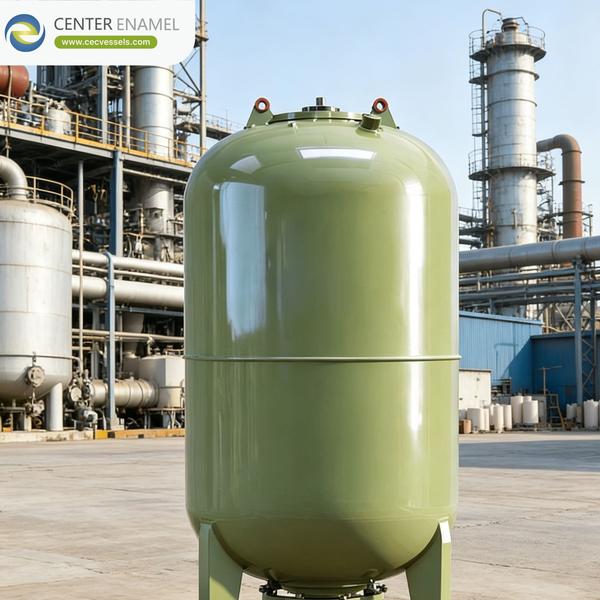
The main factors in industrial reactor design are reaction kinetics, feed rate, conversion, residence time, operating temperature, operating pressure, phase behavior, heat transfer, mixing, material compatibility, and vessel volume. These parameters determine whether a reactor should operate in batch, continuous, or semi-continuous mode and whether the equipment requires an agitator, jacket, internal coil, baffles, catalyst support, or other internal components.
For example, a reactor processing 10 m³/h of liquid feed with a required 30-minute residence time requires an effective reaction volume of approximately 5 m³ before accounting for additional design allowances. The actual working volume, total vessel volume, and usable reaction volume should be established from the process design basis.
What Information Is Needed for Reactor Design?
The first stage of reactor design is to establish a complete process data sheet. Engineers normally need the reaction type, chemical composition, feed flow rate, target production capacity, required conversion, reaction rate, operating temperature, operating pressure, density, viscosity, heat capacity, and phase composition.
For example, a process specification may define a feed rate of 5 m³/h, an operating temperature of 80°C, an operating pressure of 0.5 MPa, and a target conversion of 95%. These values provide the basic inputs for determining reactor volume, heat-transfer duty, material selection, and mechanical configuration.
Additional information may include solids concentration, particle size, corrosive components, foaming tendency, required batch time, cleaning requirements, and available plant space. The more complete the process data, the more accurately the reactor vessel can be sized.
How Does Reaction Kinetics Affect Reactor Design?
Reaction kinetics describe how quickly reactants are converted into products under specific operating conditions. Reaction rate, reaction order, activation behavior, temperature, concentration, and catalyst performance can directly affect the required reactor volume and residence time.
For a continuous reactor, engineers may need to determine how much reactor volume is required to achieve a target conversion such as 90%, 95%, or 98%. A reaction requiring a longer residence time generally requires a larger effective reaction volume at the same feed rate.
Reaction kinetics should therefore be established before finalizing the vessel dimensions. A reactor designed without reliable kinetic data may have insufficient residence time or excessive volume for the required production rate.
How Is Reactor Volume Determined?
Reactor volume is determined from the process throughput, residence time, reaction kinetics, conversion target, and reactor operating mode. For a simplified continuous process, effective reaction volume can be estimated from feed flow rate multiplied by the required residence time.
For example, a continuous process with a feed rate of 8 m³/h and a required residence time of 45 minutes has an estimated effective reaction volume of 6 m³. The final vessel volume must also consider working volume, headspace, liquid level, agitation requirements, gas expansion, and other process-specific allowances.
For batch reactors, engineers also consider batch size, filling ratio, reaction time, charging sequence, product withdrawal requirements, and cleaning volume. The resulting vessel may therefore have a larger total volume than the nominal working batch volume.
How Is Residence Time Selected?
Residence time represents how long the process material remains in the reaction zone. It is an important parameter for continuous reactor sizing because insufficient residence time may prevent the required conversion from being achieved.
For example, if a process requires a 60-minute residence time at a feed rate of 12 m³/h, the theoretical reaction volume is approximately 12 m³. The actual design volume depends on the reactor type, flow pattern, reaction kinetics, mixing characteristics, and required operating margin.
For batch operation, residence time is normally expressed through batch cycle requirements, including charging, heating, reaction, cooling, discharge, and cleaning. The total cycle time determines production capacity and the number of reactors required for continuous plant operation.
How Do You Select the Reactor Configuration?
The reactor configuration should match the reaction mechanism, operating mode, fluid properties, heat-transfer requirements, and production capacity. Common configurations include batch reactors, continuous stirred-tank reactors, plug flow reactors, fixed-bed reactors, and jacketed reactors.
A batch reactor is suitable when different materials need to be charged, reacted, and discharged in defined cycles. A continuous stirred-tank reactor is used when feed and product streams operate continuously and uniform mixing is required.
A plug flow reactor can be considered when the process requires controlled flow through a tubular or elongated reaction zone. A fixed-bed reactor can contain catalyst particles supported by internal grids or structures.
The selected configuration should therefore be based on process requirements rather than vessel shape alone.
How Are Reactor Height and Diameter Determined?
Reactor dimensions are established after the required process volume has been calculated. Engineers consider vessel volume, liquid level, residence time, flow velocity, mixing requirements, heat-transfer area, internal components, transportation limitations, and available installation space.
For example, a cylindrical vessel with an internal diameter of 2 m and a straight-side height of 4 m has a cylindrical volume of approximately 12.6 m³ before accounting for heads, nozzles, internals, and operating level. This illustrates why diameter and height cannot be selected independently from the required process volume.
The final height-to-diameter ratio depends on reactor type and application. Fixed-bed reactors, stirred reactors, storage-type reaction vessels, and continuous process reactors may require substantially different proportions.
How Is Reactor Mixing Designed?
Reactor mixing is designed according to viscosity, density, solids content, gas dispersion, heat-transfer requirements, and reaction kinetics. The agitator configuration may include anchor agitators, pitched-blade impellers, turbine impellers, or other mixing systems.
For example, a low-viscosity liquid may require a different impeller configuration from a polymer solution with a viscosity of several thousand mPa·s. A slurry reactor containing 20% solids also requires different mixing considerations from a homogeneous liquid reactor.
Engineers may also add internal baffles to reduce vortex formation and improve circulation. The agitator shaft, impeller diameter, rotational speed, motor capacity, mechanical seal, and bearing arrangement should be selected according to the process conditions.
How Is Heat Transfer Designed for a Reactor?
Heat transfer is required when a reaction must be heated, cooled, or maintained within a controlled temperature range. The design depends on reaction heat, process temperature, utility temperature, heat-transfer coefficient, vessel surface area, and required temperature control.
For example, if a batch reactor must maintain a process temperature of 80°C while the heating medium enters the jacket at 100°C, the jacket must provide sufficient heat-transfer area to achieve the required heating rate. An exothermic reaction may instead require cooling water or another cooling medium.
Common reactor heat-transfer configurations include jacketed vessels, dimple jackets, half-pipe coils, and internal coils. The appropriate configuration depends on the heat duty, vessel geometry, fluid properties, and utility conditions.
How Does an Energy Balance Affect Reactor Design?
An energy balance determines how much thermal energy enters, leaves, accumulates within, or is generated by the process. Engineers consider feed enthalpy, product enthalpy, reaction heat, heating or cooling utility, and heat loss.
For an exothermic reaction, the released reaction heat must be considered when sizing the cooling system. For example, if a reaction generates 500 kW of thermal duty, the heat-transfer system must be designed to remove the required thermal load under the specified operating conditions.
The energy balance therefore affects the required jacket area, coil area, utility flow rate, heat-transfer coefficient, and temperature-control system.
How Are Reactor Materials Selected?
Reactor materials are selected according to operating temperature, operating pressure, chemical composition, corrosion characteristics, mechanical requirements, and applicable design standards.
Common materials include carbon steel, stainless steel, and other alloy materials selected according to the process medium. For example, a reactor handling a corrosive chemical may require stainless steel or a corrosion-resistant alloy rather than standard carbon steel.
Material compatibility should also consider temperature, concentration, residence time, impurities, cleaning chemicals, and cyclic operating conditions. The selected material must satisfy both process compatibility and mechanical design requirements.
How Are Reactor Mechanical Components Designed?
The reactor vessel normally includes a shell, heads, nozzles, supports, manways, agitator components, seals, and process connections. Additional internal components may include baffles, catalyst supports, distributors, spargers, coils, or heating and cooling surfaces.
The vessel shell and heads are sized according to design conditions and applicable mechanical design rules. Nozzle sizes and locations are determined by feed flow, product discharge, instrumentation, cleaning requirements, and maintenance access.
For example, a reactor with a 2 m internal diameter may require multiple nozzles for feed, discharge, venting, instrumentation, and utility connections. Their final dimensions and reinforcement requirements depend on the process and mechanical design calculations.
How Are Operating Temperature and Pressure Used in Reactor Design?
Operating temperature and pressure are key design inputs because they influence reaction kinetics, material selection, heat transfer, vessel thickness, seals, gaskets, and instrumentation.
For example, a reactor operating at 120°C and 0.6 MPa requires a different mechanical design basis from an atmospheric reactor operating at 60°C. The design conditions should include appropriate consideration of normal operation, startup, shutdown, cleaning, and other specified operating cases.
The design pressure and design temperature should be established before the final mechanical design is completed. These values are not simply the normal operating pressure and temperature; they are engineering design parameters defined according to the process and applicable code.
Which Design Standards Apply to Industrial Reactors?
The applicable reactor design standards depend on the project location, vessel classification, design conditions, and customer requirements. Common standards for pressure equipment include ASME BPVC Section VIII, BS EN 13445, and GB/T 150.1-150.4-2024.
ASME BPVC Section VIII provides requirements for pressure vessel design and construction. BS EN 13445 covers unfired pressure vessels for applicable European projects. GB/T 150.1-150.4-2024 provides requirements for steel pressure vessels under the applicable Chinese standard system.
The selected code affects calculations for shell thickness, heads, openings, materials, welding, inspection, testing, and other mechanical design requirements. Engineers should establish the applicable code at the beginning of the project rather than after equipment design is completed.
What Inspections and Tests Are Required for a Reactor?
Reactor manufacturing may involve material verification, welding procedure qualification, weld inspection, non-destructive testing, dimensional inspection, pressure testing, and final inspection, depending on the applicable code and project specification.
For example, pressure equipment manufactured to a specified design code may require documented material certificates, qualified welding procedures, inspection records, and hydrostatic or other specified pressure tests.
The exact inspection scope depends on the vessel category, material, design code, customer specification, and project requirements. Inspection and testing should therefore be incorporated into the manufacturing plan from the beginning.
What Information Should You Provide to a Reactor Manufacturer?
To obtain a suitable industrial reactor design, customers should provide the manufacturer with the process and mechanical information available for the project.
Important information includes:
For example, a project specification stating 10 m³/h feed flow, 90°C operating temperature, 0.4 MPa operating pressure, 95% target conversion, and 30-minute residence time provides substantially more useful design information than a request containing only the required vessel capacity.
What Is the Step-by-Step Process for Designing a Reactor?
The reactor design process can be organized into seven main stages:
Step 1 — Define the reaction and process requirements: Establish reaction type, feed composition, production capacity, conversion, temperature, pressure, and residence time.
Step 2 — Establish engineering assumptions: Define the operating mode, phase behavior, flow characteristics, mixing conditions, and other process assumptions.
Step 3 — Perform material and energy balances: Calculate feed and product quantities, conversion, reaction heat, heating requirements, and cooling requirements.
Step 4 — Determine reactor volume and dimensions: Establish working volume, total volume, diameter, height, liquid level, headspace, and required residence time.
Step 5 — Select reactor configuration and internals: Select the reactor type, agitator, baffles, catalyst supports, nozzles, and other internal components.
Step 6 — Design heat transfer and mechanical components: Determine jacket or coil requirements and complete the mechanical design of the shell, heads, supports, nozzles, seals, and other components.
Step 7 — Verify the design and manufacturing requirements: Apply the applicable design code and complete material verification, welding, inspection, testing, and final quality documentation.
This seven-step approach connects process design, reactor sizing, thermal design, mechanical design, and manufacturing requirements into one engineering workflow.
Where Are Industrial Reactors Used?
Industrial reactors are used in chemical processing, petrochemical production, pharmaceutical manufacturing, polymer production, food processing, biotechnology, wastewater treatment, and other process industries.
Typical applications include chemical synthesis, polymerization, hydrogenation, esterification, neutralization, crystallization, fermentation, and wastewater reaction processes.
The reactor configuration changes according to the application. For example, a polymerization process may require a jacketed vessel with an agitator, while a catalytic process may use a fixed-bed configuration with catalyst support structures.
How Does Center Enamel Support Reactor Manufacturing?
Center Enamel manufactures industrial reactors and process vessels according to project-specific process and mechanical requirements. Reactor configurations can include jacketed vessels, mixing reactors, reaction pressure vessels, and customized process equipment.
The manufacturing process can incorporate carbon steel or stainless steel construction, automated welding, machining, non-destructive testing, pressure testing, and code-based quality documentation, depending on the project specification.
Center Enamel supports reactor projects based on applicable requirements such as ASME BPVC, BS EN 13445, and GB/T 150.1-150.4-2024. The final design is determined from the customer's process data, operating conditions, material requirements, capacity, and applicable engineering standards.
Frequently Asked Questions About Reactor Design
What is the most important parameter in reactor design?
There is no single parameter that determines the complete reactor design. Reaction kinetics, conversion, feed rate, residence time, temperature, pressure, heat duty, mixing, and material compatibility must be evaluated together. For example, a 10 m³/h process requiring 60 minutes of residence time has a theoretical effective reaction volume of about 10 m³ before additional design considerations.
How is reactor size calculated?
Reactor size is calculated from process throughput, reaction kinetics, residence time, working volume, and operating mode. A simplified continuous process with a flow rate of 6 m³/h and a residence time of 30 minutes requires approximately 3 m³ of effective reaction volume before considering headspace and other design allowances.
What is the difference between operating pressure and design pressure?
Operating pressure is the pressure normally expected during process operation, while design pressure is the engineering pressure used for mechanical design and code verification. The design pressure should be established from the specified operating conditions and applicable engineering requirements.
Why is reactor mixing important?
Reactor mixing promotes uniform concentration and temperature and can improve contact between liquid, gas, and solid phases. Mixing requirements depend on viscosity, density, solids content, gas dispersion, reaction rate, and heat-transfer requirements.
What materials are commonly used for reactors?
Common reactor materials include carbon steel and stainless steel, with material selection depending on chemical compatibility, temperature, pressure, corrosion requirements, and applicable design standards.
Which standards can be used for reactor pressure vessel design?
Common standards include ASME BPVC Section VIII, BS EN 13445, and GB/T 150.1-150.4-2024. The applicable standard depends on the project location, vessel classification, design requirements, and customer specification.
What information does a reactor manufacturer need?
A manufacturer normally needs reaction information, feed composition, flow rate, production capacity, conversion target, operating temperature, operating pressure, design conditions, residence time, working volume, heating or cooling requirements, agitation requirements, material requirements, installation location, and applicable design codes.
Can reactor dimensions be customized?
Yes. Reactor dimensions can be customized according to process volume, residence time, plant layout, transportation limitations, heat-transfer requirements, agitator configuration, nozzle arrangement, and applicable mechanical design requirements.
How Should Reactor Design Be Started?
A successful industrial reactor design should start with the process rather than the vessel dimensions. Engineers first establish the reaction, feed conditions, production capacity, conversion target, operating temperature, operating pressure, residence time, heat duty, and mixing requirements. These inputs are then used to determine reactor volume, configuration, materials, heat-transfer equipment, mechanical components, and applicable design standards.
For a customized reactor project, providing complete process data at the beginning allows the manufacturer to develop a more accurate technical proposal and equipment configuration based on the required capacity, operating conditions, materials, reactor type, and design code.


