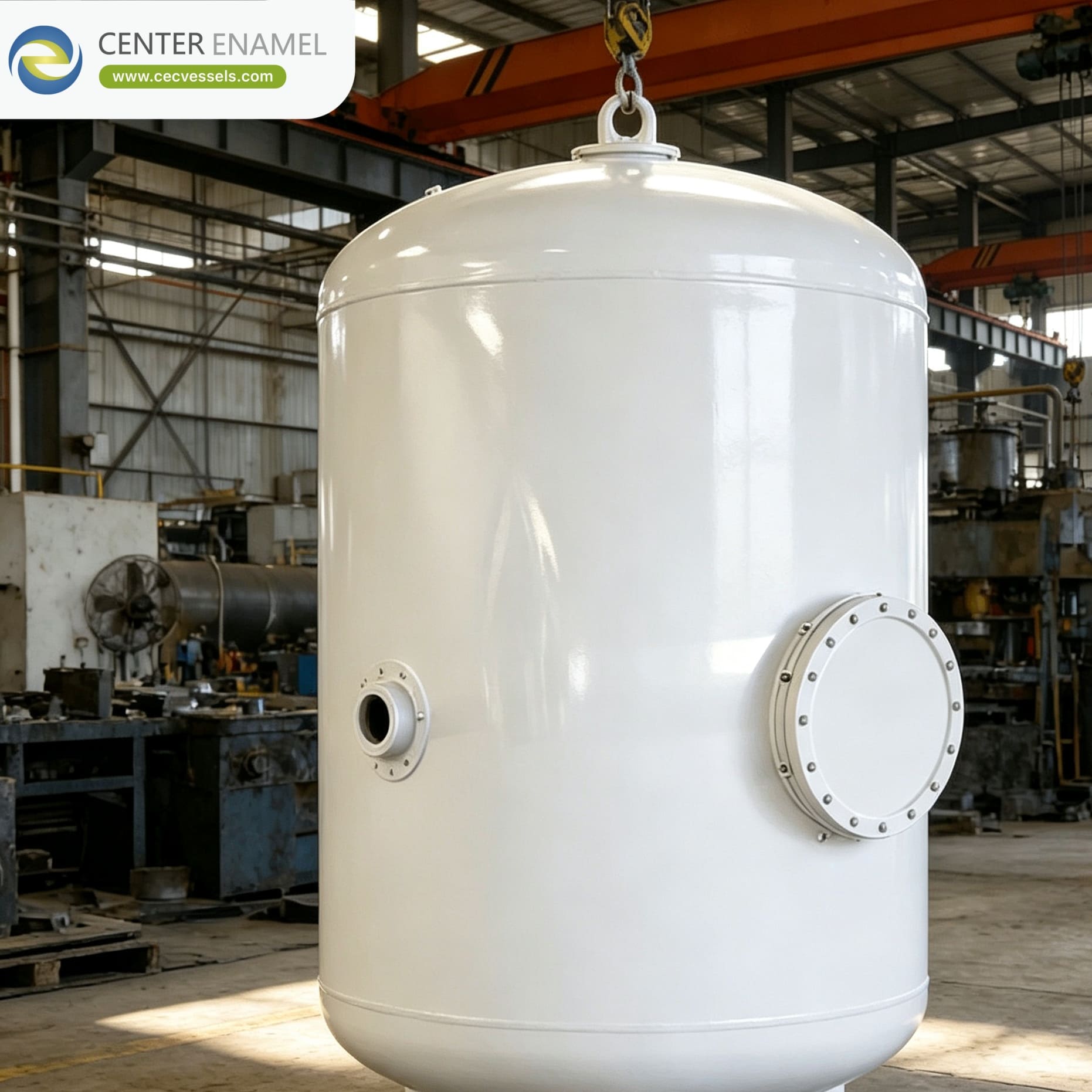
Industrial Mixing and Reaction Systems for Battery Materials
Industrial mixing and reaction systems play an important role in modern battery material manufacturing. From raw material preparation to chemical synthesis and slurry production, specialized equipment helps maintain consistent material quality, improve process efficiency, and support large-scale lithium battery production. What Are Industrial Mixing and Reaction Systems for Battery Materials?Industrial mixing and reaction systems are integrated equipment solutions designed to process chemical materials used in battery manufacturing. They combine mixing vessels, reactors, agitators, heating and cooling systems, and process control components. These systems support different production stages, including:
lRaw material blending and homogenization lChemical reaction and material synthesis lSolid-liquid mixing and dispersion lBattery slurry preparation lTemperature-controlled material processing lIntermediate product storage and transfer
Battery Material Mixing Systems are commonly used to combine active materials, conductive additives, binders, solvents, and other ingredients. Meanwhile, Industrial Reaction Systems provide controlled environments for chemical reactions involved in producing cathode and anode materials. By integrating mixing and reaction operations, manufacturers can achieve more consistent processing conditions and improve production coordination. Key Applications in Lithium Battery Material ManufacturingLithium battery production involves multiple chemical and physical processing stages. Different materials require specific mixing conditions, reaction temperatures, and processing times. Cathode Material Processing Cathode materials such as lithium iron phosphate (LFP), nickel cobalt manganese (NCM), and lithium cobalt oxide (LCO) require controlled preparation and processing. Industrial reactors and mixing vessels can be used for:
lPrecursor solution preparation lChemical precipitation and synthesis lLithium source and precursor mixing lSlurry preparation and homogenization lMaterial dispersion and blending
Anode Material Processing Anode materials, including graphite and silicon-based materials, also require reliable mixing and reaction equipment. Typical applications include raw material blending, surface treatment, slurry preparation, and the processing of silicon-based material compositions. Electrolyte and Battery Chemical Processing Specialized mixing vessels and reactors support the preparation of electrolyte components, solvent blending, and other chemical processing operations. Equipment selection depends on material properties, chemical compatibility, required processing temperatures, and production capacity. Lithium Battery Mixing Equipment and Its Main FunctionsLithium Battery Mixing Equipment is designed to achieve uniform material distribution while maintaining stable processing conditions. Different mixing technologies are selected according to viscosity, particle characteristics, solid content, and production requirements. Common equipment configurations include:
lAgitated Mixing Vessels: Suitable for liquid blending, solution preparation, and general material mixing
lHigh-Shear Mixers: Used for dispersing fine particles and improving the distribution of solid materials in liquids. lPlanetary Mixers: Suitable for high-viscosity materials and applications requiring intensive mixing. lVacuum Mixing Systems: Help reduce entrapped air and support uniform slurry preparation. lJacketed Mixing Vessels: Provide temperature regulation through heating or cooling media circulating within the jacket.
The appropriate mixing configuration helps improve material consistency, reduce processing variations, and support stable downstream production. Battery Slurry Mixing Systems for Electrode ProductionA Battery Slurry Mixing System is an essential part of lithium-ion battery electrode manufacturing. Electrode slurry generally contains active materials, conductive agents, binders, and suitable solvents. These components must be evenly distributed to achieve the required slurry properties. The typical slurry preparation process includes: Raw Material Feeding Active materials, conductive additives, binders, and solvents are prepared according to the production formula. Accurate feeding helps maintain consistency between batches. Premixing Initial mixing combines the ingredients and creates a relatively uniform material mixture. High-Efficiency Dispersion Mixing equipment distributes conductive agents and active particles throughout the liquid phase. The mixing method is selected according to the formulation and material characteristics. Viscosity Adjustment Additional solvent or other formulation components may be introduced to achieve the required viscosity and solid content. Final Homogenization The slurry undergoes further mixing to improve uniformity before being transferred to the electrode coating process. A properly designed Battery Slurry Mixing System helps manufacturers maintain stable slurry quality, which directly affects electrode coating performance and production consistency. Industrial Reaction Systems for Battery Material SynthesisBattery Material Reactors are designed to provide controlled processing conditions for chemical reactions involved in battery material production. Depending on the synthesis route, reactors may be used for precipitation, dissolution, crystallization, surface modification, and other chemical processing operations. Common reactor configurations include:
Lithium Battery Reactors can be equipped with mechanical agitators, heating and cooling jackets, temperature sensors, and automated control systems. For example, precursor preparation for cathode materials may involve controlled chemical precipitation. A reactor with an appropriate agitation system helps maintain material distribution and processing consistency throughout the reaction. Reactor design should consider reaction characteristics, material compatibility, working volume, heat transfer requirements, and cleaning procedures. Important Design Considerations for Industrial Mixing VesselsSelecting suitable Industrial Mixing Vessels is essential for maintaining stable battery material production. Several factors should be evaluated during equipment design and selection. Material of Construction Stainless steel is commonly used for industrial mixing and reaction equipment. SS304 and SS316L may be considered depending on the chemical composition, operating conditions, and corrosion resistance requirements. For applications involving specific solvents or reactive chemicals, material compatibility should be carefully evaluated. Agitation System The agitator design affects mixing efficiency, circulation patterns, and particle dispersion. Common agitator configurations include:
lPropeller agitators lPaddle agitators lAnchor agitators lTurbine agitators lCustomized multi-stage agitators
The selection depends on viscosity, solid content, vessel geometry, and required mixing performance. Heating and Cooling Design Battery material processing may require precise temperature management. Jacketed vessels, internal coils, and external heat exchange systems can provide heating or cooling according to process requirements. Vessel Structure and Capacity The vessel volume, aspect ratio, internal configuration, and available installation space should match the production process. Manufacturers should also consider feeding connections, discharge outlets, inspection openings, and cleaning access. Automation and Process Control in Battery Material ProductionModern Industrial Mixing and Reaction Equipment increasingly incorporates automated control technologies to improve production consistency and operational efficiency. Common control functions include:
lAgitator speed adjustment lTemperature monitoring and regulation lMixing time control lMaterial feeding coordination lLiquid level monitoring lProcess data recording lAutomated batch operation
A centralized control system can coordinate multiple processing steps and help operators maintain consistent production parameters. For large-scale battery manufacturing facilities, automated equipment integration also supports production scheduling, process monitoring, and equipment management. Benefits of Integrated Mixing and Reaction EquipmentIntegrating mixing vessels, reactors, and auxiliary systems provides several advantages for battery material manufacturers. Improved Material Uniformity Properly selected agitators and mixing technologies help achieve consistent material distribution during blending, dispersion, and reaction processes. Better Temperature Management Integrated heating and cooling systems support stable processing temperatures for different battery material formulations. Flexible Production Configurations Batch and continuous processing solutions can be designed according to production capacity, product specifications, and manufacturing requirements. Improved Process Coordination Connecting feeding, mixing, reaction, and discharge operations helps reduce unnecessary material transfers and simplifies production workflows. Scalable Equipment Solutions Modular equipment configurations allow manufacturers to expand processing capacity or integrate additional production stages as demand increases. How to Select the Right Battery Material Processing SystemChoosing the right Industrial Mixing and Reaction Systems requires a detailed understanding of the production process. Manufacturers should evaluate the following factors:
lMaterial Characteristics: Identify viscosity, density, particle size, solid content, and chemical properties. lProduction Capacity: Determine batch volume or continuous processing requirements. lProcess Requirements: Define mixing speed, reaction time, temperature range, and material transfer conditions. lEquipment Configuration: Select suitable reactors, mixing vessels, agitators, and auxiliary systems. lAutomation Requirements: Determine the necessary instrumentation and control functions. lCleaning and Maintenance: Consider vessel accessibility, discharge design, and cleaning procedures.
Working with an experienced industrial equipment supplier can help manufacturers develop equipment configurations that match their specific battery material production processes. Customized Industrial Mixing and Reaction Solutions for Battery ManufacturingBattery material production involves complex processing requirements, and standard equipment configurations may not always meet every application. Customized Industrial Mixing and Reaction Equipment can be designed according to material characteristics, production capacity, process flow, and factory layout. An integrated solution may include stainless steel mixing vessels, jacketed reactors, high-efficiency agitators, heating and cooling systems, material feeding units, and automated control panels. For lithium battery manufacturers, selecting the right equipment helps establish a stable production process from raw material preparation to chemical synthesis and slurry mixing. With appropriate engineering design and equipment integration, industrial mixing and reaction systems provide reliable support for the growing demand for lithium battery materials and advanced energy storage technologies.
|