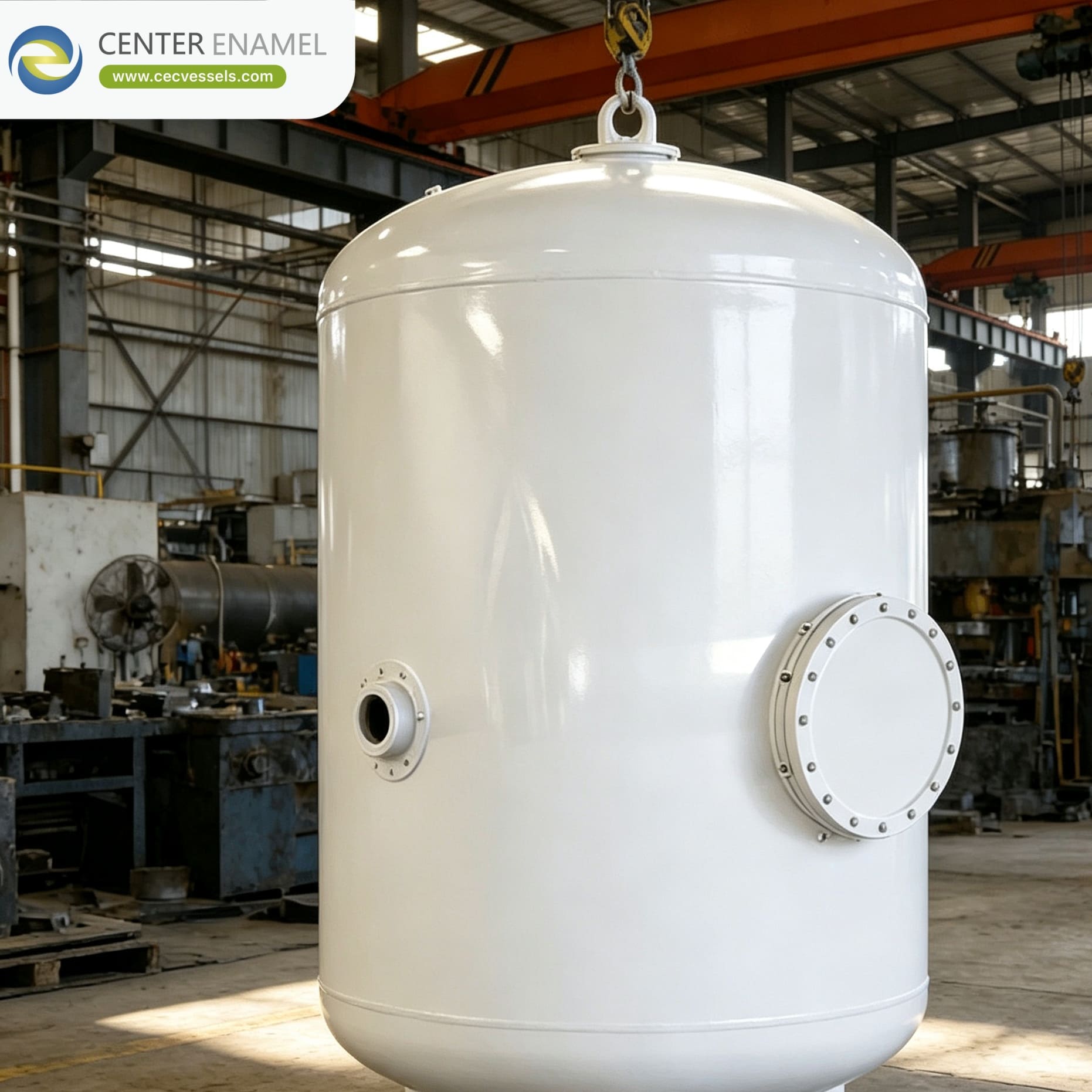
Multi-Effect Evaporator for Large-Scale Liquid Processing with Reduced Steam Consumption
A Multi-Effect Evaporatoris an industrial thermal processing system designed to concentrate liquids by removing water or other volatile components through evaporation. It consists of multiple evaporation stages that reuse secondary vapor as a heating source, improving thermal efficiency and reducing fresh steam consumption. For industries processing large volumes of liquid, this technology supports continuous production, efficient resource utilization, and consistent concentration results. Center Enamel provides customized industrial process equipment solutions designed around different production capacities, material characteristics, and process requirements. How Does a Multi-Effect Evaporator Work?The operating principle of a Multi-Effect Evaporatorinvolves sequential evaporation and heat recovery. Fresh steam supplies thermal energy to the first effect, heating the feed liquid and generating secondary vapor. Instead of releasing this vapor without further utilization, the system transfers it to the heating section of the next effect. The second effect operates at a lower boiling temperature, allowing the transferred vapor to provide the heat needed for additional evaporation. This process continues through subsequent effects, enabling the system to reuse thermal energy throughout the evaporation process. A typical multi-effect evaporation system includes several key operating stages: · Feed preheating to prepare the incoming liquid. · · First-effect evaporation using fresh steam or another suitable heat source. · · Vapor-liquid separation to separate generated vapor from concentrated liquid. · · Secondary vapor transfer to subsequent evaporation effects. · · Final vapor condensation and condensate collection. · · Concentrated product discharge and process monitoring. · By connecting multiple evaporation stages, the system increases the amount of liquid that can be evaporated using a given supply of fresh steam. The actual performance depends on the system configuration, feed properties, operating temperatures, and heat-transfer conditions. How Multi-Effect Evaporators Reduce Steam ConsumptionOne of the main advantages of a Multi-Effect Evaporatoris its ability to reuse thermal energy. In a single-effect evaporator, heating steam generally supports one evaporation stage. In a multi-effect system, the vapor generated in one stage becomes the heating medium for another. This approach improves steam economy, which describes the amount of liquid evaporated per unit of fresh steam supplied. As the number of effects increases, the system can reuse thermal energy across additional stages, potentially reducing steam requirements for the same evaporation capacity. However, adding more effects also affects equipment investment, heat-transfer requirements, operating conditions, and system layout. Therefore, the optimal configuration should balance energy consumption, production capacity, installation requirements, and operating costs. For large-scale liquid processing, a properly designed multi-effect system can support efficient thermal utilization while maintaining stable production performance. Common Types of Multi-Effect EvaporatorsDifferent industrial applications require different evaporation configurations. The selection depends on feed composition, viscosity, solids content, required concentration, and production volume. Double-Effect EvaporatorA double-effect evaporator contains two connected evaporation stages. Vapor produced in the first effect supplies heat to the second effect, improving steam utilization compared with conventional single-effect evaporation. This configuration can suit industrial facilities seeking a balance between equipment investment, evaporation capacity, and energy efficiency. Triple-Effect EvaporatorA triple-effect evaporator uses three sequential stages to reuse thermal energy. Vapor from the first effect heats the second, while vapor from the second heats the third. This arrangement is suitable for many continuous concentration processes in chemical manufacturing, food production, and industrial wastewater treatment. It can offer improved steam economy when the operating conditions support effective heat transfer across all three effects. Quadruple-Effect EvaporatorA quadruple-effect evaporator extends vapor reuse across four stages. It can be considered for large-scale applications where steam consumption is a key factor in equipment selection. The additional effects provide more opportunities for thermal energy recovery, although the overall benefits depend on the available temperature differences and the characteristics of the process liquid. Falling-Film and Forced-Circulation EvaporationA Multi-Effect Evaporatorcan incorporate different evaporation technologies according to the material being processed. A falling-film evaporator distributes liquid over heat-transfer surfaces, allowing the liquid to flow downward as a thin film. This arrangement provides efficient heat transfer and can be suitable for heat-sensitive materials that benefit from relatively short residence times. A forced-circulation evaporator uses pumps to move liquid continuously through the heat-transfer system. It can be appropriate for concentrated solutions, higher-viscosity liquids, and certain processes involving suspended solids. The appropriate technology depends on viscosity, concentration, thermal sensitivity, scaling characteristics, and the required evaporation rate. In some industrial systems, different circulation arrangements can be selected for individual stages to meet specific process requirements. Industrial Applications of Multi-Effect EvaporatorsMulti-Effect Evaporatorsserve a wide range of industries that require efficient liquid concentration, water removal, or resource recovery. Chemical ProcessingChemical manufacturers use evaporation systems to concentrate process solutions, recover valuable components, and prepare materials for downstream production. Equipment design can be adapted to the chemical composition and required final concentration. Food and Beverage ProductionEvaporation is commonly used to concentrate syrups, extracts, and other liquid ingredients. Suitable heat-transfer configurations help maintain product consistency while supporting continuous processing. Pharmaceutical ManufacturingPharmaceutical processes may require controlled concentration of liquid products or recovery of process solvents. Material selection, temperature control, and equipment cleanliness can be incorporated into the design requirements. Industrial Wastewater TreatmentMulti-effect evaporation can reduce liquid waste volume and concentrate dissolved substances for further treatment or recovery. Condensate may also be collected for suitable reuse applications, depending on its quality and the plant's requirements. Resource RecoveryIndustrial facilities can use evaporation to separate volatile components from non-volatile materials, supporting resource recovery and improving the utilization of process streams. Key Factors in Selecting a Multi-Effect EvaporatorChoosing the right Multi-Effect Evaporator Manufacturerrequires careful evaluation of the complete production process. Equipment specifications should reflect actual operating conditions rather than relying solely on standard configurations. Important considerations include: · Evaporation capacity:Determine the feed flow rate and the quantity of water or solvent to be removed per hour. · · Feed characteristics:Evaluate viscosity, solids content, concentration, and thermal sensitivity. · · Final concentration:Establish the target concentration and required product quality. · · Steam availability:Assess the available heating source and the expected steam economy. · · Number of effects:Compare double-effect, triple-effect, and quadruple-effect configurations according to energy and investment objectives. · · Material selection:Choose suitable construction materials based on the process medium and operating temperature. · · System integration:Coordinate feed preheaters, separators, condensers, pumps, piping, and control systems. · A complete engineering assessment helps determine the appropriate evaporation technology, heat-transfer area, circulation arrangement, and auxiliary equipment for each project. Center Enamel: China Multi-Effect Evaporator ManufacturerCenter Enamel, operated by Shijiazhuang Zhengzhong Technology Co., Ltd., provides industrial process equipment and customized engineering solutions for international customers. Its product portfolio includes reactors, heat exchangers, separators, evaporators, and other industrial equipment. As a China Multi-Effect Evaporator Manufacturer, Center Enamel focuses on coordinating equipment design, material selection, fabrication, inspection, and project requirements. Each evaporation system can be evaluated according to the customer's feed characteristics, processing capacity, required concentration, available utilities, and installation conditions. A customized solution may incorporate multiple evaporation effects, vapor-liquid separators, condensers, circulation pumps, condensate recovery equipment, and automated process controls. Coordinating these components helps create an integrated system for continuous industrial liquid processing. Center Enamel also supports project-specific technical documentation and manufacturing requirements, helping customers align equipment specifications with their intended industrial applications. Improving Production Efficiency with Multi-Effect EvaporationA Multi-Effect Evaporatorprovides an effective solution for large-scale liquid concentration by reusing secondary vapor across successive evaporation stages. This approach improves thermal energy utilization and can reduce fresh steam consumption compared with single-effect evaporation. Selecting the right system requires consideration of production capacity, feed properties, final concentration, heat sources, and overall plant integration. Double-effect, triple-effect, and quadruple-effect configurations each offer different balances between equipment investment and steam economy. With customized engineering and industrial equipment manufacturing capabilities, Center Enamel supports customers seeking suitable evaporation solutions for chemical processing, food and beverage production, pharmaceutical manufacturing, wastewater treatment, and resource recovery. A well-designed system can help improve steam utilization, support consistent production, and meet the long-term requirements of industrial liquid processing.
|