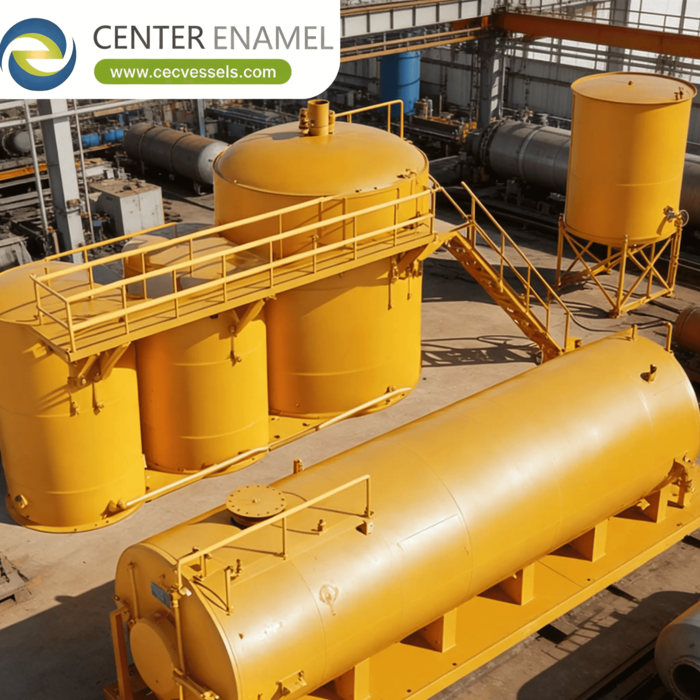
Choosing the right Steam Separator Manufacturer is important for industrial facilities that need reliable steam-water separation, stable steam quality, and properly engineered separation equipment. This guide introduces 10 manufacturers and suppliers in China while explaining key factors for evaluating a China Steam Separators Manufacturer.
What Is a Steam Separator?
A Steam Separator is industrial equipment designed to remove entrained water droplets and other liquid moisture from steam. It is commonly installed in steam distribution systems, boilers, power generation facilities, chemical plants, petrochemical processes, and industrial heating systems.
Wet steam can contain suspended water droplets that reduce the quality of steam delivered to downstream equipment. A properly designed Steam Separator uses physical separation principles such as changes in flow direction, centrifugal action, gravity, internal baffles, or other separation structures to remove liquid from the steam stream.
The separated liquid is collected and discharged through a suitable drainage system, while the drier steam continues toward the downstream process.
Why Is Steam Separation Important?
The quality of steam can directly influence the operation of thermal equipment and process systems. A suitable Steam Separator Manufacturer should therefore consider separation efficiency, flow conditions, materials, operating parameters, and connection requirements during the design stage.
The main functions of industrial steam separation include:
1. Improving Steam Quality
A steam separator removes entrained moisture from wet steam, helping provide a more consistent steam stream for downstream equipment.
2. Supporting Heat Transfer
Drier steam can improve the operating conditions of heat exchangers, process heaters, reboilers, and other steam-consuming equipment.
3. Protecting Downstream Equipment
Removing liquid droplets helps reduce the amount of moisture entering turbines, valves, heat exchangers, and process equipment.
4. Supporting Stable Process Operation
Consistent steam conditions can help industrial systems maintain more stable heating and process performance.
5. Improving Steam System Efficiency
Properly selected separation equipment can help reduce unnecessary moisture carryover and support efficient steam utilization.
Top 10 Steam Separator Manufacturers in China
When searching for a China Steam Separators Manufacturer, buyers should look beyond product listings and consider engineering capabilities, manufacturing experience, customization, quality control, applicable standards, and project support.
The following manufacturers and suppliers represent companies and supplier types that can be considered when researching China's steam separator market.
1. Center Enamel
Center Enamel is a China-based manufacturer of pressure vessels and industrial process equipment, with Steam Separators included in its product range.
As a China Steam Separators Manufacturer, Center Enamel provides engineered steam-water separation solutions for industrial applications. Its steam separator solutions are developed according to project requirements such as operating conditions, flow rate, materials, dimensions, connection configuration, and applicable design standards.
The company states that its pressure vessel engineering and manufacturing capabilities cover standards including ASME BPVC, BS EN 13445, and GB/T 150.1-150.4-2024. Its steam separator solutions are positioned for applications including power generation, chemical processing, petrochemical operations, and industrial steam systems.
For projects requiring a customized Steam Separator Manufacturer, Center Enamel can provide support covering design, fabrication, inspection, documentation, and delivery.
2. Pressure Vessel Manufacturers
China has a large number of pressure vessel manufacturers capable of producing customized separation equipment. Many of these manufacturers provide carbon steel and stainless steel vessels for industrial applications.
For a steam separator project, buyers should confirm whether the supplier has experience with:
1. Steam-water separation equipment
2. Pressure vessel fabrication
3. Internal separator components
4. Nozzle and connection design
5. Welding and inspection
6. Customized vessel dimensions
A manufacturer with both pressure vessel fabrication and separation equipment experience can be considered for projects requiring customized designs.
3. Industrial Separator Suppliers
Industrial separator suppliers in China manufacture equipment for separating gas-liquid, liquid-liquid, and solid-liquid phases.
Some companies offer multiple separator technologies, including steam separators, gas-liquid separators, cyclone separators, oil-water separators, and process vessels.
When evaluating an Industrial Steam Separator Manufacturer, buyers should make sure that the supplier's actual product experience matches the required steam service rather than selecting a company based only on the general term "separator."
4. Steam Water Separator Manufacturers
Steam Water Separator Manufacturers focus specifically on removing liquid water from steam.
These systems can use different internal configurations depending on the operating conditions. Common design considerations include:
1. Steam flow rate
2. Steam pressure and temperature
3. Moisture content
4. Required separation efficiency
5. Pressure drop
6. Vessel diameter
7. Material selection
8. Drainage arrangement
A suitable supplier should be able to evaluate these parameters before recommending or designing a steam-water separator.
5. Custom Separator Manufacturers
Custom equipment manufacturers are another option for industrial users that cannot use a standard separator configuration.
A Custom Steam Separator Manufacturer can develop equipment according to the customer's process conditions, plant layout, connection dimensions, material requirements, and applicable codes.
Customization may include:
1. Vessel diameter and height
2. Inlet and outlet nozzle configuration
3. Internal baffle arrangement
4. Drain connection
5. Support structure
6. Inspection openings
7. Material selection
8. Surface treatment
Custom design can be particularly useful when the separator must be integrated into an existing steam system.
6. Petrochemical Equipment Manufacturers
China's petrochemical equipment manufacturers supply a wide range of process vessels and separation equipment.
Steam separators can be used in petrochemical plants together with heat exchangers, boilers, process heaters, condensers, reactors, and other process equipment.
For petrochemical applications, buyers should pay particular attention to material compatibility, design codes, fabrication procedures, inspection requirements, and project documentation.
7. Chemical Process Equipment Manufacturers
Chemical plants often require steam for heating, evaporation, stripping, sterilization, and other process operations.
A Steam Separator Manufacturer serving the chemical industry should understand how the separator integrates with the complete process system.
Important considerations include:
1. Process steam conditions
2. Required steam quality
3. Chemical compatibility
4. Temperature range
5. Flow capacity
6. Installation conditions
7. Maintenance requirements
A supplier capable of coordinating the separator design with other process equipment can simplify project engineering.
8. Power Generation Equipment Manufacturers
Steam is an important working medium in power generation systems. Steam separators can be installed in suitable locations to remove moisture from steam before it enters sensitive downstream equipment.
For power-related applications, manufacturers should be evaluated according to their experience with steam systems, pressure vessels, separation technology, fabrication quality, inspection procedures, and documentation.
A China Steam Separators Manufacturer serving power-generation projects should also be able to review the required operating conditions and equipment interface before production.
9. OEM and Customized Equipment Suppliers
OEM manufacturers can provide steam separation equipment according to customer drawings, specifications, or engineering requirements.
This approach can be useful for engineering companies, EPC contractors, distributors, and industrial equipment integrators that need a customized product under their own project specifications.
Before selecting an OEM Steam Separator Supplier China, buyers should confirm:
1. Manufacturing capability
2. Engineering support
3. Quality control system
4. Production capacity
5. Inspection capability
6. Export experience
7. Technical documentation
8. After-sales support
10. Integrated Industrial Equipment Manufacturers
Some large industrial equipment manufacturers provide steam separators as part of a broader portfolio that may include pressure vessels, reactors, heat exchangers, condensers, evaporators, and other process equipment.
An integrated supplier can be useful when a project requires several types of equipment from the same manufacturer.
For larger projects, buyers can also compare the supplier's ability to coordinate engineering, manufacturing, quality inspection, documentation, logistics, and technical support.
How to Choose a China Steam Separators Manufacturer?
Selecting a suitable China Steam Separators Manufacturer requires more than comparing product prices. The separator should match the actual process conditions and project requirements.
Consider the following factors:
1. Engineering Experience
Check whether the manufacturer has experience designing steam separators and related pressure vessel equipment.
2. Product Configuration
Confirm the separator type, vessel dimensions, internal components, inlet and outlet arrangement, drainage system, and support structure.
3. Material Selection
The material should be selected according to operating temperature, pressure, steam composition, corrosion conditions, and applicable project specifications.
4. Design Standards
Ask the supplier which design and manufacturing standards can be applied to the project. Depending on the destination market and project requirements, standards may include ASME BPVC, BS EN 13445, or applicable Chinese pressure vessel standards. Center Enamel, for example, identifies these standards in its steam separator and pressure vessel engineering information.
5. Manufacturing Capability
A supplier with appropriate fabrication equipment, qualified technicians, inspection procedures, and quality management systems can provide stronger project support.
6. Customization Capability
Industrial steam systems often have different operating parameters and connection requirements. A manufacturer should be able to adjust the equipment according to project specifications.
7. Quality Inspection
Ask about material inspection, welding inspection, dimensional inspection, pressure testing, leakage testing, and final inspection procedures where applicable.
8. Documentation
International projects may require material certificates, inspection records, drawings, test reports, operation manuals, and other technical documents.
9. Delivery and Project Support
For overseas projects, consider the manufacturer's ability to manage packaging, transportation, export documentation, installation guidance, and after-sales communication.
What Types of Steam Separators Are Available?
Different industrial systems may use different separator configurations. Common categories include:
1. Steam-Water Separators
These separators are designed primarily to remove liquid water from steam.
2. Cyclone Steam Separators
Cyclone configurations use rotational flow to promote the separation of liquid droplets from the steam stream.
3. Baffle-Type Steam Separators
These designs use changes in flow direction and internal baffles to separate liquid from gas.
4. Vertical Steam Separators
Vertical configurations can be selected according to process layout and space requirements.
5. Horizontal Steam Separators
Horizontal vessels can be suitable for certain flow arrangements and plant layouts.
The correct configuration should be determined according to the process conditions rather than simply selecting equipment based on its name.
What Industries Use Steam Separators?
Steam Separators are used in a variety of industrial applications.
Key applications include:
1. Power Generation
Steam separation can be used to improve steam quality in power generation systems.
2. Chemical Processing
Steam is commonly used for process heating, evaporation, and other thermal operations.
3. Petrochemical Processing
Steam systems are integrated into various petrochemical processes and supporting utilities.
4. Food and Beverage Processing
Steam is widely used for heating, cleaning, sterilization, and process operations.
5. Pharmaceutical Manufacturing
Controlled steam systems are important for process heating and sterilization applications.
6. Industrial Manufacturing
Factories may use steam for heating, drying, cleaning, and other production processes.
What Information Should You Provide to a Steam Separator Manufacturer?
Providing complete technical information can help a manufacturer develop a more suitable proposal.
Customers should normally provide:
1. Steam flow rate
2. Operating pressure
3. Operating temperature
4. Steam inlet condition
5. Required steam outlet condition
6. Moisture content if available
7. Inlet and outlet connection sizes
8. Material requirements
9. Installation orientation
10. Applicable design standards
11. Available installation space
12. Project location
The more complete the technical information, the easier it is for a Steam Separator Manufacturer to evaluate the required design.
Why Consider Center Enamel as a China Steam Separators Manufacturer?
Center Enamel combines pressure vessel engineering, fabrication, customization, and project support for industrial equipment applications.
Its published steam separator information highlights several capabilities:
1. Engineering Design
The company provides customized engineering based on operating parameters, flow requirements, space limitations, and equipment configuration.
2. International Standards
Center Enamel identifies ASME BPVC, BS EN 13445, and GB/T 150.1-150.4-2024 among the standards used in its pressure vessel engineering and manufacturing.
3. Customized Manufacturing
Steam separators can be designed according to different dimensions, materials, internal configurations, connections, and operating requirements.
4. Quality Control
The company's published manufacturing process covers engineering design, material inspection, fabrication, final inspection, and technical documentation.
5. Global Project Support
Center Enamel states that its pressure vessel and industrial equipment solutions serve customers across different international markets.
Steam Separator Manufacturer China: What Should Buyers Compare?
When comparing several Steam Separator Manufacturers in China, buyers should create a consistent evaluation framework.
The key comparison points include:
1. Product and application experience
2. Engineering and customization capability
3. Applicable design standards
4. Material and fabrication capability
5. Quality inspection procedures
6. Production capacity
7. Technical documentation
8. Delivery capability
9. Installation and after-sales support
10. Total project cost
Price is only one part of the purchasing decision. The technical suitability of the separator, manufacturing quality, documentation, delivery capability, and long-term service should also be considered.
Frequently Asked Questions About Steam Separators
What Does a Steam Separator Do?
A Steam Separator removes entrained liquid water from steam. It helps improve steam quality before the steam enters downstream equipment.
What Is the Difference Between a Steam Separator and a Steam Trap?
A steam separator removes liquid droplets from flowing steam, while a steam trap is primarily used to automatically discharge condensate and non-condensable gases from a steam system. They perform different functions and can be used together.
How Does a Steam-Water Separator Work?
A Steam-Water Separator changes the flow conditions so that water droplets separate from the steam through mechanisms such as gravity, centrifugal action, flow direction changes, and internal baffles.
Can Steam Separators Be Customized?
Yes. Industrial Steam Separators can be customized according to flow rate, operating conditions, vessel dimensions, materials, connection configuration, installation requirements, and applicable standards.
How Do I Choose a Steam Separator Manufacturer in China?
Start by reviewing the manufacturer's engineering experience, pressure vessel capabilities, applicable standards, manufacturing process, inspection procedures, customization capabilities, documentation, and international project experience.
Can Center Enamel Manufacture Customized Steam Separators?
Center Enamel's published product information indicates that its steam separators can be engineered according to customer operating parameters, flow rates, pressure requirements, dimensions, materials, and project requirements.
Select the Right China Steam Separators Manufacturer
The Chinese steam separator market includes pressure vessel manufacturers, industrial separator suppliers, OEM manufacturers, and integrated process equipment companies. Current search results also show that supplier directories contain a large number of steam separator manufacturers, making technical evaluation particularly important when comparing suppliers.
For buyers looking for a China Steam Separators Manufacturer, the most important factors include engineering capability, separation technology, material selection, manufacturing quality, applicable standards, customization, inspection, documentation, and project support.
Center Enamel provides customized Steam Separators and pressure vessel solutions for industrial applications. Contact our engineering team to discuss your steam flow rate, operating conditions, dimensions, materials, and project requirements, and we can develop a suitable steam separator solution for your application.


