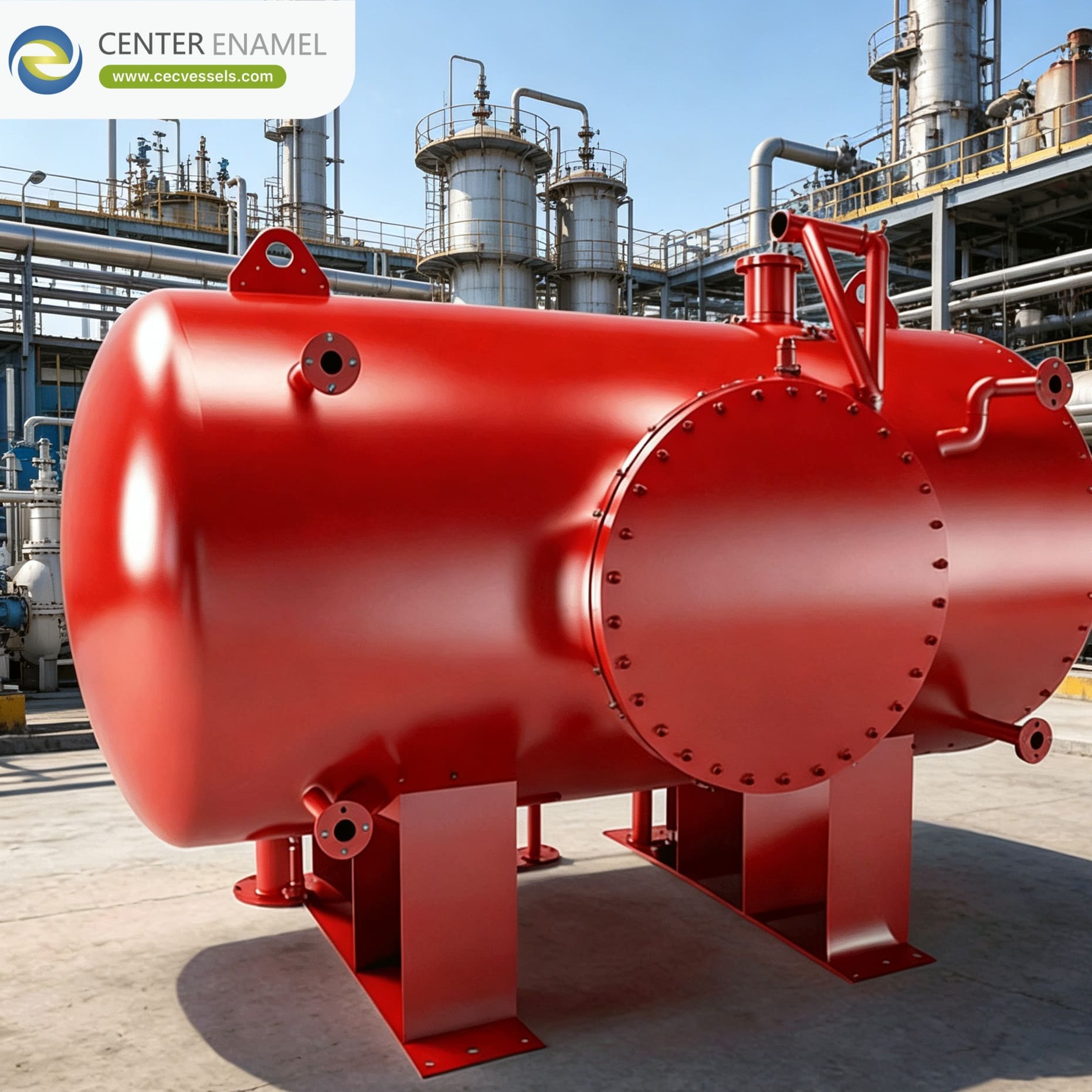
Mixing Tanks and Reactors for Lithium Battery Material Processing
Lithium battery manufacturing requires precise material preparation and consistent process control. From electrode slurry preparation to chemical synthesis and material treatment, different production stages depend on reliable equipment to achieve uniform composition and stable product quality. Industrial mixing tanks and chemical reactors play important roles in these processes by supporting material blending, temperature regulation, and chemical reactions. As demand for lithium-ion batteries continues to grow in electric vehicles, energy storage systems, and consumer electronics, manufacturers increasingly focus on efficient production equipment. Selecting suitable Battery Manufacturing Equipmenthelps improve process consistency, optimize material utilization, and support continuous industrial production. What Are Mixing Tanks and Chemical Reactors?An Industrial Mixing Tankis designed to combine liquids, powders, suspensions, and other process materials into a uniform mixture. Depending on the application, the equipment may include agitators, heating or cooling jackets, temperature sensors, and automated control systems. A Chemical Reactoris designed to carry out chemical reactions under defined operating conditions. It provides a controlled environment for processes such as dissolution, synthesis, neutralization, and material modification. Reactor configurations vary according to the properties of the raw materials, reaction requirements, and production capacity. Although mixing tanks and reactors may share similar structural features, their primary functions differ. Mixing tanks focus on achieving consistent material distribution, while chemical reactors provide the process conditions required for chemical transformation. In lithium battery production, these two types of equipment can work together as part of an integrated processing system. Applications in Lithium Battery Material ProcessingLithium Battery Material Processinginvolves multiple operations, including raw material preparation, active material synthesis, slurry mixing, and intermediate product treatment. Each operation requires equipment designed around the characteristics of the materials being processed. Mixing tanks are commonly used to blend liquid ingredients, disperse powders, and prepare homogeneous suspensions. In electrode manufacturing, specialized mixing equipment helps combine active materials, conductive additives, binders, and suitable solvents or processing media to produce electrode slurry. Chemical reactors are used in the preparation and modification of battery-related materials. Depending on the production route, they can support controlled chemical reactions, precursor preparation, dissolution, and other process operations involved in producing cathode or anode materials. Equipment selection depends on the required production process. Manufacturers should consider material viscosity, particle characteristics, processing temperature, batch size, and the required level of mixing or reaction control. How Industrial Mixing Tanks Improve Material UniformityUniform mixing is essential for producing consistent battery materials. Differences in ingredient distribution can influence slurry stability, coating consistency, and the quality of downstream products. An Industrial Mixing Tankuses mechanical agitation to promote material circulation and improve contact between different components. The agitator design, rotational speed, tank geometry, and operating conditions all affect mixing performance. For low-viscosity liquids, a suitable impeller can provide effective circulation throughout the tank. For more viscous materials, specialized agitators may be required to move material through different regions of the vessel and reduce the formation of poorly mixed areas. Powder dispersion also requires appropriate equipment design. Adding powders at a controlled rate and selecting a suitable mixing configuration can improve wetting and distribution. Where necessary, additional dispersing systems can be integrated to meet specific process requirements. Temperature control is another important consideration. Some battery material formulations require heating to improve dissolution or reduce viscosity, while others benefit from cooling to maintain material properties. Jacketed tanks and external circulation systems can help regulate process temperature according to production needs. The Role of Chemical Reactors in Battery Material ProductionChemical reactors provide controlled conditions for manufacturing and modifying battery-related materials. Their configuration depends on the reaction mechanism, material properties, production scale, and required product characteristics. A Chemical Reactormay be equipped with an agitator, temperature control jacket, instrumentation, and process connections for adding raw materials or transferring finished products. These components allow operators to manage important process variables and maintain consistent operating conditions. In cathode material production, reactors may support precursor synthesis and other chemical preparation steps, depending on the selected manufacturing route. In anode material processing, reactors can be used for certain material treatments, surface modifications, or chemical preparation processes. Reactor materials are selected according to the chemical compatibility of the process media. Stainless steel and other suitable construction materials may be considered based on the composition, temperature, and properties of the materials being handled. Surface finish, cleanability, and maintenance requirements should also be evaluated. For processes requiring accurate temperature management, an appropriate heating or cooling system helps maintain the conditions specified by the production procedure. Instrumentation can monitor temperature, liquid level, and other relevant parameters to support repeatable operation. Key Design Considerations for Battery Manufacturing EquipmentChoosing suitable Battery Manufacturing Equipmentrequires an understanding of the complete production process rather than evaluating individual machines in isolation. First, manufacturers should define the processing capacity. Batch volume, production frequency, and expected output determine the required vessel size and equipment configuration. A system designed for laboratory testing may differ significantly from equipment intended for large-scale industrial production. Second, the mixing performance must match the physical properties of the materials. Viscosity, density, solids content, and particle size can influence the required agitator type and motor capacity. Proper design helps achieve consistent mixing while supporting efficient operation. Third, temperature control should correspond to the process requirements. Heating and cooling capacity, temperature measurement accuracy, and heat transfer performance should be considered during equipment selection. Fourth, the construction material must be compatible with the process media. Suitable material selection helps maintain product quality and supports the intended service life of the equipment. Finally, automation and process monitoring can improve production consistency. Sensors, control panels, variable-speed drives, and programmable operating sequences allow manufacturers to manage mixing time, temperature, agitation speed, and material transfer more effectively. Integrating Mixing Tanks and Reactors into Production LinesAn integrated processing line can connect raw material preparation, mixing, reaction, storage, and transfer operations. The exact arrangement depends on the battery material and the selected manufacturing method. For example, raw materials may first be measured and introduced into a mixing tank for preliminary blending. The prepared mixture can then be transferred to a reactor for a specified chemical treatment. After processing, the material may move to a holding tank, filtration unit, or subsequent production stage. A well-planned system considers equipment capacity, transfer distances, pipe layout, instrumentation, and cleaning requirements. Coordinating these elements helps maintain a logical production sequence and reduces unnecessary material handling. For manufacturers processing multiple formulations, the system may also require flexible batch management and suitable cleaning procedures between production runs. Automated valves and controlled transfer systems can support accurate material movement and improve coordination between individual units. Equipment suppliers can work with customers to develop configurations based on process flow diagrams, material specifications, target capacity, and available plant space. This approach helps ensure that each mixing tank and reactor serves a defined function within the overall production line. Benefits of Selecting the Right Mixing and Reaction EquipmentAppropriate equipment selection can support several important production objectives. Consistent mixing helps maintain uniform material composition, while controlled reaction conditions contribute to repeatable processing results. Integrated temperature management can support process stability, and automation can reduce variation between production batches. Properly configured material transfer systems also help coordinate different manufacturing stages and improve operational efficiency. In addition, equipment designed around actual process requirements can simplify routine cleaning, inspection, and maintenance. These factors are particularly relevant to battery material manufacturers seeking reliable production performance and consistent product specifications. The expected benefits depend on the application, equipment design, and operating procedures. Therefore, manufacturers should evaluate performance requirements before selecting a standard configuration or developing a customized solution. Supporting Efficient Lithium Battery ProductionMixing tanks and chemical reactors are essential components in many Lithium Battery Material Processingapplications. While mixing tanks provide uniform blending and dispersion, chemical reactors support controlled chemical preparation and material transformation. Together, they form an important part of modern Battery Manufacturing Equipmentsystems. By evaluating material characteristics, production capacity, temperature requirements, construction materials, and automation needs, manufacturers can select equipment that matches their specific processes. A properly designed combination of Industrial Mixing Tankand Chemical Reactorequipment supports consistent material quality, efficient production workflows, and reliable operation across different stages of lithium battery manufacturing.
|