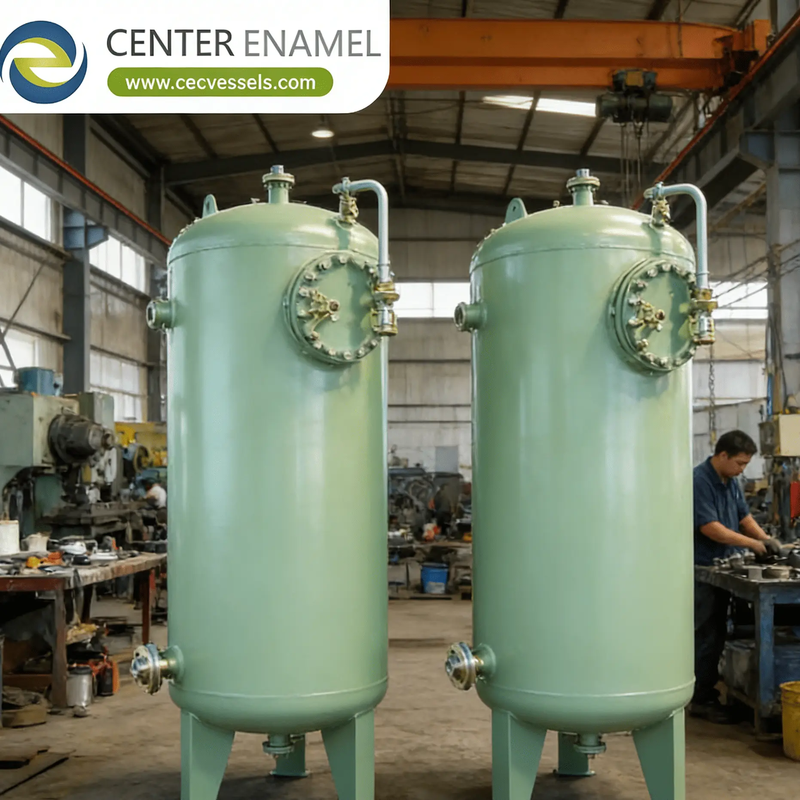
Multifunctional reactors for hydrolysis reactions are process vessels designed to carry out hydrolysis under controlled temperature, mixing, pressure, and reaction conditions. A multifunctional reactor can integrate heating or cooling systems, interchangeable agitators, temperature and pressure monitoring, feed and discharge connections, sampling devices, and other process-specific components in one vessel. This configuration allows one reactor system to support different hydrolysis processes while maintaining consistent reaction conditions.
What Is a Multifunctional Reactor?
A multifunctional reactor is a process vessel designed to perform chemical reactions while integrating several supporting functions into the same equipment. Depending on the process, these functions can include heating, cooling, agitation, material feeding, sampling, temperature measurement, pressure monitoring, and online process analysis.
Unlike a storage vessel, a multifunctional reactor is designed to actively control the conditions required for a chemical reaction. For hydrolysis applications, the reactor must provide sufficient contact between water and the reactants while maintaining the required temperature, mixing intensity, reaction time, and other process conditions.
The exact configuration depends on the process. A low-viscosity liquid hydrolysis process may require a relatively simple agitator and jacketed heat-transfer system, while a solid-liquid hydrolysis process may require higher mixing capacity, suitable baffles, a larger working volume, and an agitator designed to keep solids suspended.
Multifunctional reactor design is therefore based on the actual reaction process rather than a single standard equipment configuration.
What Is Hydrolysis?
Hydrolysis is a chemical reaction in which water participates in breaking chemical bonds within a compound. Depending on the material and reaction pathway, hydrolysis can convert a larger or more complex compound into smaller molecules or different chemical products.
Industrial hydrolysis can be applied to materials such as starch, esters, biomass-derived compounds, and other chemical intermediates. The process may be performed with catalysts, enzymes, acids, bases, or other reaction media.
The required operating conditions vary considerably between hydrolysis processes. Important parameters can include reaction temperature, reaction time, water-to-feed ratio, pH, catalyst concentration, pressure, viscosity, and solids content. A properly configured reactor provides the controlled environment needed to maintain these parameters throughout the reaction.
How Does a Multifunctional Reactor Support Hydrolysis?
A multifunctional reactor supports hydrolysis by controlling the physical and chemical conditions inside the reaction vessel. The main functions are heat transfer, agitation, temperature control, pressure control, material handling, and process monitoring.
For example, the heating system establishes the required reaction temperature, while the agitator promotes contact between water and reactants. Temperature sensors provide process feedback, and pressure instruments can monitor the vessel when the hydrolysis process requires controlled pressure or sealed operation.
For heterogeneous systems, such as solid-liquid hydrolysis, mixing is particularly important because insufficient agitation can cause solids to settle and create differences in temperature or reactant concentration within the vessel.
The reactor configuration should therefore be selected according to the reaction kinetics, physical properties of the feedstock, required conversion, and operating conditions.
Heating and Cooling Systems for Hydrolysis Reactors
Temperature directly affects hydrolysis reaction kinetics, so the reactor should provide an appropriate and controllable heat-transfer method. Center Enamel multifunctional reactors can be configured with different heating arrangements according to the process requirements.
Common heating options include electric heating, steam heating, and thermal oil heating. A jacket or other heat-transfer structure can be used to transfer heat between the utility medium and the reaction mixture.
Electric heating can provide direct and controllable heat input for suitable applications. Steam heating can provide efficient heat transfer where a suitable steam utility is available. Thermal oil heating can be selected when a controlled heat-transfer medium is required for the process.
Cooling can also be integrated into the same reactor system. Cooling water or another suitable cooling medium can be circulated through the heat-transfer system to reduce the reaction temperature after heating or to control an exothermic process.
The appropriate heating and cooling configuration should be determined from the required operating temperature, heating rate, cooling load, utility availability, heat-transfer area, and characteristics of the reaction mixture.
Agitation for Solid-Liquid and Liquid-Liquid Hydrolysis
Agitation is one of the most important functions of a hydrolysis reactor because it affects mass transfer, heat distribution, and contact between reactants.
For liquid-liquid hydrolysis, the agitator should provide sufficient circulation and dispersion to maintain uniform composition throughout the vessel. For solid-liquid hydrolysis, the agitator must also provide enough circulation to prevent excessive sedimentation and maintain effective contact between the solid feedstock and liquid phase.
Different agitator configurations can be selected according to viscosity, liquid level, solid content, density difference, required shear, and heat-transfer requirements.
High-shear agitators can be considered when strong dispersion or emulsification is required. Anchor-type agitators can be suitable for more viscous materials where wall sweeping and bulk circulation are important. Other impeller configurations can be selected when axial flow, radial flow, or solids suspension is the primary requirement.
Agitator selection should therefore be based on measurable process conditions rather than simply selecting a motor with higher power.
Temperature and Pressure Control
Temperature control helps maintain the reaction within its specified operating range. A typical reactor temperature-control system can include temperature sensors, a heating or cooling system, a controller, and utility control components.
The temperature sensor provides process feedback, while the control system adjusts the heating or cooling medium according to the selected operating setpoint. This arrangement helps reduce temperature variation within the reaction vessel.
Pressure control is required when the hydrolysis process operates in a sealed vessel or when the reaction conditions require a specified pressure. Depending on the design, the reactor can incorporate pressure gauges, transmitters, valves, and appropriate pressure-relief or protection devices.
The design pressure and design temperature must be determined from the actual process conditions. They should not be selected from generic reactor specifications because the required rating depends on the reaction medium, operating temperature, pressure, material of construction, and applicable design code.
Online Monitoring and Process Control
Multifunctional reactors can incorporate monitoring instruments that provide information about the reaction during operation. Typical measurements can include temperature, pressure, liquid level, flow, and other process-specific variables.
For hydrolysis processes that require tighter chemical control, additional instruments may be considered according to the application. pH measurement can be useful when the hydrolysis reaction is sensitive to acidity or alkalinity. Sampling ports can also allow operators to collect material for laboratory analysis.
Online monitoring is particularly useful during process development and scale-up because operating data can be recorded and compared between different batches. The collected information can help engineers evaluate reaction temperature, mixing performance, conversion, residence time, and other process variables.
The instrumentation package should be customized according to the control strategy and the parameters that directly affect product quality.
Materials of Construction for Hydrolysis Reactors
The material of construction should be selected according to the chemical composition, temperature, concentration, pH, corrosion characteristics, and required product purity of the hydrolysis process.
Stainless steel grades such as 304 or 316L may be considered for applications where their corrosion resistance and cleanliness characteristics are appropriate. More corrosion-resistant materials, linings, or specialized alloys may be required for aggressive reaction media.
Material selection should also consider the mechanical properties of the vessel at the design temperature and pressure. For applications involving corrosive acids, alkaline solutions, solvents, or other aggressive media, engineers should evaluate corrosion resistance before finalizing the reactor material.
The wetted parts, agitator, shaft, seals, nozzles, heat-transfer surfaces, and other components should be considered as part of the complete material-selection process.
What Factors Should Be Considered When Selecting a Multifunctional Reactor for Hydrolysis?
The correct multifunctional reactor should be selected from the process requirements rather than capacity alone. Important selection factors include:
Reaction volume: Determine the required working volume and total vessel volume based on batch size, filling ratio, expansion space, and operating mode.
Feedstock characteristics: Evaluate whether the feed is liquid, solid-liquid, slurry, or multiphase and determine its density, particle size, and settling behavior.
Viscosity: Higher-viscosity materials generally require different agitator designs and higher mixing torque than low-viscosity liquids.
Solids content: Solid loading affects agitator selection, suspension performance, heat transfer, and discharge requirements.
Reaction temperature: Define the normal operating temperature, minimum and maximum temperature, heating rate, and cooling requirement.
Reaction pressure: Specify whether the reactor operates at atmospheric pressure, under vacuum, or at a controlled positive pressure.
pH and chemical composition: Identify the required pH range and evaluate the corrosiveness of the reaction medium.
Residence or reaction time: Determine how long the feed must remain under controlled conditions to achieve the required conversion.
Heating and cooling method: Select steam, electric heating, thermal oil, cooling water, or another suitable utility according to the thermal load.
Agitation requirements: Consider viscosity, solids content, density difference, required shear, circulation pattern, and heat-transfer requirements.
Material of construction: Select vessel and wetted-component materials based on corrosion resistance, temperature, pressure, and product purity.
Instrumentation: Determine whether temperature, pressure, pH, level, sampling, or other online monitoring functions are required.
Cleaning requirements: Consider vessel geometry, internal components, access, drainability, and the cleaning method required between batches.
Installation conditions: Evaluate available floor space, vessel orientation, nozzle location, maintenance access, and connection requirements.
These factors provide a practical engineering framework for selecting a reactor that matches the actual hydrolysis process.
Multifunctional Reactor Design and Customization
Hydrolysis processes differ in feedstock, reaction chemistry, temperature, mixing requirements, and production capacity. For this reason, a multifunctional reactor should be configured according to the customer's process conditions.
Customization can include vessel capacity, vessel dimensions, heating and cooling configuration, agitator type, motor power, shaft arrangement, baffles, internal coils, jacket design, nozzles, sampling ports, instrumentation, seals, and discharge configuration.
For example, a high-viscosity slurry may require an anchor agitator with suitable wall clearance, while a low-viscosity liquid may use an impeller designed primarily for axial circulation. A solid-liquid hydrolysis process may require an agitator capable of maintaining the required solids suspension.
The reactor can also be designed around the available utilities and plant layout. Steam pressure, cooling-water temperature, electrical supply, installation height, pipe connections, and maintenance access can all affect the final configuration.
Multifunctional Reactors for Different Hydrolysis Applications
Multifunctional reactors can be configured for different types of hydrolysis depending on the feedstock and reaction mechanism.
Enzymatic hydrolysis may require controlled temperature, moderate agitation, pH monitoring, and accurate reaction-time management. The agitator should provide sufficient mixing without unnecessarily damaging sensitive biological components.
Acid or alkaline hydrolysis may require careful material selection because the reaction medium can be corrosive. Temperature, concentration, mixing, and reaction time must be controlled according to the process specification.
Solid-liquid hydrolysis requires effective suspension and mass transfer between the solid feedstock and liquid phase. Agitator geometry, motor torque, vessel dimensions, and discharge configuration become particularly important when solids loading is high.
Biomass hydrolysis may involve fibrous or heterogeneous materials with variable particle size and viscosity. The reactor should therefore be designed around the actual rheological and solids-handling characteristics of the biomass.
The reactor configuration should always be validated against the specific process rather than assuming that one standard design is suitable for every hydrolysis application.
Multifunctional Reactor Manufacturing by Center Enamel
Center Enamel, operated by Shijiazhuang Zhengzhong Technology Co., Ltd., designs and manufactures industrial process equipment for chemical and related applications. Its multifunctional reactor solutions are configured according to reaction conditions, production requirements, material characteristics, and installation conditions.
The company's manufacturing and R&D facilities cover approximately 150,000 m². Reactor fabrication includes processes such as material inspection, welding, machining, assembly, and non-destructive testing, with quality control applied throughout manufacturing.
For pressure-vessel applications, Center Enamel states that its designs can conform to international and national requirements including the ASME Boiler and Pressure Vessel Code, BS EN 13445, and GB/T 150.1-150.4-2024, depending on the project specification.
Engineering design begins with process information such as reaction volume, operating temperature, operating pressure, feed composition, viscosity, solids content, corrosiveness, heating and cooling requirements, agitator requirements, and available installation space.
This process-based approach allows the reactor configuration to be matched to the actual hydrolysis application rather than relying on a generic multifunctional reactor design.
Frequently Asked Questions About Multifunctional Reactors for Hydrolysis
What is a multifunctional reactor?
A multifunctional reactor is a process vessel that combines reaction and supporting functions such as heating, cooling, agitation, temperature measurement, pressure monitoring, sampling, and material handling within one system. Its configuration can be customized according to the reaction process.
What is a multifunctional reactor used for?
A multifunctional reactor can be used for chemical reactions and processes that require controlled mixing and thermal conditions. Depending on its configuration, it can support hydrolysis, neutralization, dissolution, emulsification, and other batch processing operations.
How does a multifunctional reactor support hydrolysis?
A multifunctional reactor supports hydrolysis by maintaining controlled reaction conditions. Heating or cooling controls temperature, agitation improves contact between water and reactants, and instruments can monitor variables such as temperature, pressure, and pH.
What heating methods can be used for hydrolysis reactors?
Common heating methods include electric heating, steam heating, and thermal oil heating. The appropriate method depends on the required temperature, heating rate, thermal load, available utilities, and characteristics of the reaction mixture.
What type of agitator is suitable for hydrolysis?
Agitator selection depends on viscosity, solids content, liquid level, density difference, required shear, and mixing objective. High-shear impellers, anchor agitators, and other axial- or radial-flow impellers may be selected for different hydrolysis conditions.
Can a multifunctional reactor handle solid-liquid hydrolysis?
Yes. A multifunctional reactor can be configured for solid-liquid hydrolysis when the vessel and agitation system are designed for the required solids loading, particle characteristics, suspension behavior, and discharge conditions.
How is a multifunctional reactor customized?
Customization can include vessel volume, dimensions, material of construction, heating and cooling system, agitator type, motor power, baffles, heat-transfer jacket, internal coils, nozzles, sampling ports, instrumentation, seals, and discharge arrangement.
What materials can be used to manufacture hydrolysis reactors?
Material selection depends on the reaction medium, temperature, pressure, pH, corrosion potential, and product requirements. Stainless steel grades such as 304 and 316L may be suitable for some applications, while more corrosion-resistant alloys or specialized linings may be required for aggressive media.
What information is needed to design a hydrolysis reactor?
Important design information includes working volume, batch size, feed composition, solids content, viscosity, density, reaction temperature, operating pressure, pH, reaction time, heating and cooling requirements, agitator requirements, material compatibility, instrumentation, and installation conditions.
How do I choose a multifunctional reactor manufacturer?
Evaluate the manufacturer's process-engineering capability, pressure-vessel design experience, fabrication capacity, quality-control procedures, applicable design standards, customization capability, testing procedures, and ability to provide engineering support based on the actual hydrolysis process.


