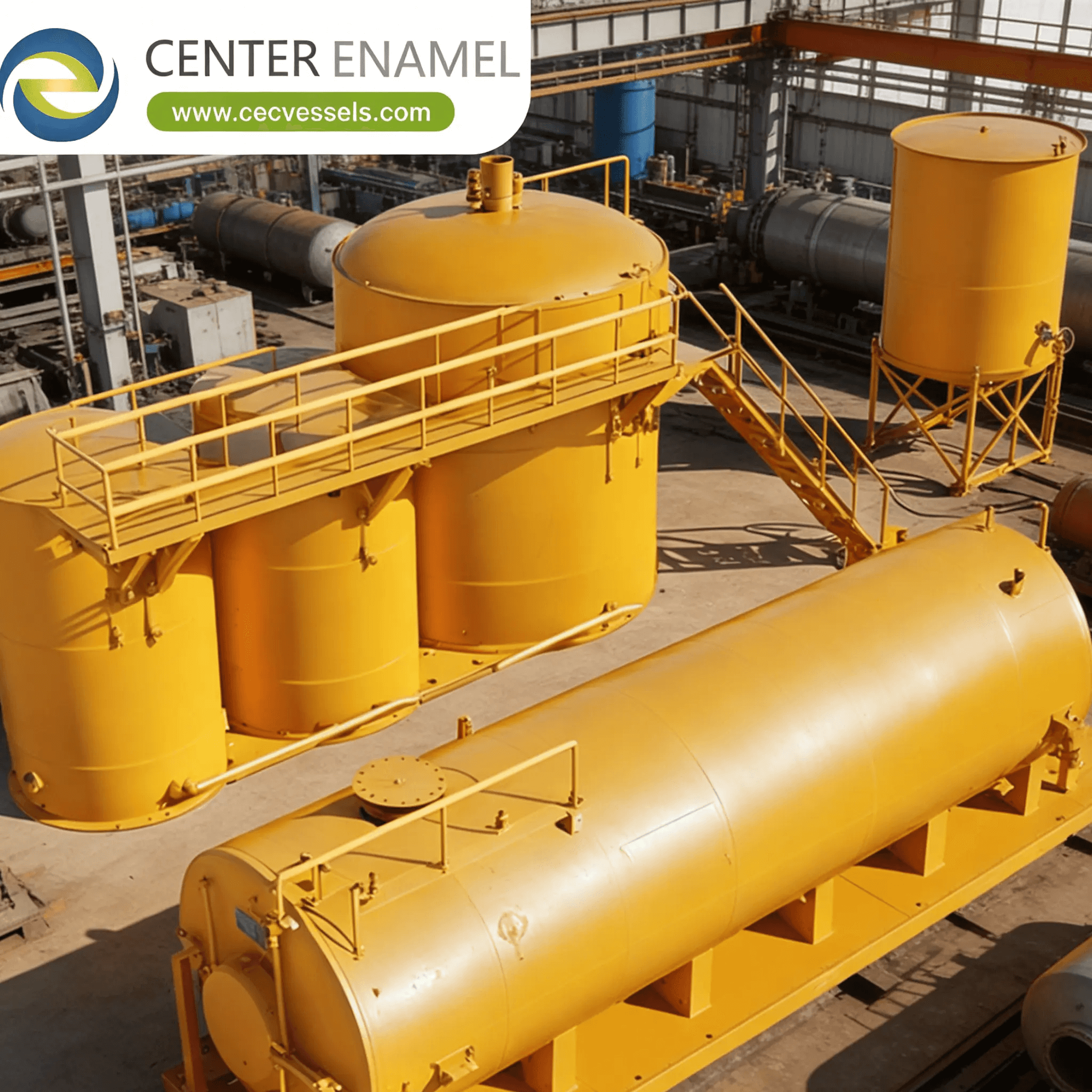
A polymerization reactor is the core equipment used to convert monomers into polymers through controlled chemical reactions. Its design directly affects product quality, reaction efficiency, production capacity, and operating stability. Among all design considerations, mixing and heat transfer are two of the most important factors because they influence reaction uniformity, temperature distribution, and molecular characteristics of the final polymer.
Modern polymerization reactors are designed to provide efficient mixing, uniform heat exchange, and precise process control while accommodating different polymerization methods and production requirements. Whether producing plastics, synthetic rubber, resins, adhesives, coatings, or specialty polymers, selecting an appropriate reactor design helps manufacturers achieve consistent product performance and efficient manufacturing.
What Is a Polymerization Reactor?
A polymerization reactor is a process vessel where monomer molecules chemically combine to form long polymer chains. Depending on the production process, the reactor may operate continuously or in batches while maintaining carefully controlled mixing, temperature, residence time, and catalyst distribution.
Unlike ordinary mixing vessels, a polymer reactor must provide an environment that supports continuous molecular growth while maintaining uniform reaction conditions throughout the vessel. Proper reactor design ensures that raw materials are evenly distributed, heat generated during the reaction is efficiently transferred, and polymer properties remain consistent from one production batch to another.
Polymerization reactors are widely used for manufacturing products such as polyethylene, polypropylene, PVC, polystyrene, polyester, epoxy resin, acrylic resin, polyurethane, synthetic latex, engineering plastics, and numerous specialty polymers used in industrial and consumer applications.
Basic Principles of Polymerization Reactor Design
Designing a polymerization reactor requires balancing several process parameters to achieve stable production and high-quality products. Every component of the reactor contributes to process performance, from the vessel geometry to the internal mixing system and heat transfer surfaces.
The primary design objectives include:
lUniform mixing throughout the reactor
lEfficient heat transfer
lStable temperature distribution
lConsistent residence time
lEffective catalyst dispersion
lReliable material circulation
lEasy cleaning and maintenance
Flexible operation for different production requirements
These design objectives work together to maintain consistent polymerization conditions while supporting efficient production.
The reactor size is selected according to production capacity, reaction time, material properties, and processing requirements. Larger reactors often require multiple mixing zones and optimized impeller configurations to maintain homogeneous conditions across the entire vessel.
Why Mixing Is Important in Polymerization
Mixing is one of the most important functions of a polymerization reactor. During polymer formation, reactants, catalysts, additives, and solvents must remain uniformly distributed to ensure the reaction progresses consistently throughout the vessel.
Effective mixing provides several important benefits.
First, it distributes monomers evenly, preventing concentration differences inside the reactor.
Second, it allows catalysts and initiators to disperse rapidly, supporting uniform reaction rates.
Third, continuous circulation helps maintain an even temperature throughout the reactor by moving materials across heat transfer surfaces.
Fourth, mixing improves contact between different phases when gas-liquid or liquid-liquid polymerization processes are used.
Finally, proper agitation contributes to consistent molecular weight distribution and stable product quality.
Without adequate mixing, localized concentration variations may occur, leading to differences in polymer properties between different regions of the reactor. Modern reactor designs therefore focus on creating efficient circulation patterns that continuously renew the reaction mixture.
Mixing efficiency depends on several factors, including impeller type, rotational speed, reactor dimensions, liquid viscosity, and the position of internal components such as baffles and draft tubes.
Types of Mixing Systems Used in Polymerization Reactors
Different polymerization processes require different mixing systems. Reactor designers select impellers based on viscosity, flow characteristics, production scale, and reaction objectives.
Anchor Agitators
Anchor agitators are commonly used for medium- to high-viscosity polymer systems. Their large diameter allows the impeller to sweep close to the reactor wall, promoting continuous circulation while improving heat transfer between the vessel wall and the reacting material.
These agitators are frequently used in resin production, adhesives, and coating materials where viscosity increases during polymerization.
Paddle Agitators
Paddle agitators generate gentle circulation and are suitable for low- to medium-viscosity materials. Their simple structure makes them practical for many batch polymerization processes requiring moderate mixing intensity.
Turbine Impellers
Turbine impellers create strong radial flow and are widely applied when rapid mixing is required. They help distribute catalysts, initiators, and additives quickly throughout the reactor while maintaining excellent liquid circulation.
Propeller Agitators
Propeller agitators generate strong axial flow, making them suitable for low-viscosity polymerization systems where fast bulk circulation is desired.
Their high pumping efficiency supports continuous blending and effective heat distribution.
Helical Ribbon Agitators
For highly viscous polymer products, helical ribbon agitators provide slow but highly effective mixing by continuously moving material between the reactor wall and the center of the vessel.
This design helps maintain uniform composition while improving heat transfer as viscosity increases during the reaction.
Selecting the Appropriate Mixing Configuration
Choosing the right mixing system depends on multiple process variables rather than a single design factor.
Important considerations include:
lMaterial viscosity
lPolymerization mechanism
lBatch or continuous operation
lReactor size
lProduction capacity
lHeat generation rate
lDesired mixing intensity
lProduct quality requirements
In many industrial polymer reactors, multiple impellers are installed on the same shaft to create several circulation zones within a tall vessel. This arrangement improves mixing performance while maintaining consistent temperature and composition throughout the reactor.
The spacing between impellers, shaft diameter, rotational speed, and impeller geometry are carefully optimized during the reactor design process to achieve efficient operation.
Heat Transfer in Polymerization Reactors
Heat transfer is another key factor in polymerization reactor design. During polymer formation, maintaining a stable temperature helps ensure consistent reaction conditions and uniform polymer properties. An efficient heat transfer system allows the reactor to operate smoothly throughout the production cycle while supporting high product quality.
Heat transfer is achieved by moving thermal energy between the reaction mixture and a heating or cooling medium. Depending on the production process, the reactor may require heating at the beginning of the reaction, cooling during polymer formation, or alternating between heating and cooling at different stages.
The efficiency of heat transfer depends on several design elements, including the heat transfer area, mixing performance, reactor geometry, material circulation, and the properties of the process fluid.
Well-designed heat transfer systems provide several advantages:
lUniform temperature throughout the reactor
lStable reaction conditions
lConsistent polymer properties
lImproved production efficiency
lBetter energy utilization
lReliable long-term operation
Because mixing and heat transfer work together, improving one often enhances the performance of the other. Efficient circulation continuously moves material across heat transfer surfaces, allowing temperature to remain uniform throughout the vessel.
Common Heat Transfer Methods
Several heat transfer methods are used in industrial polymerization reactors. The selection depends on reactor size, production capacity, process requirements, and operating conditions.
Jacketed Reactors
A jacket surrounding the reactor vessel is one of the most common heat transfer solutions. Heating or cooling media circulate through the jacket, allowing thermal energy to pass through the reactor wall and into the process fluid.
Jacketed reactors offer a simple structure, reliable operation, and easy maintenance. They are widely used in batch polymerization processes across the chemical, resin, and specialty polymer industries.
Internal Coil Systems
Internal coils increase the available heat transfer area inside the reactor. Process fluids flow around the coils while heating or cooling media circulate inside them.
This design provides additional temperature control capacity and is commonly applied in larger reactors or processes requiring higher heat transfer efficiency.
External Heat Exchangers
Some polymer reactors incorporate external circulation loops connected to heat exchangers. Process material is continuously pumped through the heat exchanger before returning to the reactor.
This arrangement provides excellent temperature control while allowing flexible adjustment of heating and cooling capacity.
Combined Heat Transfer Systems
Large industrial polymer reactors often combine jacket cooling with internal coils or external heat exchangers. Using multiple heat transfer methods provides greater flexibility across different stages of production while maintaining stable operating conditions.
Factors Affecting Heat Transfer Efficiency
Several variables influence the effectiveness of heat transfer inside a polymer reactor.
Mixing Performance
Efficient mixing continuously moves process fluid across heat transfer surfaces, preventing stagnant regions and promoting uniform temperature distribution.
Fluid Viscosity
As polymerization progresses, viscosity often increases. Higher viscosity can reduce circulation efficiency, making agitator selection and reactor geometry increasingly important.
Heat Transfer Area
Increasing the available heat transfer surface improves thermal exchange between the reactor and the heating or cooling medium. Jackets, coils, and external heat exchangers all contribute additional surface area.
Reactor Geometry
The vessel diameter, height, internal components, and impeller arrangement influence circulation patterns and therefore affect heat transfer performance.
Material Properties
Different polymers have different thermal conductivity, density, and flow characteristics. Reactor design must consider these physical properties to achieve efficient temperature control.
Temperature Control Systems
Accurate temperature control helps maintain consistent production conditions throughout polymerization. Modern polymerization reactors are equipped with automated systems that continuously monitor and adjust operating parameters.
Temperature sensors installed at different locations inside the reactor provide real-time measurements of the process fluid. These measurements are transmitted to the control system, which adjusts the flow of heating or cooling media as needed.
Advanced process control systems can also coordinate agitator speed, feed rates, circulation flow, and heating capacity to maintain stable operating conditions throughout each production cycle.
Automatic temperature control offers several advantages:
lImproved product consistency
lHigher production efficiency
lBetter process repeatability
lReduced energy consumption
lStable long-term operation
lSimplified process management
Modern industrial facilities frequently integrate reactor control systems with distributed control systems or plant-wide automation platforms, allowing operators to monitor multiple reactors simultaneously and optimize production performance.
Reactor Materials and Construction
The materials used to manufacture a polymerization reactor influence equipment durability, cleanliness, and long-term performance.
Stainless steel is the most commonly used construction material because it offers excellent corrosion resistance, smooth internal surfaces, and good mechanical strength. Different grades of stainless steel are selected according to the chemical characteristics of the process materials.
For specialized polymer applications, reactors may include polished internal surfaces, special coatings, or customized sealing systems to meet specific production requirements.
In addition to material selection, reactor construction emphasizes:
lSmooth internal surfaces
lPrecision welding
lReliable shaft sealing
lDurable bearings
lEasy inspection access
lConvenient cleaning design
lLong equipment service life
These design features support consistent production while reducing routine maintenance requirements.
Reactor Configurations
Polymerization reactors are available in several configurations to meet different production requirements. The choice of reactor depends on factors such as production capacity, polymerization method, material properties, and process flexibility.
Batch Polymerization Reactors
Batch reactors are widely used for specialty polymers, resins, adhesives, coatings, and products manufactured in multiple grades. Raw materials are charged into the reactor, the polymerization process is completed under controlled conditions, and the finished product is discharged before the next production cycle begins.
Batch reactors provide excellent flexibility, making them suitable for manufacturers producing different formulations or smaller production volumes.
Continuous Polymerization Reactors
Continuous reactors are designed for large-scale production where raw materials are continuously fed into the reactor while finished polymer is continuously removed. This operating mode supports stable production rates and consistent product quality over long operating periods.
Continuous polymerization systems are commonly used for high-volume thermoplastics and other industrial polymers.
Stirred Tank Reactors
Stirred tank reactors are among the most common polymer reactor designs. They combine efficient agitation with reliable heat transfer and can be adapted for both batch and continuous production.
Their versatility makes them suitable for a wide range of polymerization processes and product types.
Loop Reactors
Loop reactors circulate reaction materials through a closed flow path, providing continuous mixing and efficient heat exchange. Their circulation pattern supports consistent reaction conditions and stable product characteristics, making them suitable for large-scale polymer manufacturing.
Tubular Reactors
Tubular reactors allow reactants to move continuously through long tubes where polymerization occurs under carefully controlled residence times. Their simple flow pattern makes them suitable for certain continuous polymer production processes that require consistent throughput.
Applications Across Industries
Polymerization reactors are used in many industrial sectors where polymers form the basis of finished products or intermediate materials.
Plastics Manufacturing
Plastic production is one of the largest applications for polymer reactors. They are used to manufacture materials that are processed into packaging, automotive components, household products, electrical equipment, and consumer goods.
Synthetic Resin Production
Many industrial resins are produced using polymerization reactors. These materials are widely used in coatings, laminates, construction materials, and composite products.
Adhesives and Sealants
Polymer reactors support the production of adhesives with consistent viscosity, bonding performance, and curing characteristics for industrial and commercial applications.
Paints and Coatings
Acrylic, epoxy, polyester, and other coating resins are commonly manufactured in polymerization reactors. Uniform mixing and precise temperature control contribute to consistent coating quality and product performance.
Synthetic Rubber
Polymerization technology is widely applied in the production of synthetic rubber used in tires, industrial belts, seals, hoses, and other engineered products.
Specialty Chemicals
Many specialty polymers used in electronics, medical materials, textiles, packaging, and advanced manufacturing are produced in customized polymerization reactors designed for specific process requirements.
How to Select the Right Polymer Reactor
Selecting a suitable polymer reactor involves evaluating both production objectives and process characteristics. A well-designed reactor should support efficient operation while delivering consistent product quality over many years of service.
Important selection factors include:
lPolymerization process type
lAnnual production capacity
lBatch or continuous operation
lMaterial viscosity
lMixing requirements
lHeat transfer efficiency
lTemperature control accuracy
lCleaning requirements
lAutomation level
lFuture production expansion
Manufacturers often work closely with reactor suppliers to customize vessel dimensions, agitation systems, heat transfer equipment, instrumentation, and control systems according to specific production goals.
A customized reactor design can improve production efficiency while allowing future process optimization and product diversification.
Future Trends in Polymerization Reactor Design
As polymer manufacturing continues to evolve, reactor technology is becoming more efficient, intelligent, and adaptable.
Automation is playing a larger role in reactor operation. Modern control systems continuously monitor process variables, allowing operators to maintain stable production conditions while improving operational efficiency.
Digital monitoring technologies provide real-time data that supports process optimization and preventive maintenance. These systems help manufacturers improve equipment utilization and maintain consistent product quality.
Energy-efficient heat transfer systems are also becoming increasingly important. Improved jacket designs, optimized internal coils, and advanced circulation systems contribute to lower energy consumption while maintaining effective temperature control.
Modular reactor designs are gaining popularity because they simplify installation, reduce project schedules, and allow future capacity expansion. Flexible reactor systems can also be adapted for multiple product grades, providing manufacturers with greater production versatility.
Another important trend is the use of computational simulation during reactor design. Advanced modeling tools allow engineers to evaluate fluid flow, mixing performance, and heat transfer before equipment is manufactured, resulting in more efficient reactor configurations.
Mixing and heat transfer are the foundation of successful polymerization reactor design. Together, they create the controlled processing environment required for consistent polymer production, efficient energy utilization, and reliable manufacturing performance.
A well-designed polymerization reactor combines optimized vessel geometry, appropriate agitation systems, efficient heat transfer equipment, accurate temperature control, and robust construction. These elements work together to support stable operation and consistent product quality across a wide range of polymerization processes.
As industrial production continues to advance, polymer reactor technology will continue to incorporate improved automation, enhanced thermal efficiency, digital process monitoring, and flexible equipment configurations. Manufacturers that invest in properly designed polymerization reactors can improve production efficiency, maintain product consistency, and adapt more easily to changing manufacturing requirements.
Whether producing commodity plastics, engineering polymers, synthetic resins, adhesives, coatings, or specialty materials, selecting the right polymer reactor design remains an essential step toward achieving efficient, reliable, and high-quality polymer production.


