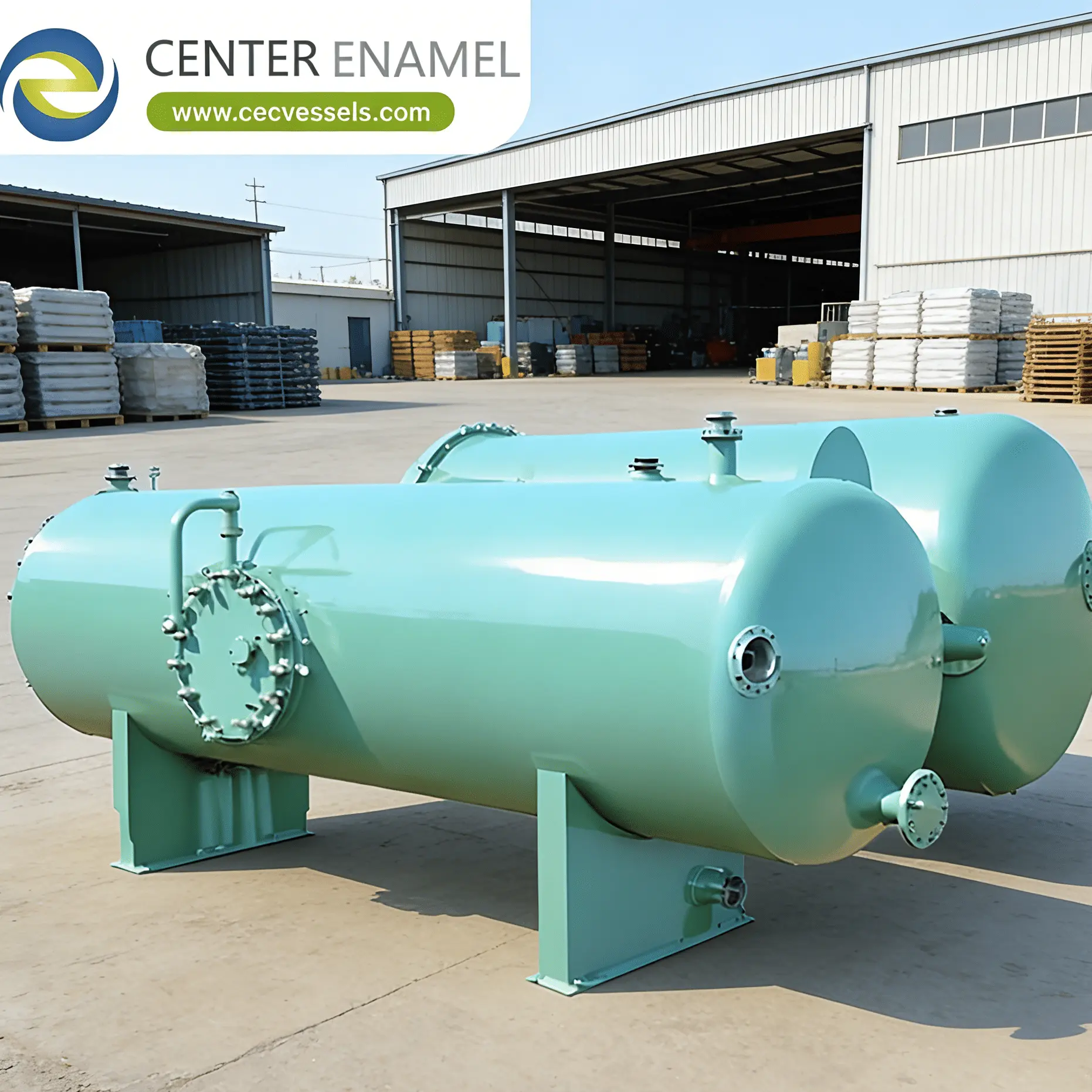
Heat exchangers sit at the centre of temperature control in process plants, moving thermal energy between two fluids without mixing them. A Process Fluid Heat Exchangeris selected on duty, fluid properties and available layout space, and it must hold its performance through continuous operation. Center Enamel designs and builds these units around the specific duty of each project.
Defining Thermal Duty Before Design
Design starts with the duty: flow rates, inlet and outlet temperatures, allowable pressure loss and the properties of each fluid. Engineers check the heat balance from both sides so that the required transfer rate is confirmed before geometry is fixed. They then look at the physical space available, the orientation of connecting pipes and the way the unit will be serviced. When the client supplies a process simulation, the calculation is repeated against it; when only field data is available, the duty is reconstructed from measured values. A clearly defined duty keeps later fabrication work predictable and gives the plant a unit that matches its actual operating range.
Configurations and Flow Arrangements
Shell and tube units remain the standard choice for process duties because they handle a wide range of flows and are easy to maintain. Fixed tube sheet designs suit clean services where the shell does not need to be opened, while U-tube and floating head arrangements allow bundles to be removed for cleaning. Counter-current flow gives the best thermal approach, and multi-pass arrangements raise velocity where a single pass would be too slow. Plate and fin alternatives are offered where compactness matters more than accessibility. The choice is made together with the client, balancing thermal result, floor space and the maintenance routine.
Materials and Thermal Performance
Tube, shell and head materials follow the chemistry of both streams. Stainless steel and duplex grades cover process fluids that require clean surfaces, carbon steel serves utility duties, and dissimilar joints are designed with transition pieces where two streams need different metals. Surface finish, tube wall thickness and baffle spacing all influence how quickly heat moves through the boundary, so these details are set from the calculation rather than from a standard template. Insulation and cladding are added where heat retention or surface temperature control is part of the specification, and every material choice is recorded in the unit documentation.
Fabrication and Quality Control
Fabrication follows approved drawings and welding procedures. Tubes are expanded or welded into tubesheets with records kept for each joint, and shells are rolled, welded and checked for roundness before the bundle is inserted. Dimensional inspection confirms nozzle positions, baffle spacing and overall length. Pressure integrity testing covers the shell side and the tube side separately, and final assembly is checked for squareness and cleanliness. Every unit ships with a documentation package containing material certificates, weld maps, inspection reports and test results, ready for the client's own review and for the plant's maintenance file.
Performance Review and Documentation
Before shipment, the calculated duty is compared with the tested behaviour of the unit. Where a test loop is available, flow and temperature data are recorded and checked against the design points; where it is not, fabrication tolerances and calculation assumptions are reviewed in detail. The documentation package includes thermal data sheets, drawings, material certificates, weld records and test reports, all indexed to the equipment tag. This record allows the plant to review performance later, plan cleaning intervals and order replacement parts without reconstructing the design from scratch.
Applications Across Process Industries
These units appear wherever a process needs controlled heating or cooling. Chemical plants use them for reactor jacket circuits, distillation condensers and utility cooling. Food and beverage producers rely on them for pasteurisation and clean-in-place circuits. Pharmaceutical facilities use polished units on purified water and clean steam duties, and industrial sites apply them to lubricating oil, compressed air aftercoolers and closed cooling loops. Each application sets its own requirements for surface finish, drainability and inspection access, and the unit is detailed to meet those conditions rather than a general specification.
Custom Engineering and System Integration
Center Enamel builds to project documents rather than to a fixed catalogue. Non-standard nozzle positions, extended tube lengths, special head designs and skid mounting are all part of the normal scope. Units can be supplied with valves, instruments, supports and interconnecting piping on a common frame, ready for connection on site. Where a unit replaces existing equipment, the new design is matched to current pipe runs and lifting points so that the changeover follows the planned shutdown. This approach keeps the equipment, the piping and the control interface under one design responsibility.
Why Work with Center Enamel
Center Enamel is a China Process Fluid Heat Exchanger Manufacturerthat combines thermal design, fabrication and testing under one roof. Clients work with a Process Fluid Heat Exchanger Manufacturerthat treats each duty as a project rather than a stock item, and receives drawings, calculations and test records that support installation and operation. As a Process Fluid Heat Exchangersupplier, the company supports plants that need dependable temperature control, clear documentation and equipment built to their own specifications.


