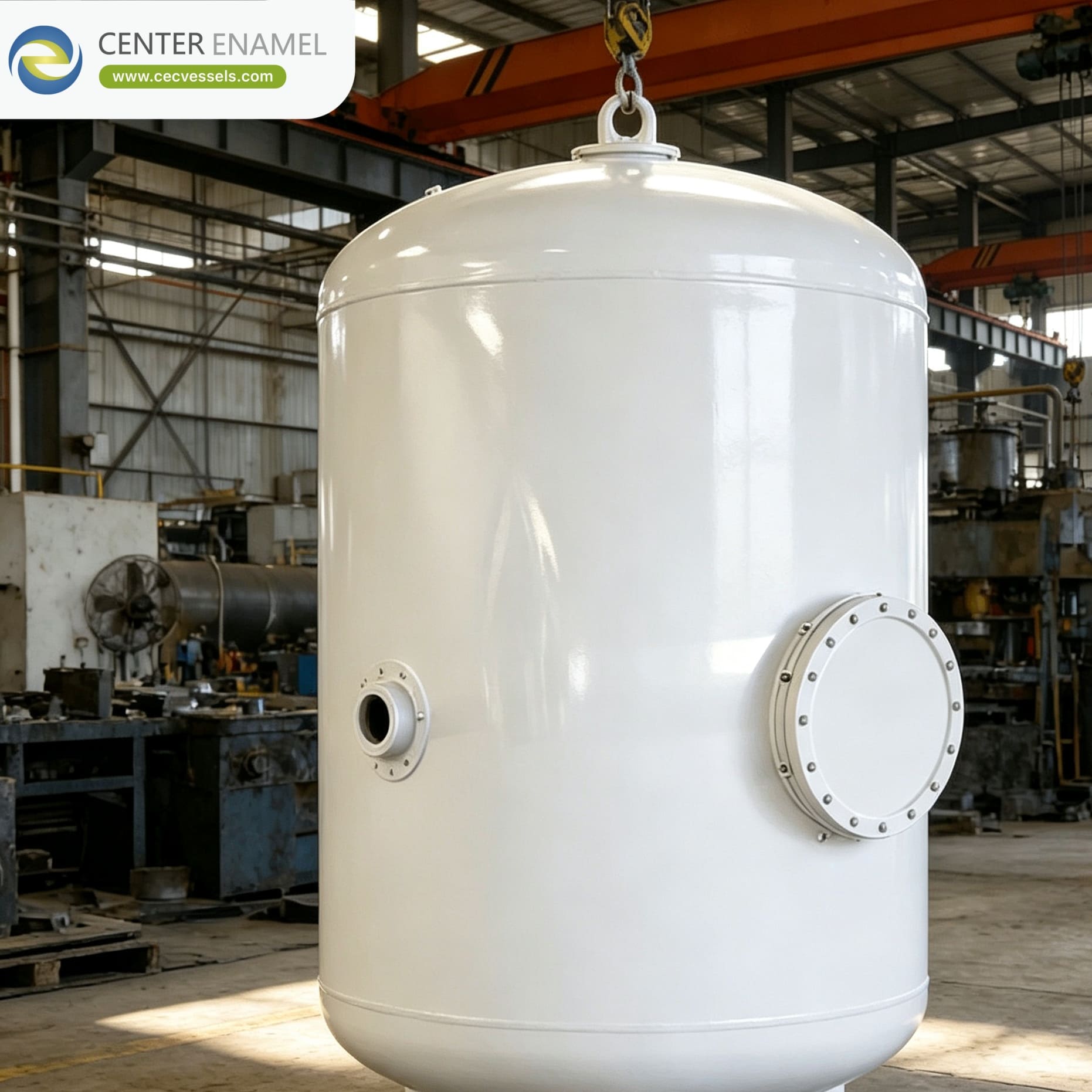
Process Vessels for Lithium Ion Battery Material Production
The growing demand for electric vehicles and energy storage systems has increased the need for reliable lithium ion battery manufacturing equipment. Process vesselsplay an important role in battery material production by supporting mixing, chemical reactions, storage, and fluid handling. From cathode and anode material preparation to electrode slurry processing, industrial process vesselshelp manufacturers establish efficient and organized production operations. What Are Process Vessels Used for in Lithium Battery Manufacturing?Process vessels for lithium ion battery material productionare industrial containers designed to perform specific operations during the preparation and processing of battery materials. Depending on the manufacturing process, these vessels can be used for powder mixing, liquid blending, chemical synthesis, precipitation, suspension preparation, and intermediate material storage. Typical applications include:
lRaw Material Mixing:Combining active material powders, additives, solvents, and other ingredients. lChemical Reactions:Supporting controlled reactions during the preparation of battery material precursors. lSlurry Preparation:Mixing active materials, conductive additives, binders, and solvents to produce electrode slurry. lIntermediate Storage:Holding prepared materials before they enter downstream production processes. lMaterial Transfer:Providing connection points for pumps, pipelines, and other processing equipment.
The vessel configuration depends on the material characteristics, production capacity, processing temperature, and required mixing conditions. Main Applications of Industrial Process Vessels in Battery Material ProductionDifferent stages of lithium battery manufacturing require different types of processing equipment. Battery material processing vesselscan be configured to support several important production operations. 3.1 Cathode Material ProductionCathode active materials commonly include lithium nickel manganese cobalt oxide (NMC), lithium iron phosphate (LFP), and other lithium-based compounds. In certain cathode production routes, precursor materials are prepared through controlled chemical reactions, followed by separation, washing, drying, mixing, and thermal treatment. Lithium battery reactorscan be used in precursor synthesis and chemical processing. Their design may incorporate agitation systems, temperature control components, feed connections, and discharge arrangements. Suitable chemical reactors for battery materialshelp provide consistent processing conditions throughout the reaction cycle. 3.2 Anode Material ProcessingAnode materials commonly include graphite and other carbon-based materials, while silicon-based materials are also used in selected battery technologies. Depending on the production route, processing may involve material blending, dispersion, chemical treatment, and preparation of intermediate suspensions. Battery material mixing tanksprovide controlled environments for combining different ingredients and preparing materials for subsequent processing. Their mixing configuration should be selected according to the required material characteristics and production capacity. 3.3 Electrode Slurry PreparationElectrode slurry preparation is an important stage in lithium ion battery manufacturing. The process generally involves combining active materials, conductive additives, binders, and solvents to produce a homogeneous mixture. Industrial process vesselsequipped with suitable mixing arrangements can support powder incorporation, liquid addition, dispersion, and slurry homogenization. Temperature control and mixing performance are important considerations because they influence slurry viscosity, particle distribution, and subsequent coating operations. Depending on the formulation, some mixing systems also incorporate vacuum-assisted deaeration to reduce entrained air in the finished slurry. 3.4 Intermediate Material StorageBattery material manufacturing involves multiple connected production stages. Prepared materials may need to be temporarily stored before being transferred to subsequent processing equipment. Battery material processing vesselscan serve as intermediate storage units for liquid mixtures, suspensions, and other compatible process materials. Appropriate inlet and outlet arrangements help connect storage vessels with pumps, pipelines, and downstream equipment. 4. Common Types of Process Vessels for Lithium Battery ProductionDifferent manufacturing requirements call for different vessel configurations. The following equipment types are commonly considered for battery material processing. 4.1 Battery Material Mixing TanksBattery material mixing tanksare designed for blending powders, liquids, and suspensions. Depending on the application, they can be equipped with mechanical agitators, specially designed impellers, and temperature control systems. Key design considerations include:
lMixing capacity and tank dimensions. lAgitator type and rotation speed. lMaterial viscosity and density. lHeating or cooling requirements. lInlet, outlet, and cleaning connections.
These tanks can support raw material preparation, slurry production, and intermediate blending operations. 4.2 Lithium Battery ReactorsLithium battery reactorsare designed for chemical processing operations involved in battery material production. They can be configured for batch or continuous processing, depending on the reaction route and production requirements. Typical design features include:
lAgitation systems for material mixing. lHeating and cooling jackets or external circulation systems. lFeed and discharge connections. lTemperature measurement instruments. lSuitable internal surface finishes.
For precursor preparation and other chemical synthesis processes, reactor design should correspond to the required reaction conditions and material compatibility. 4.3 Industrial Storage and Buffer VesselsIndustrial process vesselscan also be used to store prepared liquids, suspensions, and process intermediates. Buffer vessels provide additional storage capacity between production stages, helping coordinate material supply and downstream equipment operation. Their capacity and configuration should match the expected production throughput and material transfer requirements. 5. Key Design Considerations for Battery Material Processing VesselsSelecting appropriate lithium battery material production equipmentrequires a detailed understanding of the manufacturing process and material properties. 5.1 Material SelectionThe vessel material should be compatible with the processed substances, including solvents, acids, alkalis, and other chemical ingredients. Common material options include:
lStainless Steel:Widely considered for industrial liquid processing and mixing applications. lCarbon Steel:Suitable for selected applications when the material compatibility and internal protection requirements are properly evaluated. lSpecialized Materials:Available for processes requiring particular chemical compatibility or surface characteristics.
Material selection should be based on the actual process medium and operating conditions. 5.2 Temperature ControlSome battery material processes require controlled heating or cooling during mixing and chemical reactions. Vessels can incorporate jackets or external circulation connections to work with suitable heating and cooling systems. Accurate temperature monitoring helps maintain consistent process conditions and supports repeatable production operations. 5.3 Agitation and Mixing PerformanceMixing performance directly affects the distribution of solid and liquid components within a vessel. The agitator design should consider material viscosity, particle characteristics, tank geometry, and required mixing intensity. For slurry preparation, suitable mixing arrangements help achieve consistent material dispersion and support downstream coating processes. 5.4 Tank Structure and CapacityVessel dimensions and structural configuration should correspond to the production layout and required processing volume. Vertical vessels are often considered for installations with limited floor space, while horizontal configurations may be suitable for particular production layouts. Capacity selection should account for working volume, material expansion, mixing space, and operational requirements. 6. How Process Vessels Improve Battery Manufacturing OperationsWell-designed battery material processing vesselscontribute to manufacturing efficiency through several functions. Consistent Material Processing:Properly selected vessel geometry and mixing equipment help maintain uniform material distribution. Flexible Production Capacity:Different vessel volumes can accommodate laboratory, pilot-scale, and industrial production requirements. Integrated Process Operations:Multiple vessels can be connected with pumps, pipelines, heat exchangers, and other equipment to establish coordinated production lines. Improved Temperature Management:Heating and cooling arrangements support temperature-controlled material preparation. Convenient Maintenance:Suitable manways, drainage connections, and cleaning arrangements simplify equipment inspection and routine maintenance. These functions help battery manufacturers organize material processing and improve coordination between production stages. 7. Center Enamel Process Vessel Solutions for Lithium Battery ProductionCenter Enamelprovides industrial storage and process equipment solutions for various manufacturing applications. For lithium ion battery material production projects, customized industrial process vesselscan be developed according to process requirements, vessel capacity, material specifications, and installation conditions. Potential equipment configurations include battery material mixing tanks, chemical processing vessels, and industrial storage vessels. Project-specific design considerations can include:
lRequired tank capacity and dimensions. lProcess material and chemical compatibility. lHeating and cooling configurations. lAgitation and mixing requirements. lInlet, outlet, and instrument connections. lInstallation layout and equipment integration.
By considering these factors during the engineering stage, Center Enamel aims to provide practical vessel solutions that support battery material preparation and industrial production operations. 8. Frequently Asked Questions About Lithium Battery Process VesselsQ1: What are process vessels used for in lithium battery production? Process vessels are used for material mixing, chemical reactions, slurry preparation, intermediate storage, and fluid handling during battery material manufacturing. Q2: What types of vessels are needed for lithium battery material production? Common equipment includes mixing tanks, chemical reactors, storage vessels, and buffer tanks. The exact configuration depends on the battery chemistry and production process. Q3: Can industrial process vessels be customized for different battery materials? Yes. Vessel capacity, materials, agitation systems, temperature control arrangements, and connections can be customized according to specific production requirements. Q4: Why is temperature control important in battery material processing vessels? Temperature can influence reaction rates, material properties, slurry viscosity, and mixing performance. Suitable temperature control arrangements help maintain consistent processing conditions. Q5: What information is needed when selecting lithium battery reactors? Important information includes the process medium, operating temperature, required capacity, reaction type, mixing requirements, vessel material, and installation conditions. Supporting Advanced Lithium Battery Material ManufacturingAs the lithium ion battery industry continues to develop, manufacturers require reliable equipment to support increasingly sophisticated material preparation processes. Industrial process vessels, including lithium battery reactorsand battery material mixing tanks, provide essential functions for chemical reactions, blending, storage, and process integration. With customized equipment configurations and application-oriented engineering, Center Enamelsupports manufacturers seeking practical vessel solutions for lithium battery material production.
|