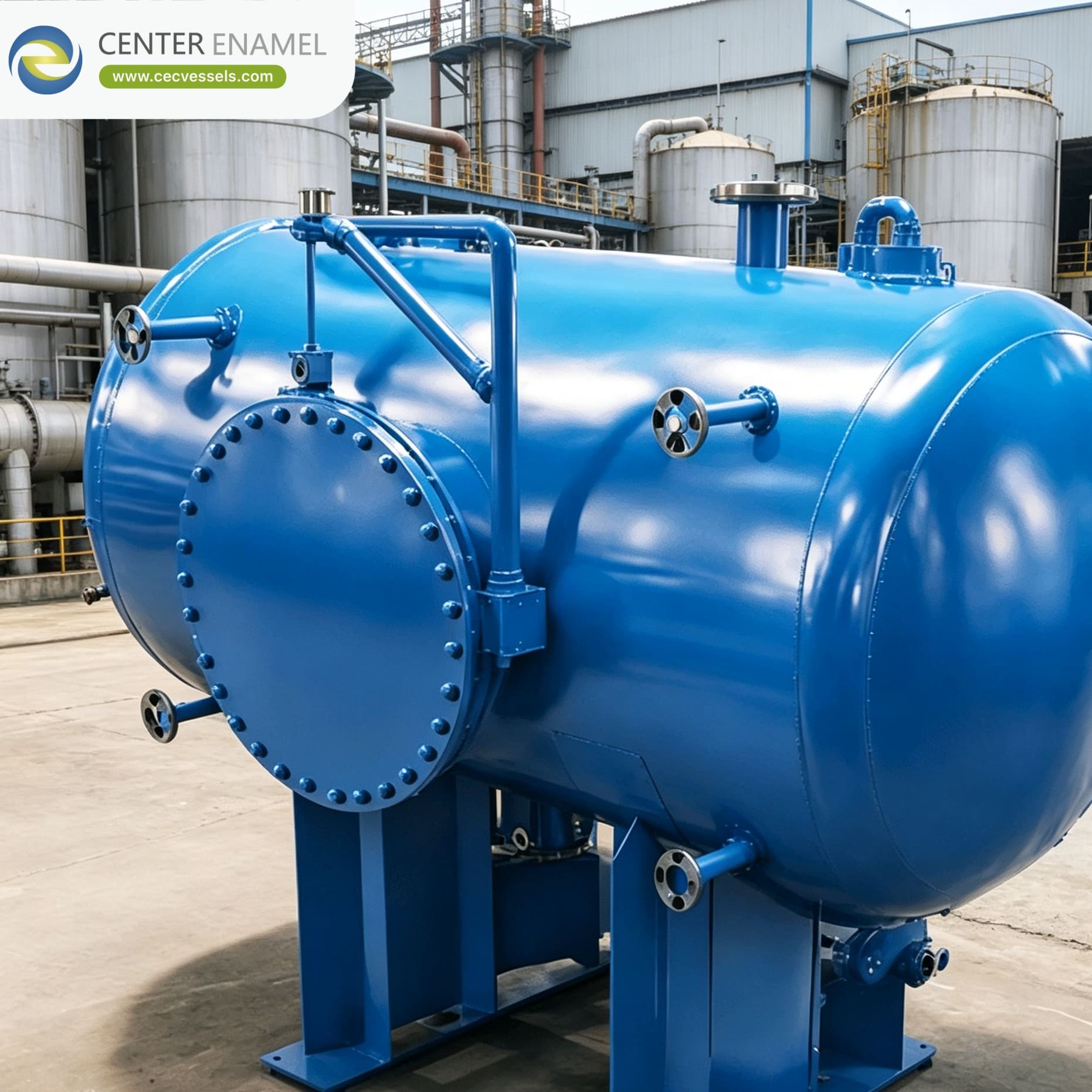
Quadruple-Effect Evaporator for High-Efficiency Liquid Concentration
A Quadruple-Effect Evaporatoris a multi-effect evaporation system designed to concentrate liquid materials through four interconnected evaporation stages. Its main operating principle is the reuse of secondary vapor generated during evaporation. Vapor from one effect is used as the heating medium for the following effect, allowing thermal energy to be utilized multiple times throughout the evaporation process. Compared with a single-effect evaporator, a four-effect configuration can make greater use of the available thermal energy. The system is suitable for industrial applications requiring continuous liquid concentration, solvent removal, volume reduction, or recovery of concentrated products. The four effects operate under progressively adjusted thermal conditions. The first effect receives the primary heating source, while the following effects use vapor generated by the preceding stage. This creates a thermal cascade in which the same initial heat input contributes to evaporation across multiple stages. A Quadruple-Effect Evaporatorcan be configured as a falling-film, forced-circulation, or combined evaporation system according to feed properties and production requirements. Center Enamel provides customized evaporation equipment based on feed composition, evaporation capacity, concentration targets, material characteristics, and plant layout. How Does a Quadruple-Effect Evaporator Work?The working principle of a quadruple-effect evaporator is based on sequential evaporation and vapor reuse. The process liquid first enters the evaporation system through a feed inlet or preheating section. Depending on the process design, condensate or recovered heat can be used to preheat the feed before it enters the first effect. In the first effect, an external heating source provides thermal energy to the process liquid. Part of the volatile component, commonly water, evaporates and produces secondary vapor. Instead of allowing this vapor to leave the system without further use, it is directed to the heating section of the second effect. The second effect operates at a lower temperature, allowing the secondary vapor from the first effect to provide the thermal energy required for additional evaporation. The vapor generated in the second effect is then transferred to the third effect. The same process continues from the third effect to the fourth effect. After the fourth effect, the remaining vapor can be directed to a condenser or another recovery system, while the concentrated liquid is discharged according to the required final concentration. The basic process can be summarized as: Feed → Preheating → First Effect → Second Effect → Third Effect → Fourth Effect → Concentrated Product At the same time, the vapor flow follows: Primary Heating → Vapor from Effect 1 → Effect 2 → Vapor from Effect 2 → Effect 3 → Vapor from Effect 3 → Effect 4 This sequential vapor reuse is the defining feature of the four-effect evaporation process and enables improved thermal utilization. The Four Effects in a Multi-Effect Evaporation SystemEach effect has a specific role in the overall evaporation process. First EffectThe first effect receives the primary heating energy. Feed liquid enters this stage and begins the evaporation and concentration process. The heat-transfer system transfers thermal energy from the heating medium to the feed liquid. Part of the liquid evaporates, generating secondary vapor for the next effect. Second EffectThe second effect receives secondary vapor from the first effect. This vapor condenses on the heating side while transferring its thermal energy to the process liquid. As a result, additional liquid evaporates and the process material becomes more concentrated. Third EffectThe third effect continues the same thermal recovery process. Vapor produced in the second effect becomes the heating source for the third effect. The operating temperature is progressively reduced, allowing the available vapor energy to continue supporting evaporation. Fourth EffectThe fourth effect represents the final evaporation stage. By this point, the liquid has undergone several concentration stages. The final effect can be connected to a condenser or other vapor recovery equipment, while the concentrated product is discharged according to the required process specification. Together, the four effects form a continuous thermal cascade that allows heat to be reused across the system. Main Components of a Quadruple-Effect EvaporatorA complete Quadruple-Effect Evaporatorconsists of several interconnected components that work together to achieve evaporation, concentration, vapor separation, heat recovery, and process control. Feed PreheaterA feed preheater can use available condensate or recovered thermal energy to increase the feed temperature before evaporation. Preheating reduces the amount of additional thermal energy required to bring the feed to the desired evaporation condition. Four Evaporation EffectsThe core of the system consists of four interconnected evaporation stages. Each effect includes a heat-transfer section and corresponding vapor-liquid processing components. The heat-transfer area and equipment dimensions are determined according to feed flow rate, evaporation capacity, temperature difference, liquid properties, and concentration requirements. Vapor-Liquid SeparatorsVapor-liquid separators separate the generated vapor from the concentrated liquid. Appropriate separation allows vapor to move efficiently toward the next effect while the liquid continues through the concentration process. CondenserThe vapor leaving the final effect can be directed to a condenser. The resulting condensate can be collected for reuse, treatment, or discharge according to the overall process design. Circulation SystemDepending on the evaporator configuration, circulation pumps may be incorporated to maintain suitable liquid movement through the heat-transfer system. Forced circulation can be particularly useful for concentrated or viscous liquids, while falling-film systems use controlled liquid distribution across heat-transfer surfaces. Control SystemA centralized control system can monitor and regulate feed flow, temperature, liquid level, vapor flow, concentrate discharge, and other process parameters. PLC-based automation can coordinate the four effects and associated auxiliary equipment as one integrated process system. Quadruple-Effect Falling-Film EvaporatorA Quadruple-Effect Evaporatorcan be designed using falling-film technology for applications requiring continuous liquid concentration and efficient heat transfer. In a falling-film evaporator, the feed liquid is distributed over the internal surfaces of vertical heat-transfer tubes. Gravity causes the liquid to flow downward as a thin film. As the liquid moves through the heated tubes, part of the solvent evaporates. The remaining liquid becomes increasingly concentrated. The thin-film configuration provides a large effective heat-transfer surface and relatively short residence time. This makes falling-film evaporation suitable for many food, beverage, pharmaceutical, chemical, and other liquid-processing applications. When falling-film technology is combined with four-effect evaporation, the system provides both thin-film heat transfer and sequential vapor reuse. Center Enamel's quadruple-effect falling-film evaporator systems can be customized according to feed characteristics, evaporation capacity, target concentration, operating temperature, and downstream processing requirements. Feed Flow ConfigurationsA four-effect evaporator can be designed with different feed arrangements according to liquid properties and process requirements. Forward FeedIn a forward-feed system, the liquid moves from the first effect toward the fourth effect. This configuration can provide a straightforward process flow and can be suitable when the feed is relatively warm before entering the evaporation system. Backward FeedIn a backward-feed arrangement, the feed enters a later effect and moves toward an earlier effect. This configuration can be considered when liquid viscosity increases significantly as concentration rises. The more concentrated liquid can be processed at a higher temperature in an earlier effect, depending on the process design. Parallel FeedParallel feeding distributes fresh feed among multiple effects rather than sending all feed through the effects sequentially. This configuration can be considered for specific high-throughput applications and customized process requirements. Mixed FeedA mixed-feed arrangement combines different feed-flow principles to achieve the required balance between heat transfer, concentration, liquid properties, and production capacity. Center Enamel can select the appropriate feed arrangement according to feed composition, viscosity, thermal characteristics, required concentration, and evaporation capacity. Benefits of a Quadruple-Effect EvaporatorThe four-effect configuration provides several important advantages for industrial liquid concentration. Improved Thermal UtilizationThe most important feature is the reuse of secondary vapor. Instead of using the primary heating source only once, the generated vapor is passed from one effect to the next. This allows thermal energy to participate in several evaporation stages. Reduced Fresh Steam ConsumptionBecause vapor is reused between effects, the amount of fresh heating steam required can be reduced compared with single-effect evaporation. Center Enamel's current evaporator portfolio identifies the quadruple-effect configuration as a system designed for significant energy savings, with a listed specific steam consumption of approximately 0.3 tons of steam per ton of water evaporated for its four-effect system. Actual performance depends on the specific process and operating conditions. Continuous ProcessingFour-effect evaporators can be designed for continuous industrial operation. Continuous feed, vapor reuse, concentrate discharge, and condensate recovery can be integrated into an automated process system. High Evaporation CapacityThe four interconnected effects provide multiple evaporation stages within one process system. This makes the configuration suitable for industrial facilities requiring continuous concentration and relatively large processing capacity. Flexible Process ConfigurationThe system can be configured with falling-film, forced-circulation, or combined technologies according to material properties. This allows the equipment to be adapted to different liquid viscosities, solids contents, concentration targets, and product characteristics. Applications of Quadruple-Effect EvaporatorsA Quadruple-Effect Evaporatorcan be applied to numerous industries where liquid concentration and thermal separation are required. Food and Beverage ProcessingFood and beverage manufacturers can use multi-effect evaporation to concentrate fruit liquids, dairy-related materials, sugar solutions, extracts, and other process streams. Falling-film configurations can be considered when short residence time and continuous processing are important. Chemical ManufacturingChemical manufacturers use evaporation to concentrate chemical solutions, recover process materials, and reduce liquid volume. Material selection and heat-transfer configuration can be customized according to the chemical characteristics of the feed and concentrate. Pharmaceutical ProductionEvaporation can be used for concentrating pharmaceutical solutions, extracts, and process liquids. Stainless steel construction and customized heat-transfer systems can be selected according to material compatibility, cleaning requirements, and production specifications. Industrial Wastewater TreatmentFour-effect evaporation can be applied to industrial wastewater concentration and liquid volume reduction. Depending on the wastewater composition, the system can be combined with forced circulation, crystallization, condensate recovery, and other downstream treatment technologies. Center Enamel's evaporator portfolio includes multi-effect systems for industrial wastewater evaporation, crystallization, and desalination applications. Salt and Mineral ProcessingSalt-containing and mineral-rich solutions can require multiple evaporation stages to achieve the desired concentration. The four-effect system can be integrated with crystallization equipment when recovery of solid materials is included in the process. Design Considerations for a Quadruple-Effect EvaporatorDesigning a Quadruple-Effect Evaporatorrequires detailed information about the process liquid and production objectives. Feed Flow RateFeed flow rate determines the required evaporation capacity and influences the size of the heat-transfer equipment, separators, condensers, and auxiliary systems. Initial and Final ConcentrationThe initial concentration and target final concentration determine the total amount of solvent that needs to be removed. These parameters directly affect the thermal duty and overall system configuration. Liquid PropertiesViscosity, density, solids content, boiling characteristics, and thermal sensitivity should all be considered when selecting the evaporation method. Falling-film, forced-circulation, or combined configurations can be selected according to these characteristics. Heat-Transfer AreaThe required heat-transfer area depends on evaporation capacity, temperature difference, heat-transfer coefficient, liquid properties, and equipment configuration. Each of the four effects should have an appropriate heat-transfer area to maintain the required evaporation performance. Material SelectionEquipment materials should be compatible with the feed liquid, concentrated product, condensate, cleaning medium, and process temperature. Center Enamel's industrial equipment manufacturing capabilities include carbon steel, stainless steel, and clad materials. Quadruple-Effect Evaporator vs. Other Evaporation SystemsA single-effect evaporator uses the primary heating source in one evaporation stage. A double-effect system reuses vapor through two stages, while a triple-effect system extends the process to three stages. A Quadruple-Effect Evaporatorextends the same principle to four interconnected effects. As the number of effects increases, the system can make greater use of secondary vapor. However, equipment configuration, heat-transfer area, control requirements, and investment should also be considered as part of the complete process design. Center Enamel's evaporator portfolio includes single-effect, double-effect, triple-effect, quadruple-effect, MVR, TVR, and waste-heat evaporation systems. This range allows the evaporation technology to be selected according to the feed characteristics, energy source, evaporation capacity, and concentration requirements. Customized Quadruple-Effect Evaporator Manufacturing by Center EnamelAs a Quadruple-Effect Evaporator Manufacturer, Center Enamel provides customized evaporation systems for chemical, food and beverage, pharmaceutical, environmental, and other industrial applications. The engineering process begins with an evaluation of the feed liquid and production requirements. Important parameters include feed flow rate, initial concentration, target concentration, evaporation capacity, viscosity, solids content, feed temperature, heating source, condensate requirements, and available installation space. Based on these parameters, Center Enamel can determine the appropriate evaporation configuration, heat-transfer area, feed arrangement, vapor-liquid separation system, condenser capacity, circulation system, piping, instrumentation, and control strategy. The company also manufactures other process equipment, allowing evaporation systems to be integrated with heat exchangers, reactors, separators, storage vessels, pumps, and other process equipment when required. Manufacturing and Project SupportAs a China Quadruple-Effect Evaporator Manufacturer, Center Enamel combines process engineering with equipment fabrication and project support. The company states that it operates a 150,000-square-meter production base and provides services covering product design, R&D, manufacturing, transportation, installation, commissioning, and after-sales support. Its equipment manufacturing capabilities include carbon steel, stainless steel, and clad materials, with support for standards such as ASME, ISO 9001, and BS EN 13445. For customized evaporation projects, manufacturing can include material preparation, forming, welding, machining, assembly, dimensional inspection, testing, and final equipment verification. The complete evaporation package can also incorporate feed preheating, vapor-liquid separation, condensate recovery, circulation systems, condensers, piping, valves, instrumentation, and PLC-based automatic control. Efficient Liquid Concentration with Center EnamelA Quadruple-Effect Evaporatorprovides an efficient approach to continuous liquid concentration by combining four interconnected evaporation stages with sequential vapor reuse. The first effect receives the primary heating energy, while vapor generated from each subsequent stage becomes the heating source for the next effect. This thermal cascade improves the utilization of available heat and can reduce fresh steam consumption compared with single-effect evaporation. Falling-film, forced-circulation, and combined configurations can be selected according to feed viscosity, solids content, concentration requirements, evaporation capacity, and product characteristics. As a China Quadruple-Effect Evaporator Manufacturer, Center Enamel provides customized evaporation systems for food and beverage processing, chemical manufacturing, pharmaceutical production, industrial wastewater treatment, salt and mineral processing, and other liquid concentration applications. Customers can provide feed composition, flow rate, initial and final concentration, evaporation capacity, heating source, material requirements, and plant layout. Based on these parameters, Center Enamel can develop a customized four-effect evaporation system designed for efficient thermal utilization and reliable continuous liquid concentration.
|